
It’s funny how puzzles can turn a simple learning task into an engaging experience. You might not realize it, but incorporating them into your practice can enhance your skills in unexpected ways. From word searches to crosswords, these activities make the process enjoyable and interactive. If you’re curious about how to make learning feel less like a chore and more like an adventure, you’ll want to explore the various puzzle options available.
Key Takeaways
- Puzzles like crosswords and word searches enhance vocabulary and reinforce word meanings in an engaging format.
- Jigsaw puzzles promote comprehension by connecting narratives, making stories more enjoyable to understand.
- Collaborative puzzle activities foster teamwork and active listening, creating a supportive learning environment.
- DIY puzzles can spark interest in reading while tracking progress in literacy skills through fun challenges.
- Themed puzzles introduce new vocabulary and provide opportunities for context-based learning, making reading enjoyable.
The Benefits of Using Puzzles in Reading Practice

While you might think of puzzles as mere games, they actually offer significant benefits for reading practice. When you engage with puzzles, you’re sharpening your critical thinking skills and enhancing your ability to decode language.
Each puzzle challenges you to connect letters, words, or images, promoting an intuitive understanding of text structure. You’ll find that solving these engaging challenges boosts your vocabulary and comprehension as you encounter new words in context.
Plus, the satisfaction of piecing together a puzzle can motivate you to tackle reading with excitement. It transforms the learning experience into something enjoyable, helping you to develop a love for reading.
Types of Puzzles That Enhance Literacy Skills
Puzzles come in various forms, each offering unique ways to enhance your literacy skills.
Crossword puzzles challenge your word recall and spelling, helping you connect meanings with letters. Jigsaw puzzles, especially those featuring words or stories, encourage you to piece together narratives, fostering comprehension.
Logic puzzles sharpen your analytical thinking, often requiring you to deduce solutions based on language clues. Scrabble or Boggle not only boost your vocabulary but also make you think creatively about word formation.
Lastly, rhyming puzzles can improve phonemic awareness, making the sounds of words come alive.
Incorporating Word Searches for Vocabulary Building

Word searches are a fun way to boost your vocabulary, as they encourage you to recognize and recall words in an engaging format. When you dive into a word search, not only do you enjoy the thrill of finding hidden words, but you also reinforce your understanding of their meanings.
Here’s a quick glimpse of how word searches can introduce new vocabulary:
| Word | Meaning |
|---|---|
| Curious | Eager to learn |
| Journey | A trip or voyage |
| Explore | Investigate |
| Imagine | Form a picture |
| Discover | Find out something |
Try incorporating themed word searches into your reading routine. You’ll be surprised at how quickly those new words become part of your everyday language!
Crossword Puzzles: A Fun Way to Reinforce Comprehension
After enhancing your vocabulary with word searches, consider how crossword puzzles can further develop your reading comprehension. These engaging challenges not only test your knowledge but also deepen your understanding of language and context.
- They encourage critical thinking as you connect clues to answers.
- You’ll encounter synonyms and antonyms, expanding your word bank.
- Crossword puzzles help improve spelling and word recognition.
- They promote patience and persistence as you work through clues.
- You can enjoy them alone or share the experience with friends and family.
Jigsaw Puzzles and Story Sequencing

While engaging with jigsaw puzzles, you can also enhance your understanding of story sequencing. Each puzzle piece represents a part of the narrative, helping you visualize the beginning, middle, and end of a story. As you connect pieces, you’ll see how events unfold, which deepens your comprehension and retention.
Here’s a simple example of story sequencing with jigsaw puzzles:
| Beginning | Middle | End |
|---|---|---|
| A girl finds a map | She goes on an adventure | She discovers treasure |
Interactive Online Puzzles for Digital Learning
Building on the concept of story sequencing with jigsaw puzzles, interactive online puzzles offer a modern twist that enhances digital learning.
These puzzles engage you and your little ones in a unique way, blending fun with educational value. You’ll find that they can help develop essential skills while keeping the experience enjoyable.
- Easy access: Play anytime, anywhere with an internet connection.
- Variety of themes: Explore different subjects, from animals to fairy tales.
- Interactive feedback: Receive instant rewards for solving puzzles.
- Collaborative learning: Work together with friends or family for added fun.
- Progress tracking: Monitor achievements and growth over time.
With each click, you’re not just solving puzzles; you’re building a love for reading!
Creating Your Own Reading Puzzles at Home

Creating your own reading puzzles at home can be a fun way to spark your child’s interest in stories and enhance their comprehension skills. Try these simple ideas to get started:
| Puzzle Type | Materials Needed | How to Play |
|---|---|---|
| Word Search | Paper, pencil | Find words from a story. |
| Crossword | Grid paper, clues | Fill in words based on hints. |
| Story Scramble | Printed sentences | Rearrange sentences to form a story. |
These activities not only make reading enjoyable but also encourage critical thinking. You can personalize each puzzle to match your child’s favorite books, making learning feel special and tailored just for them. Enjoy this bonding time as you explore stories together!
Collaborative Puzzle Activities for Group Learning
Engaging in collaborative puzzle activities can transform reading into a thrilling group experience that fosters teamwork and communication skills. When you work together, you not only enjoy the process but also deepen your understanding of stories.
Here are some benefits of these activities:
- Encourages discussion and sharing of ideas
- Builds trust and strengthens relationships
- Enhances problem-solving skills
- Promotes active listening and empathy
- Creates a fun, supportive environment
Tracking Progress With Puzzle Challenges
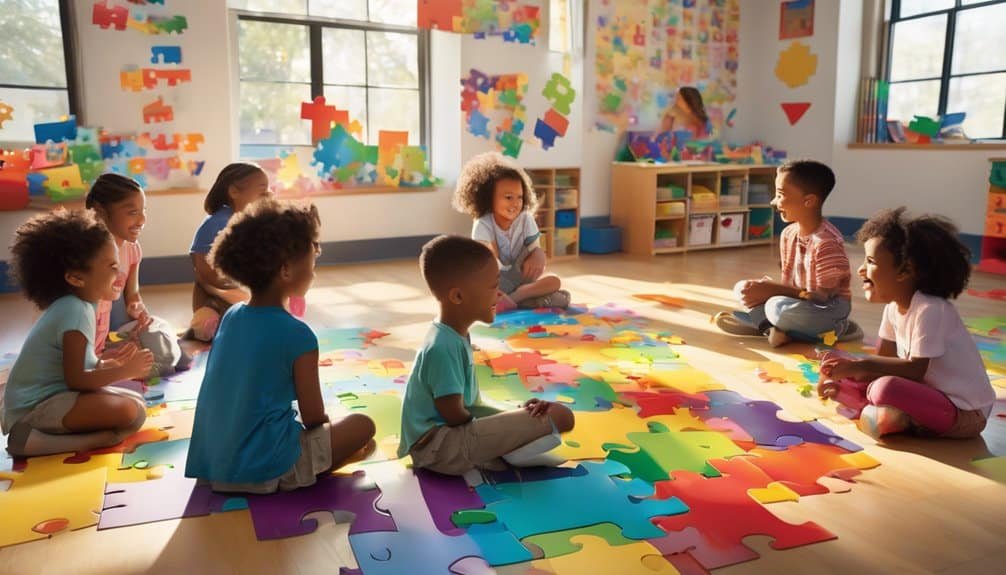
Puzzle challenges offer a dynamic way to track your progress in reading skills while keeping the experience enjoyable. As you solve each puzzle, you can see firsthand how your vocabulary and comprehension improve. It’s like a fun game where each completed challenge gives you a little boost of confidence.
You’ll notice patterns in your performance, helping you identify areas where you excel or need a bit more practice. Plus, the satisfaction of piecing together words and sentences reinforces your learning.
Celebrate your milestones, no matter how small; they’re all stepping stones on your reading journey. With each puzzle, you’re not just having fun—you’re actively building the skills that’ll take your reading to new heights. Embrace the challenge, and watch yourself grow!
Inspiring a Lifelong Love of Reading Through Puzzles
How can you spark a lifelong love of reading while having fun? Puzzles are a fantastic way to blend learning with enjoyment. They not only challenge your mind but also introduce you to new stories and vocabulary.
Here’s how puzzles can inspire that love:
- Encourage curiosity: Each puzzle reveals new themes and ideas.
- Build critical thinking: Solving puzzles enhances comprehension skills.
- Foster sharing: Work on puzzles with friends or family to discuss stories.
- Create a routine: Make puzzle time a special reading ritual.
- Celebrate achievements: Completing a puzzle can motivate you to tackle more books.
Frequently Asked Questions
What Age Group Benefits Most From Reading Puzzles?
You’ll find that children aged 4 to 8 benefit the most from reading puzzles. Their developing minds eagerly embrace playful challenges, making learning enjoyable and engaging, while boosting vocabulary and comprehension skills in a fun way.
Are There Specific Puzzles for Different Reading Levels?
Absolutely, you’ll find puzzles tailored for various reading levels. Studies show kids improve reading skills by 20% when engaged with age-appropriate challenges. It’s all about matching the puzzles to their unique abilities and interests.
How Can I Make Puzzles More Challenging?
To make puzzles more challenging, try increasing the complexity of the clues, adding time limits, or incorporating themed elements. You can also mix different types of puzzles to spark deeper engagement and enjoyment.
What Materials Do I Need to Create Reading Puzzles?
To create reading puzzles, you’ll need paper, markers, scissors, glue, and maybe some colorful stickers. Remember, “A picture’s worth a thousand words.” Your creativity can turn simple materials into engaging, unforgettable reading experiences for everyone.
Can Puzzles Be Used for Language Learning?
Absolutely, you can use puzzles for language learning! They engage your mind, reinforce vocabulary, and make the process enjoyable. Plus, they encourage you to think critically about language, helping you absorb new concepts naturally.
Conclusion
By blending the joy of puzzles with reading, you’re not just playing a game; you’re unlocking a world of words and stories. The thrill of solving a crossword contrasts beautifully with the satisfaction of discovering a new vocabulary term. Jigsaw puzzles transform narratives into tangible experiences, making learning dynamic and fun. So, embrace the adventure! With each puzzle piece you fit together, you’re not just enhancing literacy skills—you’re cultivating a lifelong love of reading that’s both enriching and enjoyable.