

Puzzles play a crucial role in enhancing classroom learning by promoting essential skills like critical thinking and collaboration. As you engage with these challenges, you’ll find that your ability to analyze information and identify patterns improves significantly. This process not only boosts your cognitive development but also fosters a strong sense of teamwork among peers. What happens next, though, is where the real transformation begins, as you discover new ways to tackle learning challenges.
Key Takeaways
- Puzzles enhance critical thinking by engaging students in analysis, strategy, and decision-making under pressure.
- Collaborative puzzle-solving fosters teamwork, communication, and a sense of belonging among students.
- Working on group challenges encourages diverse perspectives, boosting problem-solving abilities and resilience.
- Puzzles create an engaging learning environment, transforming complex problems into enjoyable challenges that spark curiosity.
- They support cognitive development by improving memory retention, independent thinking, and overall problem-solving skills.
Enhancing Critical Thinking Skills
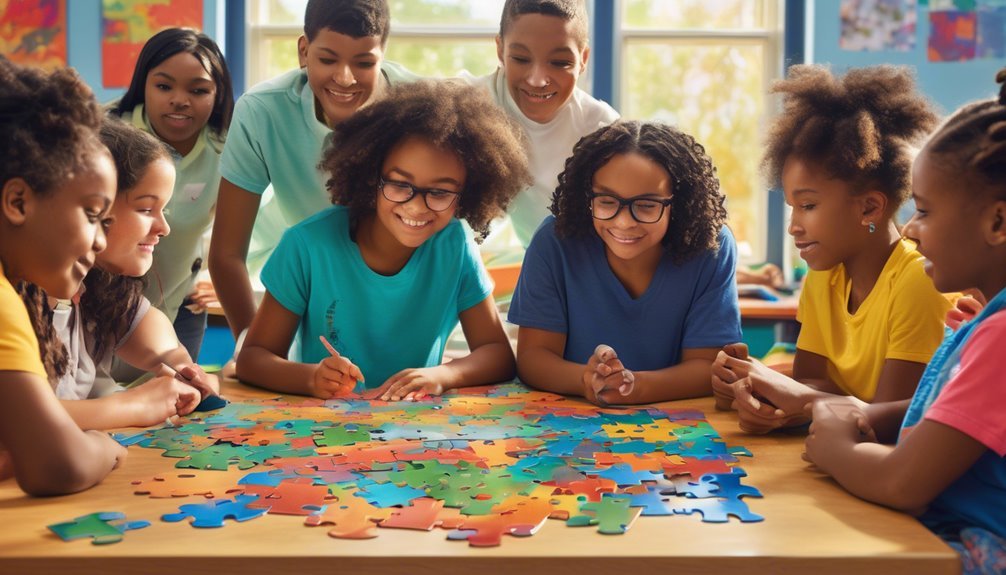
While you might think of puzzles as mere games, they actually play a crucial role in enhancing critical thinking skills in the classroom. When you tackle a puzzle, you’re not just filling in blanks or fitting pieces together; you’re engaging your brain in a dance of analysis and strategy.
Each challenge pushes you to think critically, evaluate options, and make decisions under pressure. You learn to identify patterns, draw connections, and anticipate outcomes. This process sharpens your reasoning and problem-solving abilities, which are essential in academic and real-world situations.
Fostering Collaboration and Teamwork
Puzzles not only sharpen your critical thinking but also foster collaboration and teamwork among students. When you work together to solve a puzzle, you engage in meaningful conversations, share ideas, and learn to value each other’s perspectives.
This collaborative effort creates a sense of belonging, making you feel connected and supported. As you navigate challenges, you develop trust and communication skills that are essential for successful teamwork.
Each piece you fit together symbolizes how individual contributions lead to a greater outcome. Embracing this shared experience not only enhances your social skills but also encourages you to celebrate each other’s successes.
Improving Problem-Solving Abilities
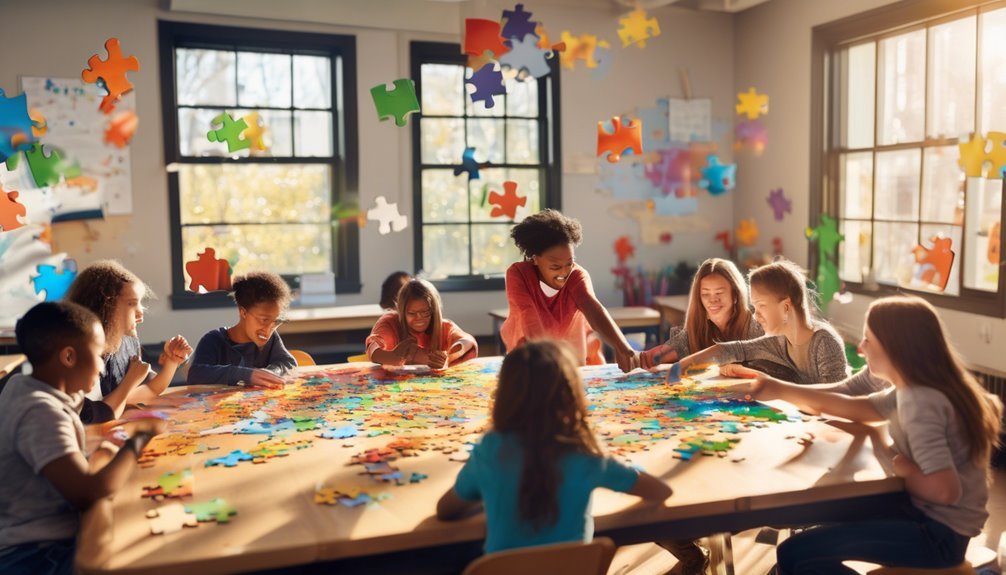
Working together on puzzles not only strengthens your teamwork skills but also sharpens your problem-solving abilities.
When you dive into a challenge with your peers, you learn to think critically and approach problems from different angles. Each piece of the puzzle represents a unique perspective, encouraging you to analyze, hypothesize, and adapt.

You’ll find that discussing strategies and sharing insights fosters a deeper understanding of the concepts at play. Every time you encounter a roadblock, you get the chance to brainstorm solutions collectively, which builds your resilience and confidence.
You’re not just solving a puzzle; you’re developing essential skills that apply beyond the classroom. Embrace these moments, and watch how they transform your approach to challenges in life.
Promoting Engagement and Motivation
When students feel engaged, their motivation skyrockets, transforming the way they approach learning. Puzzles can spark that engagement, drawing students into a world of curiosity and excitement.
Imagine them working together, sharing ideas, and celebrating small victories as they solve each challenge. This sense of collaboration not only deepens their understanding but also builds a community of learners.
You’ll notice how their enthusiasm for tackling complex problems grows, making the classroom a vibrant space for exploration. When students see learning as a fun game rather than a chore, they’re more likely to take risks and express themselves freely.
Incorporating puzzles fosters this dynamic environment, letting you witness their passion for discovery unfold right before your eyes.
Supporting Cognitive Development
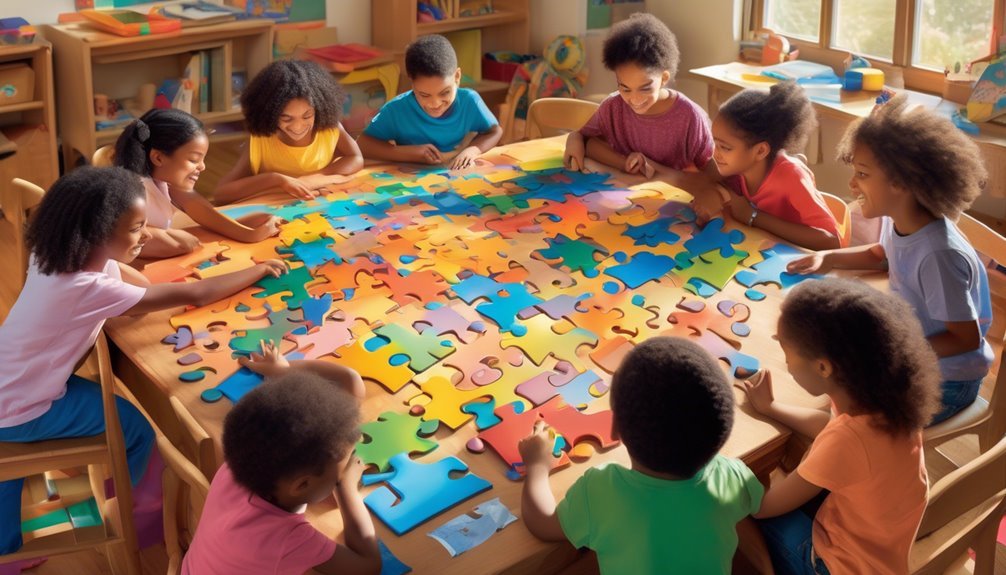
Engaging with puzzles not only excites students but also actively supports their cognitive development.
When you introduce puzzles in the classroom, you’re helping your students sharpen their minds in delightful ways.
Here’s how puzzles make a difference:
- Enhance problem-solving skills: Students learn to analyze challenges and devise strategies to overcome them.
- Boost memory retention: Working through puzzles reinforces information, making it stick in their minds longer.
- Improve critical thinking: Puzzles encourage students to evaluate options and make decisions, fostering independent thinking.
Encouraging Creativity and Innovation
Puzzles not only challenge students but also inspire them to think outside the box, fostering creativity and innovation in the classroom.
When you engage with puzzles, you tap into your imagination and explore various solutions. Each piece you fit together isn’t just about completion; it’s about seeing connections and patterns that mightn’t be obvious at first glance.
This playful approach encourages you to experiment, make mistakes, and ultimately discover new ideas. As you collaborate with classmates, you share insights and inspire each other, enhancing your creative problem-solving skills.
Embracing this process allows you to break free from conventional thinking, making learning not just an obligation but an exciting adventure.
In this vibrant environment, your creativity can truly flourish.
Facilitating Differentiated Learning
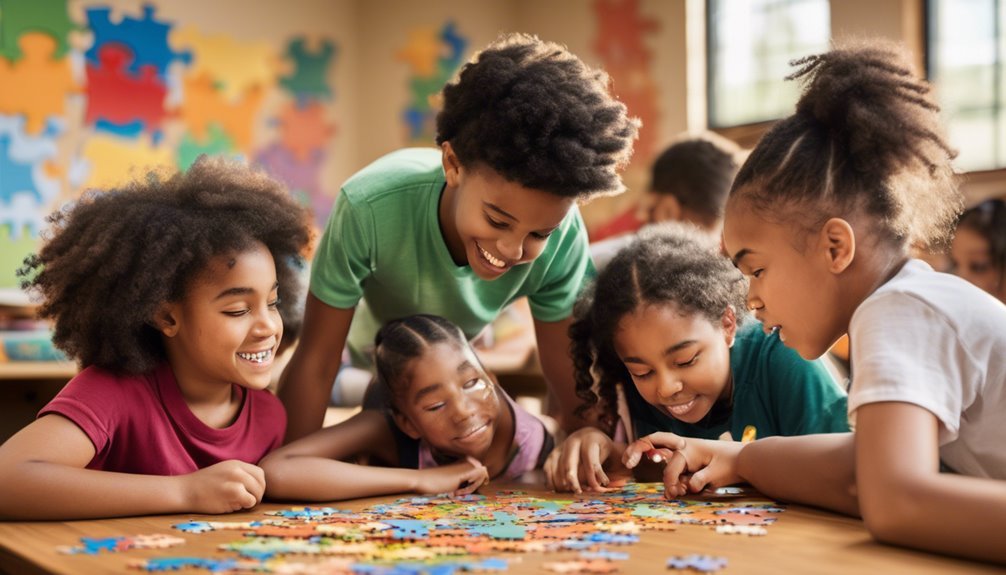
While every student has unique strengths and learning styles, facilitating differentiated learning can help each one thrive in the classroom.
By incorporating puzzles into your teaching, you can create an engaging environment where all students feel valued. Here’s how you can make a difference:
- Tailor challenges: Adapt puzzles based on skill level, allowing everyone to participate and succeed.
- Encourage collaboration: Let students work together, fostering peer support and diverse perspectives.
- Offer choices: Provide various puzzle types and topics, so students can explore what excites them.
Building Resilience and Perseverance
When students encounter challenges, they often have a chance to build resilience and perseverance. Puzzles present these challenges in a safe, engaging way. You might find yourself stuck on a tricky piece or a complex riddle, and that’s perfectly okay.
Each struggle teaches you to keep trying, to adjust your approach, and to embrace the process of learning. As you work through these obstacles, you develop a mindset that values effort over instant success.
Remember, every time you persist, you’re not just solving a puzzle; you’re building character. Celebrate those small victories, and recognize how they contribute to your growth.
In the end, the skills you cultivate today will serve you well beyond the classroom, shaping your future endeavors.
Frequently Asked Questions
What Types of Puzzles Are Most Effective for Classroom Learning?
You’ll find that crosswords, logic puzzles, and jigsaw puzzles engage your students’ minds effectively. They foster critical thinking, collaboration, and creativity, making learning enjoyable while reinforcing important concepts in a fun, interactive way.
How Can Teachers Integrate Puzzles Into Their Lesson Plans?
Imagine weaving a vibrant tapestry of learning; you can integrate puzzles by incorporating them as warm-ups, group activities, or assessments. These engaging elements spark curiosity and enhance collaboration, making lessons feel like a shared adventure.
Are There Specific Age Groups That Benefit More From Puzzles?
Absolutely! Younger kids often thrive on puzzles, as they spark curiosity and develop critical thinking. However, older students also benefit, enhancing problem-solving skills and collaboration. You’ll see engagement grow across all age groups when you incorporate them!
Do Puzzles Cater to Different Learning Styles?
Imagine piecing together vibrant images; puzzles naturally engage visual learners while tactile folks thrive on hands-on manipulation. You’ll find auditory learners benefit from discussing strategies, making puzzles a versatile tool for every unique learning style.
How Can Parents Support Puzzle-Based Learning at Home?
You can support puzzle-based learning at home by engaging in puzzles together, encouraging problem-solving discussions, and celebrating achievements. Make it fun and interactive; your involvement will spark curiosity and deepen their love for learning.
Conclusion
Incorporating puzzles into your classroom can transform learning into an engaging adventure. For instance, imagine a group of students collaborating to solve a complex escape room challenge based on historical events. As they discuss strategies and share ideas, they not only enhance their critical thinking but also build teamwork skills. By embracing puzzles, you create a dynamic environment where students thrive, fostering a love for learning that lasts beyond the classroom. So, why not give it a try?