
Vocabulary word searches for kids boost language skills, spark interest, and enhance critical thinking. They offer a fun way to engage students while reinforcing important vocabulary. By incorporating these puzzles into your lesson plans, you can promote collaboration and make learning more dynamic. But how do you choose the right words and create effective puzzles? Understanding these elements can make a significant difference in your classroom activities.
Benefits of Vocabulary Word Searches for Kids

Vocabulary word searches offer a fun and interactive way for kids to enhance their language skills. These puzzles not only entertain but also serve as effective engagement strategies.
As kids search for words, they actively participate in learning, boosting their motivation and interest in vocabulary. This hands-on approach aids cognitive development by encouraging critical thinking and problem-solving skills. Kids learn to recognize patterns and improve their spelling, all while having a good time.
Additionally, word searches can be tailored to various themes, making them versatile tools for reinforcing specific vocabulary. By integrating these enjoyable activities into learning, you can help children build a solid language foundation while keeping their enthusiasm high.
Incorporating Word Searches Into Lesson Plans
Word searches can be a fantastic addition to your lesson plans, making learning both enjoyable and effective. To integrate them seamlessly, consider using word search strategies that align with your curriculum goals.
Start by selecting themes related to your current topics, allowing students to reinforce vocabulary in a fun way. You can introduce these puzzles as warm-up activities or use them for review sessions.
Encourage students to work in pairs, fostering collaboration and discussion about the words they find. Additionally, you might create timed challenges to boost engagement.
How to Pick Vocabulary Words for Different Age Groups
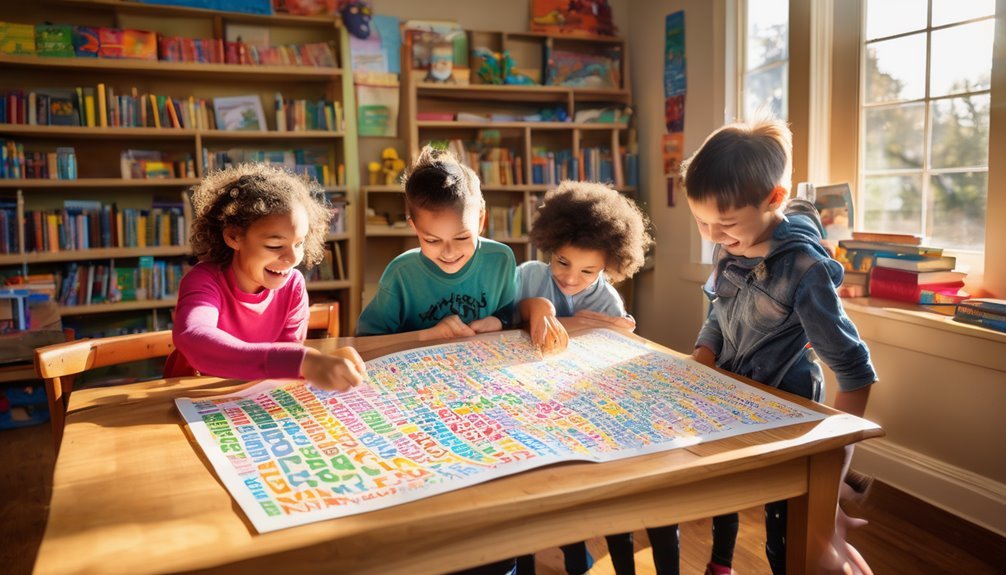
Choosing the right vocabulary words can feel like a puzzle in itself, especially when catering to different age groups. For younger kids, focus on simple, everyday words related to engaging themes like animals, colors, or food. This age-appropriate selection helps them connect with the material.
As children grow, introduce more complex words tied to their interests, such as science or technology topics. For tweens and teens, consider current events or popular culture, making the learning experience relatable and fun.
Always aim for words that spark curiosity and encourage exploration. By aligning vocabulary with their developmental stage and interests, you’ll create a more effective and enjoyable learning experience that keeps them engaged and motivated.
Step-by-Step Guide to Creating Fun Vocabulary Word Search Puzzles
Get ready to dive into the exciting world of creating your own vocabulary word search puzzles! First, choose a fun puzzle theme, like animals, space, or seasons. Next, pick 10-15 vocabulary words related to that theme.
Once you have your words, arrange them in a grid, mixing up orientations—horizontally, vertically, and diagonally.
Arrange your chosen words in a dynamic grid, mixing orientations—horizontally, vertically, and diagonally for added challenge!
Now, here’s a great word search strategy: make sure to leave enough space between words to keep it challenging. After placing your words, fill the empty spaces with random letters.
Finally, create a word bank so players know what to look for! With these steps, you’ll have an engaging puzzle that helps kids expand their vocabulary while having fun!
Creative Uses for Word Searches

While you might think of word searches as just a fun pastime, they offer a variety of creative uses that can enhance learning and engagement.
You can create themed puzzles around holidays, animals, or even favorite books, making them a fun way to explore creative themes. These puzzles can also be used in collaborative projects, where kids work together to solve or create their own word searches. This fosters teamwork and communication skills.
Plus, you can challenge your friends or family with your unique designs, turning learning into a friendly competition. By incorporating word searches into various subjects, you’ll not only make learning enjoyable but also memorable.
Resources for Free Vocabulary Word Search Printables
Finding free vocabulary word search printables has never been easier, thanks to a variety of online resources. You can explore numerous educational websites that offer engaging and fun printables designed for kids.
Websites like Education.com and Teachers Pay Teachers provide a treasure trove of printable resources tailored to different age groups and vocabulary themes. Simply search for “vocabulary word search” to discover a range of options.
Websites like Education.com and Teachers Pay Teachers offer a wealth of customizable vocabulary word search printables for all ages.
Plus, many sites allow you to customize the puzzles, making them even more suitable for your child’s learning needs. Don’t forget to check out Pinterest for creative ideas and links to free printables.
With just a few clicks, you’ll have exciting vocabulary challenges ready for your little ones!
Frequently Asked Questions
How Long Should a Vocabulary Word Search Take to Complete?
A vocabulary word search typically takes about 10 to 20 minutes to complete. This duration helps maintain your focus and retention. Enjoy the challenge, and don’t rush—take your time to find those words!
Can Word Searches Be Used for Language Learning?
Absolutely! Word searches boost language retention and vocabulary expansion. They make learning fun while helping you recognize words in context. Plus, the challenge keeps you engaged, reinforcing your skills effortlessly as you search.
What Age Is Best to Start Using Word Searches?
You can start using word searches around ages 6 to 7, as this aligns with cognitive development stages. At this age, kids enjoy puzzles, making it a fun and age-appropriate way to enhance their skills.
Are There Any Online Tools for Creating Word Searches?
Absolutely! You can find several online word search generators that let you create interactive puzzles easily. Just enter your words, customize the grid, and enjoy the fun. It’s a great way to engage learners!
How Can I Make Word Searches More Challenging?
To make word searches more challenging, try using creative themes like historical events or scientific terms. Adjust difficulty levels by increasing word length, adding diagonal placements, or hiding words in unexpected directions to keep it exciting!
Conclusion
Incorporating vocabulary word searches into your classroom can transform learning from a chore into a thrilling adventure. While some students may dread traditional study methods, word searches offer a playful escape that fuels curiosity. As they uncover words, they’re not just playing a game; they’re building skills that will serve them for a lifetime. So, embrace this engaging tool, and watch your students thrive in a vibrant learning environment where education and fun go hand in hand.