
You might find it interesting that many people discover their love for math through the right book at the right time. Math books that teach the basics can transform daunting concepts into manageable ideas. Whether you’re a beginner or looking to reinforce your skills, choosing the right resource is key. In this discussion, we’ll explore essential titles and strategies that can help you build a solid foundation in math. What’s the best fit for your learning style?
Essential Math Concepts for Beginners

Math can feel like a maze, but mastering essential concepts will help you navigate it with ease. One of the foundational skills you’ll want to develop is number sense. This includes understanding quantities, recognizing patterns, and grasping the relationships between numbers.
With a solid number sense, you’ll find problem solving becomes more intuitive. You can approach challenges with confidence, breaking them down into manageable parts.
Additionally, focusing on basic operations—addition, subtraction, multiplication, and division—will enhance your ability to tackle more complex problems later.
Top Math Books for Learning the Basics
When you’re ready to dive into the world of basic math, choosing the right books can make all the difference. Look for titles that focus on solidifying your basic math foundations.
Books like “Math Made Easy” and “The Everything Kids’ Math Puzzles Book” not only cover essential concepts but also include engaging math activities to keep you motivated. These resources break down topics like addition, subtraction, and simple geometry in a way that’s easy to grasp.
Additionally, consider “Math for Dummies” for a straightforward approach. By selecting the right materials, you’ll build confidence and skills, making your learning experience enjoyable and effective.
Fun Exercises That Reinforce Math Skills
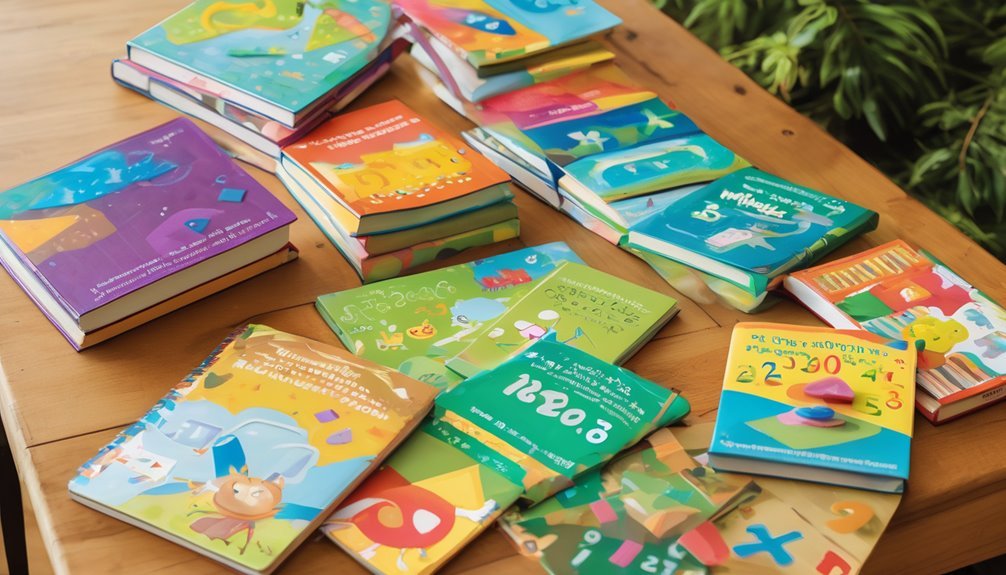
Explore engaging exercises that make reinforcing math skills both fun and effective. You’ll find that using interactive games and math puzzles can transform learning into an enjoyable experience.
Here are some exercises to consider:
- Math Bingo: Create bingo cards with math problems; players solve them to mark their cards.
- Puzzle Challenges: Use math puzzles to encourage critical thinking while solving problems in a playful way.
- Online Interactive Games: Explore websites that offer math games tailored to different skill levels, making practice feel less like work.
Choosing the Right Math Book?
How do you know which math book is right for you or your child? Start by considering your learning style. If you thrive on hands-on experience, look for books with interactive learning features, like puzzles or activities. These can make concepts stick better.
Next, explore different math book formats—some might be traditional textbooks, while others are workbooks or digital options. Each format has its strengths, so choose one that fits your needs.
Also, check for reviews or recommendations to gauge effectiveness. Finally, assess the book’s progression; it should build on concepts gradually.
Visual Learning in Math

Visual learning can transform the way you or your child grasp mathematical concepts. By incorporating visual aids and interactive tools, math becomes more engaging and easier to understand.
Here are a few ways visual learning can enhance your experience:
- Charts and Graphs: They help visualize data relationships and trends.
- Manipulatives: Physical objects like blocks or counters make abstract concepts tangible.
- Digital Tools: Apps and software offer interactive experiences that cater to different learning styles.
Using these methods, you’re not just memorizing; you’re seeing math in action.
This approach fosters deeper understanding and retention, making it easier to tackle more complex topics later on.
Embrace visual learning, and watch your confidence in math grow!
Best Workbooks for Hands-On Math Fun
Hands-on math workbooks can make learning feel like an adventure rather than a chore. These workbooks are packed with engaging hands-on activities that help you grasp fundamental concepts through real-world applications.
Hands-on math workbooks turn learning into an engaging adventure, making fundamental concepts come alive through real-world activities.
You’ll find interactive games that not only reinforce your skills but also spark your creativity. Look for titles that feature puzzles, challenges, and projects tailored to different age levels, ensuring you stay motivated as you learn.
Some popular options include “Math Made Fun” and “Creative Math Adventures,” both designed to make math enjoyable and accessible.
By incorporating these workbooks into your study routine, you’ll transform math into a playful experience that builds confidence and enthusiasm for learning.
Get ready to dive in and discover the joy of math!
Online Resources for Learning Math With Books

While traditional math books are invaluable, online resources can significantly enhance your learning experience. By combining the strengths of books with the interactivity of digital platforms, you can deepen your understanding of math concepts.
Here are some benefits of using online math platforms:
- Interactive Learning: Engage with exercises that adapt to your skill level.
- Supplemental Resources: Access videos and tutorials that clarify complex topics.
- Community Support: Join forums where you can ask questions and share insights.
These online tools not only complement your reading but also make learning more dynamic and enjoyable.
Reviews of Popular Beginner Math Books
When you’re starting your math journey, choosing the right beginner math books can make all the difference. Some books effectively address common math misconceptions while teaching beginner strategies. Look for engaging content that simplifies complex ideas.
Here’s a quick overview of popular beginner math books:
| Book Title | Key Features |
|---|---|
| “Math Made Easy” | Clear explanations, practice problems |
| “The Joy of x” | Real-world applications, relatable examples |
| “Math for Dummies” | Accessible language, covers basics |
| “The Math Curse” | Fun storytelling, problem-solving focus |
| “Khan Academy Kids” | Interactive approach, digital resources |
These selections can help you build a solid foundation in math, making learning enjoyable and effective.
Tips for Staying Motivated in Math

Staying motivated in math can be challenging, especially when concepts get tough. To help you push through, consider these effective strategies:
- Set realistic goals: Break down your learning into achievable milestones. This makes progress feel attainable and keeps you focused.
- Use positive reinforcement: Reward yourself for completing tasks or mastering concepts. This could be a small treat, a break, or even just some time to enjoy a favorite activity.
- Engage with others: Join study groups or seek help from friends. Discussing math with peers can make it more enjoyable and reinforce your understanding.
Building a Solid Math Foundation for Future Success
To build a solid math foundation for future success, it’s essential to grasp the core concepts early on. Focusing on foundational skills and early numeracy helps you become more confident and proficient in math. Here’s a simple guide to get started:
| Concept | Importance | Suggested Activity |
|---|---|---|
| Counting | Builds number sense | Count everyday items |
| Addition/Subtraction | Basic operations | Use flashcards |
| Shapes & Patterns | Visual recognition | Draw and identify shapes |
Frequently Asked Questions
How Do I Know if a Math Book Is Age-Appropriate?
To determine age suitability, check the recommended age range on the cover. Review content relevance by scanning chapter titles and examples. If they match your child’s level, it’s likely a good fit for them.
Can I Use Math Books for Self-Teaching Effectively?
Yes, you can use math books for self-teaching effectively. Incorporate self-assessment techniques and interactive exercises to reinforce concepts. This approach keeps you engaged, helping you track progress and deepen understanding as you learn independently.
What if My Child Struggles With Math Concepts?
If your child’s struggling with math concepts, address math anxiety by incorporating engaging learning strategies. Use hands-on activities, visual aids, and practice problems to build confidence and make learning enjoyable. You’ll see improvement together!
Are There Any Math Books Specifically for Visual Learners?
Absolutely! Look for math books filled with vibrant visuals and interactive exercises. These resources use visual aids to simplify concepts, making learning engaging and enjoyable for your child, helping them grasp math with confidence.
How Can I Track Progress While Using Math Books?
You can track progress by using progress metrics like test scores and completion rates. Implement tracking tools such as spreadsheets or apps to visualize your improvements and stay motivated as you advance through the material.
Conclusion
In your journey to master the basics of math, think of these books as your trusty compass, guiding you through the sometimes tricky terrain of numbers and equations. With the right resources, you can transform challenges into stepping stones for future success. Embrace the fun exercises and interactive puzzles that keep your learning lively and engaging. Remember, every great mathematician started where you are now—so keep pushing forward, and watch your confidence soar!