
Word searches are more than just a fun activity; they offer valuable benefits for early learners. As you watch children engage with these puzzles, you’ll notice how they enhance vocabulary and improve spelling. The focus required to find hidden words sharpens their concentration and cognitive skills. But there’s more to these puzzles than meets the eye. Let’s explore how word searches can transform the learning experience for young minds.
Key Takeaways
- Word searches enhance vocabulary retention by connecting letters to meanings, helping early learners engage with new terms.
- Engaging in word searches sharpens spelling skills, reinforcing correct spelling patterns for improved writing abilities.
- Completing puzzles stimulates brain activity, enhancing cognitive functions like problem-solving and memory retention.
- Word searches improve attention and focus, encouraging sustained concentration and reducing distractions during learning tasks.
- These activities foster a love for language, making vocabulary acquisition enjoyable and encouraging rich conversations among early learners.
Enhancing Vocabulary Skills

As you engage with word searches, you’ll discover that they’re not just fun; they’re also powerful tools for enhancing vocabulary skills. Each time you seek out hidden words, you’re actively connecting letters to meanings, allowing new terms to seep into your memory.
It’s like a cozy conversation with language, where you become familiar with words you mightn’t have encountered before. With every completed puzzle, you’re expanding your lexicon effortlessly. Plus, the thrill of finding a word reinforces your understanding, deepening your relationship with language.
Embrace this playful learning experience; it invites curiosity and nurtures your love for words. So grab a pencil, dive into those grids, and let your vocabulary bloom. You’ll be surprised at how much you grow!
Improving Spelling Proficiency
While you search for words in a puzzle, you’re not just playing a game; you’re also sharpening your spelling skills. Each time you spot a word, you engage with its spelling, reinforcing how letters come together. This process helps you remember the correct arrangement of letters, making it easier to spell those words later on.
As you focus on finding hidden words, you’re also training your brain to recognize patterns in spelling. This is especially beneficial for early learners, as it builds confidence in their writing abilities.
Plus, the excitement of solving puzzles keeps you motivated to practice. So, embrace those word searches—they’re a fun way to improve your spelling proficiency without even realizing it!
Boosting Cognitive Function

Word searches don’t just enhance spelling skills; they also play a significant role in boosting cognitive function. When you engage in these puzzles, you’re not just having fun—you’re stimulating your brain!
Here are three ways word searches can benefit cognitive development:
- Problem-Solving: You’ll learn to think critically as you strategize how to locate words efficiently.
- Memory Enhancement: Searching for words reinforces your memory, helping you retain vocabulary more effectively.
- Pattern Recognition: Your brain becomes adept at recognizing patterns, improving overall cognitive agility.
Strengthening Attention and Focus
Engaging in word searches sharpens your attention and focus, making them an excellent tool for early learners.
As you dive into each puzzle, you’ll notice how your mind tunes in more closely to the task at hand. Searching for letters and words encourages you to concentrate, blocking out distractions that might otherwise interrupt your flow.
This focused activity not only makes learning fun but also helps you build the habit of sustained attention. You’ll find that the more you practice, the better you become at keeping your mind on track.
Plus, it’s rewarding to see your progress as you tackle more challenging puzzles. So, grab a word search and watch your focus grow!
Encouraging Critical Thinking
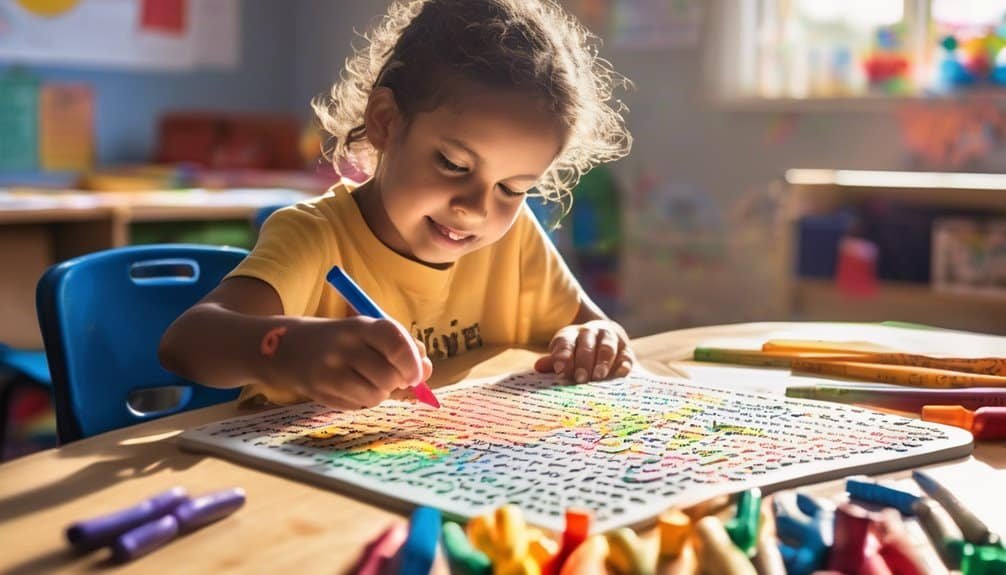
As you tackle word searches, you’ll discover how they ignite critical thinking skills in early learners. These puzzles challenge children to think critically as they search for words and make connections.
Here are three ways word searches encourage this vital skill:
- Pattern Recognition: Kids learn to identify patterns in letters, sharpening their analytical skills.
- Problem Solving: They develop strategies to find words, fostering a sense of accomplishment when they succeed.
- Vocabulary Building: Searching for words helps them understand context, enhancing their comprehension and critical thinking.
Fostering a Love for Language
While exploring the world of word searches, you’ll likely find that they can spark a genuine love for language in early learners. These engaging puzzles introduce children to new vocabulary in a fun and interactive way. As they search for words, they’ll discover the beauty of language, igniting curiosity and enthusiasm.
You’ll notice their excitement as they uncover hidden words, turning the activity into a delightful adventure. Sharing word searches together can create precious bonding moments. You can discuss the meanings of words, encouraging rich conversations that strengthen their language skills.
Supporting Memory Retention

Not only do word searches provide a fun activity, but they also play a crucial role in supporting memory retention for early learners. As you engage with these puzzles, you help strengthen your child’s ability to recall information.
Here are three key ways word searches enhance memory:
- Reinforcement of Vocabulary: When your child searches for words, they repeatedly encounter and recognize new vocabulary, solidifying their understanding.
- Visual Memory: The act of finding words visually helps create mental images, making it easier for your child to remember the words later.
- Focus and Concentration: Completing a word search encourages your child to concentrate, improving their overall attention span and memory skills.
Promoting Social Interaction
Word searches can be a fantastic way to encourage social interaction among early learners. When you gather kids around a table, they can work together, sharing ideas and strategies.
As they search for words, they’ll giggle and chat, forming connections that deepen friendships. You’ll notice how they cheer each other on, celebrating small victories together. This collaborative effort fosters teamwork, teaching them the value of cooperation.
Plus, as they discuss the words they find, they’re not just practicing vocabulary; they’re building communication skills too. By making word searches a group activity, you’re creating a warm environment where every child feels included and valued.
It’s beautiful to watch them learn not just from the puzzles, but from each other.
Making Learning Fun

As kids bond over word searches, they also discover that learning can be enjoyable. The thrill of finding hidden words sparks excitement and curiosity, turning education into a fun game.
Here are three reasons why word searches make learning delightful:
- Engagement: Kids feel involved and eager to participate, making them more invested in their learning journey.
- Creativity: Searching for words encourages imaginative thinking, allowing kids to connect words with pictures and stories in their minds.
- Social Play: Completing word searches together fosters teamwork and laughter, creating joyful memories that make learning special.
Building Confidence in Reading
When kids tackle word searches, they boost their reading confidence without even realizing it. Each time they find a word, they’re not just playing; they’re building essential skills. This fun activity engages them in recognizing letters and words, reinforcing their understanding of language. As they search, they learn to focus and develop persistence.
Here’s how word searches can help your child:
| Skill Developed | How It Helps | Confidence Boost |
|---|---|---|
| Letter Recognition | Identifying letters | Feeling accomplished |
| Vocabulary Expansion | Discovering new words | Building language skills |
| Problem-Solving | Finding solutions | Overcoming challenges |
Encouraging them to complete word searches can make reading feel less daunting and more rewarding.
Frequently Asked Questions
How Can Word Searches Be Adapted for Different Age Groups?
You can adapt word searches by adjusting the word list difficulty, using images for younger kids, or incorporating themes for older groups. Tailoring the experience keeps everyone engaged and makes learning enjoyable and effective.
Are There Any Digital Tools for Creating Custom Word Searches?
Absolutely! You can use platforms like WordSearchLabs or Discovery Education to create custom word searches. They’re user-friendly and let you personalize puzzles, making them fun for you and anyone you share them with. Enjoy creating!
What Themes Can Be Used for Word Search Puzzles?
You can choose themes like animals, seasons, holidays, or even your favorite movies. Each theme adds a personal touch, making the search more engaging. Just pick what resonates with you and enjoy the challenge!
How Often Should Children Do Word Searches for Best Results?
You might wonder how often your child should tackle word searches. Aim for a few times a week—just enough to spark curiosity and build skills without overwhelming. Balance is key in nurturing their love for learning.
Can Word Searches Be Used in Bilingual Education Settings?
Absolutely, you can use word searches in bilingual education. They’ll engage your students, helping them reinforce vocabulary in both languages. Plus, it adds a fun element to learning, making it enjoyable and effective for everyone involved.
Conclusion
Incorporating word searches into your child’s learning routine is like planting seeds in a garden; with time and care, they’ll blossom into a rich vocabulary and strong spelling skills. Just as watering those seeds nurtures growth, each puzzle your child completes strengthens their attention and critical thinking. So, let them dig through those letters and uncover hidden words—it’s not just fun; it’s a powerful way to cultivate a love for language that will flourish for years to come!