
Play gives children a natural way to practice words, sounds, and ideas without pressure. A block tower can become a lesson in colors and size, while a pretend tea party opens the door to new phrases and turn-taking. Songs, simple rhymes, and daily routines add more chances to talk. When language feels like part of play, children often surprise adults with what they start to say next.
Key Takeaways
- Use interactive play to encourage talking, listening, and responding.
- Try pretend play to introduce new vocabulary through roles, props, and actions.
- Sing songs, rhymes, and action games to build rhythm, sound awareness, and speech.
- Turn daily routines into language moments by naming objects, feelings, colors, and textures.
- Use sensory and puzzle games to strengthen listening, word choice, and memory.
Why Play Builds Language Skills
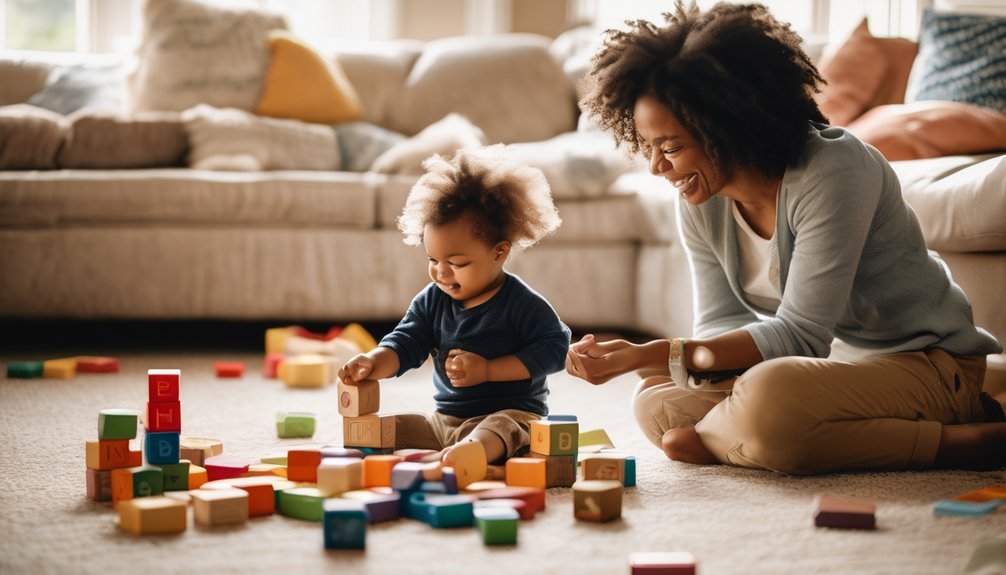
Play naturally invites children to talk, listen, and respond, turning everyday fun into a rich language-learning experience. Through interactive games, children practice social interactions in gentle, memorable ways, and cooperative play encourages turn-taking, waiting, and clear expression.
Role reversal lets them try new voices and perspectives, while language puzzles give small challenges that sharpen listening and word choice. Sensory activities add texture to meaning, helping words connect with action, movement, and feeling.
Creative expression blossoms when children invent characters, describe discoveries, and shape ideas aloud. Narrative building grows as they sequence events, retell moments, and link thoughts with confidence.
In these playful moments, language becomes lived, shared, and warmly reinforced, allowing skills to deepen naturally through connection, curiosity, and delight.
Create Easy Language Moments
Language growth often begins in small, easy moments that feel natural rather than forced. A gentle routine can invite language games into daily life, turning ordinary pauses into interactive challenges.
Vocabulary cards may be placed near a cozy table, while word puzzles encourage noticing letters and meanings together. Sensory activities, such as touching textured objects and naming them softly, keep attention warm and curious.
Sound matching can be played with claps, bells, or spoken rhymes, helping ears listen closely. Group storytelling adds shared rhythm, and role reversal lets one child lead while another responds, building confidence without pressure.
Each brief exchange should feel tender, playful, and safe, giving language room to bloom in tiny, memorable steps.
Use Pretend Play to Build Vocabulary
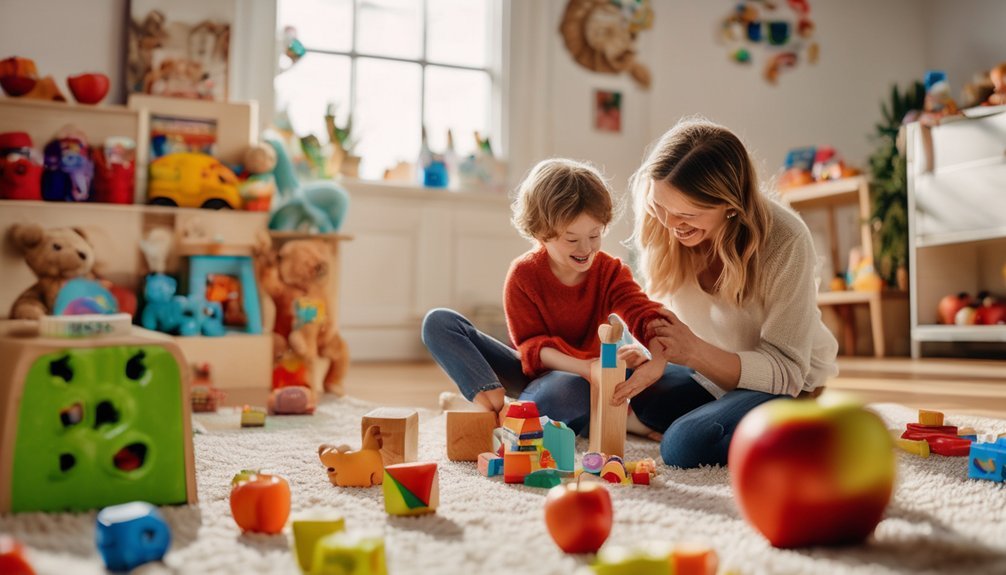
A child stepping into pretend play can gather new words almost effortlessly, because each invented role invites names for actions, objects, and feelings. In role playing scenarios, a shopkeeper may “sell,” a doctor may “examine,” and a traveler may “search,” each verb becoming memorable through use.
Simple props, such as a spoon, scarf, or box, can become rich labels for new ideas. Gentle adults can join the scene with imaginative dialogue, repeating fresh words naturally and offering one or two more when the moment feels warm.
This keeps language close, alive, and safe. When play feels cherished, vocabulary grows without pressure, and the child begins to reach for words with confidence, curiosity, and delight.
Add Songs, Rhymes, and Movement
Songs, rhymes, and movement give children another lively way to hear and use words. During musical games, adults can invite sing along sessions that spotlight nursery rhymes, movement songs, and action verses. Gentle rhythmic activities help little bodies feel sound patterns while words are repeated with warm predictability.
| Activity | Language Focus | Joyful Action |
|---|---|---|
| Nursery rhymes | New words | Clap softly |
| Movement songs | Repetition | March together |
| Action verses | Sound patterns | Reach and spin |
Short dance parties keep learning playful and close, while simple gestures make meaning easier to remember. When children sing, move, and repeat, they practice listening, timing, and clear speech in a comforting way. This shared rhythm can feel tender, familiar, and delightfully alive.
Try Storytelling and Picture Talk
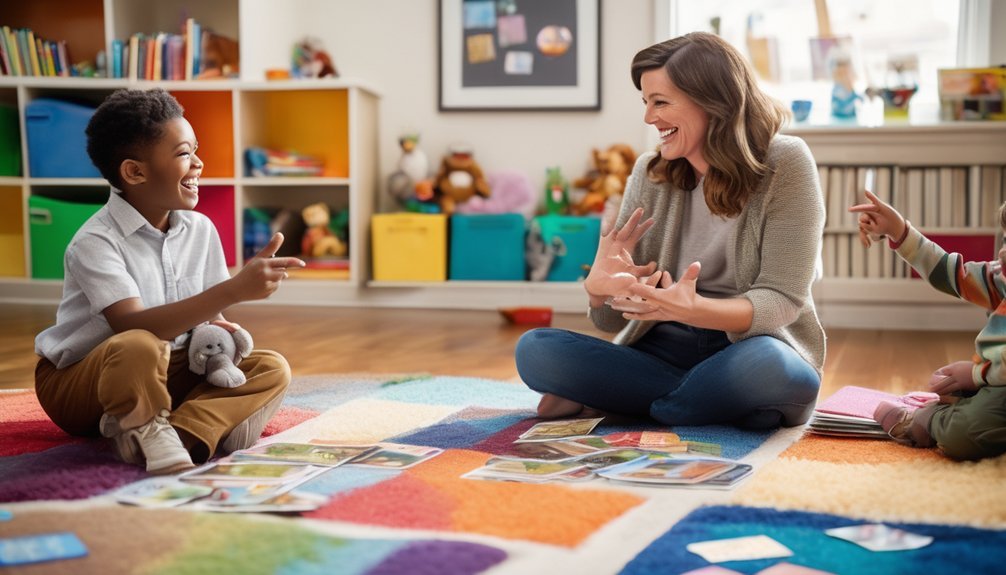
Storytelling and picture talk invite children to notice details, name familiar things, and connect words with meaning. A caregiver can use simple storytelling techniques, pausing for children to guess what happens next or repeat a favorite phrase.
Picture prompts, from books or family photos, make speaking feel gentle and inviting. The adult may ask who is shown, what is happening, and how each character might feel, giving time for small voices to grow.
When a child answers with one word or a short sentence, that effort deserves warm attention. Over time, playful stories and pictures help language bloom, building confidence, curiosity, and a cozy habit of sharing thoughts.
Turn Everyday Routines Into Conversation
Language learning does not need to wait for special activities; it can grow in the middle of daily life. During mealtime chatter, a child can name colors, tastes, and textures, while a caregiver gently expands each answer.
Bath time banter invites simple questions about splashes, bubbles, and body parts, making words feel warm and familiar. A grocery game can turn errand excursions into a playful hunt for apples, milk, or carrots, with each find becoming a tiny victory.
Chore conversations give language purpose as a child sorts socks or wipes tables. Car ride dialogues open space for noticing signs, sounds, and passing scenes.
Even bedtime stories can be echoed in soft, loving talk, helping familiar phrases settle in the heart.
Keep Language Play Going Daily
A steady rhythm of playful language helps children grow more confident with words. Keeping language games woven into daily interactions makes playful learning feel natural, like a gentle spark that returns each day.
Short word challenges at breakfast, in the car, or before bed invite social engagement without pressure. A caregiver can name objects, ask silly questions, or swap rhymes, letting the child answer in their own sweet way.
Repetition matters, yet variety keeps the game bright. Small moments of creative expression, such as inventing stories or acting out animals, deepen memory and joy.
When language play happens daily, children begin to expect it, trust it, and grow alongside it, one charming exchange at a time.
Frequently Asked Questions
What Age Should Children Start Language Play?
Children should start language play from infancy, when early exposure and playful interactions naturally support listening, babbling, and bonding. Gentle songs, touch, and shared sounds can nurture language beautifully, lovingly, and joyfully.
How Much Daily Play Improves Language Skills?
Daily play often meaningfully boosts language development, especially when shared and responsive; even 15 to 30 minutes can help. Gentle games, chatting, and pretend play invite words to bloom, warmly and playfully.
Which Toys Best Encourage Early Language Growth?
Soft books, animal figures, pretend-kitchen sets, and picture blocks best encourage early language growth; they invite building vocabulary, interactive storytelling, and turn-taking. A child can babble, label, and connect words while feeling warmly engaged and secure.
Can Bilingual Children Benefit From Language Play?
Yes—bilingual children often benefit from language play. It can strengthen bilingual advantages, deepen cultural connections, and make language mixing feel natural. Through playful interactions, they practice words warmly, confidently, and joyfully together.
How Do I Know if Play Is Helping?
Play helps when playful interactions spark more words, clearer turns, and eager imitation. Creative storytelling, laughter, and longer attention often signal growth. If the child returns gladly, language is likely blooming beautifully.
Conclusion
In the end, play gives children a natural path to stronger language skills. Through pretend games, songs, stories, and everyday routines, words begin to stick like glue. Small moments, shared often, can turn into big growth over time. When adults keep conversation light, warm, and playful, children stay engaged and eager to join in. With a little daily practice, language learning can become a fun part of life, not a chore.