You're keen to reclaim your pre-baby body, and while it's an exciting goal, it's vital to approach it with care. Start by understanding the changes your body has undergone and set realistic goals. Incorporate gentle exercises and prioritize your nutrition—these are foundational steps. But what about when you're ready to take things up a notch? There's a strategic way to intensify your efforts without compromising your health. Curious about the optimal path to enhance your fitness while ensuring you don't overdo it? Let's explore how you can safely elevate your postpartum fitness journey.
Key Takeaways
- Consult healthcare providers to create a personalized recovery and fitness plan.
- Set realistic goals and celebrate each milestone to maintain motivation.
- Prioritize a balanced diet and proper hydration for optimal recovery.
- Incorporate gentle exercises, like yoga and walking, gradually increasing intensity.
- Manage stress and fatigue with mindfulness practices and adequate rest.
Understand Postpartum Body Changes
Understanding postpartum body changes is crucial as you navigate the journey back to your pre-baby physique. Hormonal changes play a significant role in how your body reacts after childbirth. Estrogen and progesterone levels drop dramatically, which can affect your mood, skin, and overall body image.
It's important to recognize that these fluctuations are normal and temporary. Your body image might also shift as you adapt to the changes in your physical appearance. It's common to feel a range of emotions—from joy at your new baby to frustration with your body's pace of recovery.
Remember, each person's body responds differently to postpartum changes, and what you're experiencing is a normal part of the recovery process. Being patient with yourself and understanding the scientific basis of these changes can help you foster a positive outlook.
Acknowledge the incredible work your body has done in bringing new life into the world. As you adjust, focus on the strength and resilience you've shown. This period requires not just physical healing, but also compassion and support for yourself as you transition through this transformative phase.
Set Realistic Goals and Timelines
After acknowledging the shifts in your body postpartum, it's vital to set realistic goals and timelines for recovery. Engaging in goal setting and timeline planning is not just about reclaiming your pre-baby body; it's about nurturing your health in a supportive, gradual manner.
Understand that every woman's journey is unique, and your pace will not mirror someone else's. It's important to consult with your healthcare provider to tailor a plan that suits your specific needs. Start with small, manageable goals that are achievable and build up from there. Here's a simple guide to help you begin:
| Goal Type | Example |
|---|---|
| Short-Term Goals | Walk 10 minutes daily |
| Medium-Term Goals | Complete a postpartum exercise class by 3 months |
| Long-Term Goals | Return to pre-pregnancy fitness level by 12 months |
Prioritize Sleep and Rest

Prioritizing sleep and rest is crucial for your postpartum recovery. It's not just about squeezing in a few hours whenever you can; it's about enhancing the quality of sleep and ensuring you get enough.
Establishing good sleep hygiene can significantly aid this process. Set a consistent bedtime and wake-up time, even if it feels challenging initially, and create a calming pre-sleep routine that might include dimming lights and avoiding screen time.
It's also vital to recognize the role of power naps. While nighttime sleep is essential, short naps during the day can help you manage fatigue. Aim for 20-30 minute naps to avoid feeling groggier, which can occur with longer nap times.
This might seem like a small addition, but it can make a big difference in how you feel.
Start With Gentle Exercises
Once you've established a restful routine, gently ease into physical activity to help reclaim your pre-baby body.
Start with gentle yoga, which is a wonderful way to reintroduce movement. Gentle yoga focuses on stretching and strengthening your muscles softly, which can be especially beneficial if you're healing from childbirth. It also helps to improve your flexibility and reduce stress, supporting your overall well-being.
Additionally, consider taking postpartum walks. Walking is a low-impact exercise that you can easily integrate into your day.
Whether it's a short walk around the block or a longer stroll in the park, the fresh air and movement will do wonders for your body and mind. It's also a great opportunity for you to have some quiet time or connect with other moms.
Incorporate Strength Training
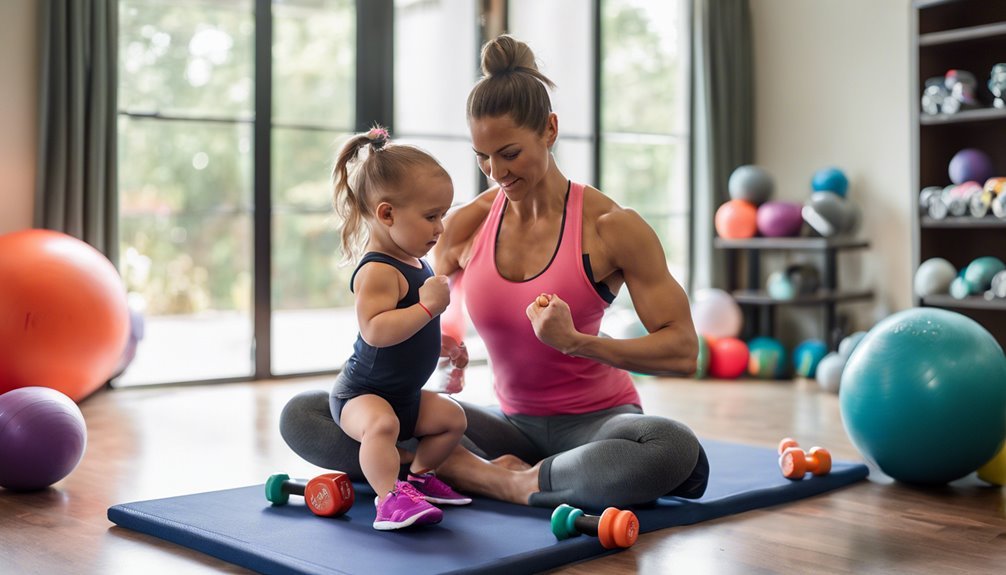
As you grow more comfortable with gentle exercises, it's crucial to start incorporating strength training into your fitness routine. Strength training benefits your overall health, not just your physical appearance. It can significantly improve muscle tone, boost your metabolism, and increase your energy levels, making it easier for you to handle the demands of motherhood.
Here are some key points to guide you:
- Start Slowly: Begin with light weights and gradually increase the intensity as your body adapts.
- Focus on Form: Proper weight lifting techniques are essential to avoid injuries. Consider consulting a trainer to ensure you're performing exercises correctly.
- Include Variety: Mix different types of strength training exercises to engage all muscle groups and prevent boredom.
- Be Consistent: Aim for at least two strength training sessions per week to see noticeable improvements.
- Listen to Your Body: Pay attention to how your body feels. If something hurts, stop and adjust your approach.
Focus on Nutritious Eating
While incorporating strength training into your routine helps rebuild muscle and boost metabolism, balancing it with nutritious eating is key to effectively reclaim your pre-baby body. Prioritizing a balanced diet rich in superfood choices will maximize your energy and recovery. Let's dive into how you can tailor your nutrition for optimal results.
Planning is your best ally. Start with meal planning and food journaling to keep track of what you're eating and ensure you're getting the right nutrient density. This process helps you maintain portion control and avoid the temptation of unhealthy snacks. Instead, stock up on healthy snacks that are easy to prepare and consume.
Mindful eating is another crucial aspect. It involves being present while you eat, savoring each bite, and listening to your body's hunger and fullness signals. This practice helps you enjoy your meals without overeating.
Here's a simple table to help you organize a week of balanced meals:

| Day | Meal Type | Example |
|---|---|---|
| Monday | Breakfast | Greek yogurt with mixed berries |
| Tuesday | Lunch | Quinoa salad with chickpeas |
| Wednesday | Dinner | Grilled salmon with asparagus |
| Thursday | Snack | Almonds and a small apple |
| Friday | Mindful Meal | Whole wheat pasta with vegetables |
Stay Hydrated

Nearly everyone can benefit from drinking more water, especially if you're recovering from childbirth and aiming to reclaim your pre-baby body. Proper hydration is crucial as it aids in the restoration and function of all your body systems. Increasing your water intake can expedite your recovery and help you feel rejuvenated more quickly.
Understanding the hydration benefits is key. Water helps to:
- Regulate body temperature: Keeping cool and avoiding overheating is essential, especially when you're physically active.
- Improve skin health: Adequate hydration can enhance skin elasticity, which may have been stressed during pregnancy.
- Boost metabolism: Water is vital for metabolizing stored fats and carbohydrates, supporting your weight loss goals.
- Enhance digestion: Water aids in digestion and can help prevent constipation, a common postpartum concern.
- Detoxify the body: It helps flush out toxins and waste products, promoting kidney health and overall wellness.
Aim for about 8-10 glasses a day, though your needs might vary based on activity level and other factors.
Remember, if you're breastfeeding, you might need additional fluids to maintain milk production and ensure optimal hydration for both you and your baby.
Drink up and give your body the support it needs!
Manage Stress Effectively
Why does managing stress matter when you're trying to reclaim your pre-baby body? Stress can significantly hinder your physical recovery and affect your ability to lose weight.
High stress levels can cause your body to hold onto fat, especially around your midsection, and can disrupt your sleep patterns, further complicating your fitness goals.
Incorporating mindfulness techniques is a powerful way to manage stress. These practices help you stay present and grounded, reducing feelings of overwhelm.
You might start with just five minutes of meditation each day or try some gentle yoga stretches that emphasize deep breathing. Both activities aren't only beneficial for stress reduction but also enhance your overall well-being.
Effective time management plays a crucial role in stress reduction. Planning and organizing your day can help you feel less hurried and more in control, which decreases stress.
Try creating a daily schedule that includes time for meal planning, exercise, and relaxation. Remember, it's essential to be realistic and flexible with your plans to avoid additional stress.
Seek Professional Guidance

Consulting with professionals such as nutritionists, personal trainers, or postnatal fitness experts can significantly enhance your journey to reclaim your pre-baby body.
These experts offer tailored advice and support that's crucial during this transformative period.
- Nutrition Counseling: A nutritionist can provide you with customized meal plans that cater to your postpartum nutritional needs, helping you regain strength and maintain energy.
- Personal Trainers: They design exercise programs that fit your current physical condition, ensuring you progress safely towards your fitness goals.
- Postpartum Specialists: These professionals specialize in women's postnatal health, helping you understand and manage bodily changes and recovery processes.
- Fitness Assessments: Regular assessments can track your progress and modify your exercise plan as needed, making your workouts effective and safe.
- Mental Health Support: Prioritizing your mental well-being is as crucial as physical health; wellness coaching can guide you in addressing any psychological challenges, promoting an overall sense of body positivity.
Join Support Groups
After consulting with professionals, consider joining a support group to continue your journey toward reclaiming your pre-baby body. Engaging with peer support can significantly enhance your efforts.
It's not just about sharing tips and experiences; it's about building relationships with those who truly understand your struggles and successes.
Online communities are particularly beneficial. They offer flexibility, allowing you to connect with others on your own schedule, which is crucial when you're balancing the demands of a newborn.
These platforms provide a wealth of resources and collective wisdom that can guide you in making informed decisions about diet, exercise, and self-care.
When you join a support group, you're tapping into a network of encouragement and accountability.
Studies show that individuals who participate in such groups tend to stick to their health goals more consistently. By sharing your goals and progress, you can receive real-time feedback and motivation from peers who are on similar paths.
Celebrate Small Victories

As you navigate your journey to reclaim your pre-baby body, it's crucial to celebrate each small victory along the way. Each step forward, no matter how minor it may seem, is an important part of your progress.
Celebrating these milestones helps to maintain your motivation and acknowledges the hard work you've put into your recovery and fitness.
When you celebrate milestones, you not only acknowledge progress but also build a positive mindset that can propel you further.
Here's how you can mark these small yet significant victories:
- Track Your Progress: Keep a journal or app that records your fitness levels, nutritional habits, and emotional well-being.
- Set Mini Goals: Break your main goal into smaller, achievable targets and celebrate when you hit each one.
- Reward Yourself: Treat yourself to something nice for each achievement, whether it's a spa day or a new book.
- Share Your Success: Let friends or members in your support group know about your achievements.
- Reflect and Reset: Take time to reflect on what you've accomplished and set new mini goals to keep the momentum.
Embrace Your New Body
Understanding that your body may have changed after childbirth is crucial to embracing your new physique. It's important to recognize that these changes are normal and often a testament to the incredible journey your body has undergone.
Embracing body positivity isn't just about acceptance; it's about celebrating the new strengths and capabilities you possess. Body positivity is deeply rooted in self-love. Start by shifting your focus from what you think you need to "fix" to appreciating the functionality and resilience of your body.
Remember, every stretch mark, curve, or change in your body tells a story of creation and motherhood—a narrative worth honoring and respecting. Set realistic expectations for yourself. It's not just about bouncing back to your pre-baby body; it's about building a healthy, strong body that serves you well in your new role as a mother.
Engage in activities that you enjoy and that make you feel good about yourself. Whether it's yoga, walking, or a dance class, find joy in movement as it contributes to both physical health and mental well-being.
Most importantly, surround yourself with a supportive community that uplifts and encourages your journey towards self-love and body acceptance. You're not alone in this transition, and embracing your new body with kindness can profoundly impact your overall happiness and satisfaction.
Frequently Asked Questions
Can Breastfeeding Help in Losing Postpartum Weight?
Yes, breastfeeding can indeed help you lose postpartum weight.
When you breastfeed, your body burns extra calories to produce milk, which can contribute to weight loss. This process increases your daily calorie expenditure significantly.
Are Postpartum Belly Wraps Effective for Recovery?
Navigating the labyrinth of postpartum recovery, you might wonder if belly wraps are a beacon of support.
Belly wraps do offer postpartum support by stabilizing your abdomen and improving posture. Their effectiveness, backed by anecdotal evidence rather than robust scientific studies, varies.
While they're not a magic solution, many new mothers find them helpful for physical comfort and support during their journey back to strength.
Always consult your healthcare provider to tailor advice to your specific needs.
How Long After Childbirth Can I Swim?
You can typically start swimming after you've received postpartum clearance from your healthcare provider, usually around 6-8 weeks if you'd an uncomplicated vaginal delivery.
For cesarean sections, it might take longer.
When you do begin, consider swimming precautions like starting slowly and listening to your body.
This form of postpartum exercise is excellent for easing back into fitness, as it's gentle yet effective, helping you regain strength without undue strain on your body.
Is It Safe to Diet While Breastfeeding?
Navigating the waters of dieting while breastfeeding can feel tricky.
It's crucial to balance your nutritional intake to support both your health and your baby's. Dieting tips often suggest focusing on whole foods and gradual weight loss.
Remember, breastfeeding benefits extend beyond bonding, providing vital nutrients to your baby.
Aim for a methodical, nourishing approach rather than restrictive eating, ensuring you both get the essential nutrients needed to thrive.
Can Herbal Supplements Promote Postpartum Weight Loss?
You might wonder if herbal supplements can aid in postpartum weight loss.
While some herbs are touted for their efficacy, it's crucial to prioritize safety and nutritional balance.
Always consult your healthcare provider before starting any supplements, as they need to complement your postpartum nutrition without harm.
Remember, weight loss can take time, and your body's nourishment is vital, especially if you're breastfeeding.
Let's ensure your health remains your top priority.
Conclusion
As you journey back to your pre-baby body, think of yourself as a gardener—patiently nurturing and tending your garden to bloom. Embrace each small victory like the first sprouts of spring, and remember that growth takes time and care. By setting realistic goals, prioritizing rest, and seeking support, you're laying down roots for lasting health and wellness. Celebrate your body's capabilities and the beautiful transformation it's undergone, as you continue to flourish in your own time.