
While some artists thrive in structured environments, others find freedom in blank pages. A ‘Learn to Draw’ sketchbook can bridge that gap, offering both guidance and space for creativity. By choosing the right sketchbook, you can enhance your practice and track your progress. Curious about the key features that can elevate your drawing experience? Let’s explore how these tools can transform your artistic journey.
Why Choose a ‘Learn to Draw’ Sketchbook?

Why should you choose a ‘Learn to Draw’ sketchbook? This type of sketchbook is designed to ignite your artistic motivation and enhance your drawing skills.
With its blank pages, it offers you the creative freedom to experiment without constraints. You can doodle, sketch, and explore different techniques at your own pace.
The structure of a ‘Learn to Draw’ sketchbook often includes prompts and exercises that guide you through the learning process, making it easier to track your progress.
Plus, having a dedicated space for your drawings encourages you to practice regularly, helping you build confidence.
Key Features to Look For in a Sketchbook
| Feature | Considerations |
|---|---|
| Paper Texture | Smooth vs. Rough |
| Binding Type | Spiral vs. Stitched |
| Portability | Lightweight vs. Heavy |
| Size Preferences | Compact vs. Large |
| Price | Budget-friendly vs. Premium |
What Makes Drawing Prompts Work Well?

Drawing prompts can ignite your creativity and help you overcome artistic blocks. To make the most of these prompts, consider the following elements that enhance their effectiveness:
- Specific Themes: Choose prompts with clear themes, like “a rainy day” or “a bustling marketplace,” to spark focused creative inspiration.
- Prompt Variety: Incorporate a mix of styles and subjects, such as animals, landscapes, or abstract concepts, to keep your drawing practice fresh and engaging.
- Challenge Level: Select prompts that push your skills without overwhelming you; balance is key.
- Emotional Connection: Use prompts that resonate with you personally, whether they evoke nostalgia or excitement, to deepen your engagement.
Embrace these strategies to cultivate a rewarding drawing experience!

Essential Techniques to Enhance Your Sketching Skills
To elevate your sketching skills, it’s essential to adopt a few key techniques that will enhance your practice and boost your confidence.
Start by incorporating gesture drawing into your routine; it’s a fantastic way to capture movement and form quickly. Set a timer for one to two minutes and draw the essence of your subject. This will sharpen your observational skills, allowing you to see shapes and angles more clearly.
Additionally, practice drawing from life whenever possible. This not only improves your accuracy but also deepens your understanding of light, shadow, and perspective.
Finally, don’t forget to keep a sketchbook handy. Regularly jotting down ideas and sketches keeps your creativity flowing and encourages you to experiment without pressure.
From Sketch to Final Artwork
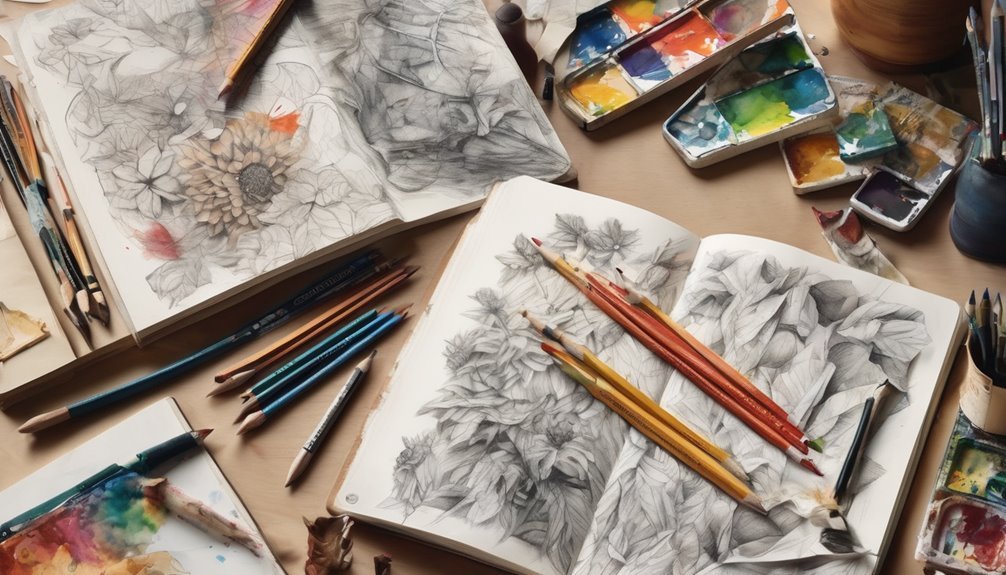
Transforming your sketches into final artwork is an exciting journey that requires both technique and vision.
By refining your ideas through various artistic processes, you can elevate your work from rough drafts to polished pieces.
Here are four steps to guide you:
- Select Your Best Sketch: Choose the sketch that resonates most with your vision.
- Enhance with Sketch Techniques: Use shading, lines, and textures to add depth and character.
- Choose Your Medium: Decide whether to work with pencil, ink, or digital tools, each offering unique effects.
- Finalize with Detail: Add finishing touches, focusing on highlights and contrasts to bring your artwork to life.
Embrace this process, and watch your creativity flourish!
Frequently Asked Questions
What Materials Are Best for My Sketchbook Drawings?
For your sketchbook drawings, use high-quality pencils like HB or 2B for versatility. Pair them with textured paper, like cold-pressed or smooth, to enhance your artistic expression. Experiment and find what inspires you most!
How Often Should I Practice Drawing in My Sketchbook?
You should practice drawing in your sketchbook daily. Incorporating sketching techniques into your daily routine helps build skills and confidence. Even short sessions make a difference, so stay consistent and enjoy the process!
Can I Use My Sketchbook for Digital Drawing?
Absolutely, you can use your sketchbook for digital drawing! With sketchbook apps and digital tools, you’ll unleash your creativity like a bird taking flight. Experiment and enjoy the limitless possibilities that digital drawing offers!
What Types of Subjects Should I Draw First?
Start with beginner subjects like simple shapes, still lifes, or basic animals. These allow you to practice essential drawing techniques. As you gain confidence, gradually explore more complex subjects, enhancing your skills and creativity along the way.
How Do I Stay Motivated to Fill My Sketchbook?
To stay motivated, set specific goals and embrace art challenges. Use creative prompts, explore various sketching techniques, and develop your personal style. Find inspiration sources, take risks, and build a consistent sketching habit to keep going.
Conclusion
Incorporating a “Learn to Draw” sketchbook into your routine is like planting a seed in fertile soil; with time and care, your artistic skills will flourish. By choosing the right sketchbook, exploring prompts, and practicing key techniques, you’ll not only enhance your drawing abilities but also deepen your creative journey. So grab your sketchbook, embrace the process, and watch as your confidence and talent grow with each stroke of the pencil. Happy drawing!