
Did you know that solving word puzzles can actually boost your vocabulary while keeping your mind sharp? Engaging with crosswords, word searches, and scrambles not only challenges your thinking but also introduces you to new terms and their meanings. This fun approach to learning can transform how you view language. Curious about how to get started and make the most of these puzzles?
Key Takeaways
- Word puzzles challenge critical thinking, making learning new vocabulary enjoyable and engaging.
- Solving crosswords and word searches introduces new words and their meanings in a fun context.
- Regular practice with puzzles enhances language understanding and boosts vocabulary retention.
- Playing games like Scrabble fosters collaborative learning and encourages exploration of new terms.
- Engaging in word puzzles provides a sense of accomplishment, motivating continuous vocabulary growth.
The Benefits of Word Puzzles for Vocabulary Expansion

While you might think of word puzzles as just a fun pastime, they actually offer significant benefits for expanding your vocabulary. As you engage with these puzzles, you’re not only entertained; you’re also challenging your brain to think critically.
Each word you uncover introduces you to new meanings, synonyms, and contexts. You might find yourself recalling words you hadn’t thought of in ages or discovering ones you’ve never encountered before. This playful exploration deepens your understanding of language, making communication more vibrant and enriched.
Plus, the joy of solving puzzles fosters a sense of accomplishment, encouraging you to keep learning. So, embrace the challenge—your vocabulary will flourish, and you’ll feel more confident expressing yourself.
Types of Word Puzzles to Explore
If you’re eager to boost your vocabulary, exploring different types of word puzzles can be an exciting journey.
Start with crosswords, where you fill in words based on clues, challenging your brain while learning new terms.
Word searches are another fun option, allowing you to spot hidden words in a grid, enhancing your recognition skills.
Try anagrams, where you rearrange letters to form new words; it’s a playful way to engage with language.
Don’t forget about scrambles, where you decode jumbled letters to reveal the correct word.
Each type offers a unique twist, keeping you entertained while expanding your lexicon.
Dive in, enjoy the challenge, and watch your vocabulary flourish!
Tips for Getting Started With Crossword Puzzles

Getting started with crossword puzzles can be a rewarding experience for anyone looking to sharpen their vocabulary.
Begin with simpler puzzles; they’ll help you build confidence. Don’t hesitate to keep a dictionary or smartphone handy for quick references. Focus on filling in the easy answers first; they’ll give you a solid foundation. Remember, it’s okay to guess sometimes—crosswords are meant to be fun!
If you get stuck, take a break and come back later. You might be surprised at how fresh ideas flow after a little time away.
Lastly, enjoy the process! Each puzzle you complete is a step towards enhancing your word skills. Embrace the challenge, and soon, you’ll find yourself addicted to the thrill of solving!
Enhancing Your Skills With Word Searches
After you’ve honed your skills with crossword puzzles, word searches offer another exciting way to boost your vocabulary.
These puzzles invite you to actively engage with words as you seek them out in a grid. You’ll feel the thrill of discovery when you spot an unfamiliar term, and you can take a moment to look it up. This simple act deepens your understanding and retention.
Plus, word searches can be enjoyed anywhere—at home, on a break, or even while waiting for an appointment. Make it a habit to tackle a few each week, and watch your vocabulary blossom.
As you immerse yourself in this playful challenge, you’ll find learning becomes a delightful journey, not just another task.
Scrabble Strategies for Vocabulary Building
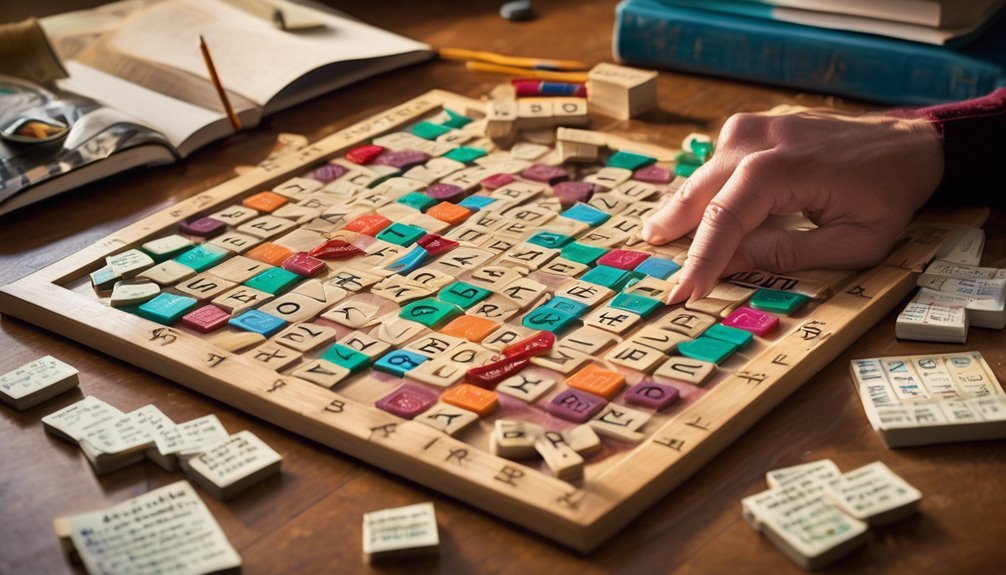
While you might think of Scrabble as just a game, it’s actually a powerful tool for building your vocabulary. To make the most of it, focus on two-letter words; they can help you score big and utilize tricky tiles.
Keep a word list handy, and challenge yourself to learn new terms after each game. Use prefixes and suffixes to expand your word options—think “un-” or “-ing.”
Don’t hesitate to ask your opponent for definitions; it’s a great way to learn together. Lastly, play regularly with diverse opponents to encounter unique words.
Embrace the fun, and watch your vocabulary grow as you connect with others over this classic game. Let the learning unfold naturally!
Incorporating Puzzles Into Your Daily Routine
To seamlessly incorporate puzzles into your daily routine, start by setting aside just a few minutes each day. Whether it’s during your morning coffee or while unwinding at night, these moments can spark joy and fuel your vocabulary growth. Choose a variety of puzzles to keep things interesting. Here’s a simple table to help you decide:
| Time of Day | Puzzle Type | Duration |
|---|---|---|
| Morning | Crossword | 5-10 minutes |
| Afternoon | Word Search | 10-15 minutes |
| Evening | Jumble | 5-10 minutes |
| Anytime | Scrabble | 20 minutes |
Tracking Your Progress and Celebrating Success
Incorporating puzzles into your daily routine not only enhances your vocabulary but also provides a fun opportunity to track your progress. As you solve crosswords or word searches, keep a journal of the new words you encounter.
This simple act lets you see how far you’ve come, making learning feel rewarding. Celebrate small victories—maybe treat yourself when you master a challenging puzzle or learn a set number of words.
Share your achievements with friends or family; their encouragement can boost your motivation. Remember, it’s not just about the destination; it’s about enjoying the journey.
Frequently Asked Questions
What Age Group Benefits Most From Word Puzzles?
You’ll find that children aged 6 to 12 benefit most from word puzzles. Their minds are eager to explore, and these puzzles spark curiosity, enhance vocabulary, and make learning enjoyable in a playful way.
Can Word Puzzles Improve Spelling Skills?
Absolutely, word puzzles can boost your spelling skills! They challenge you to engage with words, enhancing your recognition and familiarity. As you solve each puzzle, you’ll naturally improve your spelling without even realizing it.
Are There Mobile Apps for Word Puzzles?
Absolutely, there are plenty of mobile apps for word puzzles! You can explore options like Wordscapes or Words With Friends, where you’ll enjoy challenges that keep your mind sharp and engage your love for words.
How Do Puzzles Compare to Traditional Studying Methods?
Puzzles engage your mind differently than traditional studying. They’re interactive and fun, making learning feel effortless. You’ll find that solving puzzles enhances retention, sparks creativity, and keeps you motivated, turning study time into a delightful challenge.
Can Puzzles Be Used for Language Learning?
Absolutely! Puzzles can supercharge your language learning, transforming tedious vocabulary drills into thrilling adventures. You’ll uncover words, connect meanings, and deepen your understanding, all while having a blast. It’s like a party for your brain!
Conclusion
Incorporating word puzzles into your daily routine can transform your vocabulary journey into an enjoyable adventure. By engaging with crosswords, word searches, and Scrabble, you not only sharpen your language skills but also cultivate a deeper appreciation for words. Like the great thinkers of yore, you can revel in the joy of discovery as you uncover new terms and meanings. So, grab a puzzle and start expanding your lexicon—your intellect will thank you for it!