Puzzles are more than just a fun pastime; they play a crucial role in enhancing literacy skills. As you navigate through word searches and crosswords, you’re not only uncovering new vocabulary but also connecting words with their meanings. This engaging approach fosters critical thinking and problem-solving abilities. Curious about how these activities can fit into everyday learning routines? Let’s explore the various ways puzzles can transform the literacy journey.
Key Takeaways
- Puzzles introduce new vocabulary, reinforcing language through visual and contextual association, enhancing overall literacy growth.
- Engaging with puzzles fosters critical thinking and problem-solving skills, essential for reading comprehension and interpretation.
- Collaborative puzzle-solving encourages social interaction, promoting expressive language and vocabulary expansion among peers.
- Daily puzzle activities create fun learning challenges that motivate children to explore language and develop literacy skills.
- Tracking progress through puzzle-related journals highlights vocabulary growth, comprehension skills, and boosts confidence in young learners.
The Importance of Literacy in Early Childhood
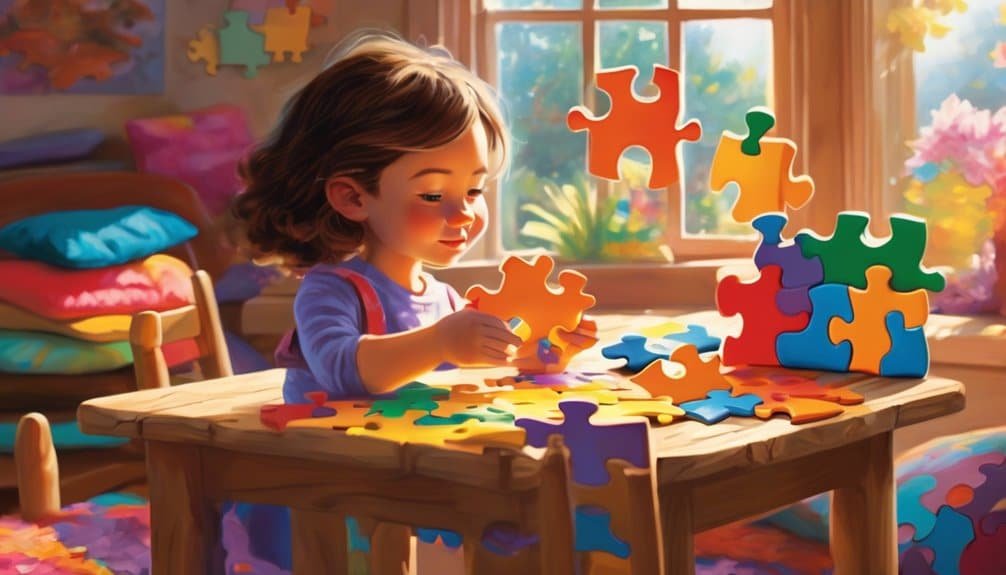
Literacy plays a crucial role in early childhood development, as it lays the foundation for future learning. When you expose your little ones to reading and writing, you’re opening up a world of imagination and communication.
Every story shared, every letter traced, helps them grasp essential skills that shape their understanding of the world. You’ll notice how their eyes light up as they recognize familiar words or make connections between letters and sounds. This early interaction with language nurtures their curiosity and confidence, setting them on a path toward academic success.
How Puzzles Enhance Vocabulary Development
While many parents mightn’t realize it, puzzles can significantly boost your child’s vocabulary development. When your little one engages with puzzles, they encounter new words and concepts, helping them make connections between images and their meanings. As they solve each piece, they learn to associate words with visual cues, reinforcing their understanding.
You can enhance this experience by discussing the themes or items found in the puzzles. Ask questions like, “What do you think this means?” or “Have you seen this word before?” This interaction encourages them to express their thoughts, expanding their vocabulary even further.
Engaging With Word Searches: a Fun Approach to Reading
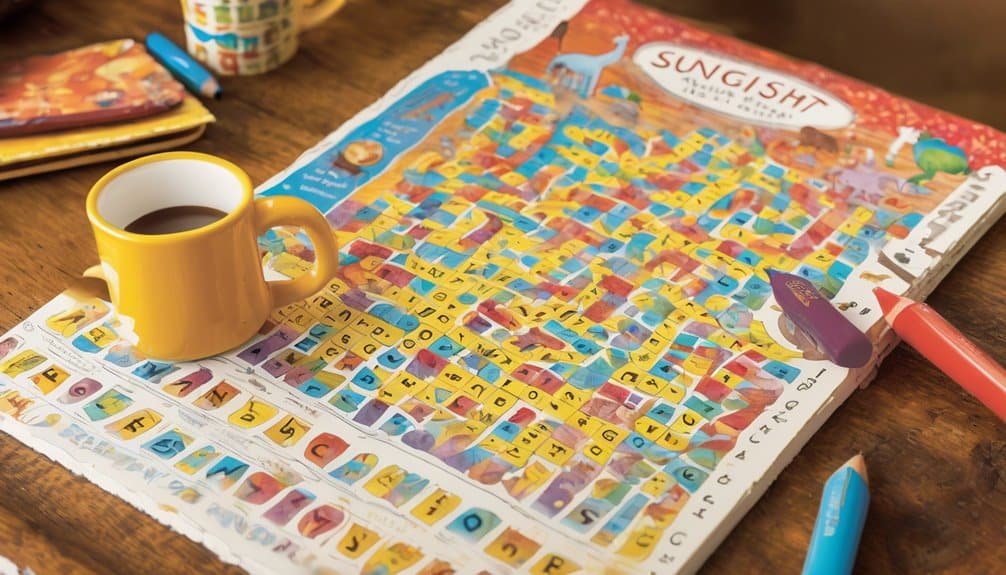
Word searches offer a dynamic way to engage with reading while making learning enjoyable. As you dive into each grid, you’re not just hunting for words; you’re immersing yourself in a world of language. Spotting familiar terms reinforces your vocabulary, while discovering new ones sparks curiosity. You’ll find that the thrill of finding that elusive word keeps you coming back for more.
Plus, there’s something incredibly satisfying about tracing the letters with your finger, isn’t there? It’s a simple yet effective method to enhance your reading skills without the pressure of traditional study.
Crosswords: Building Connections Between Words and Meanings
When you tackle a crossword puzzle, you’re not just filling in squares; you’re forging connections between words and their meanings. Each clue nudges you to recall definitions or synonyms, deepening your vocabulary and enhancing your understanding.
As you wrestle with tricky clues, you engage your mind in a delightful dance of language. You might stumble upon a word you’ve never encountered before, sparking curiosity and a desire to learn more. That ‘aha’ moment when everything clicks is a joy that brings a sense of achievement.
Plus, it’s a perfect opportunity to bond with friends or family as you share hints and laughter. So, grab a pencil and dive into the world of crosswords—your growing vocabulary awaits!
Logic Puzzles: Encouraging Critical Thinking Skills

As you enjoy the challenge of crosswords, you might find yourself craving another way to engage your mind: logic puzzles.

These puzzles invite you to think critically, asking you to analyze information and draw conclusions based on clues.
You’ll discover patterns and make connections that sharpen your reasoning skills.
The Role of Problem-Solving in Literacy Growth
Although problem-solving often seems like a separate skill, it plays a crucial role in fostering literacy growth. When you engage in problem-solving, you’re not just thinking critically; you’re also enhancing your reading and comprehension skills.
Here’s how:
- Encourages Deep Thinking: You analyze text and context, making connections that deepen understanding.
- Builds Vocabulary: Solving puzzles often requires you to encounter and use new words in context.
- Enhances Focus: Concentrating on problems improves your ability to focus while reading complex material.
- Fosters Creativity: You learn to think outside the box, which is essential for interpreting diverse texts.
Incorporating Puzzles Into Daily Learning Routines
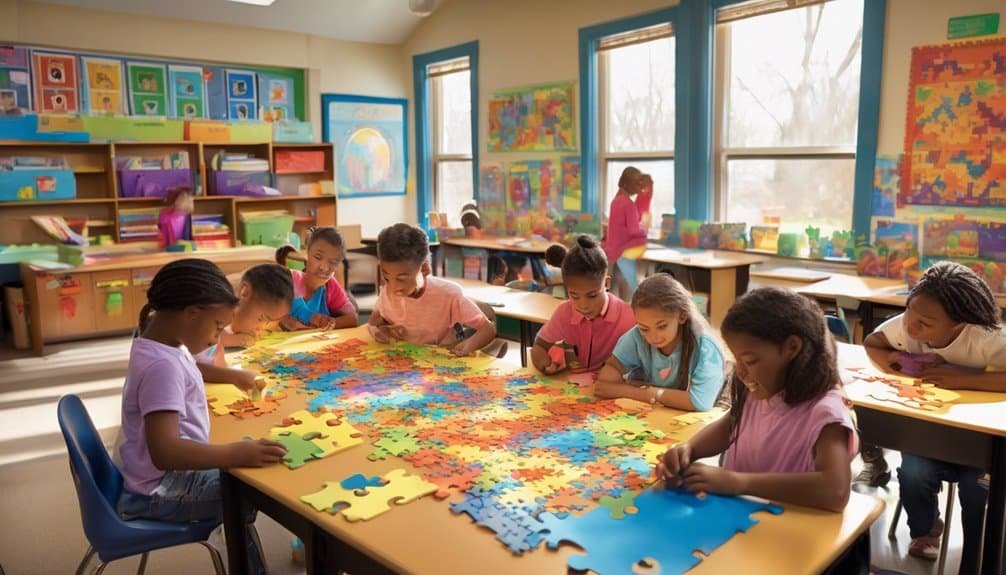
Incorporating puzzles into your daily learning routine can transform mundane tasks into engaging challenges that stimulate literacy skills. Picture starting your day with a crossword or a word search; it’s not just fun, but it sets a positive tone for learning.
You can weave puzzles into storytime by asking your child to solve riddles related to the plot. During breaks, quick brain teasers can spark curiosity and keep minds sharp.
Even while cooking, you might create word puzzles with ingredients or recipes. These small moments of play naturally enhance vocabulary and comprehension.
The Benefits of Collaborative Puzzle Solving
When you tackle puzzles together, you not only boost literacy skills but also foster teamwork and communication. Collaborating on puzzles creates a warm environment where everyone feels valued and included.
Here are some key benefits you’ll experience:
- Enhanced Problem-Solving: Working together encourages creative thinking and diverse approaches to challenges.
- Improved Communication: You’ll learn to express ideas clearly and listen actively, strengthening your connections.
- Shared Accomplishment: Completing a puzzle as a team offers a sense of achievement that deepens relationships.
- Social Skills Development: Engaging with others enhances your emotional intelligence and builds trust among participants.
Tracking Progress: Measuring Literacy Growth Through Puzzles
As you engage with puzzles, you can effectively track your literacy growth by observing specific skills that develop over time. Notice how your vocabulary expands as you encounter new words; each puzzle challenges you to decipher meanings and context.
Pay attention to your reading comprehension, too. As you solve, you’ll find that you’re better at understanding complex instructions and clues. Reflect on your problem-solving skills, as puzzles encourage strategic thinking and creativity.
Keep a journal of your experiences—what you learned, the challenges you faced, and how you overcame them. This personal record not only highlights your progress but also serves as a reminder of your journey.
Embrace each puzzle, knowing it’s a step towards becoming a more literate you.
Expanding Puzzle Options: Beyond Traditional Formats
While traditional puzzles like crosswords and jigsaw puzzles have their charm, exploring alternative formats can significantly enhance your literacy journey.
By diversifying your puzzle experiences, you’ll engage your mind in new ways and make learning even more enjoyable.
Here are four exciting options to consider:
- Logic Puzzles: Sharpen your reasoning skills while unraveling patterns and sequences.
- Word Searches: Boost your vocabulary as you hunt for hidden words in a grid.
- Sudoku: Challenge your number sense and critical thinking in a fun, structured way.
- Trivia Quizzes: Expand your knowledge on various topics while having fun with friends or family.
Embrace these alternatives, and watch your literacy grow like never before!
Frequently Asked Questions
What Age Is Best to Start Introducing Puzzles for Literacy Growth?
You can start introducing puzzles around age two. At this age, your child’s curiosity thrives, and engaging them with simple puzzles creates a fun and interactive way to develop critical thinking and early literacy skills together.
Are There Specific Puzzles Recommended for Different Reading Levels?
Absolutely! For early readers, try simple word puzzles or picture crosswords. As they advance, introduce jigsaw puzzles with themed words or letter games. Tailoring puzzles to their level keeps them engaged and motivated to learn!
How Can Parents Create a Puzzle-Friendly Environment at Home?
You can transform your home into a puzzle paradise! Fill cozy corners with colorful puzzles, set up comfy seating, and create a dedicated puzzle station. Your kids’ll thrive in this enchanting environment, fostering creativity and joy.
Can Digital Puzzles Be as Effective as Traditional Paper Ones?
Digital puzzles can be just as effective as traditional ones. They engage your mind and provide instant feedback. You’ll find your problem-solving skills sharpen, whether you’re tapping on a screen or flipping pages.
What Resources Are Available for Finding Literacy-Focused Puzzles?
Finding literacy-focused puzzles is like uncovering hidden treasures. You can explore websites, educational apps, or local libraries. Don’t forget to check online communities where fellow enthusiasts share their favorite resources and tips. You’ll discover so much!
Conclusion
Incorporating puzzles into your child’s learning routine is like planting seeds of literacy that will bloom into a lifelong love for language. As they tackle word searches and crosswords, they’re not just having fun; they’re building essential skills that will serve them well in the future. So, embrace the power of puzzles, and watch as their vocabulary flourishes and critical thinking sharpens. Together, you can turn each puzzle page into a stepping stone toward literacy growth and endless adventure!