
When it comes to your child’s education, math skills are essential. You want to set a strong foundation, and choosing the right books can make all the difference. From playful stories to interactive workbooks, there’s a variety of options tailored to different age groups. Understanding what works best for your child can enhance their learning experience significantly. Curious about which titles can transform math into a fun adventure? Let’s explore the best choices together.
Why Math Skills Matter for Kids
When you consider your child’s future, you’ll find that strong math skills play a crucial role in their overall development.
The importance of math extends beyond the classroom; it shapes critical thinking and problem-solving abilities essential for everyday life. When kids grasp mathematical concepts, they build confidence and resilience, allowing them to tackle challenges head-on.
These skills don’t just help with homework; they lay the foundation for careers in science, technology, engineering, and math (STEM) fields, which are vital in today’s job market.
Moreover, the lifelong benefits of math skills include improved financial literacy and decision-making abilities. By fostering a love for math early on, you’re equipping your child with tools they’ll use throughout their life.
How to Choose the Right Math Book for Your Child
Choosing the right math book for your child can feel overwhelming, especially with so many options available. Consider their age appropriateness and learning styles to ensure the book resonates with them. Here’s a quick guide to help you:
| Factor | Considerations |
|---|---|
| Age Appropriateness | Check the recommended age range |
| Learning Styles | Identify if your child prefers visuals or text |
| Engagement | Look for interactive elements or fun activities |
| Difficulty Level | Ensure it matches their current skill level |
| Subject Focus | Decide whether you want basic skills or advanced topics |
Top Math Skills Books for Preschoolers

Finding the perfect math skills books for preschoolers can make a significant difference in developing their foundational skills. Look for books that introduce number recognition in fun, engaging ways. Titles like “Chicka Chicka 1 2 3” use colorful illustrations to captivate your child’s attention while teaching them to identify numbers.
Discovering engaging math books like “Chicka Chicka 1 2 3” can spark your preschooler’s love for number recognition and foundational skills.
Incorporating counting games can also enhance their learning experience. Books like “Ten Black Dots” encourage counting through interactive storytelling, making math feel like play.
Consider “The Very Hungry Caterpillar,” which combines counting with a delightful narrative. These books not only foster essential skills but also ignite a love for learning.
When you choose the right titles, you’re setting your preschooler up for math success!
Must-Have Math Books for Early Elementary Kids
Math can be a thrilling adventure for early elementary kids, especially with the right books in hand. Look for titles that introduce essential math concepts through fun stories and colorful illustrations. Books like “The Very Hungry Caterpillar” not only engage young readers but also incorporate counting and basic addition.
Additionally, seek out interactive options featuring engaging activities, like puzzles or matching games, which reinforce learning. “Math Curse” by Jon Scieszka cleverly shows how math appears in everyday life, making it relatable and exciting.

With these must-have math books, you’ll spark your child’s curiosity and build a solid foundation for their mathematical journey.
Middle School Math Books Everyone Should Read

As kids move into middle school, their math journey takes on new challenges and complexities. To navigate this transition, consider these essential math book recommendations.
Titles like “The Math Curse” by Jon Scieszka provide engaging math narratives that turn problems into intriguing stories.
“Math Doesn’t Suck” by Danica McKellar offers relatable explanations and practical tips, making concepts more digestible.
For those interested in real-world applications, “The Joy of x” by Steven Strogatz explores math in everyday life, encouraging deeper understanding.
These books don’t just teach; they inspire curiosity and confidence in young learners. Embrace these resources to help your child tackle middle school math with enthusiasm and skill!
Captivating Math Books to Engage Reluctant Learners
When kids struggle with math, captivating books can spark their interest and make learning feel less daunting. Look for titles that offer interactive activities and math games, allowing them to apply concepts in a fun way.
Books featuring relatable characters and engaging illustrations can draw reluctant learners in, making math feel more personal and accessible. Storytelling techniques help weave math into exciting narratives, while fun challenges encourage problem-solving strategies.
Captivating stories with relatable characters and vibrant illustrations make math personal, transforming learning into an exciting adventure filled with challenges.
Visual aids enhance understanding, transforming complex ideas into easily digestible formats. By choosing books that blend these elements, you’ll create a positive learning environment that nurtures curiosity and boosts confidence.
Math can be enjoyable, and the right book can make all the difference!
Hands-On Math Workbooks for Fun Practice
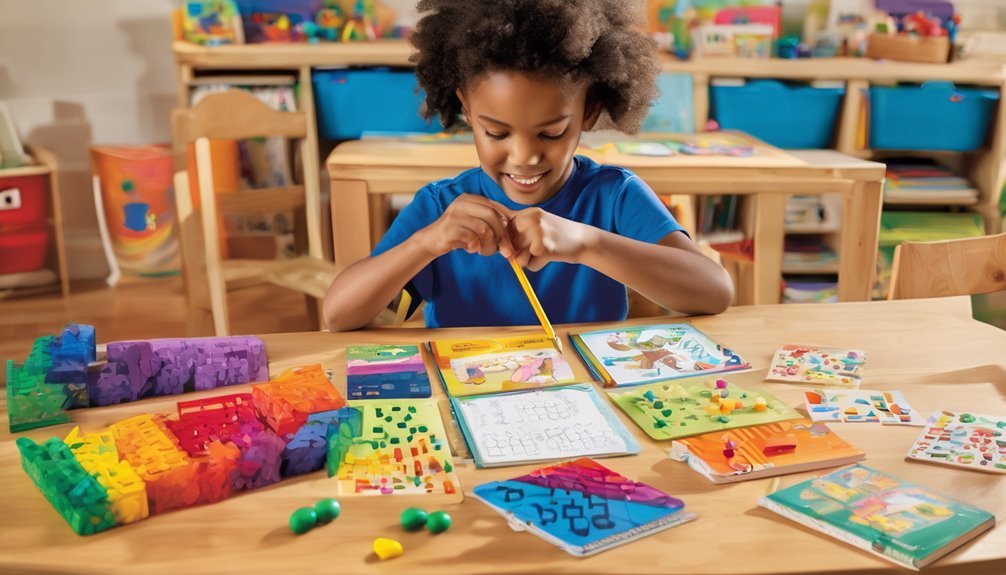
While many kids may shy away from traditional math lessons, hands-on math workbooks can turn practice into an exciting adventure. These workbooks offer interactive activities that make learning fun and engaging. You’ll find playful exercises that spark curiosity and creative problems that challenge your thinking.
With visual aids and hands-on experiments, math becomes tangible and relevant, showcasing real-life applications. Plus, collaborative projects encourage teamwork, making learning a social experience. Themed worksheets keep things fresh, while skill-building games add an element of play.
Classic Math Storybooks That Inspire Learning
Classic math storybooks can ignite a love for numbers in kids, blending storytelling with fundamental concepts. Through math-themed adventures featuring engaging characters, children explore exciting challenges while developing essential skills. These stories make learning enjoyable and relatable, encouraging kids to embrace math in their daily lives.
Here’s a quick look at some classic titles that achieve this:
| Title | Author | Key Concept |
|---|---|---|
| “The Grapes of Math” | Greg Tang | Addition |
| “Sir Cumference” | Cindy Neuschwander | Geometry |
| “Math Curse” | Jon Scieszka | Problem Solving |
| “Two of Everything” | Lily Toy Hong | Multiplication |
| “The Doorbell Rang” | Pat Hutchins | Division |
Dive into these stories and watch your child’s math skills flourish!
Top Digital Math Resources and Apps

There’s no denying that digital math resources and apps have transformed how kids learn math today. These tools offer interactive learning experiences that make math engaging and fun.
Here are three top digital resources you should consider:
- Khan Academy: This platform provides personalized lessons and practice exercises, making it easy to track progress in various math topics.
- Prodigy Math: An engaging game that combines math practice with adventure, helping kids improve their skills while playing.
- Mathletics: This app offers a range of math games and activities, allowing kids to compete with peers and earn rewards.
These resources not only reinforce math concepts but also encourage kids to dive deeper into their learning through enjoyable math games.
Tips for Encouraging a Love of Math Through Reading
To spark a love of math in your child, consider incorporating math-themed books into their reading routine. Look for stories that use engaging storytelling techniques, where characters face relatable math challenges. This makes math feel relevant and fun.
You can also turn reading into interactive math games; for example, ask your child to solve problems presented in the story or create their own scenarios based on the book’s theme. Encourage discussions about the math concepts within the stories, connecting them to real-life situations.
Finally, mix in a variety of genres—from fiction to nonfiction—so your child can see the diverse applications of math. By blending reading and math, you’ll help cultivate a lifelong appreciation for both.
Frequently Asked Questions
What Age Should Kids Start Learning Math Skills?
Kids should start learning math skills as early as preschool. Developing foundational skills at this age helps them grasp concepts like counting and shapes, setting a solid base for more complex math later on.
How Can Parents Assess Their Child’s Math Proficiency?
To assess your child’s math proficiency, use math assessments and proficiency tests. You’ll uncover strengths and weaknesses, guiding their learning journey. Remember, even the wisest owls started with simple sums before soaring high!
Are There Math Books Available in Languages Other Than English?
Yes, you’ll find bilingual math resources available in various languages. These books often incorporate cultural math approaches, making learning engaging and relatable for your child, enhancing their understanding while celebrating diverse backgrounds.
How Often Should Children Practice Math Skills at Home?
If your child practices math daily, like solving puzzles or playing math games, they’ll strengthen their skills. Establishing consistent math routines helps them retain concepts and boosts confidence, making learning enjoyable and effective.
What Role Do Games Play in Developing Math Skills?
Games play a crucial role in developing math skills by engaging you through various game types tailored to different skill levels. They make learning fun, encourage problem-solving, and help reinforce concepts in an enjoyable way.
Conclusion
In the journey of learning math, remember that “practice makes perfect.” By exploring the right math skills books and resources, you’ll not only help your child build a strong foundation but also spark a lasting love for numbers. Whether it’s through engaging stories or interactive workbooks, every page turned can inspire curiosity and confidence. So dive into these resources together, and watch as your child develops essential skills that will serve them well in the future.