
Think of math workbooks as treasure maps guiding kids through the world of numbers. You can transform these resources into vibrant tools that spark curiosity and excitement. By incorporating games, puzzles, and creative art projects, you can turn routine practice into an engaging experience. Curious about how to blend fun with learning effectively? There’s a wealth of ideas just waiting to be explored.
Fun Math Games to Boost Engagement
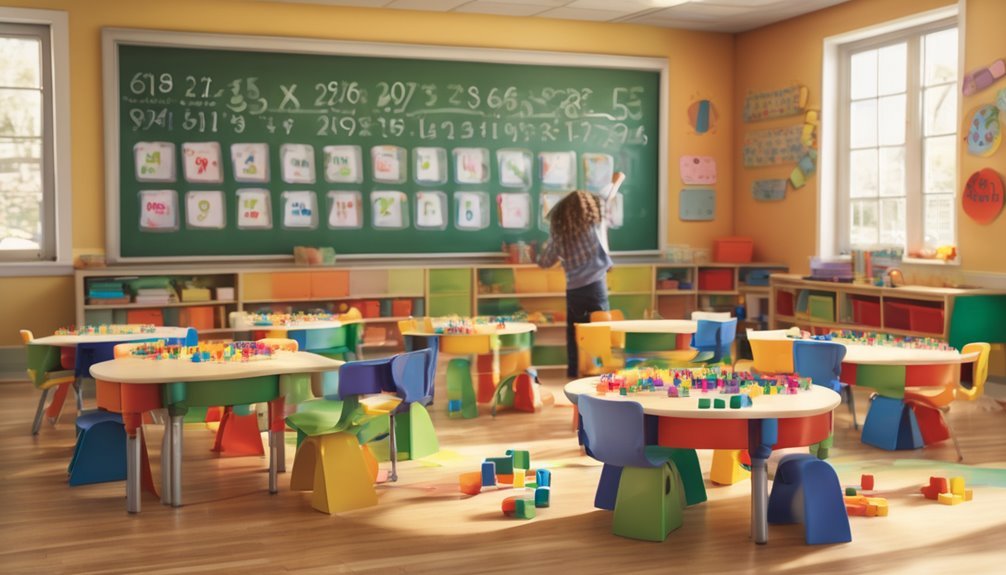
When it comes to making math enjoyable, incorporating fun games can significantly boost engagement. Math scavenger hunts are a fantastic way to get kids moving while solving problems. You can create clues that lead them to different locations, where they’ll tackle math challenges. This not only reinforces their skills but also adds an element of adventure.
Additionally, math escape rooms offer a thrilling way to combine teamwork and problem-solving. You can set up scenarios where kids need to crack codes and solve puzzles using math concepts to “escape.”
Both activities encourage collaboration and critical thinking, making math feel less like a chore and more like an exciting challenge. Give these games a try to spark enthusiasm in your young learners!
Engaging Puzzles for Parents and Teachers
While you might think of math as purely numbers and equations, engaging puzzles can transform it into a stimulating experience for both parents and teachers. Incorporating puzzles not only boosts problem-solving skills but makes learning enjoyable.
Engaging puzzles can turn math into a fun, stimulating experience that enhances problem-solving skills for both kids and educators.
Here are some engaging puzzle ideas:
- Logic Riddles: Use these to encourage creative calculations and critical thinking.
- Math Mazes: These visually appealing challenges help reinforce number patterns while keeping kids entertained.
- Math Scavenger Hunts: Combine math trivia with exploration to make learning interactive and fun.
Examples of Fun Math Puzzles to Try
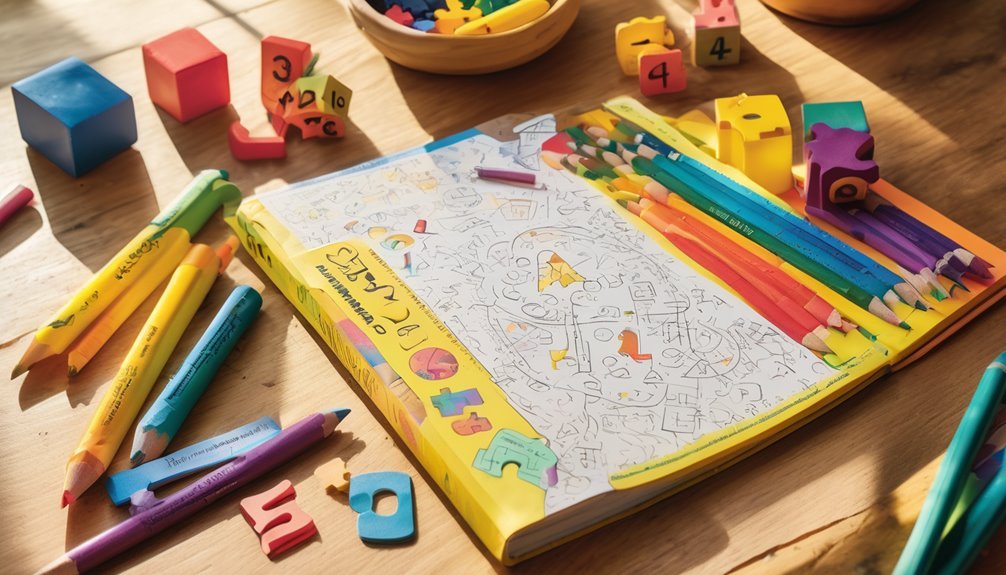
Math puzzles can be a fantastic way to spark kids’ interest in numbers and problem-solving. You might start with number mazes, where kids navigate through numbers to reach a target.
Logic riddles challenge their reasoning, while pattern puzzles encourage them to identify sequences. Shape challenges let them explore geometry creatively.
Organizing a math scavenger hunt adds excitement, as kids search for math-related items or solve clues.
Crossword math combines vocabulary with calculations, making it a fun twist. Don’t overlook math sudoku for a classic brain workout, or math trivia to test their knowledge.
Lastly, engaging in puzzle challenges boosts their confidence and enhances creative calculations. These activities make math enjoyable and engaging!
Blending Art With Math Learning
Art and math often go hand in hand, creating a dynamic learning experience that captivates kids’ imaginations. By blending art integration with math concepts, you can foster creative expression while reinforcing essential skills.

Here are a few engaging ideas to try:
- Pattern creation: Encourage kids to design geometric patterns using colors and shapes, reinforcing their understanding of symmetry and repetition.
- Math-themed art projects: Have them create artwork based on mathematical concepts, like fractals or tessellations, which visually demonstrate complex ideas.
- Storytelling with numbers: Let kids illustrate stories that incorporate math problems, merging narrative with numerical challenges for a unique learning experience.
These activities not only enhance math skills but also inspire creativity, making learning enjoyable and memorable.
Top Interactive Math Workbooks for Kids
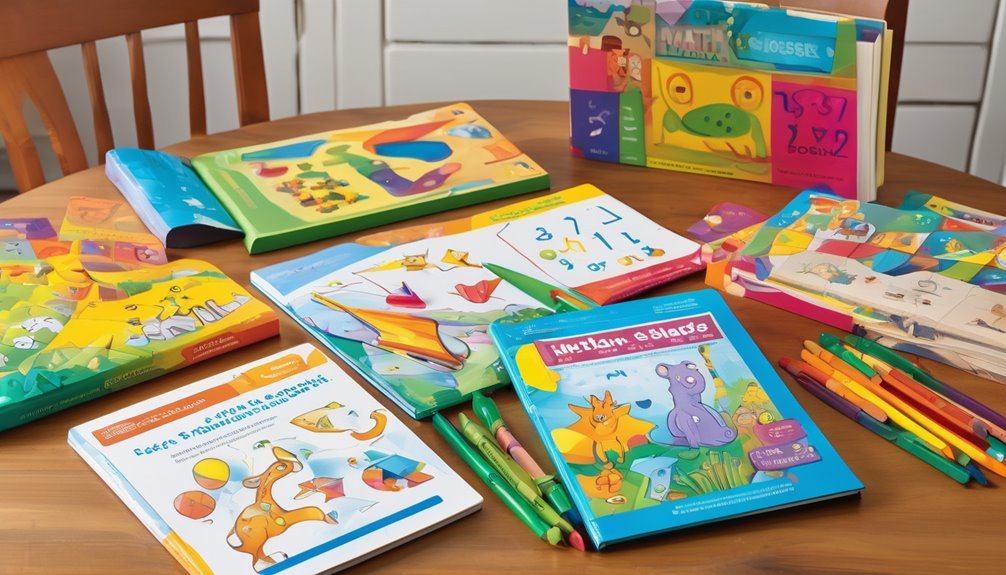
When you’re looking to make math more engaging for kids, interactive workbooks can be a game changer. These resources keep children interested through fun activities and challenges.
Look for workbooks that feature interactive worksheets, allowing kids to solve problems while enjoying colorful designs and hands-on exercises. Incorporating digital resources can enhance the experience even further.
Many workbooks now offer online platforms where kids can access additional games and quizzes, reinforcing their learning in a playful way. Plus, these tools are designed to adapt to different learning levels, ensuring that every child finds the right challenge.
With the right interactive workbook, you’re not just teaching math; you’re sparking a lifelong love for learning!
Holiday Math Challenges
As the holiday season approaches, you’ll find that incorporating festive themes into math challenges can make learning more enjoyable for kids.
By blending fun with education, you can spark their interest and deepen their understanding. Here are a few ideas to get started:
- Holiday Fractions: Create challenges where kids divide holiday treats, like pie or cookies, into equal parts for family gatherings.
- Festive Geometry: Have them measure and create holiday decorations, using shapes to design ornaments or wreaths.
- Math Advent Calendar: Each day, present a new math problem related to holiday themes, leading up to a special surprise!
Engaging kids with holiday math challenges not only enhances their skills but also makes learning festive and memorable.
Fun Group Math Activities for Classrooms

To make math more engaging in the classroom, incorporating fun group activities can foster collaboration and spark enthusiasm among students.
Consider setting up math relays, where teams race to solve problems, promoting team collaboration. Create problem-solving stations that challenge small groups to tackle various math concepts together.
Setting up math relays and problem-solving stations fosters collaboration and makes learning engaging for students.
Math scavenger hunts can turn learning into an adventurous quest, while peer teaching allows students to explain concepts to one another, reinforcing their understanding.
Organize math tournaments to encourage friendly competition, enhancing motivation. Interactive workshops can bring creativity into lessons, making math come alive.
Imaginative Math Story Problems for Kids
While math might seem straightforward, imaginative story problems can transform it into a thrilling adventure for kids. By weaving creative scenarios into math challenges, you encourage kids to engage their problem-solving skills in exciting ways.
Here are a few ideas to spark their imagination:
- The Pirate’s Treasure: Solve for how many gold coins each pirate receives after finding a hidden chest.
- The Animal Rescue: Calculate how many animals can be saved when each volunteer can carry two at a time.
- The Magical Bakery: Determine how many cupcakes are needed for a wizard’s party if each guest wants three.
These engaging problems not only make math fun but also help kids develop critical thinking and foster a love for learning.
Customizing Workbooks for Different Learning Styles
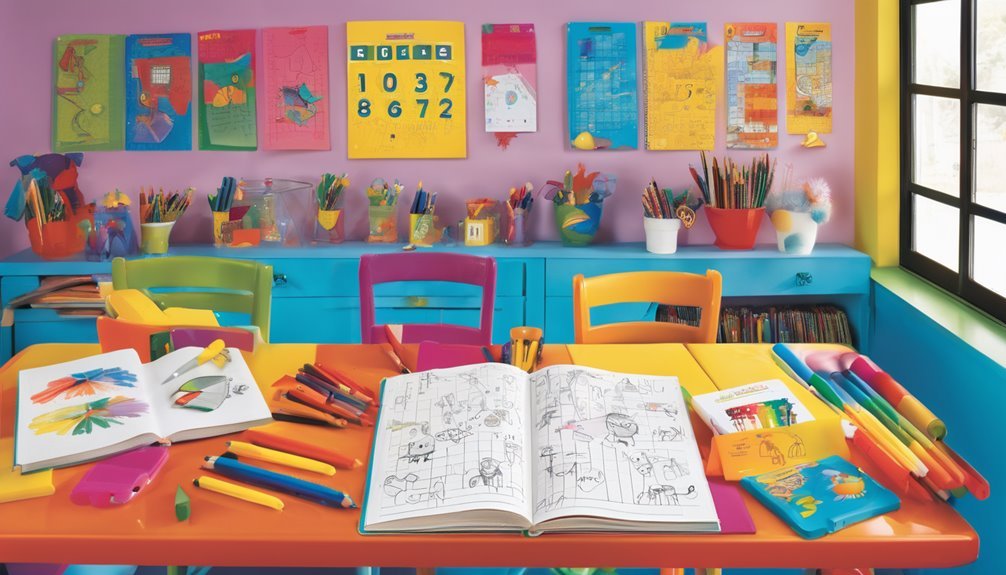
For visual learners, incorporate colorful diagrams and charts that clarify information. Auditory feedback can be enhanced with audio instructions or songs related to math topics. Tactile activities, like manipulatives, engage those who learn best through touch.
Kinesthetic games add movement, allowing active kids to absorb concepts dynamically. Offering personalized pacing helps each child progress at their own speed. Include adaptive challenges that adjust difficulty based on their performance.
Collaborative projects encourage teamwork and social interaction, while thematic units connect math to real-world contexts, making learning more relatable. Tailoring these elements ensures a richer, more effective learning experience.
What Makes a Good Math Workbook?
A good math workbook grabs kids’ attention and guides them through concepts with clarity and purpose. To achieve this, focus on an engaging workbook layout and ensure concept clarity throughout.
Here are some key elements to consider:
- Visual Appeal: Use colorful illustrations and fun fonts to make learning enjoyable.
- Progressive Difficulty: Start with simple problems, gradually increasing complexity to build confidence and skills.
- Interactive Elements: Include puzzles, games, or hands-on activities that reinforce learning through play.
Frequently Asked Questions
How Can I Motivate My Child to Enjoy Math?
To motivate your child to enjoy math, introduce fun math games and interactive learning experiences. Engage them with puzzles, apps, or group activities that spark curiosity, making math feel exciting and relevant to their everyday life.
What Age Is Appropriate for Math Workbooks?
Math workbooks start being appropriate around age three, with simple activities. As your child grows, consider age recommendations and workbook types, like interactive or thematic, to keep them engaged and excited about learning math concepts.
Are Digital Workbooks as Effective as Paper Ones?
Digital workbooks can be just as effective as paper ones, depending on your workbook preferences. They enhance digital engagement, offering interactive features that motivate learning, but some kids might still prefer the tactile experience of paper.
How Can I Track My Child’s Progress in Math?
Tracking your child’s progress in math is like watching a garden bloom. Use tracking tools and progress metrics to monitor skills over time, noting areas for improvement, and celebrate milestones to keep them motivated and engaged.
What Supplies Do I Need for Math Workbook Activities?
You’ll need colorful worksheets, engaging games, pencils, and erasers for math workbook activities. Consider using markers for creativity and a binder to organize everything. These supplies make learning fun and help keep your child motivated!
Conclusion
Incorporating fun elements into math workbooks isn’t just fluff; it’s a proven way to enhance understanding and engagement. You might worry that these activities distract from core concepts, but they actually reinforce learning through creativity and teamwork. By blending games, puzzles, and art, you create a dynamic environment where kids thrive. So, give your workbooks a makeover—turn them into exciting adventures that make math not just a subject, but a lifelong passion!