Did you know that mental math skills can boost your child’s confidence in everyday situations? These skills aren’t just about numbers; they enhance critical thinking and problem-solving, too. As you explore mental math books, you’ll discover engaging exercises and relatable scenarios that make math feel relevant and exciting. Curious about how to choose the right books or incorporate these skills into daily life? There’s so much more to uncover.
Why Mental Math Skills Matter for Kids

While you mightn’t think about it often, mental math skills play a crucial role in your child’s everyday life. These skills are more than just numbers; they enhance cognitive development, helping your child think critically and solve problems effectively.
When kids practice mental math, they’re not just memorizing facts; they’re learning to manipulate numbers, which builds confidence and resilience. Imagine your child tackling math challenges without needing a calculator or paper. This ability fosters independence and sharpens analytical thinking, essential for future academic and real-world success.
Encouraging mental math helps your child develop a toolkit for problem-solving, empowering them to approach challenges with creativity and persistence. Investing in these skills now sets the stage for a bright future.
Essential Features of Engaging Mental Math Books
When you’re searching for engaging mental math books for your child, look for features that make learning fun and effective. One essential aspect is interactive exercises that encourage participation.
These hands-on activities help kids grasp concepts while staying motivated. Colorful illustrations also play a crucial role; vibrant visuals can capture your child’s imagination and simplify complex ideas.
Additionally, consider books that incorporate relatable scenarios, making math feel relevant to daily life. Lastly, a progressive difficulty level ensures your child builds confidence as they master each skill.
Top Mental Math Books for Beginners
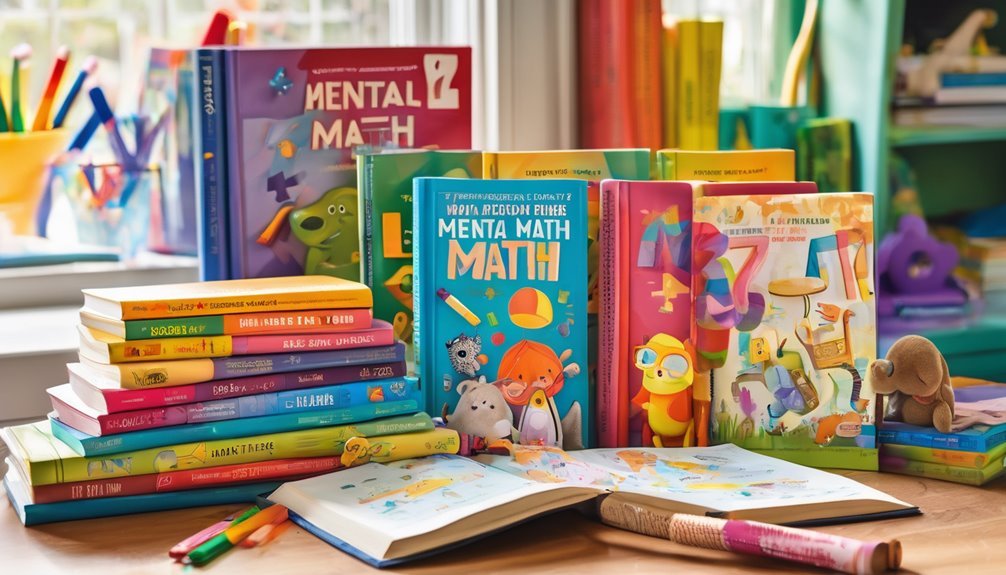
Finding the right mental math books for beginners can spark your child’s enthusiasm for numbers.

Look for titles that feature creative exercises that make learning fun and engaging. Books like “Math Made Easy” introduce concepts through playful activities, while “The Math Wizard’s Guide” combines stories with interactive challenges that boost problem-solving skills.
These books encourage kids to think critically and develop their mental math abilities in an enjoyable way. “Mental Math Magic” offers unique tricks to simplify calculations, making it easier for beginners to grasp essential skills.
By choosing engaging resources, you’ll help your child build confidence in their math abilities, fostering a lifelong love for learning.
Dive into these selections and watch their excitement grow!
Engaging Mental Math Books for Advanced Learners
As your child’s skills grow, they may seek more challenging material to further enhance their mental math abilities. Engaging mental math books for advanced learners can provide the perfect mix of advanced techniques and creative challenges.
Look for titles that focus on problem-solving and critical thinking, pushing your child to think outside the box. Books that include puzzles, games, and real-world applications will keep their interest high while reinforcing vital concepts.
Encourage them to tackle these challenges with enthusiasm, as they develop resilience and confidence in their math skills. By choosing the right material, you’ll help them not only master mental math but also ignite a lifelong passion for numbers.
Incorporating Mental Math in Daily Life

Incorporating mental math into daily life can be a fun and rewarding experience for both you and your child. Look for real-life applications, like calculating discounts while shopping or figuring out the total cost of snacks at a movie.
Turn daily practice into a game—challenge your child to estimate how long it’ll take to reach a destination or how many slices of pizza each person can have at a party. You can also encourage them to solve simple math problems during car rides or while waiting in line.
Fun Ways to Get Kids Excited About Math Books
Getting kids excited about math books can be a game-changer for their learning journey. Here are some fun ways to spark their interest:
- Incorporate Interactive Activities: Use hands-on projects like building shapes or crafting math-related art to make concepts tangible.
- Play Math Games: Introduce board games or apps that encourage problem-solving while having fun.
- Create a Math Book Club: Encourage kids to share their favorite math stories and discuss them, promoting a sense of community.
- Use Rewards: Set up a reward system for completing chapters or activities, making progress feel rewarding.
Frequently Asked Questions
What Age Is Best to Start Mental Math Training?
Starting mental math training around ages 4 to 6 offers significant cognitive benefits. Engaging your child during early development helps strengthen their problem-solving skills and boosts confidence, setting a solid foundation for future learning.
How Can Parents Assess Their Child’s Mental Math Progress?
To assess your child’s mental math progress, use progress tracking methods like quizzes or games. Incorporate assessment techniques such as observing problem-solving strategies, noting speed, and celebrating improvements to keep them motivated and engaged.
Are There Any Online Resources for Mental Math Practice?
Absolutely! You can explore interactive games and video tutorials online that make mental math practice fun. Websites like Khan Academy and Coolmath Games offer engaging resources to help your child improve their skills effectively.
Can Mental Math Skills Improve Overall Academic Performance?
Yes, sharpening your mental math skills can boost your overall academic performance. Picture tackling complex problems effortlessly; this enhances cognitive development and hones your problem-solving skills, making you more confident and capable in all subjects.
What Are Common Challenges Kids Face in Learning Mental Math?
Kids often struggle with developing number sense and finding effective calculation strategies. They might feel overwhelmed by complex problems or lack confidence in their abilities, making it challenging to grasp mental math concepts fully.
Conclusion
Incorporating mental math books into your child’s routine can transform them into a math wizard overnight! These resources not only sharpen their numerical skills but also spark a lifelong love for learning. By making math fun and relevant, you’re setting them up for success in school and beyond. So, dive into these engaging books together, and watch as your child conquers numbers with confidence and joy. Who knows, they might even start calculating faster than a speeding bullet!