
When a child counts out coins for a toy and realizes they’re short by 25 cents, you see a lesson click into place. You can use free calculators to turn those moments into simple money practice with big numbers, clear buttons, and quick results. Start with allowance math, then move into saving and spending choices, and you’ll soon see why a few easy tools can change how kids think about money.
Key Takeaways
- Choose free calculators with large numbers, simple buttons, and visual icons so kids can count money easily.
- Start with basic addition and subtraction to total prices, make change, and understand dollars and cents.
- Use calculators for allowance lessons by adding earnings, subtracting spending, and tracking weekly savings.
- Build simple budgets by dividing income into needs, wants, and goals, then checking totals regularly.
- Make money practice engaging with games, price comparisons, and verbal explanations of each calculation.
Choose a Kid-Friendly Money Calculator
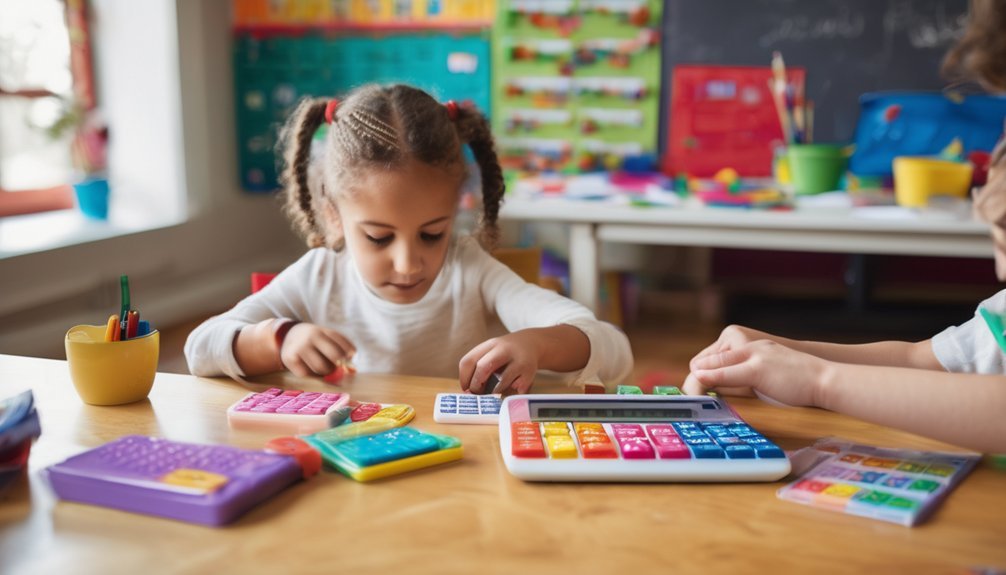
Start with a kid-friendly money calculator that’s simple, visual, and easy to use. You should pick interactive tools that show coins, bills, totals, and change in clear steps.
Look for visual aids such as color coding, icons, and large numbers, because they help kids connect actions with results. Choose calculators with few buttons, straightforward labels, and instant feedback so your child can experiment without confusion.
You can test whether the layout supports quick learning by checking if a child can add, subtract, or count money with minimal guidance. Prioritize tools that let you adjust difficulty as skills improve.
A good calculator keeps the focus on understanding money, not on navigating a complicated interface.
Teach Skills Kids Learn With Money Calculators
Once you’ve picked a kid-friendly calculator, use it to teach core money skills in a hands-on way. Start with simple addition and subtraction so your child can total prices, compare amounts, and see how change works.
Then move to multiplication and division to build stronger money concepts, like grouping coins or splitting costs. You can also practice estimating before calculating so kids learn to check answers and spot mistakes.
Show how decimals connect to dollars and cents, since that’s essential for real-world use. As you guide each problem, ask your child to explain the steps aloud. That habit strengthens financial literacy and builds confidence.
Keep sessions short, focused, and consistent, and you’ll help kids master practical skills they can use every day.
Use Calculators for Allowance Lessons

To make allowance lessons more meaningful, use a calculator to show how earning, saving, and spending work together. You can turn each payment into a quick math check that builds allowance management skills and supports budgeting basics.
Ask your child to calculate totals, then compare choices. Keep it simple and repeatable:
- Enter weekly allowance.
- Subtract planned spending.
- Add savings each week.
- Review the remaining amount.
This process helps you explain tradeoffs without pressure. When kids see numbers change, they understand that every choice affects what’s left.
Use the calculator often, and let them do the steps themselves. That practice builds confidence, sharpens decision-making, and makes money lessons feel real.
Help Kids Build a Simple Budget
After kids can total their allowance with a calculator, you can help them turn those numbers into a simple budget. Start by listing income, then divide it into clear categories like needs, wants, and goals.
Use a calculator to assign amounts and keep the math exact. Show them budgeting techniques such as setting limits, checking totals, and adjusting when a category runs short.
Keep the plan visible on paper or in a spreadsheet so they can review it often. Ask them to compare planned amounts with actual spending and explain any differences.
This routine builds financial literacy because it teaches them to make decisions before money disappears. When you guide the process, kids learn that a budget isn’t restrictive; it’s a tool for control.
Practice Saving, Spending, and Sharing

With a simple budget in place, you can help kids divide their money into three clear purposes: saving, spending, and sharing. Guide them to assign each dollar before they spend it. Use free calculators to test different amounts and compare outcomes.
Then walk through these steps:
- Set a saving goal and track progress.
- Create spending scenarios for wants and needs.
- Choose a sharing target for gifts or causes.
- Review saving challenges when goals feel hard.
You’ll teach them to delay impulse buys, make informed choices, and see money as a tool with direction. Keep the process consistent, and ask them to explain their decisions. That habit builds judgment faster than lectures.
Make Money Lessons Into Games
Turn money lessons into simple games so kids stay engaged while they learn. You can use free calculators to create quick challenges that compare prices, track allowances, or split chores into points.
Set clear rules, a target, and a timer, then let your child solve the problem and check the answer. When you turn practice into money games, you make repetition feel rewarding instead of dull.
Try store-shelf matchups, coin-count races, and save-or-spend decision rounds. Ask your child to explain each choice, because verbal review deepens understanding.
Keep scores visible and celebrate progress, not perfection. These interactive lessons build confidence, sharpen math skills, and help kids connect money choices to real outcomes.
Over time, they’ll apply the same logic outside the game.
Avoid Common Money Teaching Mistakes
Avoid teaching money as a lecture, because kids learn best when they can see, touch, and practice real choices. You’ll build stronger financial literacy when you avoid common money misconceptions early.
Don’t let kids think money appears without work, that saving means never spending, or that one mistake ruins everything. Instead, use free calculators to show tradeoffs, goals, and growth.
- Let them compare wants and needs.
- Show how small savings add up.
- Explain credit, debt, and interest simply.
- Review mistakes without shame, then reset.
When you correct errors calmly, you teach judgment, not fear. That’s how kids gain confidence, make better decisions, and learn that money skills improve with practice, reflection, and repetition.
Frequently Asked Questions
What Age Can Kids Start Using Money Calculators?
Kids can start using money calculators around age 5 or 6, once you can count with them. You’ll build money management skills and financial literacy by guiding simple addition, subtraction, and comparison exercises.
Are Online Calculators Safer Than Physical Ones for Children?
Yes, online calculators can be safer if you use strong digital safety settings and parental controls. You should choose trusted sites, supervise use, and disable ads or chats. Physical calculators avoid internet risks, but they’re easier to lose.
How Do I Choose Calculator Settings for Younger Kids?
Choose large buttons, simple display, and basic operations first. You’ll limit distractions and boost child engagement by matching calculator features to your child’s reading level, then gradually add memory or percent functions as they grow.
Can Calculators Help Teach Coin Values Before Addition?
Yes, you can use calculators to teach coin values before addition. You’ll build coin recognition, check totals, and connect coins to practical applications. Start with one coin type, then compare values and count confidently.
What Should I Do if My Child Makes Calculator Mistakes?
You should pause, review the steps, and ask your child to explain the error, like Sherlock with clues. Use mistake analysis to spot patterns, then practice again; you’ll build learning patience and sharper calculator habits.
Conclusion
When you teach kids money with free calculators, you turn abstract numbers into something they can touch and understand. I once watched a child light up after adding her allowance and realizing she could afford a toy by saving two weeks longer—like a small seed growing into a sturdy tree. Keep lessons simple, playful, and consistent. If you use games, budgets, and real-life choices, you’ll build money skills that stick and confidence that lasts.