
Imagine you've just put your baby down for a nap and you have a few moments to yourself. You might consider trying some yoga poses tailored specifically for new moms like you. Starting with the Child's Pose can help you release tension in your back and shoulders, areas that often suffer from carrying and nursing your little one. But that's just the beginning. As you explore poses like the Bridge or Warrior II, you'll find they not only strengthen your body but also help reclaim your sense of self. Curious about how these can fit into your daily routine and what other benefits they might offer?
Key Takeaways
- Child's Pose: Ideal for relaxation and stress relief, enhancing hip, thigh, and ankle flexibility.
- Bridge Pose: Strengthens core and abdominal muscles, aiding in post-pregnancy recovery.
- Cat-Cow Stretch: Increases spinal flexibility and relieves back tension, perfect for warming up.
- Warrior II: Builds stability and leg strength, crucial for physical recovery and balance.
- Corpse Pose: Promotes deep relaxation and mindfulness, essential for mental and emotional well-being.
Benefits of Yoga for New Moms
Yoga offers tremendous benefits for new moms, helping you regain strength and manage stress during this transformative time. As you navigate the joys and challenges of postpartum recovery, integrating yoga into your daily routine can be a game-changer.
It's not just about physical poses; it's also about embracing mindfulness techniques that foster a deeper awareness of your body and emotional state. Practicing yoga helps you cultivate patience and calm, essential qualities as you adjust to your new role.
By focusing on your breath and being present in each moment, you'll find a unique space where you can heal both physically and mentally. These practices encourage a gentle return to fitness, promoting circulation, enhancing flexibility, and strengthening the core muscles affected during pregnancy and childbirth.
Yoga also offers a community of support, connecting you with other moms who share similar experiences. This sense of community can be incredibly uplifting, reminding you that you're not alone in your journey.
Child's Pose for Relaxation
After exploring the general benefits of yoga for new moms, let's focus on a specific pose that can significantly aid your relaxation and recovery process: the Child's Pose. This gentle, accessible pose is perfect for moments when you need a break from the demands of new motherhood. It helps you focus on your breathing and fosters a sense of calm.
Here's how Child's Pose can benefit you:
| Benefit | Description |
|---|---|
| Reduces stress | Encourages deep breathing, alleviating stress. |
| Enhances flexibility | Gently stretches hips, thighs, and ankles. |
| Promotes recovery | Helps relax the body and refresh the mind. |
| Boosts mindfulness | Allows for introspection and mental clarity. |
To practice this pose, kneel on the floor, sit back on your heels, then lean forward, extending your arms in front of you or alongside your body, resting your forehead on the mat. As you settle into the pose, concentrate on your breathing techniques, inhaling deeply and exhaling slowly. This practice not only enhances your physical well-being but also integrates mindfulness practices into your routine.
Cat-Cow Stretch for Flexibility
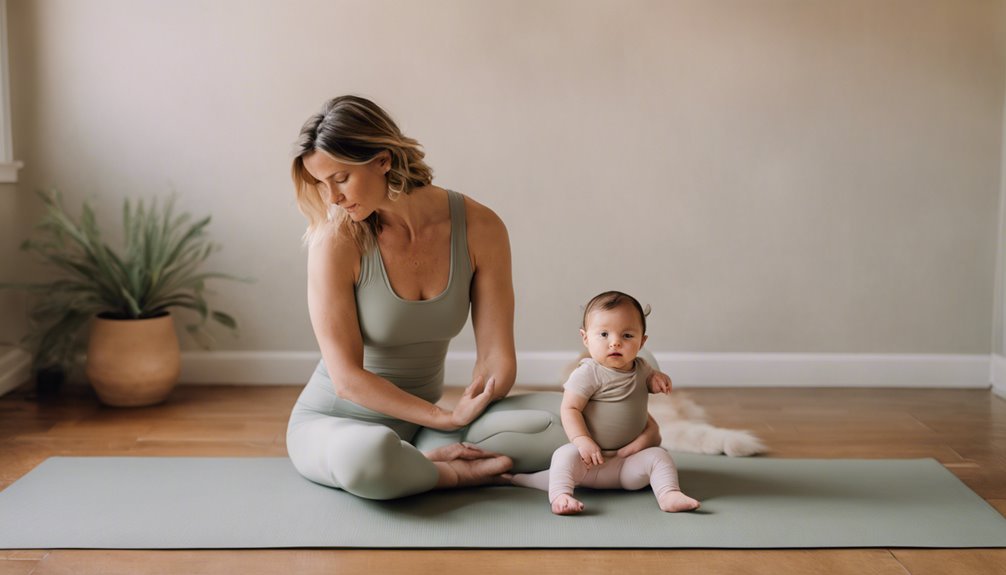
Continuing with beneficial stretches for new moms, the Cat-Cow Stretch provides a wonderful way to enhance your flexibility and relieve tension in your back. This simple yet effective movement can be a cornerstone in your daily routine to help restore your body's natural alignment and ease muscle stiffness.
To perform this stretch, start on your hands and knees, ensuring your wrists are under your shoulders and your knees under your hips. As you inhale deeply, arch your back, letting your belly drop toward the floor, and lift your head and tailbone upwards. This is the Cow position. On the exhale, round your spine towards the ceiling, tucking your chin to your chest and drawing your belly to your spine. This transitions you into the Cat position.
The cat cow benefits are immense, especially in improving postural issues and increasing spinal flexibility. Regularly practicing the Cat-Cow Stretch helps in maintaining a healthy spine and can also boost your mental focus by encouraging deep, rhythmic breathing.
It's a gentle way to warm up your body before engaging in more vigorous activity or to wind down after a busy day. Keep these flexibility tips in mind as you move, and you'll find both your body and mind reaping the rewards.
Bridge Pose for Core Strength
While the Cat-Cow Stretch focuses on flexibility, shifting to the Bridge Pose can significantly strengthen your core, which is vital for new moms looking to regain abdominal strength.
This pose not only helps in core engagement but also supports your postpartum recovery.
To start, lie on your back with your knees bent and feet flat on the floor, hip-width apart. Place your arms at your sides with palms facing down.
As you inhale, press your feet and arms firmly into the floor and lift your hips toward the ceiling. Hold this lift, focusing on tightening your abdominal muscles to engage your core.
The key here is to keep your chin away from your chest to maintain a gentle curve in your neck.
You're not just working on rebuilding strength; you're nurturing your body's return to its pre-pregnancy state.
Hold the pose for a few breaths, then exhale slowly as you lower your hips back to the floor.
Repeat this several times, allowing the rhythm of your breath to guide your movement.
Each time you lift into the bridge, imagine drawing strength from your core, empowering yourself through your recovery journey.
Warrior II for Stability
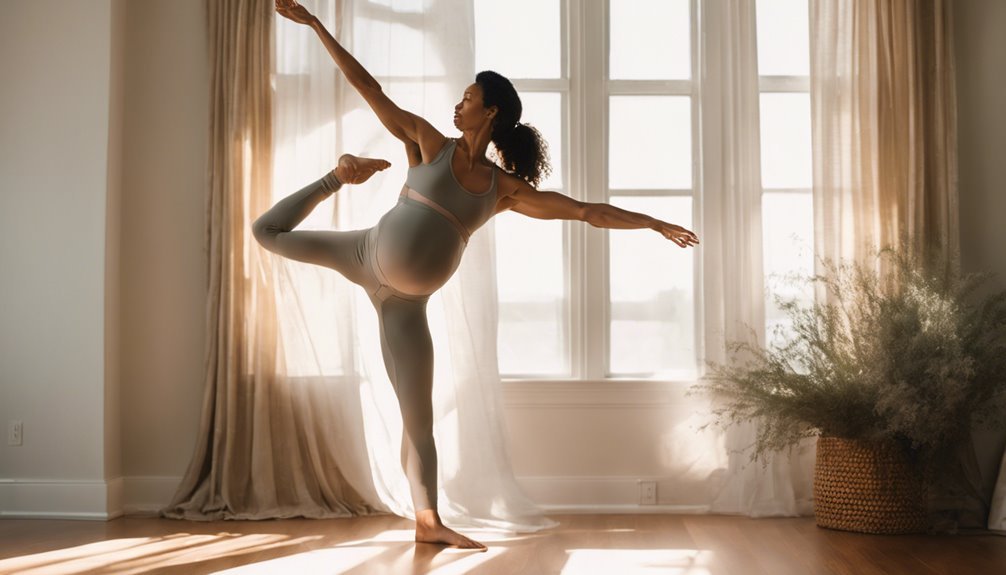
Transitioning to Warrior II pose offers exceptional benefits for enhancing your stability and balance, crucial as you navigate motherhood's physical demands. As you find your footing in this new role, Warrior II can be a grounding force.

To begin, stand with your feet wide apart, extending your arms parallel to the floor. Turn your right foot out 90 degrees and your left foot in slightly. Bend your right knee so it aligns directly over your right ankle, maintaining a strong, stable base. This warrior alignment isn't just about physical form; it's also about mental fortitude, focusing your energy on maintaining stability through life's shifts.
Keep your torso even between your hips, and gaze over your right hand. This not only improves your physical balance but also centers your mind, fostering a stability focus that's invaluable both on and off the yoga mat. Hold the pose, breathing deeply, feeling your leg muscles work and your spine lengthen.
Warrior II is more than an exercise; it's a practice in maintaining composure and strength amidst the constant changes of motherhood. It's about grounding yourself, finding stability in your new journey, and embracing each moment with confidence and grace.
Triangle Pose for Balance
After mastering Warrior II, you'll find the Triangle Pose an excellent next step to enhance your balance and coordination. This pose not only helps in stretching your muscles but also strengthens your mental resolve, which as a new mom, you know is as crucial as physical strength.
To get into Triangle Pose, step your feet about leg-length apart, turning one foot out by 90 degrees and the other in slightly. Extend your arms to the sides and bend over your front leg, reaching your front hand to your ankle, a yoga block, or the floor, depending on your comfort level. Your other arm should stretch up towards the sky, aligning with your shoulders.
Gaze can be directed toward your upper hand or straight ahead, based on what feels best for your neck. This position challenges your balance and improves stability, essential for your busy days.
Integrating balance techniques into your routine with yoga modifications can greatly aid your body's adjustment post-pregnancy. Remember, it's okay to take it slow and use props like blocks or a wall for support as you build your strength and confidence in this new phase of life.
Seated Forward Bend for Calm
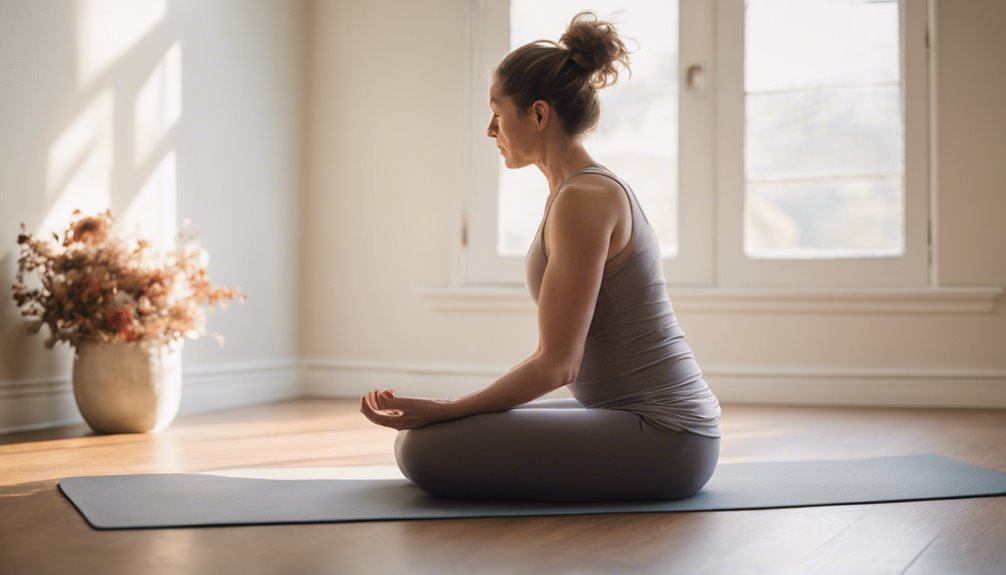
Ease into the Seated Forward Bend to cultivate a sense of calm and tranquility amidst the demands of motherhood. This pose isn't just a stretch; it's a moment for you to reconnect with your inner self. As you fold forward, allow the exhale to lengthen and deepen, engaging in mindful breathing that centers your mind and soothes your spirit.
Start by sitting with your legs extended forward. Inhale deeply, lifting your arms overhead to elongate your spine. As you exhale, hinge at your hips and gently fold over your legs. Don't worry about how far you go; it's about feeling the stretch along your back and legs while maintaining a smooth, steady breath.
Hold this position and focus on your breathing. With each inhale, think of filling your body with calm energy, and with each exhale, release the tension and fatigue. This practice isn't only restorative but also a powerful way to practice self-care.
Corpse Pose for Deep Rest
While the Seated Forward Bend helps you to reconnect and calm, lying in Corpse Pose offers the deep rest your body and mind truly need as a new mom. It's not just a momentary pause; it's one of the most profound restorative practices in yoga, providing you with an opportunity to surrender the constant demands of motherhood and immerse yourself in peacefulness.
To fully embrace Corpse Pose, lie flat on your back, let your feet fall naturally to the sides, and place your arms alongside your body, palms facing upward. Close your eyes and focus on mindful breathing; inhale deeply, feeling your chest rise, and exhale slowly, sensing the tension melting away from your body.
Here's a simple table to help you connect the benefits of Corpse Pose with the emotions you might be experiencing:
| Emotion | Benefit |
|---|---|
| Overwhelm | Calms the mind, reducing stress |
| Fatigue | Energizes by allowing complete relaxation |
| Disconnect | Reconnects you with your body's needs |
Pelvic Floor Exercises
Strengthening your pelvic floor is crucial after childbirth, as it supports your recovery and enhances your overall wellbeing.
Focusing on pelvic awareness and core activation can significantly improve your strength and stability, helping you to better care for your new baby.
Here's how you can start:
- Kegels: Begin by contracting the muscles you'd use to stop the flow of urine. Hold for five seconds, then release. Repeat 10 times, aiming for three sets per day. This exercise directly targets your pelvic floor, enhancing pelvic awareness.
- Bridge Pose: Lie on your back with your knees bent and feet flat on the floor, hip-width apart. Engage your core and lift your hips towards the ceiling, squeezing your buttocks at the top. Hold for three breaths, then slowly lower back down. This pose aids in core activation while also strengthening your glutes.
- Pelvic Tilts: Lie on your back with your knees bent. Flatten your back against the floor by contracting your abdominal muscles and tilting your pelvis up slightly. Hold for a few seconds, then release. Repeat 15 times, focusing on slow, controlled movements.
- Heel Slides: Lying still on your back, slowly slide one heel at a time away from your body, then back towards your buttocks. Maintain a flat back on the floor to engage your core throughout the movement.
These exercises serve as a foundation for rebuilding your strength and supporting you in your journey as a new mom.
Side Plank for Oblique Toning
Transitioning to side planks can really ramp up your postnatal fitness routine by targeting your obliques, which often need attention after childbirth.
This pose not only helps in oblique strengthening but also stabilizes your core, which is crucial as you juggle the new demands of motherhood.
To start, you might want to try a basic side plank. Lie on your side and prop yourself up on your elbow, ensuring it's directly under your shoulder for proper alignment.
Stack your legs and lift your hips off the ground, forming a straight line from your head to your feet. Hold this position as you breathe deeply, aiming for 20-30 seconds before switching sides.
As you grow stronger, explore side plank variations to challenge yourself further and keep your muscles engaged.
For instance, try lifting your top leg or arm to add intensity, or even dip your hips slightly and lift them again to really work those obliques.
Downward Dog for Overall Stretch
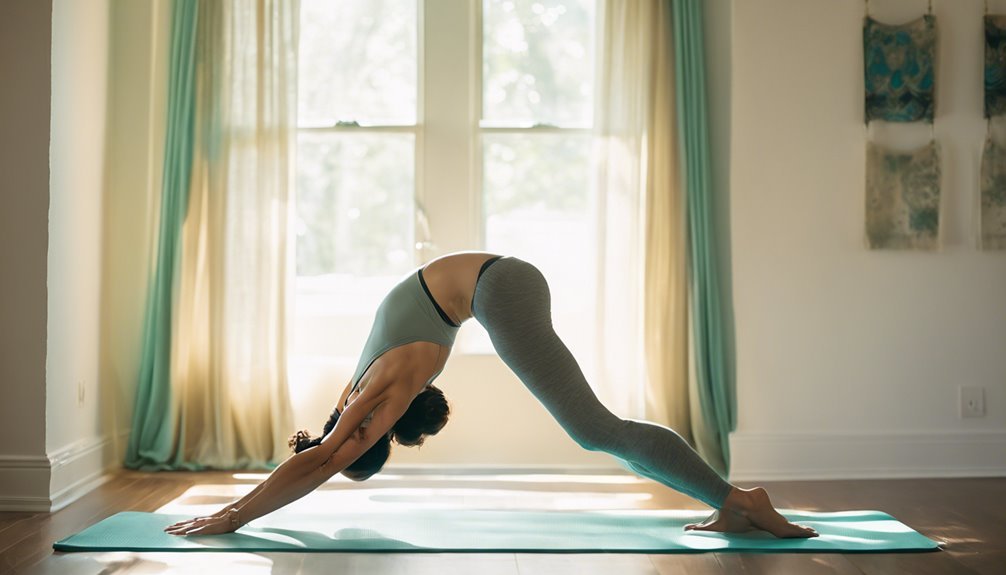
After focusing on your obliques with side planks, it's beneficial to incorporate poses that stretch and rejuvenate your entire body. Downward Dog is a fantastic choice to help you regain strength and flexibility. This pose not only stretches your back, hamstrings, and calves, but it also helps to build upper body strength.
Here's how you can maximize its benefits:
- Start with Proper Alignment: Plant your hands firmly on the mat, shoulder-width apart. Ensure your feet are hip-width apart, toes pointing forward.
- Engage Your Core: Actively engage your abdominal muscles to support your spine. This engagement also deepens the stretch in your legs, maximizing the mind-body connection.
- Focus on Your Breath: Inhale deeply to prepare, then exhale as you lift your hips towards the ceiling. With each breath, try to deepen the pose, stretching further and enhancing relaxation.
- Hold and Reflect: Maintain the pose for several breaths. Reflect on the strength and resilience of your body, acknowledging the work you're doing for yourself.
Downward Dog is more than just a physical stretch; it's a moment of connection between your mind and body, enhancing your overall well-being while you nurture others.
Gentle Twists for Spinal Health
Continuing your postnatal yoga journey, gentle twists can be incredibly beneficial for maintaining spinal health as you navigate the demands of motherhood. Twisting poses help restore and retain your spine's natural range of motion, and can be wonderfully soothing after a day of carrying or nursing your little one.
Start with simple, seated twist variations which allow you to control the intensity and ensure proper spinal alignment. Sit cross-legged on the floor, inhale deeply, and as you exhale, gently twist your torso to the right, placing your left hand on your right knee and your right hand behind you for support. Hold this for a few breaths, then slowly return to the center and repeat on the other side.
These twists not only aid in alleviating back pain but also promote better digestion and encourage a re-centering of your mind and emotions.
Frequently Asked Questions
How Soon After Delivery Can I Start Yoga?
You can start yoga as soon as you feel ready after delivery, typically after your doctor gives the go-ahead, often around 6 weeks for a natural birth.
Focus on gentle, restorative poses and consider yoga modifications to support your postpartum recovery.
Remember, every body is different, so listen to yours and ease back into your practice.
It's a wonderful way to nurture yourself while adjusting to motherhood.
Are Online Yoga Classes Effective for New Moms?
Absolutely, online yoga classes are a beacon of flexibility and convenience for you as a new mom.
Virtual yoga benefits like accessibility from the comfort of your home allow you to weave your wellness journey into your new routine seamlessly.
These classes adapt to your schedule, offering a supportive community at your fingertips, ensuring you don't have to sacrifice your well-being while you nurture your little one.
Can Yoga Help With Postpartum Depression?
Yes, yoga can indeed help with postpartum depression.
By integrating mindfulness techniques, it offers you a way to reconnect with your body and find calm.
Yoga creates a space for emotional support, allowing you to process and release stress.
It's a gentle, empowering practice that nurtures your mental health.
Don't hesitate to reach out for professional advice as well, combining these tools to better serve your wellbeing during this transformative time.
What Should I Wear for Postnatal Yoga Sessions?
Just as a soft embrace soothes the soul, comfortable fabrics will enhance your postnatal yoga experience.
Opt for breathable, stretchy materials that allow you freedom of movement. Supportive leggings are essential—they'll hold everything in place as you flow from pose to pose.
Choose tops that are easy to move in and perhaps layer with a cozy wrap or shawl for relaxation sessions.
How Long Should a Postnatal Yoga Session Last?
You should aim for postnatal yoga sessions that last between 20 to 30 minutes, especially when you're just starting.
It's important to listen to your body and adjust the duration based on how you feel.
Keep the session intensity moderate; it's about nurturing and healing your body, not pushing it too hard.
Gradually, you can increase the duration as your strength and endurance improve, always prioritizing your comfort and well-being.
Conclusion
As a new mom, embracing yoga can be transformative. Did you know that 75% of new mothers report significant improvements in physical and mental health after starting yoga? By integrating poses like Child's Pose and Bridge Pose, you'll not only boost your recovery but also enhance your overall well-being. So, give yourself this gift of renewal. Remember, every pose strengthens not just your body but your journey in motherhood. You're doing great, keep going!