Think of writing as a garden, where puzzles act as the nourishing rain that helps your ideas bloom. By incorporating crossword and word search challenges into your routine, you can cultivate a richer vocabulary and sharpen your creativity. This approach not only makes the process enjoyable but also enhances your storytelling skills. What might you discover about your writing style when you embrace this playful method?
Key Takeaways
- Engaging with crossword puzzles enhances vocabulary, enriching word choice in writing and fostering narrative depth.
- Word searches spark creativity by revealing hidden words that can inspire new storylines or concepts.
- Logic puzzles improve critical thinking skills, enhancing problem-solving abilities that benefit writing clarity and coherence.
- Starting writing sessions with puzzles warms up the brain, leading to more fluid and creative writing.
- Incorporating puzzles into writing routines can lead to unexpected themes or characters, enriching narrative development.
The Connection Between Writing and Puzzles

While you mightn’t immediately see a link between writing and puzzles, both activities engage your brain in similar ways. When you tackle a puzzle, you’re piecing together clues and expanding your understanding, just like when you’re crafting a narrative.
Each word you choose is a piece of a larger picture, and every puzzle solved sharpens your critical thinking. As you explore different clues, you develop a sense of creativity and fluidity that translates directly to your writing. You learn to think outside the box, finding unique connections and solutions.
Plus, the satisfaction you feel when completing a puzzle mirrors the joy of finishing a piece of writing. Both pursuits ignite your imagination, fostering a deeper connection to the world around you.
Enhancing Vocabulary Through Crossword Challenges
Crossword puzzles serve as a fun and engaging way to enhance your vocabulary, especially when you challenge yourself with new and unfamiliar words. As you fill in the blanks, you not only learn definitions but also discover synonyms and nuances of meanings that enrich your language skills.
| Word | Definition |
|---|---|
| Ephemeral | Lasting a very short time |
| Mellifluous | Sweet or musical; pleasant to hear |
| Quixotic | Exceedingly idealistic; unrealistic |
| Ubiquitous | Present, appearing, or found everywhere |
With each puzzle, you’re not just playing; you’re growing. Celebrate each solved clue, and let your new vocabulary seep into your writing, making it more vibrant and expressive. Enjoy the journey of learning!
Boosting Creativity With Word Searches

Engaging with word searches can spark your creativity in unexpected ways, as you hunt for hidden words and patterns. As you scan the grid, your mind begins to loosen up, allowing fresh ideas to bubble to the surface.
Each word you uncover can evoke memories, feelings, or even new storylines waiting to unfold. You’ll find your imagination dancing along with the letters, connecting ideas that might’ve seemed unrelated before.
This playful interaction not only sharpens your focus but also encourages you to think outside the box. So grab a word search, let your mind wander, and watch how it transforms your perspectives.
You might just discover fresh inspiration for your writing, all hidden within those little squares.

Logic Puzzles: Strengthening Critical Thinking Skills
Although they may seem like mere entertainment, logic puzzles are powerful tools for enhancing your critical thinking skills. As you tackle these challenges, you’re not just having fun; you’re sharpening your mind. Each puzzle invites you to analyze information, draw conclusions, and think creatively.
You’ll find yourself connecting dots you might’ve overlooked before, fostering a deeper understanding of how to approach problems. When you dive into a logic puzzle, you’re exercising your brain, improving your ability to reason and make decisions.
This practice can translate into your everyday life, making you a more adept thinker and communicator. So, embrace these puzzles, and watch as your critical thinking skills flourish, enriching both your writing and your overall problem-solving abilities.
Incorporating Puzzle Play Into Daily Writing Routines

Incorporating puzzle play into your daily writing routine can boost creativity and spark new ideas.
Try starting your day with a quick crossword or word search. These engaging activities warm up your brain, making it easier to dive into your writing. As you solve puzzles, jot down any intriguing words or phrases that catch your attention.
This practice can lead to unexpected themes or characters in your writing. You might even create a puzzle-themed story, letting the challenge guide your narrative.
Don’t underestimate the power of play; it keeps your mind agile and open. Embrace these moments, and watch how they enhance your writing journey, making it richer and more enjoyable.
Collaborative Puzzle Activities for Group Writing Sessions
While working together on a group writing project, collaborative puzzle activities can ignite creativity and strengthen teamwork. Engaging in these activities not only breaks the ice but also fosters a sense of closeness.
Here are three fun ways to incorporate puzzles into your sessions:
- Story Building Puzzle: Create a large jigsaw puzzle where each piece represents a sentence. As you put it together, you’ll craft a cohesive story.
- Word Search Challenge: Design a word search with key themes from your writing. It’ll encourage discussions and spark new ideas.
- Collaborative Crossword: Work as a team to fill in a crossword with terms related to your project, enhancing vocabulary and concept understanding.
These activities can turn writing into a delightful, shared experience!
Tracking Progress: Measuring Growth in Writing Skills Through Puzzles
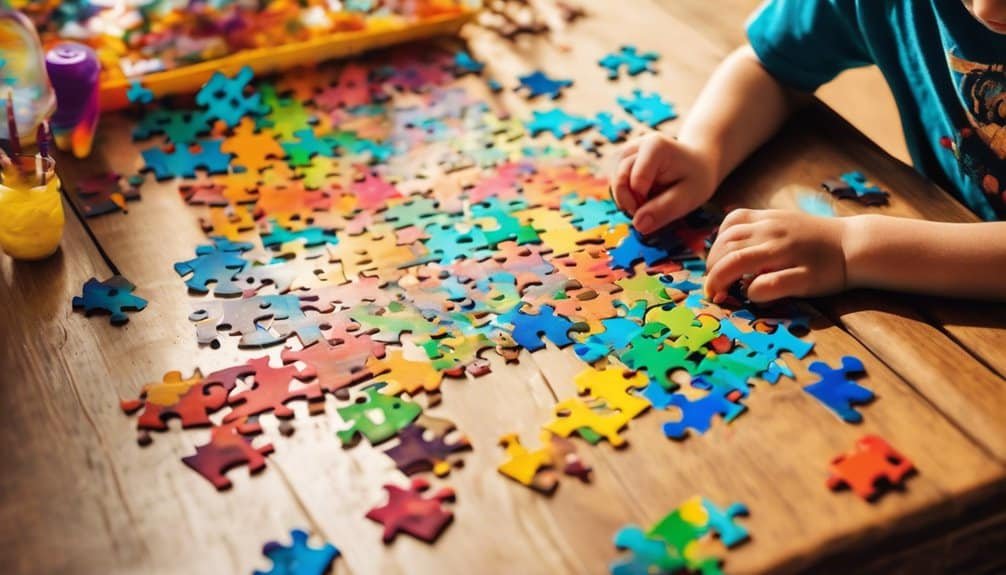
As you engage in puzzle-based activities, tracking your progress in writing skills becomes a dynamic and enjoyable process. You’ll notice how your vocabulary expands while piecing together clues, enhancing your ability to express thoughts clearly.
Each puzzle not only challenges your mind but also encourages you to experiment with new sentence structures and styles.
Keep a journal to note your reflections after each session. Jot down the new words you’ve learned or the writing techniques you’ve applied. Over time, you can revisit these entries to see your growth, celebrating those small victories.
This personalized approach turns puzzle play into a journey of discovery, making your writing practice feel intimate and rewarding. Embrace each step, and watch your skills flourish!
Frequently Asked Questions
What Types of Puzzles Are Best for Beginners?
When you’re starting out, jigsaw puzzles with larger pieces or simple crosswords are perfect. They build your confidence and make the experience enjoyable. You’ll find that as you progress, your skills will grow effortlessly.
How Often Should I Incorporate Puzzles Into Writing Practice?
You should incorporate puzzles into your writing practice a few times a week. This keeps your mind engaged and fosters creativity. Regular play will deepen your connection to writing, making it more enjoyable and rewarding.
Are There Specific Puzzles for Different Age Groups?
Absolutely! You’ll find age-specific puzzles like crosswords for teens, word searches for kids, and logic puzzles for adults. Each puzzle, like a gentle breeze, invites curiosity, enhancing skills while keeping the fun alive.
Can Digital Puzzles Be as Effective as Physical Ones?
Digital puzzles can be just as effective as physical ones. You’ll find they engage your mind similarly, offering convenience and variety. Plus, the interactive elements can enhance your experience, keeping it fresh and exciting.
What Tools Can Help Create Custom Puzzles for Writing?
To create custom puzzles for writing, you can use online puzzle makers, design software, or even simple word processors. Embrace your creativity and experiment with different formats to make your writing process more engaging and fun!
Conclusion
Incorporating puzzle play into your writing practice not only invigorates your creativity but also sharpens your language skills. By embracing the challenges of crosswords and word searches, you’ll discover new vocabulary and ideas that can elevate your storytelling. So, why not turn your writing routine into a playful adventure? As you engage in these fun activities, you’ll find that both your critical thinking and narrative flair flourish, making your writing more dynamic and vibrant than ever.