
Did you know that babies can start crawling anywhere between 6 to 10 months, but some might surprise you by starting earlier or later? Understanding the signs of readiness and the developmental milestones leading up to crawling can be crucial for supporting your little one’s growth. As you explore this journey together, you’ll discover fascinating variations in crawling styles and the importance of tummy time. What does this mean for your baby’s development?
Key Takeaways
- Most babies begin crawling between 6 to 10 months, although some may start earlier or later.
- Signs of crawling readiness include rocking back and forth and pushing up during tummy time.
- Developmental milestones such as head control typically develop around 4 to 6 months.
- Common crawling styles include classic hands-and-knees crawl, army crawling, and scooting.
- Every baby develops at their own pace, so celebrating small achievements is important.
Typical Age Range for Crawling
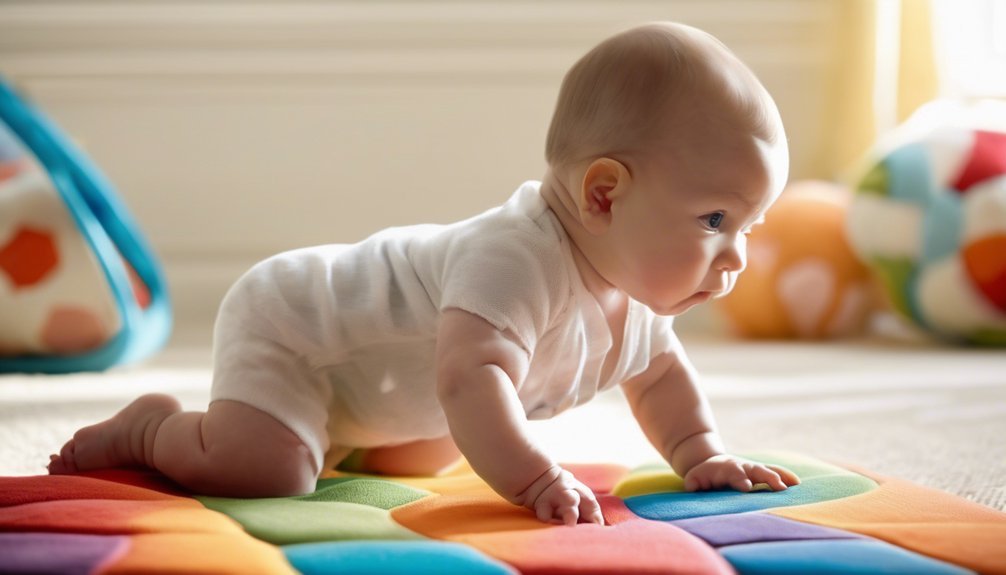
Most babies begin to crawl between 6 to 10 months, although some might start earlier or later.
As you observe your little one, look for crawling readiness signs, such as rocking back and forth on hands and knees or pushing up from a tummy position. These behaviors indicate their eagerness to explore the world around them.
Typical crawling patterns can vary; some babies may adopt a classic hands-and-knees crawl, while others might prefer scooting or army crawling.
It’s essential to remember that every baby develops at their own pace, so try to embrace this unique journey. Celebrate each small achievement, as your baby’s growing independence is a beautiful milestone in their development.
Enjoy every moment as they prepare to discover new adventures!
Developmental Milestones Leading to Crawling
As your baby grows, you’ll notice several key developmental milestones that pave the way for crawling.
Around 4 to 6 months, your little one will start to gain head control, a crucial step in their developmental progression. As they become more comfortable on their tummies, they may begin to push up during tummy time, strengthening their arms and core.
Soon after, they’ll rock back and forth, experimenting with different crawling techniques. This newfound strength and coordination will lead them to shift their weight and eventually propel themselves forward.
Each milestone builds upon the last, encouraging your baby’s exploration of the world. Celebrate these moments—they’re essential for fostering independence and curiosity as your child prepares for their crawling journey!
Types of Crawling Movements
While each baby develops at their own pace, you’ll likely observe a variety of crawling movements as they explore their newfound mobility.
These movements not only help them get around but also promote strength and coordination.
Here are some common types of crawling you might see:
- Belly crawling: Dragging their tummy along the floor.
- Army crawling: Using their arms to pull forward while their belly stays down.
- Bear crawling: Moving on hands and feet, with hips raised.
- Crab crawling: Sideways movement on hands and feet.
- Scooting movement: Shifting on their bottom, often accompanied by rolling over or side crawling.
Each style is unique and showcases your baby’s growing skills, so cherish these moments of exploration!
Factors Influencing Crawling Readiness
A variety of factors can influence when your baby becomes ready to crawl, and understanding these elements can help you support their development.
One significant factor is muscle strength; your little one needs to build the core and arm muscles necessary for crawling. This process takes time and varies from child to child.
Environmental factors also play a crucial role. A safe, open space with toys that encourage movement can motivate your baby to explore and practice crawling.
Additionally, your involvement, like encouraging tummy time and providing positive reinforcement, can enhance their readiness.
The Role of Tummy Time
Tummy time is crucial for your baby’s development, especially when it comes to crawling. This practice not only strengthens their neck and shoulder muscles but also enhances motor skills and spatial awareness.
Here are some tummy time benefits you can look forward to:
- Builds core strength, essential for crawling
- Encourages hand-eye coordination
- Reduces the risk of flat spots on the head
- Provides sensory exploration opportunities
- Fosters bonding through interaction
Incorporating tummy time activities like playing with toys, using a mirror, or lying down next to your baby can make this experience enjoyable.
Safety Precautions for Crawlers
As your baby begins to crawl, ensuring their safety becomes a top priority. Start with baby proofing tips like securing heavy furniture to the wall and covering electrical outlets.
It’s crucial to create safe crawling environments by removing small objects that could pose choking hazards. Use safety gates to block off stairs and other risky areas, giving your little one the freedom to explore without fear.
Keep sharp edges covered with corner guards and be mindful of any cords or strings that could entangle them.
Lastly, regularly check your home for new hazards as your baby grows and becomes more adventurous.
Encouraging Crawling Through Play
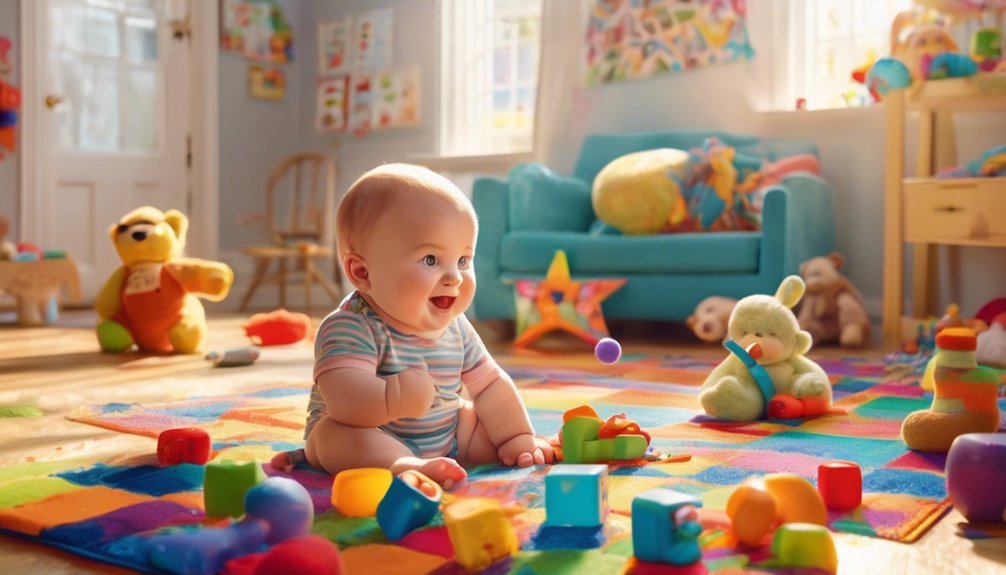
While your baby may naturally start crawling at their own pace, you can actively encourage this important milestone through engaging play.
Creating playful environments filled with stimulating activities can inspire your little one to move. Here are some ideas to get started:
- Set up a soft play area with varied textures.
- Use interactive toys that make sounds or light up to spark interest.
- Place toys just out of reach to motivate crawling.
- Join in the fun by crawling alongside them, showing them how it’s done.
- Ensure plenty of tummy time to strengthen those essential muscles.
Recognizing When Your Baby Is Ready
Understanding when your baby is ready to crawl can be an exciting part of their development. You’ll want to start recognizing cues that indicate readiness, like your little one pushing up on their hands and knees or rocking back and forth.
As you observe their behavior, notice if they’re showing interest in moving towards toys or familiar faces. These moments can signal a desire to explore their surroundings.
Keep an eye out for increased muscle strength, as babies often need to build the core and arm strength necessary for crawling. By tuning into these signs, you’ll not only support their journey but also deepen your bond as you encourage their natural curiosity and independence.
Variations in Crawling Styles
Have you noticed that not all babies crawl in the same way? It’s fascinating to see the different crawling styles your little one might develop. Each baby has their own unique movement patterns, and that’s perfectly normal.
Here are some common variations you may observe:
- Classic Crawl: Moving on hands and knees.
- Commando Crawl: Dragging their body while pulling with arms.
- Bear Crawl: Walking on hands and feet, with hips raised.
- Side-Scoot: Shuffling sideways while sitting.
- Rolling: Using rolls to navigate instead of traditional crawling.
Understanding these different crawling styles can help you appreciate your baby’s individual journey.
Embrace each stage with love, knowing every movement is a step toward exploring their world!
The Connection Between Crawling and Other Skills
Crawling isn’t just a milestone on its own; it plays a significant role in the development of various skills. As your baby starts to crawl, you’ll notice improvements in their cognitive development and motor skills. Crawling benefits go beyond physical movement; it enhances problem-solving abilities and spatial awareness. Here’s a quick look at how crawling connects to other essential skills:
| Skill | Connection to Crawling | Developmental Benefits |
|---|---|---|
| Motor Skills | Strengthens limbs | Improved coordination |
| Cognitive Skills | Encourages exploration | Enhanced learning |
| Social Skills | Interaction with others | Builds communication skills |
| Spatial Awareness | Navigating surroundings | Understanding depth |
| Emotional Skills | Boosts confidence | Fosters independence |
Embrace this journey, as each crawl brings your little one closer to new discoveries!
When to Consult a Pediatrician
When should you consider consulting a pediatrician about your baby’s crawling progress?
It’s essential to stay attuned to your little one’s development. If you notice any signs of concern, it might be time to reach out for professional advice.
Here are some indicators:
- Your baby isn’t showing interest in crawling by 10 months.
- There’s a lack of movement or muscle tone in the arms and legs.
- Your baby seems unusually stiff or floppy.
- They struggle to balance when sitting or seem disinterested in tummy time.
- There’s a noticeable regression in skills they previously mastered.
Trust your instincts; you know your baby best.
Consulting early can provide peace of mind and ensure your child’s healthy development.
Celebrating Your Baby’s Crawling Journey
As your baby reaches milestones in their development, celebrating their crawling journey can be an exciting and rewarding experience. Crawling isn’t just about movement; it’s a gateway to baby exploration and understanding their environment. Each little inch forward marks a significant achievement worth recognizing.
Here’s a simple way to track and celebrate these crawling milestones:
| Milestone | Age Range | Celebration Ideas |
|---|---|---|
| First Crawl | 6-10 months | Take a video or photo |
| Crawling Style | 8-12 months | Create a mini obstacle course |
| Mastery | 10-14 months | Host a crawling playdate |
Encouraging your baby’s exploration fosters confidence and curiosity, turning each crawl into a cherished memory for both of you.
Frequently Asked Questions
Can Babies Crawl With a Cast or Brace on Their Legs?
If your baby’s in a cast or brace, crawling might present challenges. However, with appropriate mobility aids and support, they can still explore their surroundings. Patience and encouragement will help them adapt to this temporary situation.
What if My Baby Skips Crawling Altogether?
If your baby skips crawling, don’t worry—some explore through rolling or scooting. These crawling alternatives can still meet developmental milestones. Each child’s journey is unique, so cherish their individual path and celebrate every achievement.
Are There Toys That Can Help Encourage Crawling?
Absolutely, there are toys designed to encourage crawling activities! Look for those that stimulate movement and promote developmental milestones. Soft mats, tunnels, and colorful toys can motivate your baby to explore and strengthen their muscles.
How Do I Baby-Proof My Home for a Crawling Baby?
To baby-proof your home, install safety gates to block off stairs and dangerous areas. Use corner protectors on sharp furniture edges. These steps create a safer environment, allowing your little one to explore with confidence.
Can Early Crawling Affect My Baby’s Walking Development?
Research shows that about 90% of babies crawl before walking, enhancing their strength and coordination. Early crawling supports essential crawling milestones and offers developmental benefits, so cherish this stage; it’s crucial for your baby’s growth.
Conclusion
As your baby embarks on their crawling journey, remember that “every journey begins with a single step.” Each little movement is a significant milestone in their development, so celebrate every achievement, no matter how small. Keep providing them with safe spaces to explore and encourage their efforts. If you have concerns about their crawling readiness, don’t hesitate to consult a pediatrician. Supporting your child’s growth is a beautiful adventure, and you’re right there to cheer them on!