
Did you know that the right bottle can significantly impact your baby’s feeding experience and comfort? Choosing among different materials, nipple shapes, and flow rates can be overwhelming, but understanding your baby’s unique needs is crucial. Each option provides distinct benefits that can help reduce gas and fussiness. By exploring these factors, you can enhance your formula-feeding journey and ensure your little one thrives. Let’s take a closer look at what makes a bottle the best fit for your baby.
Key Takeaways
- Choose BPA-free bottles made from glass or silicone for safety and durability when formula feeding.
- Select nipples that match your baby’s feeding style; slow flow for newborns and medium or fast flow as they grow.
- Consider anti-colic features in bottles to minimize gas and fussiness during formula feeding.
- Monitor your baby’s cues to adjust bottle types and nipple shapes for a comfortable feeding experience.
- Involve caregivers in feeding to create a positive association with bottle feeding and reduce stress.
Understanding Your Baby’s Feeding Needs
When it comes to understanding your baby’s feeding needs, how do you know what’s best? Start by observing your baby’s feeding patterns, which can help you gauge their nutritional needs.
Babies typically feed every two to three hours, but this can vary. Pay attention to cues like rooting or sucking on their hands; these signals indicate they’re hungry.
It’s essential to ensure your baby is getting the right balance of nutrients, especially when formula feeding. Look for formulas that meet the recommendations set by pediatricians, as this ensures your little one receives adequate calories, vitamins, and minerals.
Types of Bottle Materials
Choosing the right bottle material is just as important as selecting the right formula for your baby.
Glass bottles are a popular choice for many parents due to their durability and easy cleaning. They don’t retain odors or stains, and they’re free from harmful chemicals. However, they can be heavier and more prone to breaking.
On the other hand, silicone bottles are lightweight and flexible, making them ideal for on-the-go feeding. They’re often designed to withstand drops and are also easy to clean.
Plus, silicone is free of BPA and other harmful substances, which gives you peace of mind. As you explore your options, consider your lifestyle and what fits best for you and your little one.
Nipple Shapes and Their Benefits
Numerous nipple shapes are available, each designed to cater to your baby’s unique feeding preferences and needs. Understanding these shapes can help you select the right one for a comfortable feeding experience.
| Nipple Shape | Benefits | Best For |
|---|---|---|
| Standard | Mimics natural breast shape | Breastfed babies |
| Orthodontic | Supports oral development | Babies with latch issues |
| Y-Shaped | Allows for varied flow directions | Active feeders |
| Wide Base | Promotes a secure latch | Transitioning from breast |
Choosing the right nipple shape can enhance bonding during feeding and ensure your baby’s comfort. Pay attention to their cues, and don’t hesitate to try different shapes to find what suits their feeding preferences best.
Flow Rates Explained
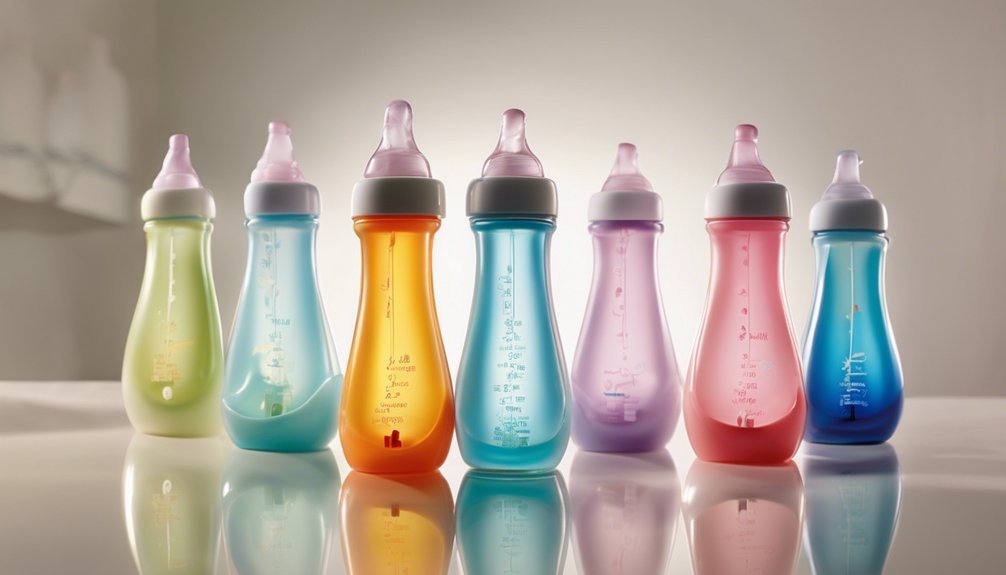
Understanding flow rates is crucial for ensuring your baby gets the right amount of formula during feeding. Nipple flow rates vary by age and feeding pace, so choosing the right one is essential.
A slow flow nipple is ideal for newborns, as it mimics breastfeeding and helps prevent overfeeding. As your baby grows, you might notice they need a medium or fast flow to keep up with their appetite.
Pay attention to your baby’s cues; if they’re frustrated or falling asleep during feeds, it may be time to adjust the nipple flow. Finding the right balance fosters a comfortable feeding experience, allowing your baby to thrive while you bond during those precious moments.
Anti-Colic Features
While feeding your baby, you might notice signs of discomfort that could indicate gas or colic. Choosing bottles with anti-colic designs can significantly help reduce these issues.
These bottles often feature special valves or vents that allow air to escape, ensuring bubble free feeding. This design minimizes the intake of air, which can contribute to gas and fussiness.
Studies show that babies who use anti-colic bottles tend to experience less discomfort after feeding. By opting for these bottles, you create a more soothing feeding experience for your little one, which can lead to happier, more relaxed moments together.
Size and Capacity Considerations
Choosing the right bottle size and capacity is just as important as selecting features like anti-colic designs.
You’ll find various bottle sizes and capacity options to suit your baby’s needs. Newborns typically require smaller bottles, around 4 to 6 ounces, since their feeding amounts are limited.
As your little one grows, you may want to transition to larger bottles, usually ranging from 8 to 12 ounces. This ensures you won’t have to constantly refill during feedings, making it convenient for both of you.
Consider how often you’ll be on the go; a larger capacity can be a lifesaver for outings.
Ultimately, matching the bottle size to your baby’s age and appetite will enhance feeding time and promote comfort.
Ease of Cleaning and Sterilization
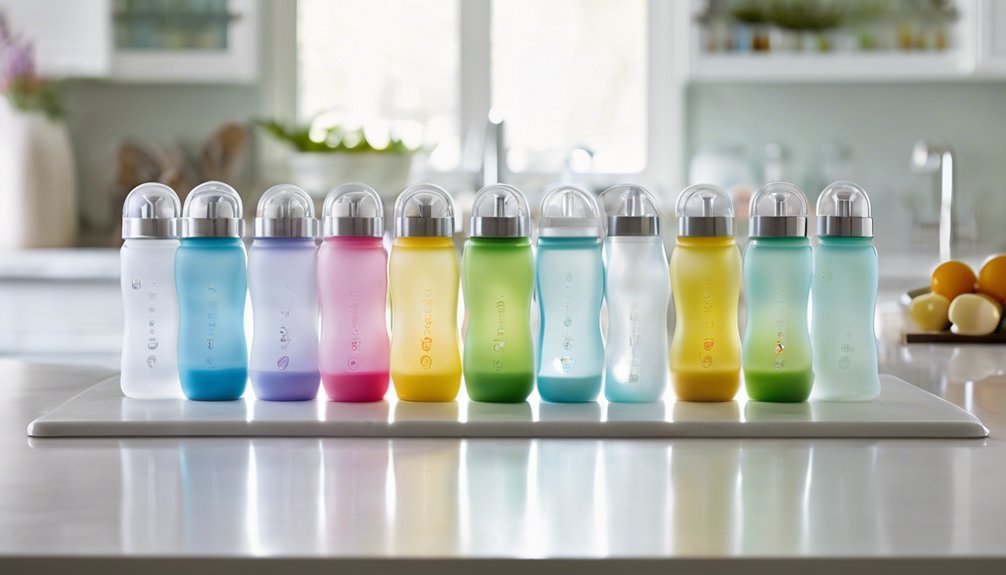
When it comes to feeding your formula-fed baby, the ease of cleaning and sterilization can significantly impact your experience.
Choosing a bottle with a thoughtful bottle design can simplify your routine. Look for wide-neck bottles that allow easy access for scrubbing and rinsing. Many bottles are also dishwasher-safe, which can save you time and hassle.
Consider options that are compatible with steam sterilizers or microwave sterilization for added convenience. It’s essential to ensure that all parts, including nipples and valves, are easy to disassemble and clean thoroughly.
Compatibility With Breastfeeding
If you’re considering combining bottle-feeding with breastfeeding, compatibility is crucial for a smooth transition between the two.
Choosing bottles that mimic the breast can help your baby latch more easily, ensuring that bottle compatibility doesn’t disrupt your breastfeeding journey. Opt for bottles with nipples designed to resemble the shape and feel of a mother’s nipple. This can make breastfeeding tips like alternating between breast and bottle much easier.
Always pay attention to flow rates; a slower flow can help maintain the breastfeeding rhythm. Remember, it may take time for your baby to adjust, so be patient and responsive to their needs.
With the right bottle choices, you can create a nurturing experience that satisfies both bottle and breast feeding.
Travel-Friendly Bottle Options
Traveling with a baby can be challenging, but selecting the right travel-friendly bottles can make the journey much smoother. Look for bottles that fit easily in your diaper bag and are compatible with portable bottle warmers, ensuring you can warm formula on the go. Additionally, investing in travel bottle bags keeps everything organized and accessible.
Here’s a quick comparison of popular options:
| Bottle Brand | Features | Price Range |
|---|---|---|
| Brand A | Collapsible, Light | $10 – $15 |
| Brand B | Insulated, Durable | $15 – $25 |
| Brand C | Wide-neck, Easy Clean | $12 – $20 |
| Brand D | BPA-free, Leak-proof | $8 – $14 |
| Brand E | Compact, Dishwasher Safe | $9 – $18 |
With the right bottles, you’ll feel more prepared for your adventures together.
Budget-Friendly Choices
Finding budget-friendly bottle options for formula-fed babies doesn’t have to be a daunting task. You can easily find affordable choices that meet your baby’s needs without breaking the bank.
Here are some great budget options to consider:
- Basic plastic bottles: These are lightweight and easy to clean, making them a practical choice for everyday use.
- Value packs: Look for multi-pack deals that give you more bottles for less, ensuring you always have a clean one handy.
- Reusable silicone bottles: While slightly pricier upfront, they’re durable and can save you money in the long run.
Eco-Friendly Bottle Alternatives
As parents become more conscious of environmental impact, eco-friendly bottle alternatives for formula-fed babies have gained popularity.
You’ll find bottles made from biodegradable materials, which break down more easily than traditional plastics, helping reduce waste in landfills. Brands committed to sustainability practices often use plant-based substances, ensuring your baby’s feeding experience is gentle on the planet.
Consider options like glass or stainless steel, which aren’t only durable but also free from harmful chemicals. These materials can be recycled, making them a smarter choice for eco-conscious families.
By choosing eco-friendly bottles, you’re not just caring for your child; you’re also nurturing the environment, creating a healthier world for future generations.
Every small choice counts!
Tips for Transitioning to Bottle Feeding
Transitioning to bottle feeding can be a smooth process if you approach it with patience and a few helpful strategies. Start by choosing the right bottle for your baby’s needs, as this can greatly affect their acceptance.
Here are some tips to make the transition easier:
- Introduce the bottle gradually: Start with one feeding a day.
- Involve someone else: Let your partner or caregiver offer the bottle to create a positive association.
- Be flexible with feeding schedule adjustments: Adapt your baby’s routine to include bottle feeding without stress.
Frequently Asked Questions
How Often Should I Replace Baby Bottles?
You should replace baby bottles every few months or sooner if you notice cracks or wear. Regular bottle cleaning helps, but materials like plastic can degrade over time, affecting safety and hygiene for your little one.
Can I Use Regular Bottles for Breast Milk?
Yes, you can use regular bottles for breast milk. Just ensure they’re BPA-free and designed for easy cleaning. Different bottle types may affect flow, so observe your baby’s preference for a comfortable feeding experience.
What Temperature Should Formula Be Served At?
The ideal serving temperature for formula is around body temperature, about 98.6°F. You can use warm water baths or bottle warmers for gentle warming. Always test on your wrist to ensure it’s comfortable for your baby.
Are Glass Bottles Safer Than Plastic Ones?
You might find glass bottles safer than plastic ones. Glass bottle benefits include durability and non-toxicity, while plastic bottle drawbacks involve potential chemical leaching. Choosing glass helps ensure your baby’s feeding experience is healthier and worry-free.
How Should I Store Leftover Formula in Bottles?
To store leftover formula, refrigerate it immediately in a clean bottle. Use proper bottle cleaning methods to prevent bacterial growth. Follow formula storage tips, and always discard any unused formula after 24 hours for safety.
Conclusion
In conclusion, finding the best bottles for your formula-fed baby is crucial for their comfort and development. Just like a knight choosing the right sword, you’ll want to consider materials, nipple shapes, and flow rates to suit your little one’s needs. Pay attention to anti-colic features and choose bottles that fit your lifestyle, whether you’re at home or on the go. By being mindful of these factors, you’ll ensure a smoother feeding experience for both you and your baby.