
When it comes to introducing solids to your baby, knowing when and what to feed first is essential for their health and development. Starting with single-grain cereals mixed with breast milk or formula is a common recommendation. As you progress, you’ll want to explore pureed vegetables and fruits. But how do you ensure your baby is ready for these new tastes? Understanding the signs of readiness and the best initial foods can set the stage for a positive feeding experience.
Key Takeaways
- Start with single-grain cereals like rice or oatmeal mixed with breast milk or formula for easy digestion.
- Introduce pureed vegetables such as carrots, sweet potatoes, or peas as nutritious options.
- Mashed bananas or pureed apples with cinnamon make excellent fruit combinations for first foods.
- Introduce new foods one at a time to monitor for potential allergies or reactions.
- Focus on iron-rich foods, as baby’s iron stores deplete around six months.
Understanding Your Baby’s Readiness for Solids
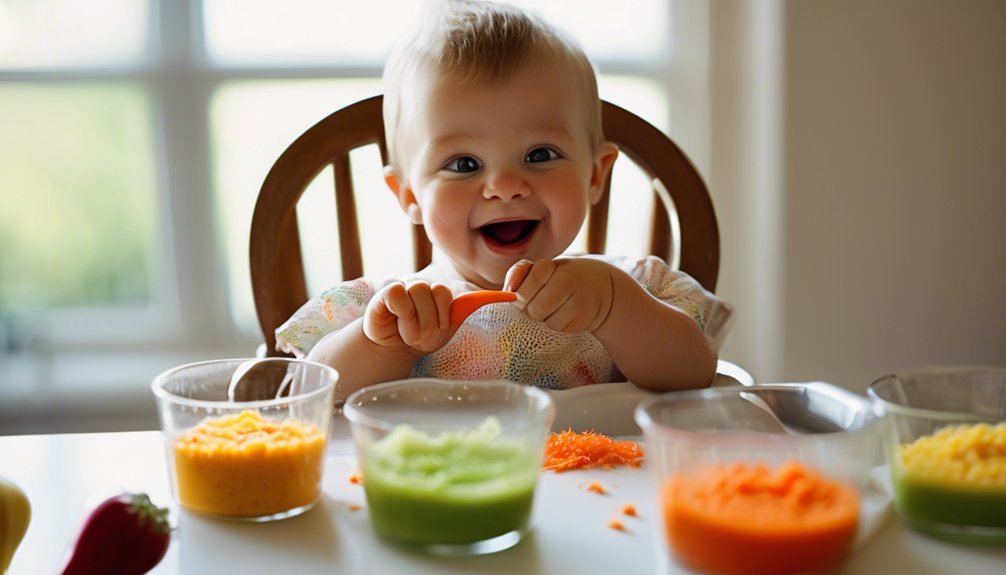
As you prepare to introduce solids to your baby, it’s important to recognize the signs of readiness that indicate they’re ready for this new adventure.
Look for baby cues like sitting up with support, showing interest in your food, or reaching for it. These developmental milestones suggest that your little one’s digestive system is mature enough to handle solids.
When your baby can control their head and neck, it’s a good sign they’re ready to explore new textures and flavors.
Remember, every baby is unique, so trust your instincts and be patient.
The Best First Foods for Your Baby
When selecting the best first foods for your baby, focus on options that are nutritious and easy to digest. Start with single-grain cereals, like rice or oatmeal, mixed with breast milk or formula for a familiar taste.
Introduce vegetable purity by offering pureed carrots, sweet potatoes, or peas, ensuring they’re smooth and free of lumps. As your baby adjusts, consider fruit combinations like mashed bananas or pureed apples with a hint of cinnamon.
These flavors not only delight their taste buds but also provide essential vitamins. Always remember to introduce new foods one at a time, allowing your little one to adapt and helping you monitor for any allergies.
This gentle approach fosters a positive feeding experience for both of you.
How to Prepare Baby Food at Home
Preparing baby food at home offers a wonderful way to ensure your little one enjoys fresh, nutritious meals tailored to their needs.
Here’s how to create delicious homemade purees:
- Choose Fresh Ingredients: Select organic fruits and vegetables when possible for maximum nutrients.
- Cook Until Soft: Steam or boil the produce until it’s tender, making it easier to blend.
- Blend to Desired Consistency: Use a blender or food processor to create a smooth puree, adding water or breast milk if needed.
- Store Properly: Use safe storage techniques by placing purees in ice cube trays or airtight containers, keeping them in the fridge for up to three days or freezing for longer storage.
This way, you’re giving your baby wholesome meals with love and care!
Store-Bought Baby Food Options
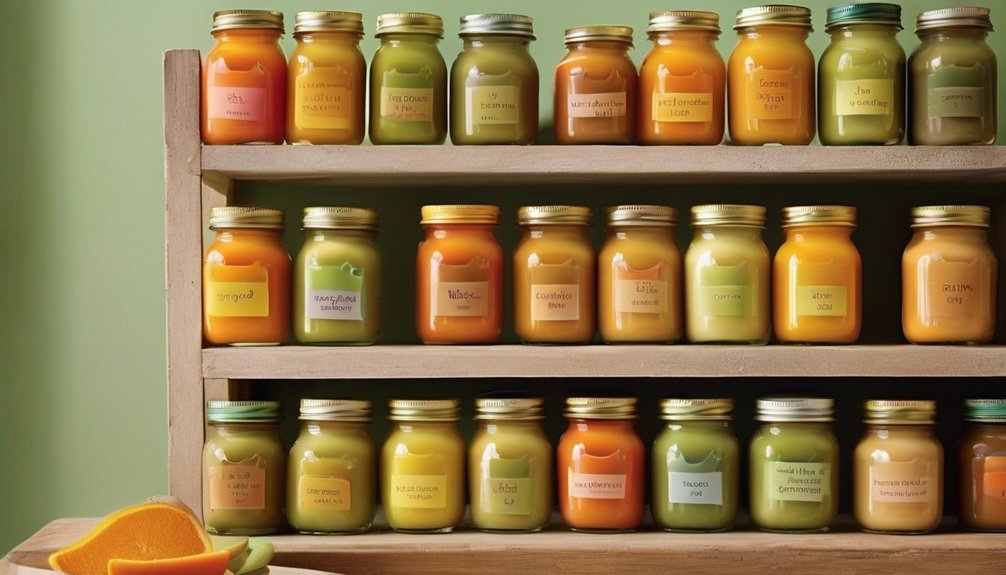
While homemade baby food is a fantastic option, many parents find themselves considering store-bought alternatives for convenience and variety.
Store-bought baby food can save you time without compromising on nutrition. Look for organic options, as they often contain fewer preservatives and additives, ensuring your little one gets the best.
You’ll be delighted to discover a range of flavor varieties, from sweet potatoes to mixed fruits, which can help introduce your baby to new tastes.
When choosing, check the labels for age-appropriate blends and ingredients. These choices can make mealtime fun and exploratory for your baby, giving you peace of mind while helping them develop healthy eating habits.
Enjoy this exciting journey into solid foods together!
Recognizing Allergies: What to Watch For
As you embark on the journey of introducing solids, being aware of potential allergies is crucial for your baby’s health and safety.
Watch for these common allergy symptoms and food reactions:
- Skin reactions: Redness, hives, or eczema can indicate a sensitivity.
- Gastrointestinal issues: Symptoms like vomiting, diarrhea, or stomach cramps may arise.
- Respiratory problems: Look for sneezing, coughing, or difficulty breathing.
- Swelling: Notable swelling of the face, lips, or tongue can signal a serious reaction.
If you notice any of these signs, contact your pediatrician immediately.
Introducing new foods can be an exciting time, but your attentiveness ensures your little one stays safe and healthy.
Trust your instincts, and remember, you know your baby best.
The Importance of Iron-Rich Foods
Once you’ve monitored for any allergic reactions, it’s time to focus on the nutritional needs of your growing baby, particularly the importance of iron-rich foods.
Iron is crucial for your little one’s development, as it supports healthy brain growth and boosts energy levels. At around six months, your baby’s iron stores begin to deplete, making it essential to introduce iron-rich options.
Fortified cereals are a fantastic choice, as they enhance iron absorption when paired with vitamin C-rich foods. Consider mixing those cereals with pureed fruits for a delicious and nutritious meal.
Introducing Fruits and Vegetables
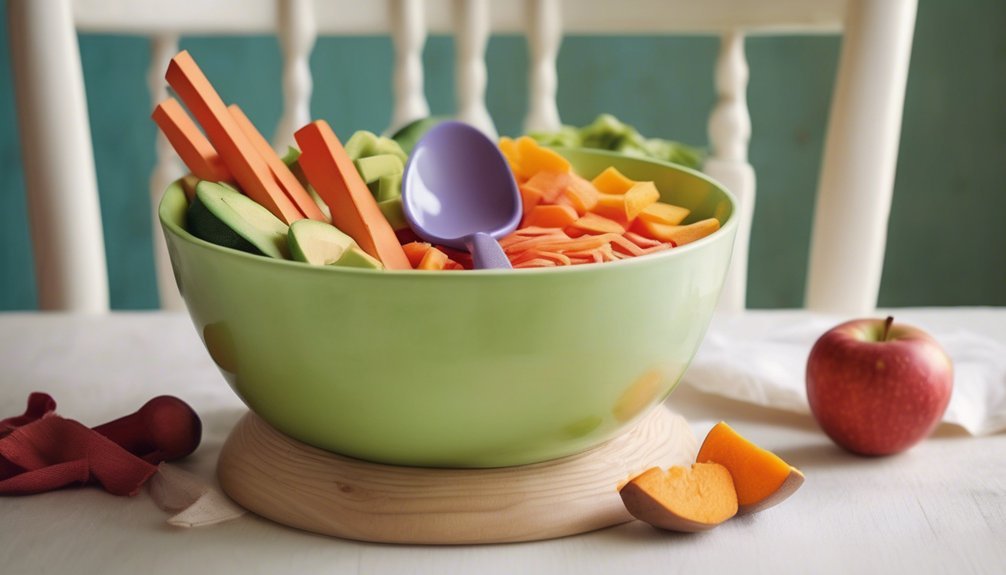
Introducing fruits and vegetables to your baby’s diet is an exciting step that can enhance their palate and provide essential nutrients.
As you begin this journey, consider these tips for introducing fruit combinations and vegetable textures:
- Start with single ingredients, like pureed carrots or apples, to identify preferences.
- Gradually mix fruits for flavor, such as banana and avocado, to create delightful combinations.
- Experiment with different textures—try mashed, pureed, or finely chopped veggies to see what your baby enjoys.
- Introduce new foods every few days to monitor for any allergic reactions.
The Role of Grains in Your Baby’s Diet
Grains play a crucial role in your baby’s diet, providing essential carbohydrates that fuel their growth and development. Introducing whole grains early helps set a foundation for healthy eating habits. As you explore different grain varieties, consider your baby’s age and readiness, especially during gluten introduction.
Here’s a helpful table to guide you:
| Grain Variety | Recommended Age | Portion Size |
|---|---|---|
| Oatmeal | 6-8 months | 1-2 tablespoons |
| Brown Rice | 6-8 months | 1-2 tablespoons |
| Quinoa | 8-10 months | 2-3 tablespoons |
| Barley | 10-12 months | 2-3 tablespoons |
| Whole Wheat Pasta | 12 months | 1/4 cup cooked |
Start with small portions and watch how your baby responds to each grain. It’s a beautiful journey!
Tips for Safe Feeding Practices
As you begin to incorporate grains into your baby’s diet, it’s important to prioritize safe feeding practices. Here are some tips to keep in mind:
- Use clean feeding utensils: Always wash spoons and bowls before every meal to prevent contamination.
- Store food safely: Keep any leftover grains in the refrigerator and consume them within 24 hours to ensure freshness.
- Introduce one grain at a time: This helps you monitor for any potential allergies or sensitivities.
- Stay present during mealtime: Engage with your baby, making feeding a nurturing experience while ensuring they’re safe and comfortable.
Gradually Expanding Your Baby’s Diet
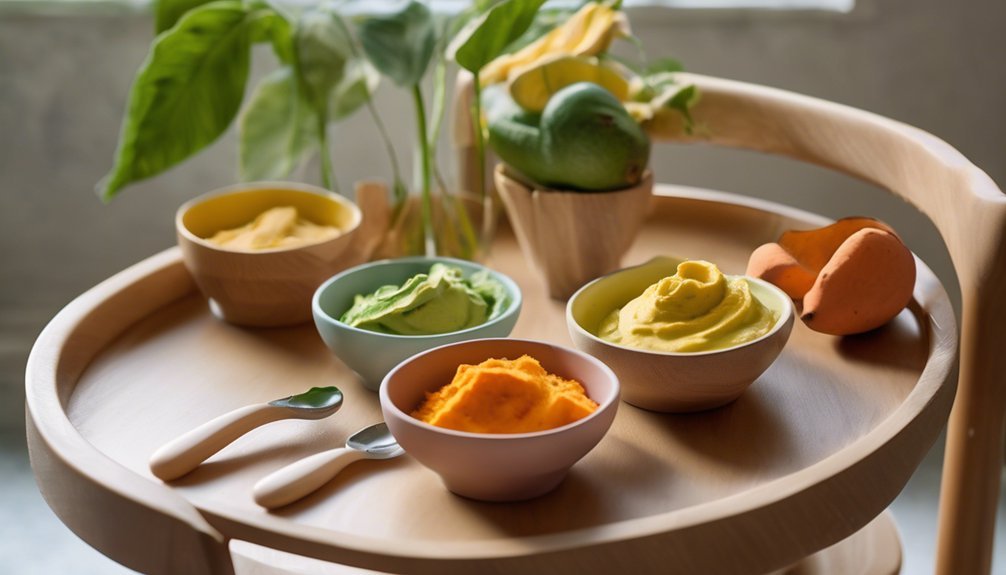
While transitioning to solid foods, it’s essential to expand your baby’s diet gradually to ensure their digestive system adapts well. Start with single-ingredient purees, like sweet potatoes or peas, before introducing more complex combinations.
As your baby grows comfortable, consider baby led weaning, allowing them to explore whole foods at their own pace. This approach encourages self-feeding and helps develop their motor skills.
Always watch for any signs of allergies or intolerances, introducing new foods every few days to monitor reactions. Remember, patience is key; each baby’s journey is unique.
Keeping Mealtime Fun and Engaging
How can you make mealtime an enjoyable experience for your little one? Keeping it fun and engaging is key! Here are some ideas to create a delightful atmosphere:
- Colorful Plates: Brighten up the table with colorful plates that attract your baby’s attention.
- Fun Utensils: Use quirky, child-friendly utensils that make eating exciting.
- Mealtime Games: Incorporate simple games, like guessing the food’s color or shape, to turn meals into interactive feeding experiences.
- Music Playlists: Play soft music that encourages relaxation and joy during family meals.
Encourage sensory exploration through taste testing with various textures and flavors.
This not only makes mealtime enjoyable but also fosters a positive relationship with food. Happy feeding!
Monitoring Growth and Development During Transition
Monitoring your baby’s growth and development during the transition to solid foods is crucial for ensuring they’re thriving. Keep an eye on their growth milestones, like weight gain and height increase, to confirm they’re adapting well.
This phase is also about tuning into developmental signals—watch for their interest in food, ability to sit up, and readiness to chew. These signs indicate they’re prepared for this exciting change.
Don’t forget to track their reactions to new foods; some may love certain flavors, while others might need time to adjust. Your intuition as a parent is invaluable during this journey.
Frequently Asked Questions
Can I Mix Different Foods Together Right Away?
You can mix different foods together, but it’s best to introduce one at a time first. This helps you observe any reactions. Gradually, as you progress through textures, explore food combinations for variety and nutrition.
How Do I Know if My Baby Is Full?
As you watch your baby’s tiny hands push food away, you’ll notice signs of fullness. Look for hunger cues like slowed movements or turning their head, helping you adjust portion sizes to their needs.
What if My Baby Refuses to Eat Solids?
If your baby’s refusing solids, consider their preferences and try different feeding techniques. Patience is key; it might take time for them to adjust. Keep offering a variety of foods, and stay positive and supportive.
Should I Avoid Certain Foods Until a Specific Age?
Like nurturing a delicate flower, you should introduce foods gradually. While allergy prevention is key, you don’t need to avoid textures; just ensure they’re appropriate for your baby’s age and readiness. Trust your instincts.
How Can I Encourage My Baby to Try New Flavors?
Encourage your baby’s taste exploration by pairing familiar flavors with new ones. Start with small amounts, and be patient; repeated exposure helps them develop a preference. Celebrate their curiosity, making mealtime a joyful adventure together.
Conclusion
As you embark on this exciting journey of introducing solids, remember that patience is key. With each new food, you’re not just nourishing your baby; you’re opening the door to a world of flavors and textures. Trust your instincts, stay attentive to their reactions, and enjoy these precious moments together. After all, a well-fed baby is a happy baby, and you’re laying the foundation for a lifetime of healthy eating habits. Happy feeding!