When it comes to creating a nurturing play environment for your baby, DIY baby play mats and toys can be a game-changer. Not only do they allow you to customize designs and features, but they also ensure that the materials are safe and non-toxic. By engaging in these projects, you can foster a deeper bond with your child while enhancing their sensory and cognitive development. So, what essential materials and tools do you need to get started?
Key Takeaways
- Create personalized baby play mats and toys to save money while fostering emotional connections and bonding with your child.
- Choose safe, natural materials like cotton and organic fabrics to ensure a non-toxic play environment for your baby.
- Use essential tools such as fabric scissors and measuring tools to enhance precision and confidence in your DIY projects.
- Incorporate sensory features like crinkly fabrics, mirrors, and textured patches to stimulate your baby’s development and engagement.
- Regularly inspect and maintain DIY toys for safety, ensuring a clean and inviting play space for your child.
Benefits of DIY Baby Play Mats and Toys
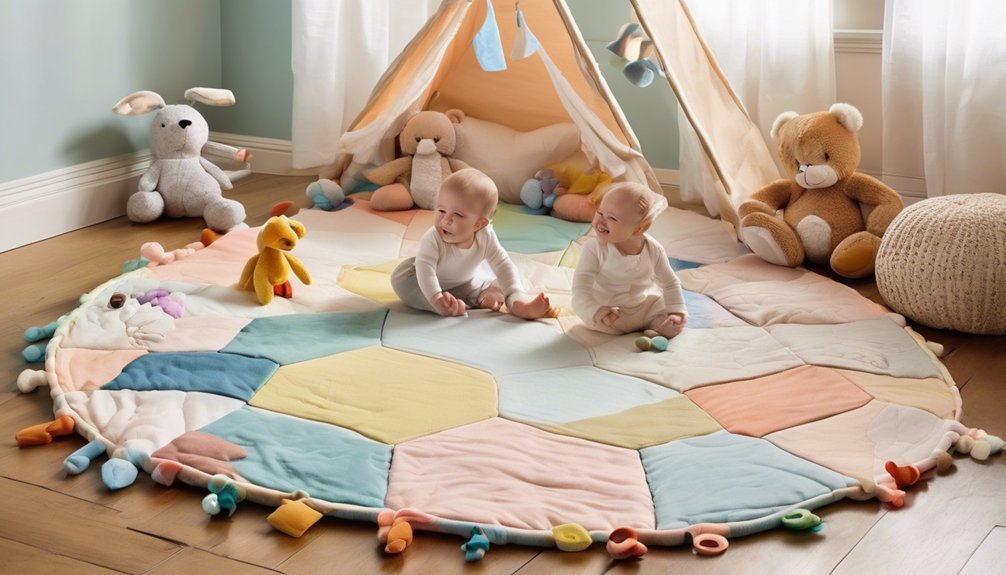
When you create DIY baby play mats and toys, you not only save money but also provide a personalized environment for your little one.
Crafting these items encourages the benefits of bonding, as you’ll spend quality time together during the process. This interaction fosters emotional connections, which are crucial for your baby’s social development.
Moreover, the developmental advantages of custom play mats and toys are significant; they can be tailored to stimulate your child’s senses and motor skills. By incorporating colors, textures, and shapes that resonate with your baby, you’re enhancing their learning experience.
Your involvement in their playtime not only nurtures their growth but strengthens the special bond you share, laying a solid foundation for their future development.
Choosing Safe Materials
Creating a safe play environment for your baby starts with choosing the right materials.
By selecting the safest options, you can ensure your little one enjoys their playtime without any worries.
Here are some tips to help you make informed choices:
- Opt for play mats made from natural fibers like cotton or wool.
- Choose toys crafted from sustainable wood or organic materials.
- Use non-toxic paints that are free from harmful chemicals.
- Avoid synthetic materials that may contain allergens or toxins.
Essential Tools for Your DIY Projects
Selecting safe materials is just the beginning of your DIY journey; having the right tools makes all the difference in bringing your ideas to life.
To create beautiful baby play mats and toys, you’ll need essential measuring tools like a tape measure and a ruler. These help ensure your dimensions are precise, which is crucial for safety and aesthetics.
When it comes to cutting techniques, a rotary cutter or fabric scissors can make clean cuts, saving you time and frustration. Don’t forget a cutting mat to protect your surfaces!
Investing in quality tools not only enhances your crafting experience but also boosts your confidence. With the right equipment, you can transform your creative vision into a safe, delightful play area for your little one.
Step-by-Step Guide to Making a Play Mat
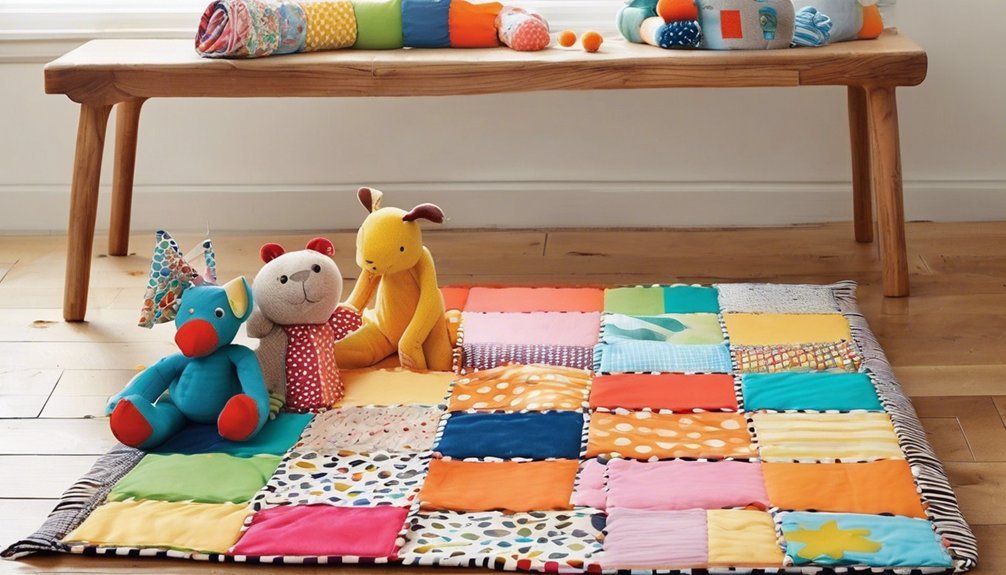
Making a baby play mat can be a rewarding project that enhances your little one’s playtime. To get started, gather your materials and follow these simple steps:
- Choose your fabric: Look for soft, durable options like cotton or fleece.
- Select play mat patterns: Consider geometric shapes or whimsical designs that stimulate your baby’s senses.
- Cut your fabric: Trim to your desired size, usually around 36 inches square.
- Sew the pieces together: Use a sewing machine for a neat finish, leaving a small opening to stuff the mat.
This DIY project not only creates a safe space for your baby but also allows you to customize it with colors and patterns that reflect your family’s style.
Enjoy the process and cherish the moments!
Creative Design Ideas for Play Mats
While you might envision a simple play mat, adding unique design elements can transform it into an engaging and stimulating environment for your baby. Consider incorporating various play mat patterns and toy themes to spark curiosity and encourage exploration. Here are some creative ideas:
| Play Mat Pattern | Toy Theme | Color Palette |
|---|---|---|
| Animal prints | Safari Adventure | Earthy tones |
| Geometric designs | Space Exploration | Bright primaries |
| Nature motifs | Underwater World | Soft pastels |
| Alphabet and numbers | Learning Fun | Bold contrasts |
| Storybook scenes | Fairytale Magic | Warm hues |
These elements not only beautify the space but also promote cognitive and sensory development. So, get creative and let your imagination guide you!
Crafting Soft Toys for Your Baby
Soft toys can provide comfort and joy to your baby while also fostering sensory development. Crafting handmade plushies allows you to create unique sensory stuffed animals that cater to your baby’s needs.
You can choose materials that are soft, safe, and easy to clean, ensuring a worry-free playtime experience.
Here are some ideas to inspire your creations:
- Use different textures like minky, cotton, or fleece for varied sensory experiences.
- Add crinkle paper inside to engage your baby’s curiosity.
- Incorporate squeakers to stimulate auditory senses.
- Personalize with your baby’s name or favorite colors for a special touch.
With a little creativity, you can craft toys that not only entertain but also nurture your baby’s growth.
Using Upcycled Materials for Eco-Friendly Toys
Creating engaging toys doesn’t have to come at the expense of the environment. By using upcycled fabrics, you can craft unique and safe toys for your baby while making sustainable choices.
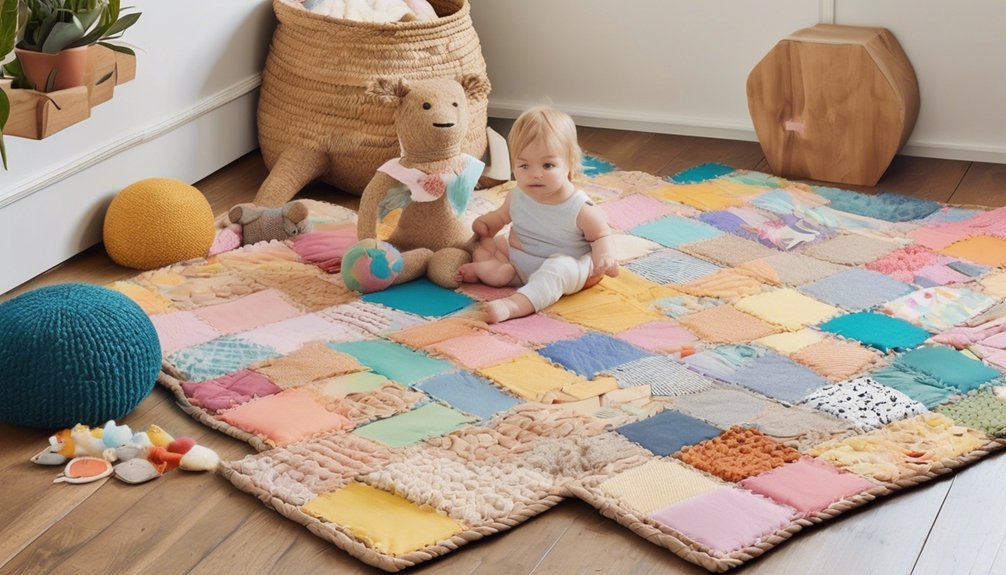
Consider repurposing old clothing, linens, or even fabric scraps from previous projects. Not only does this reduce waste, but it also adds character to your creations. For instance, a patchwork of colorful fabrics can transform into a soft toy or a sensory mat.
When you choose upcycled materials, you’re not just saving money; you’re also teaching your child the value of recycling. Plus, these toys can spark conversations about sustainability, fostering an early appreciation for the planet.
Embrace your creativity and make eco-friendly toys that both you and your baby will love!
Personalizing Your Baby’s Play Space
Personalizing your baby’s play space can transform it into a nurturing and stimulating environment.
By thoughtfully incorporating color themes and designated play zones, you can create an inviting area that sparks joy and creativity.
Here are some ideas to help you personalize:
- Choose a color palette: Opt for soft pastels or vibrant primary colors that resonate with you and your baby.
- Define play zones: Create distinct areas for different activities, like a cozy reading nook or a space for tummy time.
- Incorporate family photos: Add personal touches with framed pictures that foster connection and familiarity.
- Use handmade toys: Craft unique toys that reflect your baby’s interests or milestones, adding a special touch to their space.
Embrace this opportunity to create a warm, engaging environment for your little one!
Incorporating Sensory Elements
While you design your baby’s play area, incorporating sensory elements can significantly enhance their development and engagement. Tactile textures are essential; consider using soft fabrics, crinkly materials, or even textured toys that your baby can explore with their hands.
These varied surfaces stimulate their sense of touch and promote fine motor skills. Additionally, integrate auditory elements like rattles, bells, or even soft music. Sounds can capture your baby’s attention and encourage them to reach, grasp, and explore.
The combination of tactile and auditory experiences fosters cognitive growth and sensory processing. By creating a rich sensory environment, you’re not just providing entertainment; you’re nurturing your baby’s curiosity and development, laying a foundation for their future learning.
Maintenance and Care for DIY Toys
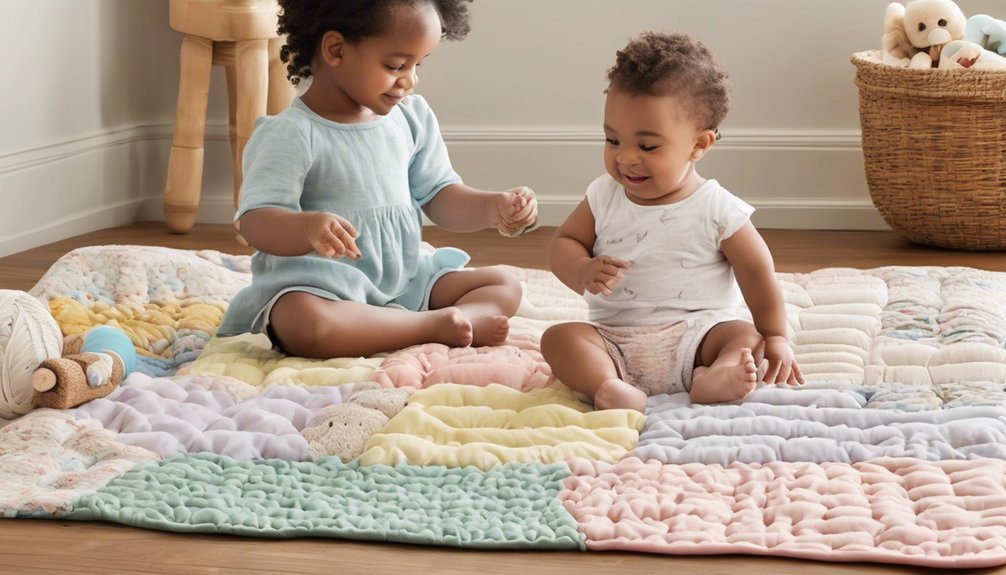
Maintaining your DIY baby toys is essential to ensure they remain safe and engaging for your little one. Regular care not only protects your child but also extends the life of your creations.
Here are some effective cleaning techniques and storage solutions to keep in mind:
- Washable Fabrics: Use machine-washable materials for easy cleaning.
- Gentle Detergents: Opt for baby-safe detergents to avoid harsh chemicals.
- Regular Inspections: Check for wear and tear to prevent accidents.
- Organized Storage: Use bins or baskets to keep toys tidy and accessible.
Engaging Your Baby With Interactive Features
To truly captivate your baby’s attention, incorporating interactive features into DIY play mats and toys can make all the difference. By adding elements like crinkly fabrics, mirrors, and textured patches, you create an engaging environment that encourages sensory stimulation.
Babies thrive on discovery, so consider integrating interactive games, such as peek-a-boo flaps or pull-tabs, to spark their curiosity. These features not only entertain but also promote cognitive development, helping your little one learn cause and effect.
Inspiring Examples From Other Parents
Many parents have taken the initiative to craft their own baby play mats and toys, showcasing incredible creativity and resourcefulness.
These inspiring examples not only provide creative inspiration but also foster a sense of community among parents.
Here are some standout ideas you might consider:
- Patchwork Play Mats: Combine colorful fabrics for a cozy, personalized feel.
- Sensory Toys: Use different materials like ribbons and textured fabrics to stimulate your baby’s senses.
- Nature-Themed Mats: Incorporate natural elements like leaves and flowers for a unique touch.
- Convertible Toys: Create toys that can transform, like a mat that folds into a soft toy.
These parent showcases highlight the joy of creating and celebrating your baby’s early experiences.
Dive into these ideas, and let your imagination run wild!
Frequently Asked Questions
How Long Does It Typically Take to Complete a DIY Play Mat?
Typically, you’ll find that project timelines vary based on fabric choices and your sewing skills. Most DIY enthusiasts complete a play mat in 3 to 5 hours, depending on complexity and preparation involved.
What Age Is Appropriate for Babies to Use DIY Toys?
You might wonder when it’s safe for babies to explore DIY toys. Typically, around 3-6 months, as they hit developmental milestones. Always prioritize safety considerations to ensure their playtime is both enjoyable and secure.
Can I Machine Wash My DIY Play Mat?
Yes, you can machine wash your play mat, but always check the fabric care instructions first. Use a gentle cycle and a mild detergent to ensure it stays soft and safe for your little one.
Are There Specific Design Trends for Baby Play Mats?
Absolutely! You’ll find modern patterns featuring bold colors and geometric shapes trending. Plus, eco-friendly materials are in high demand, ensuring your choices are not just stylish but also safe for your little one and the planet.
How Can I Make My Toys More Durable for Active Babies?
Imagine a little one tugging at their favorite toy, but it frays. To prevent that, choose sturdy fabric like canvas and use reinforcement techniques like double stitching. These choices ensure lasting joy for your active baby.
Conclusion
By diving into the world of DIY baby play mats and toys, you’re not just crafting items; you’re weaving cherished memories and nurturing your child’s development. With a sprinkle of creativity and a dash of love, you can transform simple materials into delightful play experiences. Embrace the journey of creating a safe, stimulating environment for your little one, where every stitch and texture becomes a stepping stone in their growth. Let your imagination soar and watch your bond flourish!