
A well-worn storybook is like a treasure chest, holding the keys to your child’s cognitive development. By establishing storytime habits, you can unlock a world of language skills and creativity. But how do you choose the right books or create an inviting space? Understanding these elements can make all the difference in nurturing your child’s brain growth and fostering a lifelong love for stories. Let’s explore effective strategies to enhance this enriching experience.
Key Takeaways
- Establish a consistent storytime routine to strengthen bonding and nurture a love for reading, enhancing cognitive growth.
- Engage in interactive storytelling techniques, utilizing open-ended questions to stimulate critical thinking and creativity.
- Create a cozy and inviting storytime environment that encourages focus and engagement with narratives.
- Encourage imaginative play post-storytime, allowing children to explore themes and characters, fostering emotional intelligence and cognitive skills.
- Celebrate children’s narratives and provide positive feedback, reinforcing self-expression and confidence in their storytelling abilities.
Choosing the Right Books for Different Ages

When it comes to choosing the right books for different ages, you’ll find that engaging your child’s interests can make all the difference.
Start by selecting age-appropriate selections that match their developmental stage. For toddlers, look for colorful picture books that spark curiosity. As they grow, encourage genre exploration—introducing them to adventure, fantasy, or even non-fiction.
This not only broadens their horizons but also helps them discover their preferences. Pay attention to their reactions; a captivated smile or a furrowed brow can guide your next choice.
Creating a Cozy Storytime Environment
Selecting the right books is just the beginning; creating a cozy storytime environment can enhance the reading experience and foster a love for stories. A warm and inviting space encourages children to engage with the narrative.
Here’s how to set the stage for memorable moments:
| Element | Tips |
|---|---|
| Lighting | Use soft, warm lights. |
| Seating | Choose cozy seating options like bean bags or cushions. |
| Decor | Add blankets and pillows for comfort. |
Engaging With Interactive Storytelling
Interactive storytelling can transform a simple reading session into an immersive adventure for children. By incorporating interactive dialogue, you invite your child to become a co-creator in the narrative. Ask open-ended questions, encouraging them to share their thoughts and ideas. This fosters critical thinking and emotional connection.
Embrace sensory experiences by engaging their senses. Use props, sound effects, or even costumes to bring the story to life. When they touch, hear, and see elements of the tale, their engagement deepens, making the story memorable.
As you make storytelling interactive, you’re not just reading; you’re building a bond and sparking imagination. These moments can ignite a lifelong love for books, enhancing their cognitive development and emotional understanding.
Encouraging Imaginative Play Post-Storytime
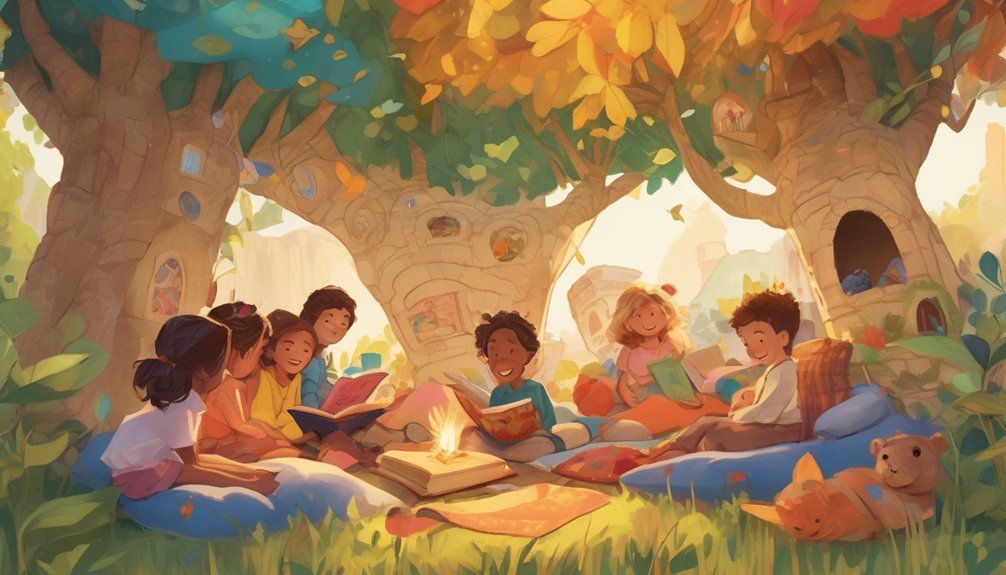
While diving into the world of stories, you can seamlessly transition into imaginative play that reinforces the themes and characters your child just encountered.
Encourage your little one to create imaginative scenarios inspired by the tale. Ask open-ended questions that spark their creativity—like, “What do you think happens next?” or “How would you feel if you were the hero?” This not only deepens their understanding but also nurtures their ability to think critically.
Engage in creative roleplay together, taking on different characters and acting out scenes. This playful exploration fosters emotional intelligence and strengthens cognitive skills.
Incorporating Rhymes and Songs
Incorporating rhymes and songs into your storytime routine can be a delightful way to enhance your child’s language skills and boost their memory. Using rhyme repetition helps your child recognize patterns in language, making it easier for them to learn new words.
Choose songs that are engaging and age-appropriate, encouraging your little one to sing along. This active participation not only strengthens their memory but also fosters a love for language.
As you share these musical moments, you create a nurturing environment where your child feels safe to explore sounds and rhythms. So, gather your favorite nursery rhymes and catchy tunes, and watch as your child’s brain flourishes through the joy of music and language together.
Asking Open-Ended Questions
How often do you take a moment to ask your child open-ended questions during storytime?
These open-ended prompts can transform a simple reading session into an engaging conversation. Instead of just asking yes or no questions, invite your child to explore their thoughts and feelings. For instance, ask, “What do you think the character will do next?” This encourages critical thinking and sparks their imagination.
When you create a space for your child to express themselves, you’re not only deepening their understanding of the story but also fostering a love for reading. Embrace these moments to connect on a deeper level, nurturing their curiosity and confidence.
Your questions can inspire their minds to wander and grow, making storytime truly magical.
Using Props and Visual Aids
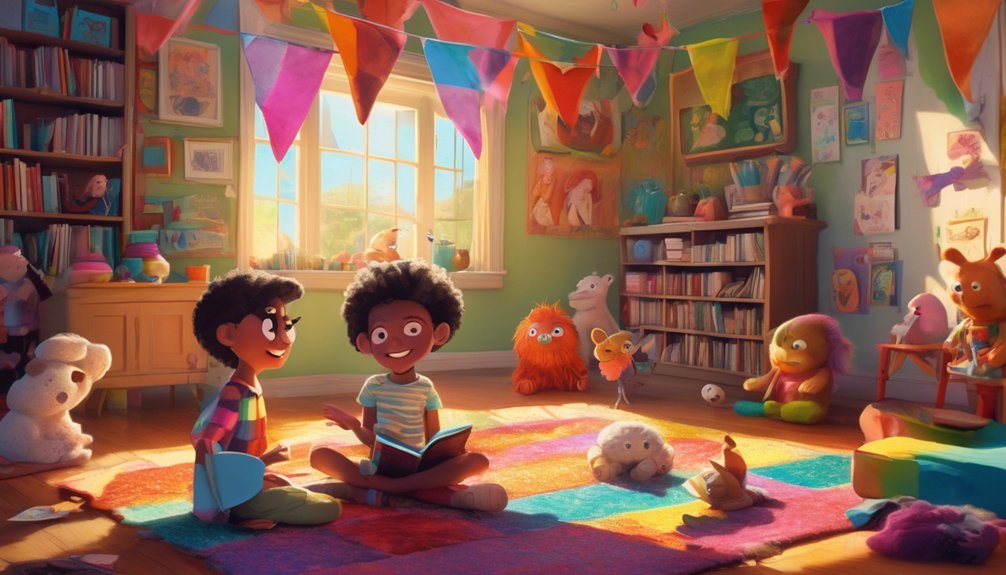
Props and visual aids can transform your storytime experience into a vibrant adventure that captivates your child’s imagination. By incorporating a variety of props like puppets, toys, or illustrations, you create a rich tapestry of visual engagement that draws your little one in.
As you bring characters to life, watch their eyes light up with excitement and curiosity. This interaction not only makes the story more memorable but also enhances comprehension and retention.
You’ll find that using colorful visuals and tangible objects sparks their creativity, encouraging them to ask questions and share their thoughts. So, gather some props and get ready to embark on a storytelling journey that will boost your child’s brain growth while deepening your bond.
Making Connections to Real-Life Experiences
Bringing stories to life isn’t just about visuals; it’s also about connecting those tales to your child’s everyday experiences. When you share personal anecdotes related to the story, it helps your child grasp the narrative’s emotions and themes. For instance, if a character faces a challenge, you might recall a time when your child overcame something similar.
These real-life parallels make the story resonate deeper, fostering empathy and understanding.
Encourage your child to share their own experiences that relate to the story. This not only enriches their engagement but also builds their confidence in expressing themselves.
Establishing a Consistent Storytime Routine
While you might have a busy schedule, establishing a consistent storytime routine can significantly enhance your child’s cognitive and emotional development. By setting aside a specific time each day for storytime, you create a comforting environment that encourages your child to engage with books. Aim for regular storytime frequency, whether it’s during the day or as part of your bedtime stories.
Here’s a simple table to help you plan:
| Day | Time | Story Type |
|---|---|---|
| Monday | 7 PM | Adventure |
| Tuesday | 7 PM | Fairy Tale |
| Wednesday | 7 PM | Non-fiction |
| Thursday | 7 PM | Bedtime Stories |
This routine not only nurtures a love for reading but also strengthens your bond through shared experiences.
Exploring Diverse Cultures Through Stories

Stories hold the power to transport you and your child to distant lands and cultures, enriching your lives with diverse perspectives.
By diving into cultural folktales and storytelling traditions, you nurture empathy and curiosity in their hearts. Here’s how exploring these stories can be magical:
- Connect with characters facing challenges and triumphs, igniting compassion.
- Discover vibrant customs that spark conversations about differences and similarities.
- Experience emotions tied to unique traditions, fostering a sense of belonging.
- Inspire curiosity about the world, encouraging a lifelong love for learning.
Engaging with diverse stories not only broadens your child’s understanding but also strengthens your bond as you explore the richness of humanity together.
Let these tales be a bridge to understanding and appreciation!
Modeling Expressive Reading Techniques
As you read aloud to your child, using expressive techniques can transform the experience into a captivating adventure. Emphasizing expressive intonation and bringing characters to life with distinct voices not only engages your child but also nurtures their imagination. Here’s a simple guide to help you:
| Technique | Description |
|---|---|
| Expressive Intonation | Vary your tone to convey emotions. |
| Character Voices | Use different voices for each character. |
| Pausing | Create suspense by pausing at key moments. |
| Volume Variation | Adjust your volume for dramatic effect. |
Encouraging Children to Tell Their Own Stories
How can you inspire your child to unleash their creativity through storytelling? Encouraging them to tell their own stories can spark their imagination and enhance their cognitive growth.
Here are some helpful tips:
- Use story prompts to ignite their imagination and help them start weaving tales.
- Create storytelling circles where they can share their stories with family or friends, fostering a sense of community.
- Celebrate their narratives by listening actively, showing genuine interest in their ideas.
- Encourage illustrations to accompany their stories, allowing them to express emotions visually.
Frequently Asked Questions
How Can I Tell if a Book Is Age-Appropriate?
To tell if a book’s age-appropriate, check its reading levels and content themes. Look for reviews or recommendations, and consider your child’s interests. Trust your instincts; you know what resonates best with them.
What Are Some Benefits of Group Storytime Sessions?
In a cozy circle, you’ll experience the magic of group dynamics. Group storytime sessions spark shared imagination, foster social skills, and deepen connections, creating a vibrant tapestry of creativity and understanding that enriches everyone involved.
How Often Should We Have Storytime Each Week?
You should aim for storytime at least three to five times a week. Keep each session around 15 to 20 minutes. This daily frequency and duration create a cozy routine that nurtures connection and imagination.
Can Technology Enhance Storytime Experiences?
Imagine technology as a bridge, connecting you to immersive worlds. Interactive storytelling and digital books can transform your storytime, engaging your little one’s imagination while fostering a love for reading and enhancing their learning journey.
What if My Child Loses Interest During Storytime?
If your child’s losing interest during storytime, try mixing up the stories or involving them more. Keeping story engagement high can help maintain attention spans, making the experience enjoyable and interactive for both of you.
Conclusion
By embracing these storytime habits, you’re not just sharing tales; you’re weaving a rich tapestry of growth for your child’s mind. Each book opens a door to new worlds, nurturing their creativity and critical thinking. So, as you turn those pages together, think of it as planting seeds of knowledge and imagination that will flourish for years to come. Remember, the stories you share today could inspire the dreams they chase tomorrow. Keep reading, keep growing!