
A good kids chore chart is like a map that turns daily chaos into a steady path. You can start by choosing one clear goal, then match chores to each child’s age and abilities. Keep the list simple with daily and weekly tasks, and use a format you can update easily. When you add fair rules and small rewards, you set up a system that can actually work—but the key is what you do next.
Key Takeaways
- Set a clear chore chart goal, such as building responsibility, routine, or teamwork, and keep it visible for the family.
- Choose age-appropriate chores that match your child’s skills, with clear expectations and room to grow.
- Include a mix of daily and weekly chores, grouped by day to make the chart easier to follow.
- Pick a simple chart format, such as paper, magnetic, or digital, and keep labels and colors consistent.
- Use motivating rewards your child values, making them simple, fair, and easy to earn.
Start With the Goal of Your Chore Chart

Before you make a chore chart, decide what you want it to do for your family. Clear goal setting helps you build a chart that supports responsibility, routine, or teamwork. You might want to reduce reminders, teach independence, or make mornings calmer.
Name the main outcome first, then choose chores and rules that match it. If you want stronger family involvement, ask everyone what would help most and what problems they notice now. Their input can reveal practical needs and increase buy-in.
Write one simple purpose statement and keep it visible while you plan. When you know the goal, you can make choices faster, stay consistent, and measure whether the chart actually works for your home.
Set Age-Appropriate Chores
Start with chores your child can actually do, not chores you wish they could do right now. Use age guidelines as a starting point, then adjust for your child’s skills, attention, and confidence. You’re aiming for success, not perfection. Chore examples, like putting toys away, setting napkins, or folding washcloths, help you match tasks to ability. Keep expectations clear and concrete.
| Age range | Good fit | Support needed |
|---|---|---|
| 3–5 | Match socks | Step-by-step prompts |
| 6–8 | Clear dishes | Simple reminders |
| 9–12 | Sweep floors | Occasional check-ins |
When you choose well-matched chores, your child builds competence faster and resists less. If a task feels too hard, scale it down, then increase difficulty as mastery grows.
List Daily and Weekly Tasks
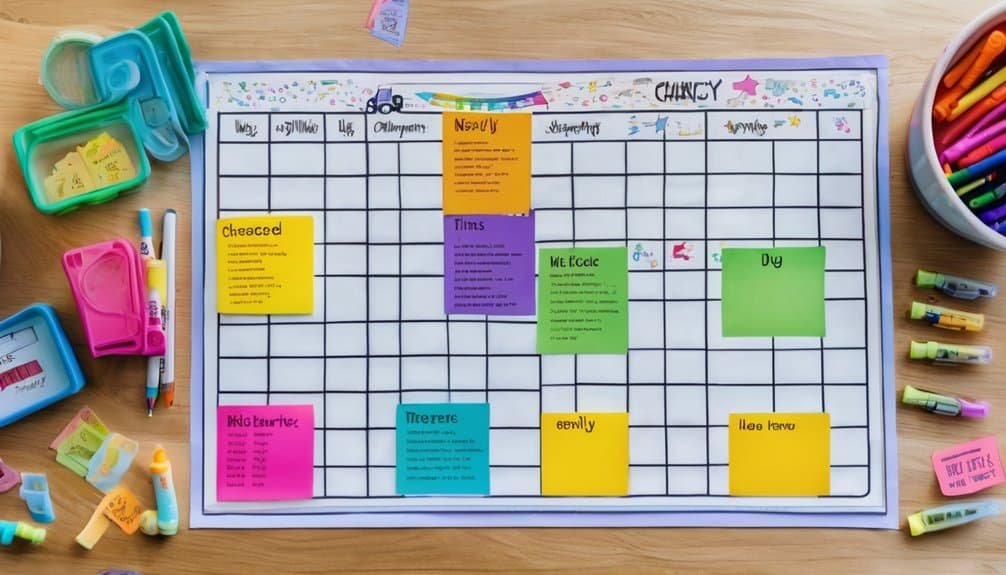
Mix a few daily chores with a few weekly ones so your child knows what to do and when to do it. Start by naming daily responsibilities like making the bed, putting dishes in the sink, or feeding a pet.
Then add weekly routines such as vacuuming a room, wiping baseboards, or sorting laundry. Keep each task specific and easy to picture, so your child can act without guessing. You can group tasks by day to reduce stress and build consistency.
Aim for a balanced list that teaches follow-through without overwhelming your child. When you list chores clearly, you help your child practice responsibility, build confidence, and see progress.
Review the list together so you can adjust it as your child’s skills grow.
Choose a Simple Chore Chart Format
A simple chore chart works best when your child can glance at it and know exactly what to do. You’ll want a format that’s clean, consistent, and easy to update. Many parents do well with magnetic boards because they’re visible and hands-on. Others prefer digital apps, which let you edit tasks quickly and track progress on the go.
| Format | Best Use |
|---|---|
| Magnetic board | Visual, reusable, kid-friendly |
| Paper chart | Simple, low-cost, easy to post |
| Digital app | Fast updates, portable reminders |
Pick one layout and keep the same labels, colors, and symbols each week. When you reduce clutter, you help your child focus and build confidence. A clear design supports follow-through and makes the whole routine smoother for you.
Assign Chores by Child

Assign chores by child’s age, ability, and attention span so each task feels fair and doable. You’ll assign responsibilities more effectively when you match each chore to what your child can handle right now.
Start with simple, concrete jobs for younger kids, then add steps, independence, and consistency as skills grow. Keep siblings from comparing lists by giving each child a balanced mix of easy and challenging tasks.
You can also pair chores that encourage teamwork, like setting the table together or tidying shared spaces. Be specific about what “done” looks like, and review assignments often so you can adjust for growth, schedules, and changing routines.
When you tailor chores well, kids build competence, ownership, and follow-through.
Choose Rewards Kids Actually Want
Choose rewards your kids actually care about, because a chore chart works best when there’s a real payoff. Start with kid preferences and test reward types like screen time, choosing dinner, extra story time, or small allowances.
Mix practical incentive ideas with fun activities so your reward systems feel exciting, not random. Use interest surveys to ask what matters most, then confirm it in quick feedback sessions after a few weeks.
You’ll get better results when your motivational strategies match each child’s age, personality, and effort level. Keep rewards simple, fair, and easy to earn, so chores feel achievable.
When your kids know the payoff is worth it, they’ll stay engaged and build responsibility without constant reminders.
Keep the Chart Visible and Simple
Keep the chart somewhere your kids can see it every day, like the fridge, a hallway wall, or near the kitchen table. When you place it in a high-traffic spot, you give them visual reminders without having to repeat yourself all day.
Keep the design clean and easy to read, with short task names, clear spaces, and simple labels. Too many colors, notes, or extra details can distract kids and make the chart feel harder to use. If your child can glance at it and know what to do next, you’ve built strong chore motivation.
You’ll also make it easier for younger kids to stay independent and for older kids to track progress quickly. The simpler the chart, the more likely your family will actually use it.
Set Simple Rules Everyone Can Follow
Set a few clear rules so everyone knows how the chore chart works. You can explain chore expectations in simple terms: finish the task, check it off, and ask for help if needed. Keep family involvement strong by making the rules together, so kids feel heard and accountable. Use the same standards for everyone, but match jobs to age and skill.
| Rule | Why it helps |
|---|---|
| Do chores on time | Builds routine |
| Use kind words | Supports teamwork |
| Ask before switching | Keeps order |
| Finish before screens | Encourages focus |
| Check off each task | Shows progress |
When you keep rules short and consistent, your chart stays easy to follow. This helps your child practice responsibility with confidence every day.
Review and Update the Kids Chore Chart
Every few weeks, review the chore chart with your child and see what’s working well and what needs to change. During family meetings, ask for chart feedback in simple terms: Which chores feel fair? Which ones take too long? Which steps feel confusing?
You can then adjust tasks, timing, or expectations so the chart matches your child’s current abilities. If a chore has become too easy, add a small challenge. If it’s too hard, break it into smaller parts.
Keep changes clear and limited so your child can follow them. When you update the chart together, you show that responsibility grows with practice, and you help your child build confidence, problem-solving skills, and ownership without creating stress or confusion.
Keep Kids Consistent and Engaged
Consistency grows when you make the chore chart easy to follow and worth sticking with. Use clear routines, brief reminders, and praise to build momentum. Rotate small rewards so motivation stays fresh, and connect chores to privileges kids care about. Keep expectations steady, but adjust tasks as skills improve. Family involvement matters, so model the behavior, check in together, and celebrate progress as a team.
| Strategy | How You Use It | Benefit |
|---|---|---|
| Visual cues | Post the chart where kids see it | Fewer reminders |
| Praise | Notice effort right away | Stronger habits |
| Choice | Let kids pick task order | More ownership |
| Routine | Do chores at the same time | Better follow-through |
These motivation techniques help kids stay engaged and build lasting responsibility.
Frequently Asked Questions
How Can I Handle Chore Chart Conflicts Between Siblings?
You can handle chore chart conflicts by guiding sibling negotiation and checking fair distribution. Set clear rules, let kids voice concerns, and adjust tasks calmly. You’ll reduce resentment and build cooperation through consistent, respectful problem-solving.
What if My Child Refuses to Do Any Chores?
If your child refuses, you can stay calm, set clear limits, and offer positive reinforcement, age appropriateness, and choices. You’ll model, remind, and reward effort; then you’ll gradually increase responsibility and consistency.
Should Allowances Be Tied to Completing Chores?
Not always. You can tie allowance to chores if you want stronger chore motivation and clear allowance benefits, but you should still expect shared family responsibilities. Start small, stay consistent, and praise effort, not just completion.
How Do I Track Chores for Kids With Different Schedules?
Set the stage with a simple visual tracking board and chore rotation plan. You can assign tasks by day, not child, so each kid knows what’s next, even when schedules shift.
Can I Use a Chore Chart for Toddlers?
Yes, you can use a chore chart for toddlers. You’ll boost toddler motivation with simple tasks, pictures, and visual rewards. Keep it playful, short, and consistent so they can succeed and feel proud.
Conclusion
So, the secret to a calmer home is a chore chart—because nothing says “fun family time” like tracking who forgot to feed the dog. Still, when you keep it simple, age-appropriate, and easy to see, your kids can actually follow through. Review it often, adjust what’s working, and celebrate small wins. You’ll build responsibility without the daily drama, and your chart will do what it’s meant to: make life run a little smoother.