
If your child’s day feels like a puzzle with a thousand pieces, a free daily routine chart can make it suddenly fit together. You can use simple icons, short words, and checkboxes to guide morning and bedtime tasks, while also building independence and confidence. The best chart matches your child’s age and needs, but the real difference often comes from how you set it up…
Key Takeaways
- Free daily routine charts for kids should cover waking up, dressing, meals, learning, chores, play, and bedtime.
- Choose charts with simple icons, clear text, and checkboxes to help kids follow routines independently.
- Match the chart to your child’s age, attention span, and ability to understand visual cues.
- Morning and bedtime charts work best when steps are short, predictable, and shown in logical order.
- Involve your child in picking pictures or wording to make the routine chart more engaging and personal.
What’s Included in Daily Routine Charts
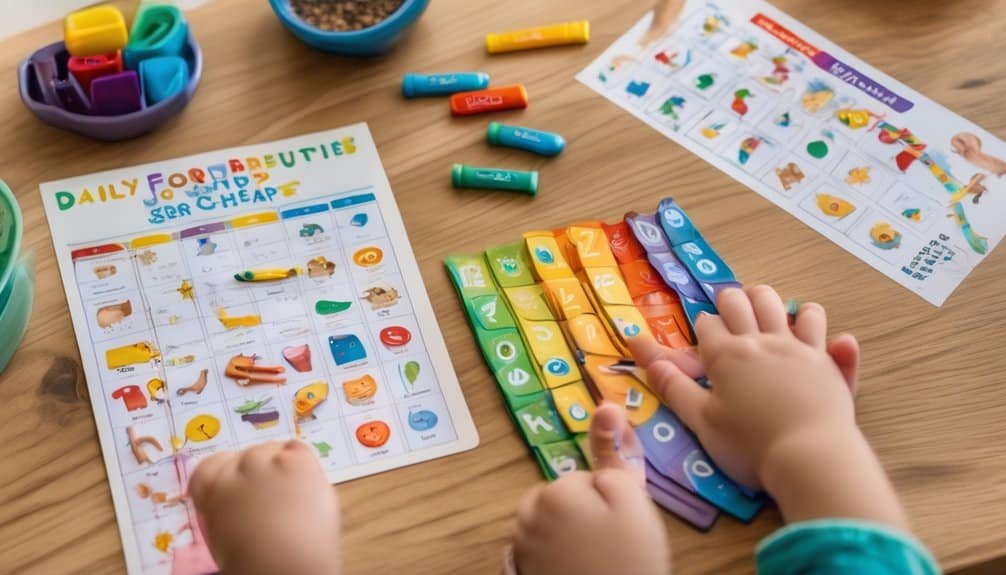
Daily routine charts for kids usually include the key parts of a child’s day, such as waking up, getting dressed, eating meals, school or learning time, chores, play, and bedtime.
You can add simple icons or photos to boost visual appeal and help your child recognize each step quickly. Keep the language brief, clear, and developmentally fitting so your child can follow the chart with confidence.
Age appropriateness matters because younger children need fewer choices and more concrete images, while older kids can handle more text and responsibility.
You can also include checkboxes or moveable pieces to reinforce completion and build independence.
When you organize the day in sequence, you help your child predict what comes next, reduce stress, and practice self-management skills that support growing mastery.
Choose the Right Chart for Your Child
Choosing the right chart for your child starts with their age, attention span, and ability to follow visual cues. Younger children usually benefit from simple, bold images and fewer steps, while older kids can handle more detailed layouts and written prompts.
You can boost visual learning by using clear icons, color coding, and consistent placement so your child knows what comes next. Match the chart to your child’s needs, not your own preferences, because the best tool supports independence without overwhelming them.
When the format feels manageable, child engagement improves, and your child is more likely to use the chart daily. Look for a design that’s easy to update, easy to read, and flexible enough to grow with your child’s routines over time.
Morning Routine Chart Ideas
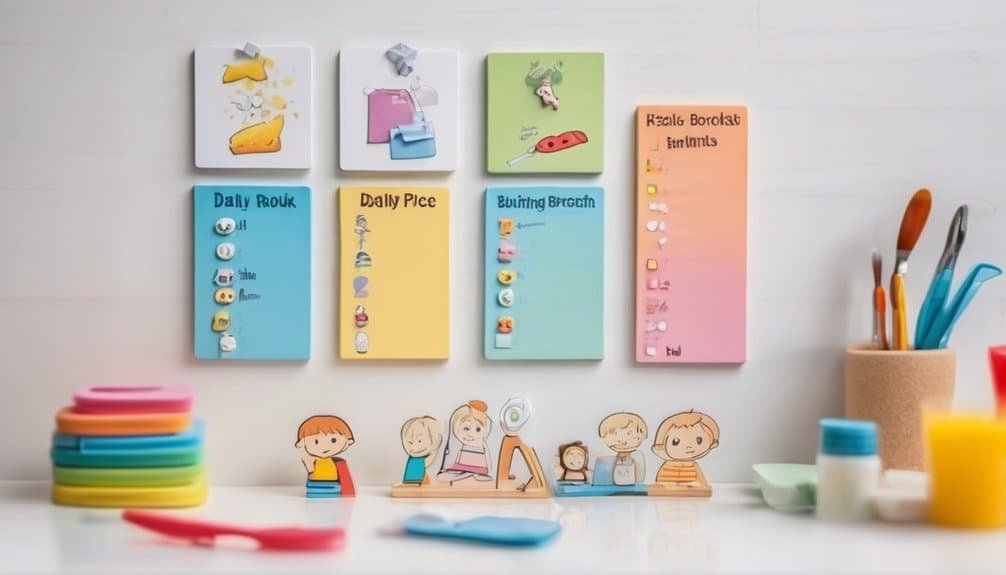
Once you’ve picked a chart that fits your child’s age and attention span, you can shape it around the morning tasks that matter most. Keep each step simple, visible, and achievable so your child can build confidence and independence.
Use visual morning cues like pictures, colors, or checkboxes to show what comes next.
- Wake up and stretch
- Get dressed and brush teeth
- Eat breakfast and pack essentials
You can also add engaging activities, such as choosing a sticker after each completed step, to keep motivation high.
When you model the routine calmly, your child learns sequencing, time awareness, and self-management. A clear chart turns busy mornings into a predictable rhythm your child can follow with less stress and more success.
Bedtime Routine Chart Ideas
A good bedtime chart helps your child wind down with fewer reminders and more confidence, especially when you keep the steps calm, simple, and predictable.
You can show each step with clear icons: pajamas, brushing teeth, reading a bedtime story, and lights out. This structure supports sleep hygiene by reducing stimulation and signaling the body that rest is near.
Add a few relaxation techniques, such as slow breathing or gentle stretches, so your child learns to settle independently.
Keep nighttime rituals consistent, because repetition builds security and helps children anticipate what comes next.
When you present the chart at your child’s eye level, you reinforce ownership and mastery.
Over time, your child can follow the routine with less prompting and more ease.
Make a Routine Chart Kids Will Use
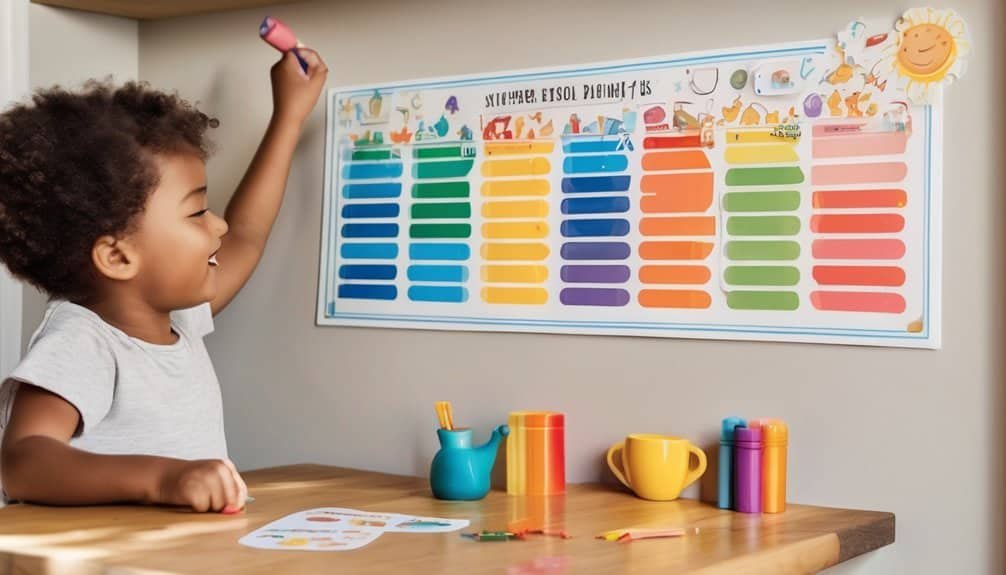
To make a routine chart kids will actually use, keep it simple, visual, and tied to your child’s daily life. You want each step to feel doable, clear, and worth repeating. Use visual aids like icons, photos, or color blocks so your child can read the chart at a glance. Focus on routines that matter most, such as getting dressed, brushing teeth, or packing a bag.
- Show only a few steps at first.
- Place tasks in the order your child follows.
- Add positive reinforcement for completed steps.
When you match the chart to your child’s age and attention span, you build confidence and independence. Invite your child to help choose pictures or wording so the chart feels personal. That small choice increases ownership and consistency.
How to Print and Set Up Your Chart
How should you print and set up your chart so it’s easy for kids to use? Choose a sturdy paper or cardstock, then print in color so each icon stands out.
If you’re using chart customization options, match fonts, labels, and pictures to your child’s reading level and interests. Laminate the chart or place it in a clear sleeve so you can reuse it daily.
Attach it at your child’s eye level on a fridge, wall, or clipboard. Add Velcro, magnets, or dry-erase markers to make changes simple.
These visual aid benefits help kids track steps, build independence, and stay engaged. Review the chart together, model each routine, and invite your child to check off tasks.
Frequently Asked Questions
How Do Routine Charts Help Children With ADHD?
You help children with ADHD by giving them visual aids that make tasks clear and predictable. You also use positive reinforcement to build focus, independence, and confidence, while reducing overwhelm, forgetfulness, and transitions.
Can Siblings Share One Daily Routine Chart?
Yes, siblings can share one daily routine chart if you tailor it well. You’ll strengthen sibling dynamics and shared responsibilities, and you can test the theory that visual routines boost cooperation, independence, and follow-through.
What Age Is Best to Start Using Routine Charts?
You can start using routine charts as early as toddlerhood, around age two, when visual schedules help you build independence; keep routine flexibility, since your child’s needs, attention, and understanding will keep changing.
How Often Should a Child’s Routine Chart Be Updated?
Like a compass, you should update your child’s routine chart whenever routines change, and review it every few weeks. That routine chart frequency keeps routine chart effectiveness high, helping you guide growth with confidence.
Can Routine Charts Work During School Breaks?
Yes, you can use routine charts during school breaks; they’ll help you keep healthy habits while allowing routine flexibility. You’ll adjust wake times, activities, and chores, supporting your child’s independence, confidence, and smooth transitions.
Conclusion
You’ve got everything you need to turn free daily routine charts for kids into a simple, helpful part of your day. When you choose a chart that fits your child’s age and needs, you’ll build confidence, independence, and smoother routines. Add easy visuals, checkboxes, and a little fun so your child stays engaged. Print it, set it up, and watch their progress grow—like a tiny time-traveling assistant guiding the way.