
Teaching toddlers to share starts with understanding that sharing is hard for them, not because they are selfish, but because they are still learning patience and trust. Simple turn-taking, clear words, and calm adult modeling can make a big difference. Timers, praise, and gentle handling of upset moments help the lesson stick. A few small habits can change daily play in surprising ways.
Key Takeaways
- Toddlers resist sharing because ownership feels personal, so treat it as normal development, not bad behavior.
- Teach turn-taking instead of forced sharing, using clear phrases like “my turn” and “your turn.”
- Use timers or short waits to make sharing predictable and easier for toddlers to understand.
- Praise patience, cooperation, and waiting, not just giving up a toy.
- Stay calm during meltdowns, name feelings, and protect special toys from sharing pressure.
Understand Why Toddlers Resist Sharing

Toddlers often resist sharing not out of defiance, but because their sense of ownership is still taking shape and impulse control is limited. A favorite toy can feel like an extension of the self, especially when emotional attachment is strong. In these moments, the child may guard objects to protect comfort and predictability, not to exclude others.
New social settings can intensify this response, since peer influence introduces unfamiliar expectations before the child is ready to navigate them. Caregivers can read this resistance as a developmental signal rather than a problem behavior.
With that perspective, patience becomes easier to sustain, and guidance can remain calm, warm, and respectful. Understanding the reason behind the struggle helps adults respond in ways that build trust and make future cooperation feel safer.
Start With Turn-Taking, Not Forced Sharing
A simple waiting game often works better than demanding immediate sharing, because turn-taking gives young children a concrete, manageable rule to follow. In this approach, one child uses the toy while another waits with a clear promise of a turn next.
The turn taking benefits are immediate: frustration is lowered, expectations become visible, and cooperation feels possible. A gradual introduction helps toddlers succeed, since short waits are easier than open-ended giving.
Adults can name the sequence calmly, then praise patience rather than possession. This keeps the tone warm and secure, while protecting a child’s sense of control.
Over time, the child learns that access can be temporary without loss, and that others will return the favor.
Model Sharing During Everyday Play
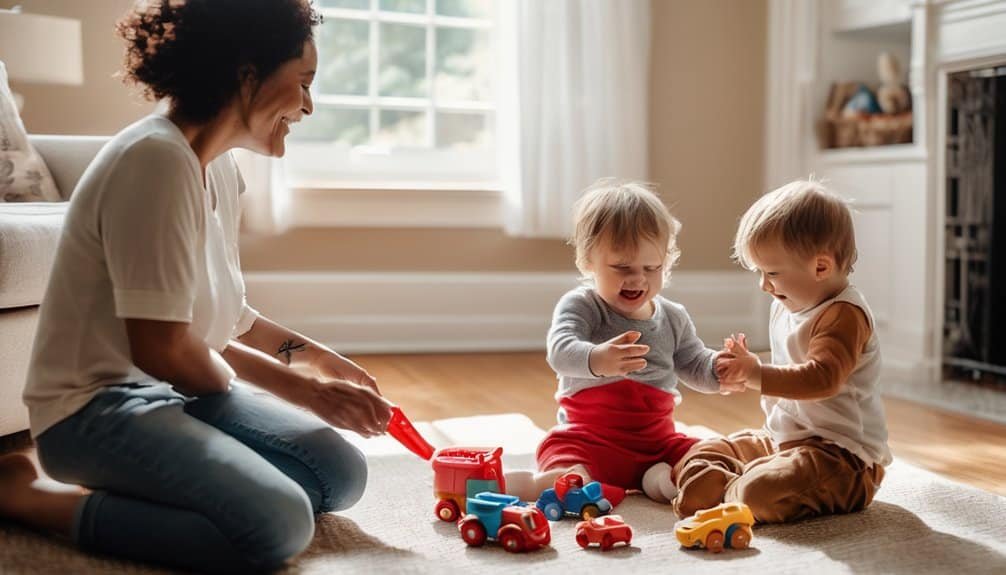
Children learn a great deal by watching how the adults around them handle everyday moments of give-and-take. During playful interactions, a parent can quietly demonstrate generosity by offering a toy, waiting for a turn, or handing over a crayon with ease.
Such small acts show that sharing is normal, safe, and kind. When a toddler notices calm behavior repeated often, imitation follows more readily than correction. Positive reinforcement helps this lesson settle in: a warm smile, gentle praise, or appreciative attention makes the shared moment feel rewarding.
- Offer, wait, and receive with patience.
- Let the child observe fair exchange.
- Celebrate each generous gesture warmly.
Use Simple Sharing Words
Simple, repeatable language helps toddlers understand what sharing looks like in the moment. Caregivers can use sharing vocabulary that stays short, warm, and clear. Simple phrases like “your turn,” “my turn,” and “you can have it next” give a toddler a gentle script to follow. When words are paired with calm tone and steady eye contact, the message feels safe, not demanding.
| Simple phrase | Meaning |
|---|---|
| “Your turn” | Another child may play now |
| “My turn” | A child is ready to wait |
| “Let’s share” | The item is for taking turns |
These simple phrases support early cooperation and help toddlers feel included while learning respectful boundaries.
Teach Toddlers to Share With Timers
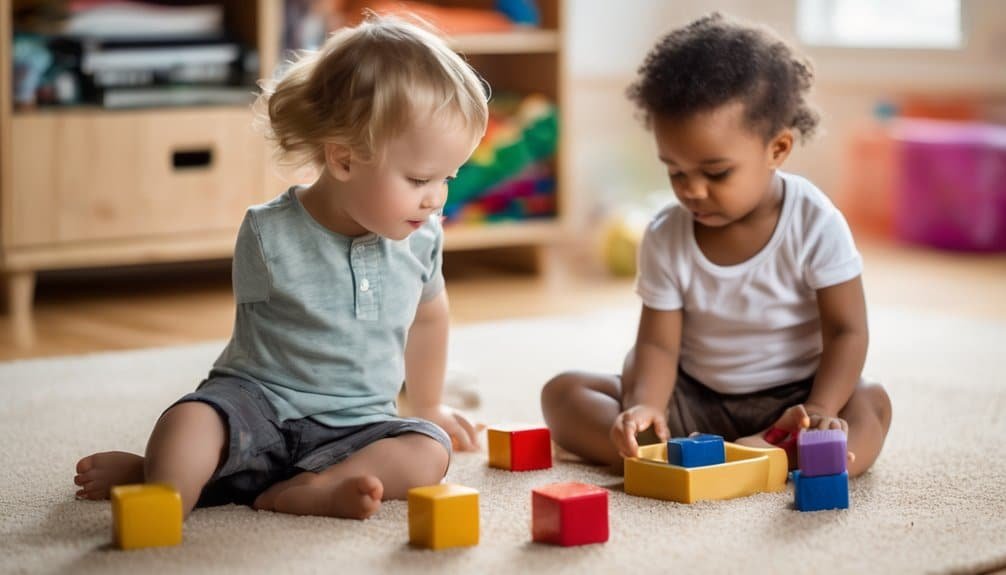
Timers can turn sharing into a predictable, manageable routine for toddlers. A caregiver can begin with short intervals, then gently announce when one child’s turn ends and another begins. This helps little hearts feel secure, because the rule is clear and fair. Effective timer techniques work best when the adult stays calm, consistent, and warm.
- Use a visual timer so time feels concrete.
- Keep turns brief to match toddler attention.
- Praise waiting, handing over, and trying again.
Sharing games, such as passing a toy back and forth, make the lesson playful rather than heavy. Over time, toddlers begin to trust the rhythm, and sharing becomes less about losing and more about taking turns with comfort.
Set Up Easy Practice Playdates
Playdates give toddlers a real setting to practice sharing skills in low-pressure moments. Gentle playdate themes help adults plan simple toy rotation, snack sharing, and brief group games without overwhelm. | Activity | Sharing Focus | Feeling |
| — | — | — |
|---|---|---|
| storytelling sessions | waiting turns | connected |
| art projects | passing tools | calm |
| outdoor activities | sharing space | free |
| music time | taking turns | joyful |
| role playing | borrowing props | secure |
Cooperative crafts keep hands busy and make sharing feel natural. Short visits work best, especially when one calm peer joins at a time. A trusted adult can guide transitions with warmth, then step back. Rotating between indoor and outdoor options keeps interest high and tension low. Over time, these easy meetings build comfort, patience, and early generosity in small, memorable ways.
Praise Sharing Right Away
Praise should be immediate and specific so toddlers can connect the behavior with the positive attention. Gentle, timely praise gives immediate reinforcement and helps sharing feel rewarding, not forced. A caregiver may notice even small turns of generosity and name them warmly, so the child feels seen and valued.
- “You handed the truck to Maya. That was kind.”
- “You waited for your turn so patiently.”
- “You shared your blocks; that helped everyone play.”
Such positive feedback works best when it is sincere, brief, and delivered in the moment. Over time, toddlers begin to repeat the behavior that earns steady approval, because the lesson feels clear and safe.
With this approach, sharing becomes a familiar part of closeness, trust, and everyday play.
Handle Sharing Meltdowns Calmly
When a toddler melts down over sharing, a calm adult response helps contain the emotion and model the behavior being taught. The adult can kneel nearby, speak softly, and name the feeling: “That is hard. You wanted a turn.”
This steady presence supports emotional regulation without shaming the child. Rather than lecturing, the adult offers simple coping strategies, such as taking three breaths, hugging a caregiver, or squeezing a toy.
Once the child settles, the adult can restate the expectation and guide a small repair, like returning a turn or asking politely. Consistency matters more than force.
Over time, the toddler learns that big feelings are manageable, and that sharing does not have to end in chaos.
Protect Special Toys From Sharing Pressure
Some toys hold special meaning for a toddler, and those items do not need to be shared on demand. Caring adults can practice special toy protection by naming certain possessions as private, comforting, or “for now.” This gentle structure teaches sharing boundaries without shame or confusion, while preserving a child’s sense of safety.
- Set aside a few treasured toys before playdates.
- Tell visitors, “This one stays with them.”
- Offer a different toy for passing around.
When adults respect these limits, toddlers learn that generosity grows best in a protected space. They can still welcome others into play, yet keep cherished objects close.
That balance feels intimate, steady, and kind, helping sharing feel possible rather than forced.
Keep Practicing Sharing Every Day
Sharing grows more naturally through repetition than through lectures. Toddlers benefit when sharing is woven into daily routines, not reserved for rare lessons.
A parent can invite simple turn-taking during snack time, toy cleanup, and reading together, letting the child practice in low-pressure moments. Short sharing games, such as passing a ball or handing out crayons, make the skill feel playful and safe. Each successful exchange deserves calm praise, which helps the toddler connect generosity with warmth and approval.
When conflict appears, the adult can gently model words like “my turn” and “your turn,” then guide a reset. Over time, these steady experiences build confidence, patience, and trust.
Repetition, offered with tenderness, teaches that sharing is a familiar part of loving relationships.
Frequently Asked Questions
When Should Toddlers Start Understanding Sharing?
Toddlers typically start understanding sharing around age two, with developmental milestones and social awareness gradually emerging. Gentle, repeated guidance helps them practice turn-taking, while emotional comfort and modeling make the process feel safe and connected.
Does Forcing Sharing Make Toddlers More Cooperative?
No—forcing sharing often sparks resistance. Gentle guidance, turn-taking, and modeling cooperative play better support sharing benefits, emotional development, and social skills, helping toddlers feel secure enough to cooperate more willingly over time.
How Do I Teach Sharing With Siblings Differently?
Sibling interactions differ because each child shares an ongoing relationship; effective sharing strategies include turn-taking, personal boundaries, and praise for cooperation. A calm, nurturing approach helps siblings feel secure, valued, and more willing to practice generosity.
What if My Toddler Refuses to Share at Daycare?
At daycare, a toddler refusing to share often needs calm coaching, not punishment. Gentle modeling, brief turn-taking, and naming emotional responses during peer interactions help build confidence, while consistent routines make sharing feel safer and more natural.
Can Sharing Toys Help Toddlers Make Friends?
Yes, sharing toys can help toddlers make friends by building social skills, encouraging play interactions, and strengthening friendship bonds. With gentle guidance, it supports emotional growth and helps children feel connected, secure, and valued.
Conclusion
In the end, toddlers learn sharing best through patient, everyday practice, not pressure. When adults use turn-taking, simple words, timers, and calm guidance, children begin to see sharing as safe and rewarding. For example, a 2-year-old who resists handing over a truck may cooperate more easily after a short timer and a clear “my turn, your turn.” With steady praise and consistent modeling, sharing slowly becomes a normal part of play.