
A chore chart can help young children build routine, responsibility, and confidence with simple daily tasks. The chart should stay clear, visual, and easy to follow, with a few age-appropriate chores and small rewards that support steady progress. When used consistently, it can reduce resistance and improve cooperation. The next step is choosing tasks that match a child’s abilities and attention span.
Key Takeaways
- Start with a few simple, age-appropriate chores like putting away toys or wiping tables.
- Make the chart easy to see with clear labels, large pictures, and a weekly layout.
- Keep instructions consistent and give gentle reminders so children know what to do.
- Use small, immediate rewards like stickers, check marks, or extra story time.
- Celebrate small successes to build confidence, cooperation, and motivation over time.
How Do You Start a Chore Chart?

Starting a chore chart works best when the task list is simple, age-appropriate, and easy to follow. A short, visible chart can reduce confusion and support daily routine, much like a calm treatment plan.
The caregiver may begin by naming a few regular tasks and placing them in a consistent location. Clear instructions, gentle reminders, and predictable timing help a young child feel secure and capable.
The chore chart benefits often include improved cooperation, growing confidence, and smoother transitions between activities. Family involvement also strengthens motivation, because children respond well when everyone participates and expectations stay steady.
A warm, encouraging tone can make the process feel safe and connected, while still keeping boundaries clear. Consistency matters more than perfection, especially in early stages.
Choose Age-Appropriate Chores
Choosing age-appropriate chores helps the chart stay realistic and successful. A calm chore selection process should match tasks to motor control, attention span, and maturity, reducing frustration for the child and caregiver.
Simple options like putting toys away, wiping a low table, or matching socks support skill development without overload. Limited task variety is useful at first, because too many demands can weaken follow-through. Small successes encourage responsibility building and help the child feel capable in the family setting.
Family involvement matters, since shared expectations create steadier routines and less tension. Positive reinforcement, given promptly and warmly, strengthens cooperation and makes the work feel safe.
When chores fit current abilities, progress tends to be gentle, sustainable, and emotionally reassuring for everyone.
Design a Simple Chore Chart
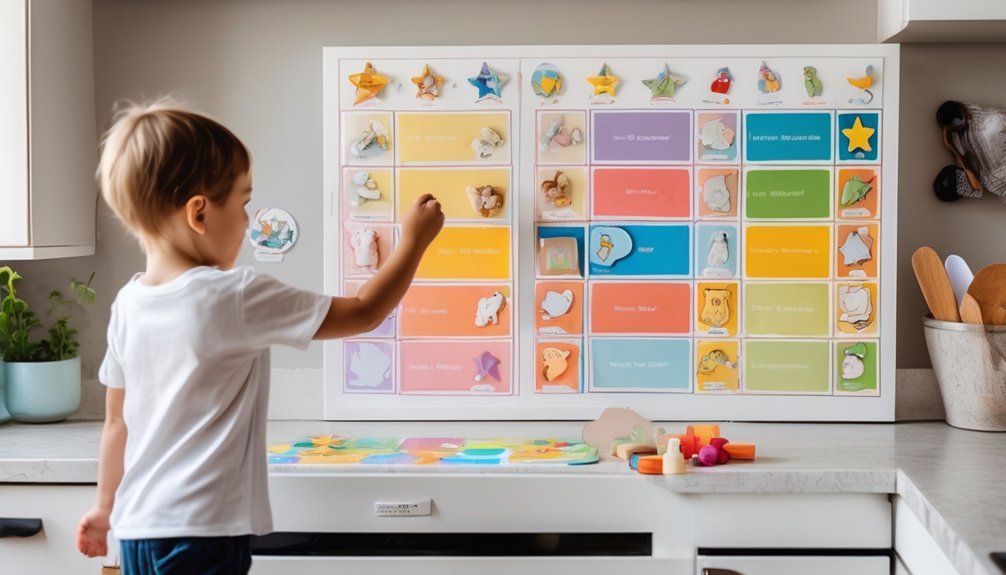
A simple chore chart works best when it is easy for a young child to see, understand, and follow. Clear labels and large pictures reduce confusion and support calm routine. Colorful designs can make the chart inviting without becoming busy. A weekly layout with one task per day helps the child track progress safely and predictably. Visual incentives, such as stickers or check marks, may strengthen attention and consistency.
| Day | Task | Mark |
|---|---|---|
| Mon | Put toys away | □ |
| Tue | Place clothes in hamper | □ |
| Wed | Wipe table | □ |
| Thu | Help water plants | □ |
The chart should hang at the child’s eye level, where a caregiver can review it gently. Small, steady expectations often lead to better follow-through.
Choose Age-Appropriate Rewards
Age-appropriate rewards should be simple, immediate, and linked to the child’s effort rather than the size of the task.
In a young child, a steady reward system works best when reward types are small and concrete, such as stickers, a favorite song, or extra story time. Positive reinforcement helps the child connect helpful behavior with a safe, loving response, which can reduce frustration and support trust.
Gentle celebration ideas, like a smile, a high-five, or brief praise, are often enough for preschool children. The goal is not to bribe, but to guide.
Clear, modest rewards can keep the chore chart emotionally healthy and easy to understand, while preserving closeness between caregiver and child.
Use the Chore Chart Every Day

Daily use helps the chore chart become a predictable part of the child’s routine. When it is reviewed at the same time each day, the mind learns the pattern, and stress often decreases. This steadier rhythm supports daily routines and makes expectations feel safe and close.
| Time | Action | Effect |
|---|---|---|
| Morning | Review chart | Sets tone |
| After meals | Check tasks | Reinforces habit |
| Evening | Mark completed chores | Confirms progress |
| Daily | Repeat process | Builds memory |
| Weekly | Brief review | Maintains structure |
The consistency benefits are usually stronger when adults respond calmly and keep the chart visible. Simple repetition, without pressure, allows a young child to absorb the routine naturally.
Keep Kids Motivated
Motivation tends to grow when the chore chart feels achievable and rewarding. A young child often responds best to small, steady successes that build confidence without overwhelm.
Clear tasks, brief instructions, and consistent expectations help the nervous system settle into routine, making cooperation more likely. Positive reinforcement, such as warm praise, a sticker, or a brief celebratory moment, can strengthen the link between effort and completion.
Visual tracking lets the child see progress in a simple, concrete way, which supports memory and encourages follow-through. Caregivers may keep the tone calm and affectionate, reinforcing that responsibility is a normal part of the day.
When the chart reflects real abilities and visible success, motivation becomes easier to sustain over time.
Fix Common Chore Chart Problems
When a chore chart stops working, the issue is usually not the child’s character but the setup itself. Common chore chart challenges often come from unclear tasks, too many steps, or expectations that shift from day to day.
A calm review can reveal where the strain begins, much like checking a sore spot before treatment. Gentle solution strategies work best when adults narrow the list, use simple words, and match chores to the child’s age and attention span.
- Confirm each task is visible and specific.
- Reduce the number of chores to avoid overload.
- Keep responses consistent, with brief praise and steady follow-through.
This approach supports trust, lowers resistance, and helps the routine feel safe, close, and manageable for both child and caregiver.
Fun Chore Chart Ideas for Kids
Caregivers may use creative chore themes such as space missions, animals, or treasure maps to give each task a clear identity. Interactive chart activities, including stickers, movable tokens, or color changes, help young children see progress without pressure.
A chart placed at eye level often improves consistency and strengthens a child’s sense of safety. Small, predictable rewards, such as praise or shared time, may reinforce healthy habits.
When the system feels warm and personal, children are more likely to cooperate and learn responsibility with confidence.
Frequently Asked Questions
How Many Chores Should a Young Child Do Each Day?
A young child typically does 1 to 3 chores daily, within daily chore limits and age appropriate tasks. A small, steady routine feels manageable, reassuring, and practical, while preserving warmth, closeness, and confidence.
Should Siblings Share the Same Chore Chart?
Yes, siblings may share one chore chart. Research suggests nearly 70% of families report smoother routines with visual structure. Shared charts can support sibling dynamics, reduce rivalry, and make chore sharing calmer, practical, and reassuring.
Can Chore Charts Work Without Rewards?
Yes, a chore chart can work without rewards. Its chore chart benefits include building routine and responsibility, while intrinsic motivation may grow through praise, consistency, and gentle encouragement, creating a calm, supportive closeness.
What if My Child Cannot Read the Chart Yet?
Picture prompts, practical patience, and parent involvement help: use visual cues, picture symbols, and routine integration so the child can follow the chart before reading. This approach is reassuring, simple, and developmentally appropriate.
How Often Should the Chart Be Updated?
The chart should be updated weekly, with gentle chart frequency adjustments as routines change. Effective updating strategies keep expectations clear, reduce stress, and support closeness. Smaller children benefit from simple, consistent revisions and reassurance.
Conclusion
In time, a chore chart can become a small compass on the wall, guiding young children toward steady habits and confidence. Each sticker placed is like a bright marker of progress, showing that simple tasks can grow into reliable routines. With age-appropriate chores, gentle reminders, and consistent praise, the chart supports calm learning rather than pressure. In this way, the family home becomes a well-tended garden where responsibility takes root and confidence quietly blooms.