
Helping a toddler adjust to daycare often begins before the first drop-off. Small steps like short visits, steady routines, and a familiar comfort item can make the change feel less sudden. On the first day, a calm goodbye and simple expectations can ease stress for both child and parent. The hardest part is often the first few weeks, when consistency matters most, and a few small habits can change everything.
Key Takeaways
- Build emotional readiness with simple routines, daycare books, and brief practice separations.
- Visit the daycare together so your toddler can become familiar with the environment and teachers.
- Keep bedtime, morning, and drop-off routines steady to create predictability and security.
- Use calm, short goodbyes and allow comfort items like a favorite toy or blanket if permitted.
- Speak positively about daycare, friends, and activities to build confidence and excitement.
Prepare Your Toddler Before Daycare Starts

Preparing a toddler for daycare before the first day can make the transition feel less overwhelming for both child and caregiver. Gentle preparation helps build emotional readiness by introducing simple routines, talking about new faces, and practicing brief separations in familiar settings.
Reading books about daycare, naming feelings, and encouraging play with other children can support social skills in a calm, reassuring way. It also helps to visit the center together, if possible, so the environment feels less unknown.
Keeping bedtime and morning routines steady offers a sense of security. Small conversations about who will be there and when pickup will happen can create trust.
With patient preparation, the change may feel safer, warmer, and easier to accept.
What to Expect on the First Day of Daycare?
On the first day of daycare, a toddler may feel curious, hesitant, or upset as they encounter a new space, new adults, and unfamiliar routines. These first day emotions are normal, and separation anxiety may appear in tears, clinginess, or quiet watching.
The child might explore briefly, then seek comfort. Staff usually guide the day with calm care, while the toddler learns names, toys, and room rhythms.
Parents may notice a mix of progress and resistance, which can feel tender and hard.
- Short goodbyes are common
- Tears may fade after settling
- Snack and play can soothe
- Comfort items may help
- Reassurance builds trust over time
Create a Predictable Drop-Off Routine
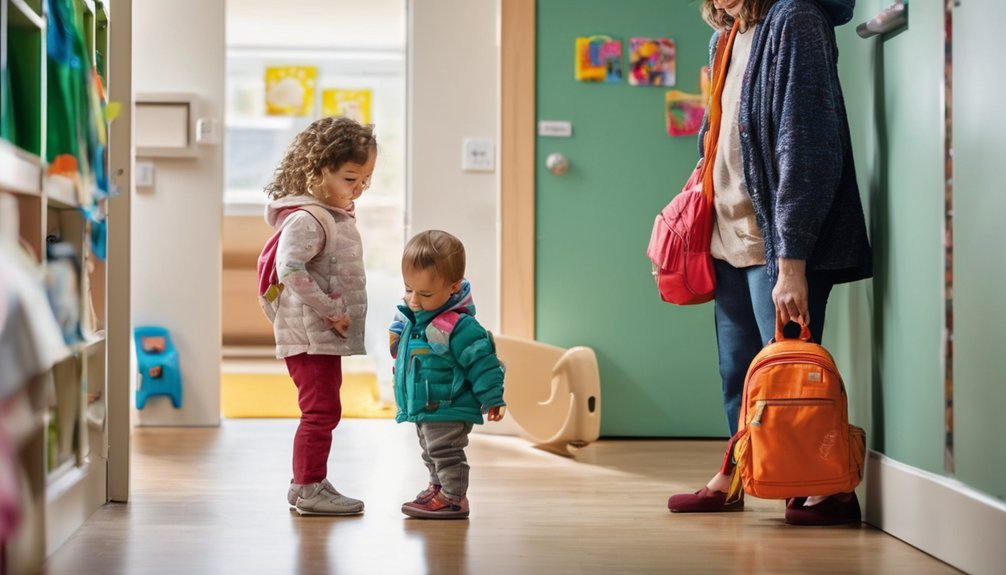
A steady drop-off routine can make those early daycare moments feel more manageable for both toddler and parent. A brief sequence, such as greeting the teacher, hanging up belongings, and sharing a quick goodbye, gives the child a sense of what comes next.
Repeating the same steps each morning supports the consistency importance of familiar patterns, which can reduce anxiety and build trust. Gentle visual cues, like a wave at the door or a hand squeeze before parting, help signal that separation is temporary and safe.
It also helps to keep the goodbye calm, warm, and short so the transition feels clear rather than uncertain. When the routine stays predictable, the toddler can focus on settling in, and the parent can leave with greater confidence.
Pack Daycare Comfort Items That Help
One familiar item can make a big difference during daycare transitions. A small comfort collection helps a toddler feel held, even when apart from home. Caregivers can pack a few trusted items that are easy to manage and safe for group settings. The goal is not to fill a bag, but to offer steady reassurance through touch, sight, and scent.
- favorite toys
- security blankets
- comforting books
- familiar stuffed animals
- family photos or calming scents
Each item should be labeled and checked with daycare rules. A soft blanket, a tiny photo, or a beloved animal can become a quiet anchor during hard moments.
When these comforts are nearby, a child may settle with less distress and more confidence.
Talk About Daycare in Positive Ways

Comfort items can help a toddler feel safer, and the same steady feeling can be supported through the words adults use about daycare. They can describe playful experiences, social interactions, and learning opportunities in warm, simple terms. Positive reinforcement helps when they mention fun activities, creative play, and exploration time.
| Phrase | Effect | Use |
|---|---|---|
| “You will paint today.” | Builds interest | Before drop-off |
| “Friends are waiting.” | Suggests new friendships | At home |
| “Teachers help.” | Feels reassuring | Daily talk |
| “You can explore.” | Encourages curiosity | Morning routine |
| “That sounds fun.” | Strengthens confidence | After pickup |
Gentle praise about small successes can make daycare feel familiar. When adults speak with calm hope, toddlers often sense belonging, and the day may seem less uncertain.
Use Simple Goodbyes to Ease Separation Anxiety
Simple, brief goodbyes can help a toddler feel more secure at drop-off. A calm, loving routine signals that the separation is safe and temporary. Long exits often heighten worry, while quick goodbyes give the child less time to feel overwhelmed.
It can help to offer one hug, one phrase, and one confident wave, then leave with warmth. Caregivers may also use positive distractions, such as a favorite toy or a welcoming activity, to gently shift attention after the parent departs.
- Keep the farewell short
- Use the same words each day
- Stay calm and confident
- Avoid sneaking away
- Trust simple routines to soothe
With steady, tender consistency, a child can begin to feel held even during parting.
Support Your Toddler Through the First Few Weeks
The first few weeks of daycare can be an adjustment for both toddler and parent, and a steady response helps the transition feel safer.
Consistent routines at home, such as predictable mornings and calm evenings, can give the toddler a sense of order when the day feels new. A parent may ask caregivers about meals, naps, and playtime activities, then mirror familiar rhythms at home.
Brief emotional check-ins after pickup can help the child name feelings without pressure. If tears appear, they should be met with patience rather than alarm.
Small comforts, like a favorite blanket or photo, may also ease the shift. With time, reassurance and repetition often help confidence grow.
Frequently Asked Questions
How Do I Know if My Toddler Is Ready for Daycare?
Daycare readiness shows in toddler signs like brief separations tolerated, curiosity about peers, and basic communication. If comfort can be regained after goodbyes, that suggests readiness. Gentle pacing and reassurance can make the transition easier.
What Should I Do if My Toddler Refuses to Eat at Daycare?
Like a shy bird, the toddler may need time. Staff can try mealtime strategies, honor snack preferences, and keep routines calm. A trusted caregiver should reassure gently, since pressure often worsens refusal.
How Can I Find a Daycare With a Gentle Transition Policy?
They can find a daycare by asking about a gentle environment, transition activities, gradual drop-offs, and parent communication. Visiting classrooms and observing staff warmth helps reassure families that the center supports tender, individualized adjustment.
When Should I Worry About My Toddler’s Daycare Anxiety?
Worry grows when separation anxiety lingers beyond a few weeks, or distress intensifies like a storm at dusk. Gentle coping strategies help, but persistent withdrawal, sleep changes, or regression merit pediatric guidance.
How Do I Handle Biting or Aggression During Daycare Adjustment?
He should identify biting triggers, stay calm, and gently redirect. Managing aggression works best with consistent boundaries, close supervision, and comforting routines. He can praise gentle behavior, offer words for frustration, and partner closely with caregivers.
Conclusion
By the time the first week settles in, small coincidences often bring comfort: a favorite blanket in the cubby, the same cheerful greeting at the door, a familiar song drifting from the playroom. These little moments can help a toddler feel that daycare is not so strange after all. With steady routines, gentle goodbyes, and patient encouragement, the new place begins to feel safe, and both child and parent can breathe a little easier.