
When it comes to tracking your baby’s temperature, choosing the right thermometer can make all the difference. It’s essential to find a tool that provides accurate readings while being gentle on your little one. With various options available, from digital to infrared, you might wonder which is best suited for your needs. Understanding these choices can help ensure your baby’s health is monitored effectively, so let’s explore what each type has to offer.
Key Takeaways
- Digital Thermometers are reliable and versatile, allowing for rectal, oral, or axillary readings in under a minute for accurate monitoring.
- Infrared Forehead Thermometers enable quick, non-intrusive temperature checks, ideal for restless babies, but placement accuracy is crucial for reliable results.
- Ear (Tympanic) Thermometers provide fast and comfortable temperature readings using infrared technology, ensuring less stress during measurement.
- Pacifier Thermometers are designed for sensitive babies, offering a user-friendly, comfortable option that delivers reliable and quick temperature readings.
- Smart Thermometers connect to apps for tracking temperatures over time, providing alerts and notifications to keep parents informed about their baby’s health.
Digital Thermometers
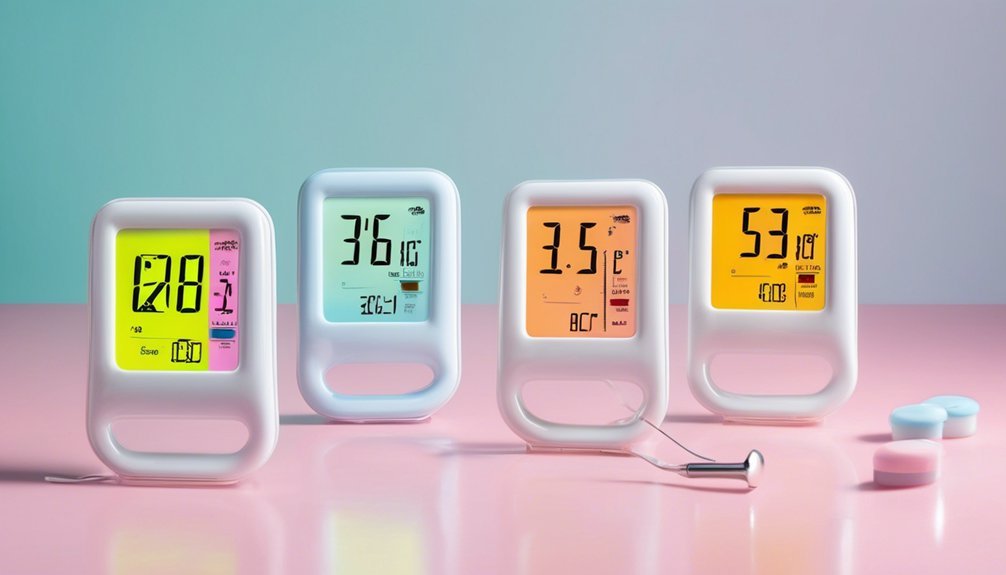
Digital thermometers are essential tools for monitoring your baby’s health, providing quick and accurate temperature readings. With their digital accuracy, you can trust that the readings reflect your child’s true condition.
Most models offer a temperature range that adapts to your baby’s needs, whether you’re taking a rectal, oral, or axillary measurement. You’ll appreciate how easy they’re to use, often yielding results in under a minute. This efficiency means less discomfort for your little one during those vulnerable moments.
When fever strikes, knowing you have a reliable thermometer at hand can ease your worries. Investing in a quality digital thermometer is a crucial step in ensuring your baby’s well-being, allowing you to respond effectively to any health concerns.
Infrared Forehead Thermometers
When you need a quick temperature check without disturbing your little one, infrared forehead thermometers are an excellent choice. These devices allow you to take a reading in seconds, which can be particularly handy during those restless nights.
However, it’s important to be aware of accuracy concerns; ensure the thermometer is placed correctly on the forehead for reliable results. Follow the usage guidelines provided by the manufacturer, as positioning and distance can affect readings.
While these thermometers are convenient, remember that they may not always be as precise as other methods, especially if you suspect a serious illness. Trust your instincts and consult a healthcare professional if you’re uncertain about your baby’s health. Your peace of mind is crucial.
Ear (Tympanic) Thermometers
Ear (tympanic) thermometers provide a fast and accurate way to measure your baby’s temperature, making them a popular choice among parents. These devices use infrared technology to gauge the temperature inside your baby’s ear, ensuring reliable ear thermometer accuracy.
When your little one is feeling unwell, you’ll appreciate how quickly you can get a reading, allowing you to act swiftly.
Moreover, ear thermometer comfort is a significant advantage. The soft tips are designed to fit snugly in your baby’s ear without causing discomfort, making the experience less stressful for both of you.
Just remember to follow the instructions carefully for the best results. With this tool, you can monitor your baby’s health with confidence and care, keeping those worried moments at bay.
Pacifier Thermometers
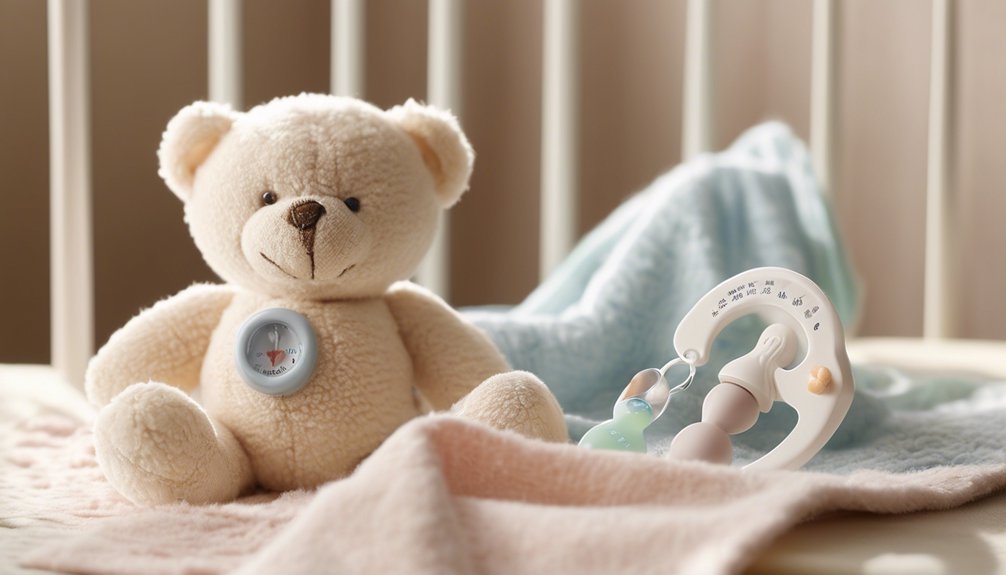
Pacifier thermometers offer a unique solution for measuring your baby’s temperature, especially for those who may be sensitive to more traditional methods.
With a gentle pacifier design, these thermometers can ease your little one’s discomfort while providing accurate readings.
Here’s what you can expect:

- User-friendly: Easy to use, making temperature checks a breeze.
- Comfortable: The soothing design encourages your baby to accept it willingly.
- Temperature accuracy: Delivers reliable results, ensuring you’re well-informed.
- Quick readings: Most models provide results in under a minute.
- Portable: Great for on-the-go parents, fitting easily in diaper bags.
Rectal Thermometers
Rectal thermometers are often regarded as the gold standard for accurately measuring a baby’s temperature. They provide precise readings, helping you quickly assess your little one’s health.
One of the major rectal thermometer advantages is their reliability, especially in infants under three months where accuracy is crucial.
When using a rectal thermometer, safety is paramount. Always ensure the thermometer is clean and use a lubricant to ease insertion. Hold your baby securely to prevent movement, and never leave them unattended during the process.
While it may feel uncomfortable at first, you’ll find that this method offers the most dependable results. Your baby’s well-being is your priority, and choosing the right thermometer reflects your commitment to their health.
Smart Thermometers
As technology advances, smart thermometers have emerged as a convenient and innovative option for tracking your baby’s temperature. These devices offer several smart features that make monitoring easier and more efficient, allowing you to focus on your little one’s comfort.
- App connectivity lets you track temperatures over time.
- Alerts and notifications keep you informed about any fevers.
- Data sharing options allow caregivers to stay updated.
- Multiple measurement modes provide versatility for different ages.
- User-friendly interfaces make it easy for anyone to operate.
Using a smart thermometer can bring peace of mind, helping you ensure your baby stays healthy.
With these devices, you can quickly respond to any changes in your baby’s health, fostering a more proactive approach to care.
Non-Contact Thermometers
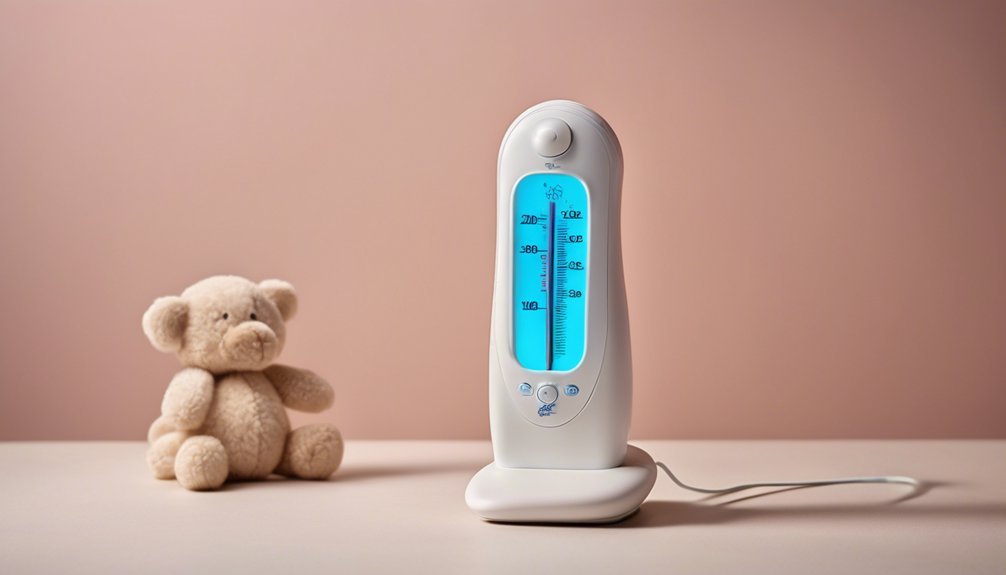
For parents seeking a quick and non-invasive way to monitor their baby’s temperature, non-contact thermometers are a valuable option.
These devices measure temperature without physical contact, offering non-contact benefits that can significantly reduce discomfort for your little one. With non-contact accuracy, you can confidently track your baby’s temperature in mere seconds, making it easier to keep an eye on their health, especially during those restless nights.
Their ease of use is particularly advantageous when your baby is asleep or unsettled. Plus, many non-contact thermometers come with features like fever alerts and backlit displays, enhancing usability.
Choosing this type not only prioritizes your baby’s comfort but also gives you peace of mind during those crucial moments of care.
Wearable Thermometers
When you’re juggling the demands of parenthood, wearable thermometers can provide a convenient solution for monitoring your baby’s temperature. These innovative devices utilize wearable technology to keep track of your little one’s health without constant disruptions.
- They offer real-time temperature readings.
- Most are designed for comfort and ease of use.
- Many sync with your smartphone for quick updates.
- They can alert you to any concerning shifts in temperature.
- Some models even track sleep patterns and activity levels.
With a wearable thermometer, you can focus on those precious moments with your baby, knowing you’re staying on top of their health seamlessly.
It’s a smart choice for modern parents who want to ensure their baby’s well-being.
Temperature Strips
Temperature strips offer a quick and easy way to monitor your baby’s temperature without the hassle of traditional thermometers.
These adhesive strips provide a simple strip application on your baby’s forehead, allowing you to check for fever at a glance. While they’re convenient, it’s important to note that temperature accuracy can vary. They’re best used for initial assessments rather than definitive measurements.
When using temperature strips, ensure the skin is clean and dry for optimal adhesion. Although they can’t replace clinical thermometers, they can help you keep an eye on your baby’s well-being.
If you notice persistent fever, don’t hesitate to consult your pediatrician for further evaluation. Remember, your baby’s comfort and health are always your top priority.
Bath Thermometers

Monitoring your baby’s temperature during bath time is just as important as checking it when they’re feeling unwell.
Ensuring the right water temperature helps create a safe and enjoyable bathing experience for your little one. Here’s what you should consider:
- Use a bath thermometer to measure water temperature accurately.
- The ideal water temperature for babies is around 98.6°F (37°C).
- Always follow safety guidelines to prevent burns or discomfort.
- Check the water temperature before placing your baby in the tub.
- Look for thermometers that are easy to read and designed for use in water.
Features to Consider
Choosing the right thermometer for your baby involves considering several key features that ensure accuracy and ease of use. You want a thermometer that offers a user friendly design and provides accurate readings, so you can quickly assess your little one’s health. Here are some vital features to keep in mind:
| Feature | Importance |
|---|---|
| Type of Thermometer | Affects comfort and accuracy |
| Response Time | Quicker readings reduce fuss |
| Display Readability | Clear display helps reduce stress |
| Memory Function | Stores previous readings for tracking |
How to Take Your Baby’s Temperature
Taking your baby’s temperature is an essential skill every parent should master.
Whether you choose traditional methods or modern thermometers, knowing the right technique can help you monitor their health effectively.
Here’s how to do it:
- Choose the appropriate thermometer: Digital thermometers are often the easiest for home use.
- Know the temperature ranges: A normal temperature is typically between 97°F and 100.4°F (36.1°C to 38°C).
- Select the right method: Oral, rectal, or underarm methods all have their places.
- Follow the instructions: Each thermometer has specific guidelines for accurate readings.
- Stay calm: Your baby can sense your stress, so try to remain relaxed during the process.
Frequently Asked Questions
What Is the Normal Temperature Range for Babies?
A normal body temperature for infants typically ranges from 97°F to 100.4°F. Monitoring this range is crucial for your baby’s health, helping you identify potential issues and ensuring their comfort and well-being.
How Often Should I Check My Baby’s Temperature?
You should check your baby’s temperature whenever you suspect illness or follow frequency guidelines provided by your pediatrician. Use gentle temperature techniques, ensuring comfort while monitoring their health closely to provide reassurance and care.
Can I Use Adult Thermometers for Babies?
You can use adult thermometers, but be cautious. Their accuracy might differ for babies. Consider using rectal, axillary, or temporal types specifically designed for infants, ensuring you get the most reliable and comforting readings for your little one.
When Should I Contact a Doctor About My Baby’s Fever?
So, your little one’s got a fever—congrats, you’re officially a parent! When to worry? If symptoms like persistent crying, lethargy, or difficulty breathing show up, it’s time to call your doctor. Trust your instincts.
Are There Any Risks Associated With Taking My Baby’s Temperature?
Taking your baby’s temperature can carry risks like discomfort or potential injury if improper methods are used. Always monitor for fever symptoms closely, and choose a safe, reliable temperature measurement technique to ensure your baby’s well-being.
Conclusion
In the journey of caring for your baby, having the right thermometer is like holding a gentle compass, guiding you through the sometimes turbulent seas of health monitoring. From digital to infrared options, each type offers unique benefits tailored to your little one’s needs. Remember, choosing the right thermometer not only ensures accuracy but also provides peace of mind, letting you focus on nurturing your baby’s wellbeing during those feverish moments. Your baby’s health deserves the best tools available.