
You might think that blank art journals are the secret portals to a child’s imagination. They aren’t just pages; they’re gateways to self-discovery and expression. As your child explores their thoughts and feelings through art, you’ll see confidence bloom and creativity thrive. But how exactly do these journals transform a simple doodle into a powerful form of communication? Let’s explore the essential role these journals play in nurturing young artists.
Why Blank Art Journals Are Essential for Kids

When kids have a blank art journal in hand, they unleash their creativity and explore their thoughts freely. These journals are essential for imagination development, providing a safe space for self-expression.
Each page invites your child to dive into artistic exploration, whether through doodles, sketches, or written words. This unstructured format encourages them to experiment without fear of judgment, allowing their ideas to flow naturally.
As they fill the pages, they gain confidence in their abilities and learn to articulate their feelings visually. Art journals also promote fine motor skills and cognitive growth, making them a valuable tool for holistic development.
How Blank Art Journals Foster Creativity
Blank art journals serve as gateways to creativity, inviting kids to explore their imaginations without constraints. When you give your child a blank journal, you’re opening the door to imaginative exploration. They can freely sketch, doodle, or write, allowing their thoughts to flow onto the pages.
This artistic freedom helps kids express themselves in ways they mightn’t otherwise, boosting their confidence and encouraging unique ideas. As they fill the pages, they learn to take risks, experiment with different techniques, and develop their own artistic voice.
Each entry becomes a celebration of their creativity, fostering a sense of ownership and pride. In this space, there are no wrong answers—just endless possibilities waiting to be discovered.
How to Select the Best Art Journal for Your Child’s Age and Interests

Choosing the right art journal for your child can feel overwhelming, but it’s easier than you think. Start by considering their age suitability and interest alignment.
Here are four tips to guide your selection:
- Age Suitability: Choose a journal designed for your child’s specific age group, ensuring the materials are safe and appropriate.
- Size and Format: Opt for a size that fits their comfort—smaller journals are great for little hands, while larger ones can inspire bigger projects.
- Paper Quality: Look for thicker paper that can handle various mediums, from crayons to watercolors.
- Theme and Design: Select a journal that reflects your child’s interests, whether it’s animals, fantasy, or abstract designs.
This thoughtful approach can spark their creativity!
Easy Ways to Make Daily Art Journaling Fun
Art journaling can become a delightful part of your child’s daily routine, especially if you incorporate fun and engaging activities. Start by introducing daily prompts to spark creativity; these can be simple themes like “favorite animal” or “dream vacation.”
Encourage your child to doodle, paint, or write about these ideas, making it a playful challenge.
Collaborative projects can also bring excitement; invite friends or family members to join in. Each person can contribute a page, creating a shared experience full of laughter and creativity.
Don’t forget to celebrate their progress! Display their art journals prominently, showing that their creativity is valued.
With these easy strategies, daily art journaling will transform into a cherished habit.
Creative Activities for Kids Using Blank Art Journals

While exploring creative activities, you’ll find that blank art journals open up a world of possibilities for your kids. These journals can inspire imagination and foster artistic expression.
Blank art journals unlock endless creativity for kids, inspiring imagination and nurturing artistic expression in playful ways.
Here are some engaging ideas:
- Collaborative Projects: Encourage kids to team up on a page, combining their styles and ideas for a unique creation.
- Themed Prompts: Use prompts like “Under the Sea” or “Outer Space” to spark their creativity.
- Storytelling: Have them illustrate their favorite stories or create new ones, blending art with narrative.
- Mood Boards: Let them cut and paste pictures or drawings that represent their feelings or dreams.
These activities not only nurture creativity but also help build essential skills like teamwork and self-expression.
Personalizing Your Child’s Art Journal
When you dive into personalizing your child’s art journal, the possibilities are endless. Start by discussing art journal themes that resonate with your child’s interests—whether it’s nature, superheroes, or fantastical worlds.
Encourage them to brainstorm ideas, making the process exciting and collaborative.
Next, consider creating personalized covers. Use materials like colorful paper, stickers, or even photos to reflect their personality.
Let your child choose colors and designs that inspire them.
You could also include pockets for keepsakes or a dedicated section for their favorite quotes. This not only makes the journal unique but also invites them to explore their creativity freely.
Personalizing the journal fosters a deeper connection, turning it into a cherished space for self-expression.
How Art Journals Help Kids Express Their Feelings

Creativity often serves as a powerful outlet for children to express their feelings. Art journals provide a safe space for emotional expression and artistic reflection, allowing kids to explore their thoughts and emotions freely.
Here are some ways art journals can help:
- Visual Storytelling: Kids can create narratives through drawings and collages, helping them articulate experiences.
- Emotional Release: Expressing feelings through art can reduce stress and anxiety.
- Self-Discovery: Journaling encourages kids to understand their emotions better, fostering personal growth.
- Enhanced Communication: Art can bridge the gap when words fail, making it easier for children to share their feelings.
Integrating Art Journals Into Learning
Art journals aren’t just a means for kids to express their feelings; they can also play a pivotal role in enhancing their learning experiences. By integrating art into various subjects, you can make lessons more engaging and memorable.
Try using journal prompts that encourage creativity while exploring topics like science, history, or literature. For example, ask your child to illustrate a scientific concept or create a visual representation of a story’s theme. This art integration not only deepens understanding but also boosts retention.
Plus, it allows kids to connect personally with what they’re learning, fostering a love for education. So, grab those blank journals and watch as your child’s creativity and knowledge flourish together!
Inspiring Examples of Kids’ Art Journal Pages
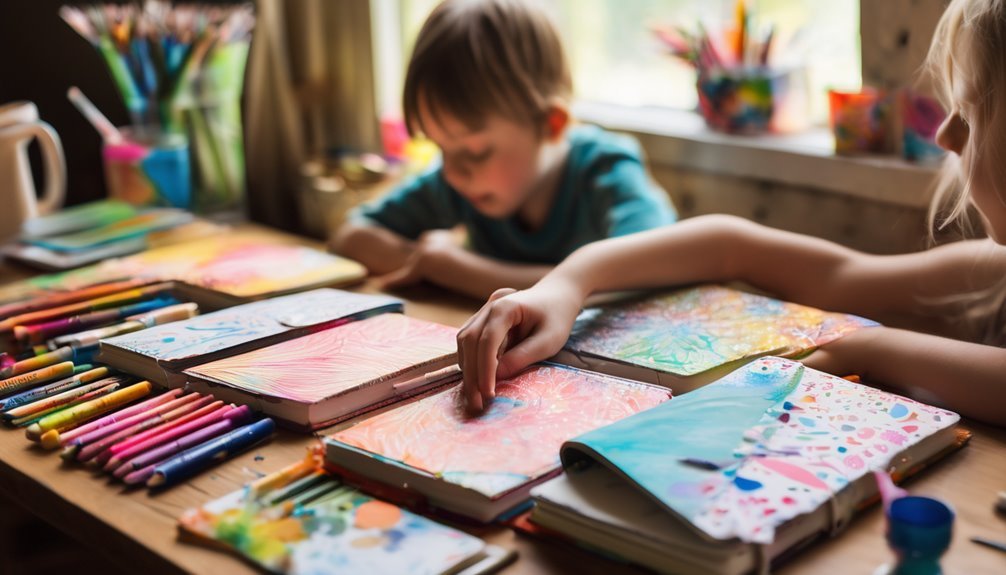
Blank pages can transform into vibrant worlds of imagination with just a few strokes of a crayon or brush. Kids can create stunning art journal pages that reflect their unique perspectives.
Here are some inspiring examples to get those creative juices flowing:
Here are some creative prompts to ignite imagination and inspire artistic expression in young minds.
- Nature Sketches: Encourage kids to observe the outdoors and capture the beauty of plants and animals.
- Collage Techniques: Using magazine cutouts or colored paper, they can create dynamic compositions that tell a story.
- Mixed Media: Combine drawing, painting, and found objects for an exciting, layered effect.
- Themed Pages: Create pages around specific themes—like seasons or emotions—to spark creativity and exploration.
With each page, kids can express themselves and develop their artistic voices.
Let the journey begin!
Frequently Asked Questions
What Materials Are Best for Decorating Blank Art Journals?
To decorate your journal, use decorative stickers and colorful washi tape. These materials add fun flair and personality, making your creativity shine. Experiment with different designs and let your imagination guide you!
Can Art Journaling Improve My Child’s Writing Skills?
Sure, art journaling won’t help your child’s writing at all! Just kidding. It fosters creative expression and inspires writing prompts, boosting their skills while making writing feel fun and engaging. They’ll love it!
How Often Should Kids Use Their Art Journals?
Encourage your kids to use their art journals daily for creative routines and daily inspiration. Even short sessions can spark imagination, helping them express thoughts and feelings while developing their artistic and writing skills.
Are There Age Restrictions for Using Art Journals?
There aren’t strict age restrictions for using art journals; they’re great for anyone! Embracing creative expression at any age unlocks art journal benefits, sparking imagination like a vivid sunrise lighting up a blank canvas.
What to Do if My Child Feels Stuck Creatively?
If your child feels stuck creatively, try using art prompts to spark inspiration. Encourage them to explore different materials or themes. Remind them that creative blocks are normal, and it’s okay to take breaks.
Conclusion
In a world buzzing with noise, your child’s blank art journal becomes a quiet sanctuary for self-expression. It’s where wild imagination meets structured creativity, allowing thoughts to flow freely onto the page. As they doodle and sketch, they not only enhance their skills but also build confidence. Each journal entry is a step on their journey, transforming fleeting feelings into vibrant art. Embrace this beautiful blend of play and learning, and watch your child flourish as an artist and storyteller.