When Sarah placed her car seat in the front passenger seat, she thought she was providing her child with the best view. However, this common mistake can dramatically increase the risk in an accident. To ensure your child’s safety, it’s crucial to understand the intricacies of car seat installation. From choosing the right seat type to securing it correctly, there are several pitfalls you need to avoid. Let’s explore these key mistakes that could jeopardize your child’s safety.
Key Takeaways
- Failing to secure the car seat tightly can result in movement; it shouldn’t shift more than an inch when installed correctly.
- Ignoring weight and height limits can jeopardize safety; always check specifications to ensure the seat is appropriate for your child.
- Incorrect harness positioning, such as placing it above shoulder level, increases injury risk; ensure it’s at or below shoulder level.
- Not reading the car seat manual may lead to improper usage; familiarize yourself with the instructions for safe installation and adjustments.
- Overlooking expiration dates can compromise safety; regularly check your car seat’s expiration and replace it if it’s past due.
Choosing the Wrong Car Seat Type

When you’re selecting a car seat for your child, it’s crucial to understand that not all seats are created equal.
You’ll need to choose between infant seats and booster seats based on your child’s age, weight, and height. Infant seats are designed for newborns and smaller babies, providing essential support and safety during those early months.
As your child grows, you’ll transition to a booster seat, which is meant for older kids who’ve outgrown their infant seat but aren’t yet ready for a regular seatbelt.
Incorrect Harness Positioning
One of the most critical aspects of car seat safety is ensuring the harness is positioned correctly. Incorrect harness positioning can jeopardize your child’s safety. Make sure to perform regular safety checks and harness adjustments to keep everything snug and secure.
| Harness Position | Safety Implications |
|---|---|
| At or below shoulder level | Provides optimal protection |
| Above shoulder level | Increases risk of injury |
| Loose harness | Can lead to ejection in a crash |
| Tight harness | Should fit like a snug hug |
Always check that the harness is properly threaded through the slots and lies flat against your child’s body. This attention to detail ensures they stay safe on every journey.
Loose Installation
A secure installation is vital for ensuring your child’s safety in a car seat, and loose installation is a common mistake that can compromise that safety. To avoid this, always use the right installation techniques.
First, place the car seat in the back seat, as this is the safest spot. Then, use either the LATCH system or the vehicle’s seat belt, making sure to pull it tight.
After installation, check for movement; the seat shouldn’t shift more than an inch side to side or front to back. If it does, re-adjust until it feels secure.
Misunderstanding Weight and Height Limits

Many parents underestimate the importance of adhering to weight and height limits for car seats, which can jeopardize their child’s safety. Understanding the height guidelines and weight classifications is vital for choosing the right car seat.
Here’s a quick reference table to help you:
| Age Group | Weight Limit |
|---|---|
| Infant | Up to 30 lbs |
| Toddler | 30-65 lbs |
| Preschooler | 40-100 lbs |
| School-Age | 40-120 lbs |
| Booster Seat | 40-100 lbs |
Always check the manufacturer’s specifications and ensure your child remains within these limits. Ignoring these guidelines can lead to serious injury in a crash. Stay informed and keep your little one safe on the road!

Failing to Use the LATCH System Properly
While the LATCH (Lower Anchors and Tethers for Children) system is designed to simplify car seat installation, misusing it can compromise your child’s safety.
First, always check your vehicle’s manual for specific LATCH system guidelines and weight limits. Ensure the lower anchors are securely attached to the car seat, and avoid using both the LATCH system and the seatbelt simultaneously, as this can create a dangerous instability.
Remember to tighten the straps firmly until there’s no slack—installation tips like these are crucial for a secure fit.
Lastly, don’t forget the top tether for forward-facing seats; it plays a vital role in preventing the seat from tipping forward during a crash.
Prioritize your little one’s safety by using the LATCH system correctly!
Not Securing the Car Seat to the Vehicle
Although it might seem straightforward, failing to secure the car seat to the vehicle can have serious consequences for your child’s safety.
You need to ensure that your car seat is firmly anchored and compatible with your vehicle. Here are three crucial steps to follow:
- Use the car seat anchors: Check for the LATCH system in your vehicle; it provides a secure way to fasten the car seat without using the seatbelt.
- Double-check compatibility: Not all car seats fit every vehicle. Always refer to your car seat manual and vehicle owner’s manual to confirm compatibility.
- Test for security: After installation, give the car seat a firm tug. It shouldn’t move more than an inch. This ensures your child’s safety during travel.
Ignoring the Angle of the Car Seat
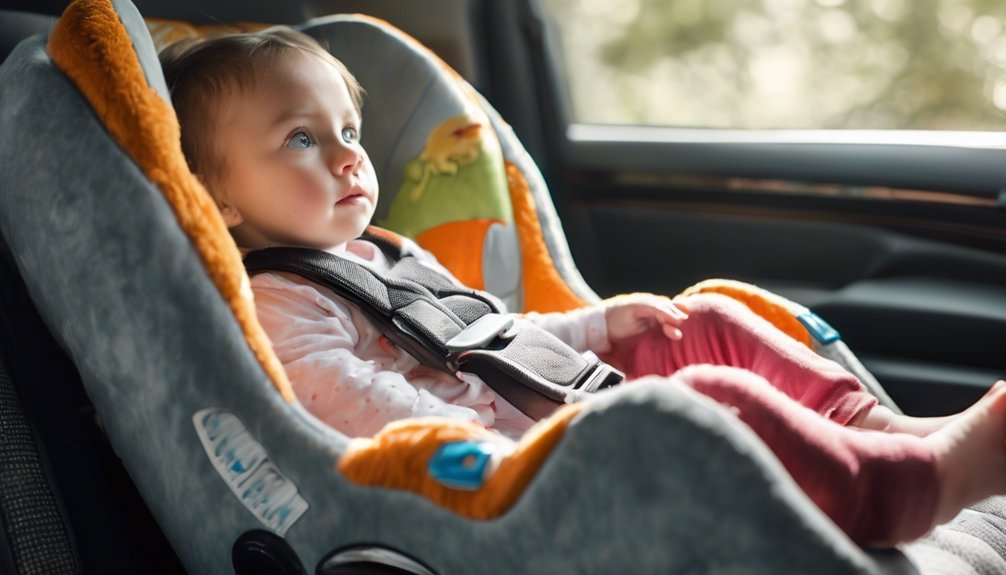
When installing a car seat, ensuring it’s at the correct angle is essential for your child’s safety. An improper angle can lead to serious injury during a collision.
Most car seats come with an indicator to help you achieve the right angle adjustment; typically, it’s between 30 to 45 degrees for rear-facing seats. Take a moment to check the seat recline before securing it in place.
If it’s too upright, your child’s head might flop forward, restricting their airway. Conversely, if it’s too reclined, your little one may slide down, compromising their protection.
Always double-check the angle after installation, and don’t hesitate to adjust as needed. Your child’s safety is worth every bit of effort you put in.
Overlooking Expiration Dates
Ensuring your car seat is at the correct angle is just one aspect of keeping your child safe on the road.
A critical mistake many parents make is overlooking expiration dates. Car seats have a limited lifespan due to materials degrading over time, which can compromise safety.
Here are three key points to remember about expiration implications:
- Check the Label: Always look for the expiration date on the car seat; it’s typically found on a sticker or in the manual.
- Understand Safety Regulations: Familiarize yourself with local safety regulations regarding car seat usage and expiration.
- Replace When Necessary: If your car seat is expired, replace it immediately to ensure your child’s safety during travel.
Prioritizing these details can make a world of difference.
Using a Second-Hand Car Seat
Many parents consider using a second-hand car seat to save money, but this decision can pose significant risks. You need to be aware of the seat’s history. Has it been in a crash? Has it been recalled? These factors greatly affect safety.
Ensure the car seat meets current safety standards. Older models may not comply with updated regulations, leaving your child vulnerable. It’s also crucial to check for any missing parts or damage that could compromise effectiveness.
If you can’t verify the seat’s history or if it’s too old, it’s better to invest in a new one. Your child’s safety is priceless, and choosing the right car seat is a critical step in protecting them on the road.
Neglecting to Read the Manual
Although it might seem straightforward, neglecting to read the car seat manual can lead to improper installation and usage, putting your child’s safety at risk.
Understanding the manual’s importance is essential for every parent. Here are three key reading guidelines to follow:
- Installation Instructions: Always check the specific installation steps for your car seat model. Each design may have unique requirements.
- Weight and Height Limits: Familiarize yourself with the weight and height limits to ensure your child is safe and secure.
- Maintenance Tips: Learn how to care for and clean the seat properly; this can prolong its life and maintain safety features.
Taking a few moments to read through these guidelines can make all the difference in your child’s safety on the road.
Frequently Asked Questions
How Can I Tell if My Car Seat Is Installed Correctly?
To tell if your car seat’s installed correctly, follow an installation checklist and adhere to safety guidelines. Check for tightness, proper angle, and secure harnesses. Trust your instincts; it should feel snug and safe for your child.
What Should I Do if My Car Seat Is Expired?
If your car seat’s expired, don’t hesitate. Check for replacement options immediately. Research trusted brands and consider safety ratings to ensure your child’s protection. It’s crucial to prioritize their safety with a reliable, up-to-date car seat.
Can I Use a Car Seat With a Broken Strap?
You shouldn’t use a car seat with a broken strap. For your child’s safety, replace the strap immediately. Always prioritize car seat safety; a secure, functional seat is vital for protecting your little one.
How Often Should I Check My Car Seat Installation?
You should check your car seat installation every month and after any long trips. Consistent car seat maintenance ensures your child’s safety. Always verify the tightness and positioning; it makes a world of difference for their protection.
Are There Any Car Seat Safety Certifications I Should Look For?
When it comes to car seat safety, you should always look for certification labels that meet safety standards. It’s like having peace of mind; knowing your child’s protected makes all the difference in the world.
Conclusion
To ensure your child’s safety, steer clear of common car seat missteps. Stay savvy and secure by selecting the suitable seat type, snugly securing the harness, and sticking to weight limits. Always assess angle accuracy and adhere to the manual’s instructions. Remember, safety’s no accident; it’s a proactive pursuit! By avoiding these pitfalls, you’ll foster a safer travel experience for your little one. Stay informed, stay vigilant, and drive with peace of mind!