
When it comes to choosing the right baby gate, you need to consider several factors that impact safety and functionality. Your space, the type of gate, and safety standards all play a vital role. It’s not just about blocking access; it’s about doing so securely and effectively. Understanding these elements will help you make an informed decision that meets your family’s needs. Let’s explore what you should keep in mind before making a purchase.
Key Takeaways
- Determine the type of gate needed: pressure-mounted for doorways or hardware-mounted for stairs for optimal safety and security.
- Consider the space requirements and choose a gate that fits the specific width and height needed for your area.
- Ensure the gate meets safety standards such as ASTM or CPSC regulations, and verify certification labels for child safety.
- Choose materials that match your lifestyle: wood for aesthetics, metal for durability, or plastic for portability.
- Establish a maintenance routine to inspect, clean, and address any wear or damage to ensure longevity and safety.
Understanding Baby Gate Types

When it comes to keeping your little one safe, understanding the different types of baby gates is crucial.
You’ll find that each gate type offers unique gate functionality to suit your home. For instance, pressure-mounted gates are easy to install and perfect for doorways, while hardware-mounted gates provide a more secure option for top of stairs.
Consider gate placement carefully; a well-placed gate can prevent accidents and keep your child in safe areas. Look for features like one-handed operation for convenience and durable materials to withstand wear and tear.
Assessing Your Space Requirements
Before choosing a baby gate, you need to evaluate your space to ensure the gate fits properly and functions effectively. Consider your area layout and space dimensions, as these factors will significantly influence your choice.
| Area Type | Recommended Gate Type | Key Considerations |
|---|---|---|
| Doorway | Swing or Retractable | Width and swing clearance |
| Stairs | Hardware-Mounted | Stability and height |
| Open Spaces | Pressure-Mounted | Ease of installation |
| Playrooms | Extra-Tall Gates | Height for climbing |
Safety Standards and Certifications
Ensuring your baby’s safety involves checking for safety standards and certifications when selecting a baby gate.
Look for gates that meet or exceed recognized compliance standards, such as those set by ASTM International or the Consumer Product Safety Commission. These safety certifications indicate that the gate has undergone rigorous testing for durability and safety, ensuring it can withstand the challenges of a curious child.
Always check for a label or documentation that confirms these certifications. Remember, a gate without proper safety standards may compromise your child’s safety, so it’s essential to be vigilant.
Material Considerations: Wood vs. Metal vs. Plastic

Choosing the right material for your baby gate can significantly impact both safety and functionality.
Wood gates offer excellent durability, providing a sturdy barrier that can withstand the wear and tear of daily use. They often blend well with home decor, adding a touch of warmth.
However, consider the weight of metal gates; they’re typically heavier and can provide added security, making them ideal for high-traffic areas.
On the other hand, plastic gates are lightweight and easy to move, but may lack the robustness of wood and metal.
Ultimately, your choice should align with your lifestyle, the specific needs of your space, and your desire for both safety and aesthetic appeal.
Mounting Options: Hardware-Mounted vs. Pressure-Mounted
When deciding on a baby gate, understanding the differences between hardware-mounted and pressure-mounted options is crucial for ensuring safety and convenience.

| Feature | Hardware-Mounted | Pressure-Mounted |
|---|---|---|
| Security | Higher security, screws into walls | Less secure, relies on tension |
| Installation | Requires tools and drilling | Easy to install, no tools needed |
| Portability | Permanent, not easily moved | Portable, can be relocated easily |
Hardware advantages include stability and strength, making them ideal for high-traffic areas. However, pressure disadvantages come into play, as they may not withstand forceful pushes and can slip over time. Choose wisely to ensure your little one’s safety!
Height and Width: Finding the Right Fit
How do you determine the ideal height and width for a baby gate? Start by considering your child’s age and mobility.
Generally, a gate should be at least 30 inches tall to prevent climbing. However, many models offer adjustable height, allowing you to customize the fit as your child grows.
When it comes to width, measure the space where you plan to install the gate. Look for options with adjustable gate dimensions to ensure a snug fit, preventing any gaps that could pose a safety risk.
Remember, a properly sized gate not only keeps your little one safe but also provides peace of mind for you.
Take your time to find the perfect fit that meets your family’s needs.
Features to Look For: Locking Mechanisms and Openings
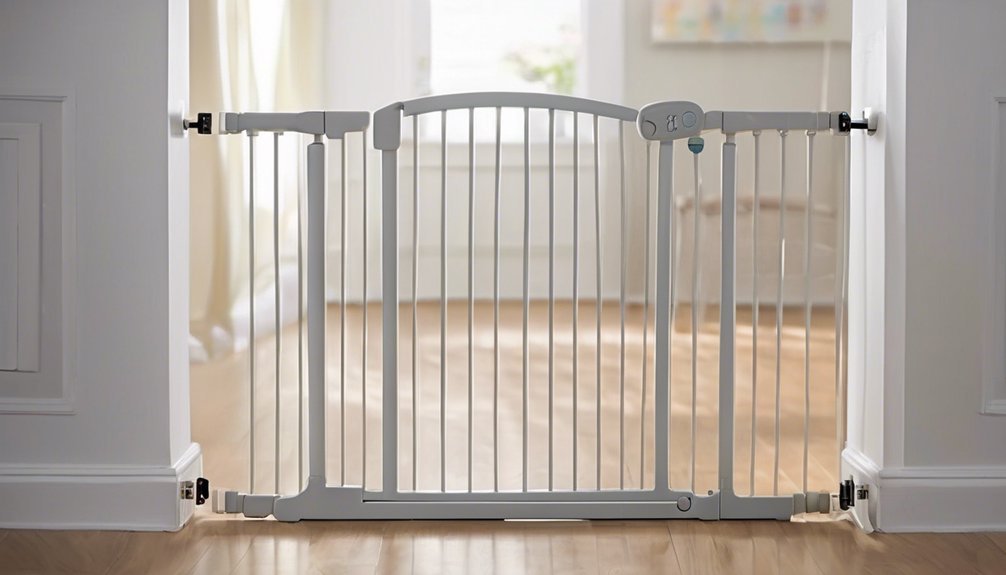
While you prioritize safety in your home, the locking mechanisms and openings of a baby gate are crucial features to consider.
Choosing the right ones can make a world of difference in keeping your little one safe. Here are three key features to look for:
- Easy-to-Use Locking Mechanisms: Opt for locks that you can operate with one hand, allowing you to manage the gate while holding your baby.
- Secure Design: Ensure the locking mechanism is child-proof yet simple enough for adults.
- Wide Gate Openings: Look for gates that swing open fully for easy access, especially when your hands are full.
Portable vs. Permanent Solutions
Whether you’re frequently on the move or prefer a more permanent solution, understanding the differences between portable and permanent baby gates can significantly impact your decision.
Portable baby gates are perfect for families who travel or need flexibility. They’re lightweight, easy to set up, and can be moved from room to room with ease.
On the other hand, permanent baby gates offer stability and security, ideal for areas where your child spends a lot of time. These gates often require installation and are designed to blend seamlessly into your home.
When choosing between the two, consider your lifestyle, the layout of your home, and how often you’ll need to adjust the gate’s location.
Style and Aesthetic Considerations
When selecting a baby gate, the style and aesthetic should align with your home’s decor. Choosing a gate that complements your space not only enhances safety but also adds to your interior design.
Here are a few considerations to keep in mind:
- Design Trends: Look for gates that reflect current design trends, like minimalist or rustic styles, to seamlessly blend with your home.
- Material Choices: Opt for wood, metal, or fabric gates based on your interior style—each brings a unique texture and feel.
- Color Options: Choose colors that match or contrast beautifully with your existing palette, ensuring your baby gate enhances rather than detracts from your decor.
Budgeting for Your Baby Gate

Budgeting for your baby gate is crucial because it ensures you find the right balance between safety and affordability.
Start by conducting a cost comparison of different styles and brands. Prices can range significantly, so understanding what fits your budget is important.
Take into account not just the initial cost, but also durability and potential long-term savings. Budget planning should reflect your specific needs—consider how many gates you’ll need and where they’ll be installed.
Remember, investing in a quality gate can save you money in the long run by preventing accidents.
Installation Tips for Optimal Safety
To ensure your baby’s safety, proper installation of the gate is essential. Follow these tips for a secure fit:
- Gather Installation Tools: Before you start, collect all necessary tools, like a screwdriver, level, and measuring tape. Having everything on hand makes the process smoother.
- Read Installation Instructions Carefully: Take a moment to read the manufacturer’s instructions thoroughly. Each gate is different, and understanding the specifics ensures you get it right.
- Secure the Gate Properly: When installing, make sure the gate is mounted firmly, either to the wall or using pressure mounts.
Test it by applying pressure to ensure it’s stable and won’t budge.
Maintenance and Care for Longevity
Although baby gates are designed for durability, regular maintenance is crucial for ensuring their longevity and safety.
Start by establishing an inspection routine; check for any signs of wear, loose screws, or damage at least once a month. If you notice anything amiss, address it immediately to prevent accidents.
For cleaning techniques, use a gentle soap solution to wipe down the surfaces, avoiding harsh chemicals that could compromise the materials. Pay special attention to hinges and latches, which can collect dust and grime.
Keeping your baby gate clean and well-maintained not only enhances its appearance but also guarantees it continues to function effectively.
With these simple steps, you’ll create a safer environment for your little one.
Frequently Asked Questions
Can I Use a Baby Gate for Pets as Well?
Yes, you can use a baby gate for pets, but ensure it’s sturdy and designed for pet safety. Different gate types offer varying heights and durability, so choose one that fits your pet’s needs effectively.
How Do I Clean and Disinfect My Baby Gate?
Cleaning your baby gate is crucial. Start with safe cleaning materials like mild soap and water. For disinfecting methods, consider using vinegar or a gentle disinfectant spray. Wipe it down thoroughly, ensuring it’s safe for your little one.
What Is the Average Lifespan of a Baby Gate?
The average lifespan of a baby gate typically ranges from two to five years, depending on the average material quality and adherence to gate safety standards. Regular checks can ensure it stays safe and effective for your little one.
Can I Use a Baby Gate Outdoors?
Sure, you can use a baby gate outdoors, but make sure it’s made of weather-resistant materials. Otherwise, your gate might become a sad, rusty sculpture instead of a reliable outdoor safety solution for your little explorer.
Are There Baby Gates Specifically Designed for Stairs?
Yes, there are baby gates specifically designed for stairs. These gate types enhance stair safety by preventing falls. Look for options with sturdy construction and features like pressure mounts or hardware for secure installation.
Conclusion
Choosing the right baby gate isn’t just about convenience; it’s about safety and peace of mind. By considering the type, materials, and mounting options, you’ll ensure your little one stays secure. But don’t stop there—regular maintenance is key to keeping your gate functional over time. Imagine the relief of knowing your child is safe as they explore their surroundings. So, take these steps seriously, and you’ll create a secure environment for your growing family.