
It’s easy to think that a fire won’t happen in your home, but accidents can occur anywhere, especially with a baby around. Your little one’s safety depends on your proactive measures. From creating a fire safety plan to ensuring smoke detectors are functional, every step counts. Let’s explore practical strategies to safeguard your family and create a secure environment for your baby.
Key Takeaways
- Keep matches, lighters, and flammable materials out of reach to prevent curious infants from accessing dangerous items.
- Install smoke detectors in every room and test them monthly to ensure they are functioning properly.
- Create a fire escape plan with multiple routes and practice it regularly with all family members.
- Store kitchen appliances and flammable materials securely, and never leave cooking unattended to minimize fire risks.
- Maintain an emergency kit with baby essentials, first-aid supplies, and a list of emergency contacts readily available.
Understanding Fire Risks in a Home With Infants

How aware are you of the unique fire risks that come with having an infant in your home? Infants are particularly vulnerable, so understanding fire hazards is crucial for their safety.
Common risks include overloaded electrical outlets, candles left unattended, and cooking accidents. Your little one’s curiosity can lead to dangerous situations, especially as they start to crawl and explore.
Always keep matches and lighters out of reach, and ensure that flammable materials are stored safely. Regularly check smoke detectors and have a fire extinguisher accessible.
Creating a Fire Safety Plan
Having a clear fire safety plan is vital for every home, especially when you have an infant.
Establishing this plan not only protects your family but also gives you peace of mind.
Here’s how to create an effective fire safety plan:
- Identify fire escape routes: Know at least two ways out of every room, especially the nursery.
- Assign family roles: Designate who’ll grab the baby, who’ll help older kids, and who’ll call 911.
- Practice regularly: Conduct fire drills with your family, so everyone knows what to do in an emergency.
Installing Smoke Detectors
Installing smoke detectors is one of the most crucial steps you can take to protect your family from fire hazards, especially when you have a baby in the house.
Start by choosing the right smoke detector types. Ionization detectors are great for fast-flaming fires, while photoelectric detectors excel with smoldering fires. It’s wise to install both types for comprehensive coverage.
Place detectors in key installation locations, such as every bedroom, the hallway outside sleeping areas, and on every level of your home. Avoid installing them near kitchens or bathrooms, where steam and smoke can cause false alarms.
Regularly Testing and Maintaining Alarms

Regularly testing and maintaining your smoke alarms is essential for ensuring your family’s safety, especially with a baby at home.
You want to be confident in your alarm functionality to protect your little one. Follow this simple testing frequency:

- Monthly Tests: Press the test button on each alarm to ensure it’s working correctly.
- Battery Replacement: Change batteries at least once a year or use a date to remind you.
- Full Replacement: Replace alarms every 10 years to ensure optimal performance.
Safe Use of Electrical Outlets and Cords
Since babies are naturally curious, ensuring the safe use of electrical outlets and cords becomes crucial in your home. Start by installing outlet covers to prevent little fingers from exploring dangerous spaces. These simple barriers can significantly reduce the risk of electric shocks.
Additionally, practice effective cord management by securing loose cords and keeping them out of your baby’s reach. Use cord organizers or clips to tidy up any trailing wires, minimizing the temptation for your child to tug or pull on them.
Regularly check your cords for frays or damage, replacing them as necessary. By taking these precautions, you create a safer environment for your little one, allowing them to explore with more freedom and you to worry less.
Kitchen Safety Tips
While it’s easy to overlook, kitchen safety is essential when you have a baby crawling around.
To keep your little one safe, focus on these three key areas:
- Kitchen Appliance Safety: Ensure all appliances are out of reach or secured. Turn pot handles inward to prevent accidental spills.
- Cooking Supervision: Never leave your cooking unattended. It only takes a moment for something to go wrong, so stay close while you’re preparing meals.
- Childproofing: Install safety latches on cabinets and drawers to keep harmful items out of reach.
Heating Equipment Precautions
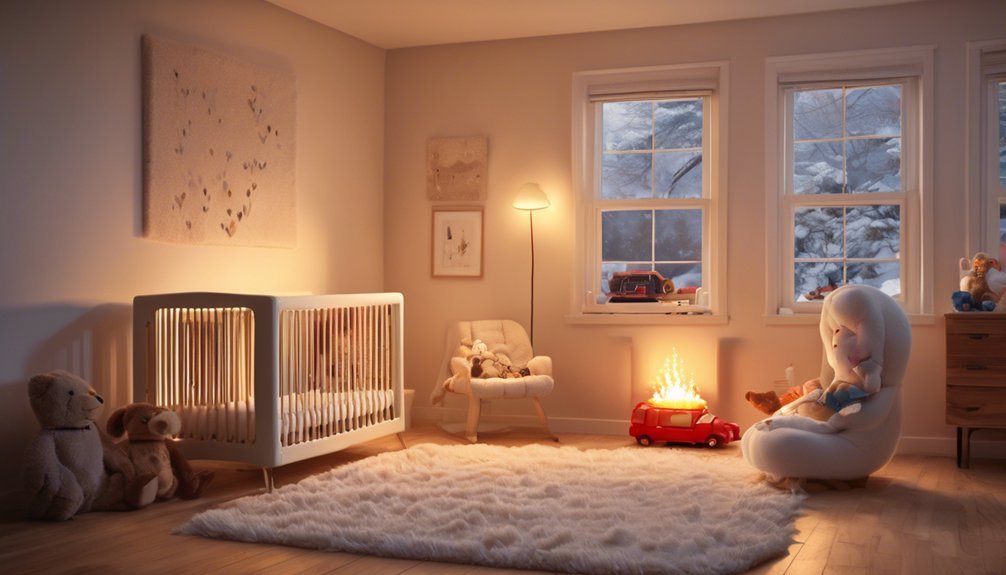
As you focus on kitchen safety, don’t forget about the heating equipment in your home.
Regular furnace maintenance is crucial; it keeps your heating system running efficiently and reduces fire risks. Schedule annual inspections to catch any issues early.
If you use a space heater, prioritize safety—place it on a flat surface, away from flammable objects, and never leave it unattended. Always opt for heaters with automatic shut-off features.
Make sure cords aren’t frayed and avoid using extension cords. Talk to your family about these precautions, reinforcing a culture of safety.
Safe Storage of Flammable Materials
To ensure your home remains a safe haven for your baby, it’s crucial to store flammable materials properly.
Following these tips on flammable storage will help keep your little one safe:
- Use Lockable Cabinets: Store all flammable liquids, like cleaning supplies, in high, lockable cabinets to prevent curious hands from accessing them.
- Label Clearly: Clearly label all containers with flammable materials. This will remind you and others of their potential dangers, promoting better material safety.
- Keep Away from Heat Sources: Ensure these materials are stored away from heat sources like stoves or radiators. This reduces the risk of accidental ignition.
Educating Older Siblings About Fire Safety
Educating older siblings about fire safety is essential, especially when a new baby joins the family. You can start by explaining the importance of fire safety education and how it impacts everyone’s well-being.
Encourage them to take on sibling responsibilities by helping to keep the home safe. Discuss basic fire prevention tips, like not playing with matches and recognizing smoke alarms.
Make it interactive—perhaps through stories or games—to help them grasp these concepts better. Reinforce that their role as an older sibling includes looking out for their baby brother or sister.
Practicing Fire Drills With Your Family
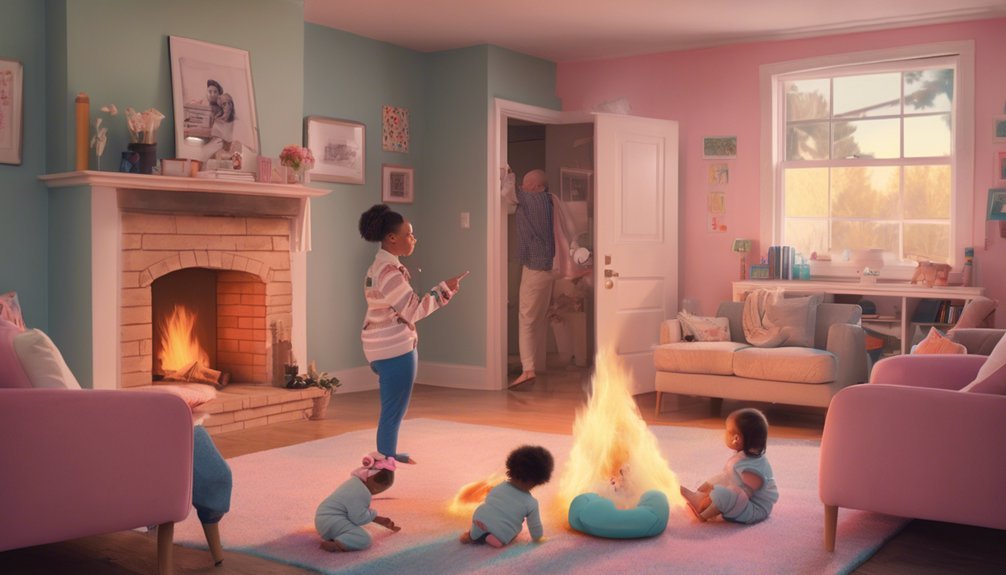
Once your older child understands the basics of fire safety, it’s time to put that knowledge into practice by conducting fire drills with the entire family.
These drills not only reinforce safety but also foster family involvement. Here’s how to make them effective:
- Choose a Location: Decide on a meeting point outside your home where everyone should gather after escaping.
- Set a Schedule: Practice regularly, perhaps once a month, to keep everyone aware and prepared.
- Involve Everyone: Encourage your older child to help teach younger siblings, making it a fun and educational family activity.
Choosing Safe Sleeping Arrangements
When it comes to ensuring your baby’s safety during sleep, choosing the right sleeping arrangements is crucial. You’ll want to invest in a safe crib that meets current safety standards, providing a secure environment for your little one.
Place the crib away from windows, curtains, and anything that could pose a fire risk. Always lay your baby down on their back, as this sleep position significantly reduces the risk of Sudden Infant Death Syndrome (SIDS).
Avoid using soft bedding, pillows, or stuffed animals in the crib, as these can create hazards. By creating a safe sleep space, you’re not just promoting restful nights; you’re also ensuring peace of mind for yourself, knowing your baby is protected while they sleep.
Emergency Preparedness for Families With Babies
Creating a safe sleep environment is just one aspect of protecting your baby; being prepared for emergencies is equally important. You can ensure your family’s safety by taking these steps:
- Establish emergency contacts: Keep a list of important numbers, including family, friends, and local emergency services. Make sure caregivers have access to this list.
- Plan evacuation routes: Identify multiple exit points in your home and practice these routes with your family. Ensure you know where to meet outside.
- Create an emergency kit: Stock it with essentials like water, snacks, first-aid supplies, and baby items. Regularly check and update the kit.
Frequently Asked Questions
What Should I Do if My Baby Is Sleeping During a Fire Drill?
If your baby’s sleeping during a fire drill, follow drill procedures calmly. Prioritize their sleep safety. Gently wake them if needed, but keep the atmosphere calm. Remember, it’s okay to reassure them with comforting words.
Can I Use Candles Around My Baby for Ambiance?
Using candles around your baby for ambiance might feel like setting the mood for a grand gala, but prioritize candle safety. Instead, opt for safer ambient lighting alternatives to create a warm, inviting space without risks.
How Can I Keep My Baby Calm During a Fire Emergency?
During a fire emergency, keep your baby calm by practicing fire drills regularly. Create and review your emergency plans together, ensuring your little one feels secure and knows what to expect, even in stressful situations.
Are There Baby-Proof Smoke Detectors Available?
Yes, there are baby-proof detectors available. These smoke alarms often feature silencing options for false alarms and low battery alerts. They help ensure your little one’s safety while keeping your home environment calm and secure.
When Should I Replace My Smoke Detectors?
You should replace your smoke detectors every 10 years, as their lifespan typically caps there. Regularly test alarms monthly to ensure they’re functioning properly, keeping your loved ones safe and secure in your home.
Conclusion
By prioritizing fire safety, you’re not just protecting your home; you’re safeguarding your little one’s future. Remember, every small step—like installing smoke detectors or practicing fire drills—can make a world of difference in an emergency. Stay vigilant and proactive, because in the blink of an eye, a safe home can turn into a hazardous one. Together, let’s create a secure environment where your family can thrive, knowing you’ve done everything possible to keep them safe.