
Boosting your baby’s vocabulary can be a rewarding journey. Engaging games not only make learning enjoyable but also lay the foundation for effective communication. Activities like word association and sensory play connect words to experiences, enhancing understanding. You’ll discover how simple interactions can transform everyday moments into valuable learning opportunities. Curious about the best ways to incorporate these fun activities into your routine? Let’s explore some effective strategies together.
Key Takeaways
- Engage in interactive storytelling and sing-along sessions to enhance vocabulary through imaginative experiences and musical activities.
- Play word association games that connect words and concepts, promoting cognitive development and creativity.
- Use picture flashcards to enhance visual recognition and memory by labeling familiar objects and encouraging verbal repetition.
- Incorporate rhyming and rhythm activities, like clapping along to nursery rhymes, to boost listening skills and vocabulary.
- Foster family engagement by creating a word jar for collaborative vocabulary games that encourage sentence formation and shared learning.
Interactive Storytelling Adventures
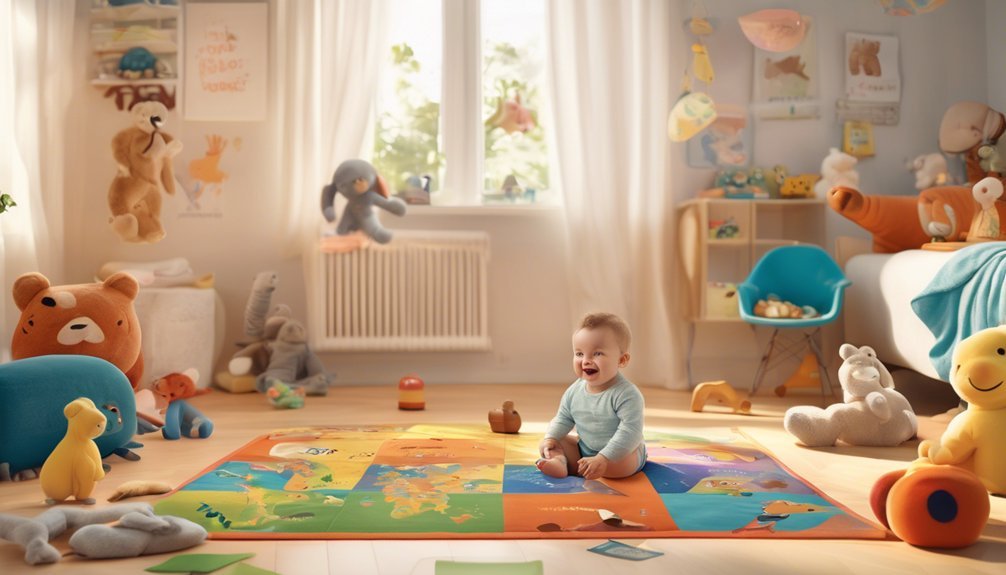
As you dive into the world of interactive storytelling adventures, you’ll find that these engaging experiences can significantly enhance your baby’s vocabulary.
By using story prompts, you can spark your little one’s imagination, encouraging them to think creatively and express themselves. When you adopt different character voices, you not only make the story more entertaining but also introduce your baby to a diverse range of words and sounds.
This playful approach fosters a love for language and nurtures listening skills. Research shows that interactive storytelling helps children grasp new concepts and words faster.
Word Association Games
Word association games are a fun and effective way to expand your baby’s vocabulary. These simple word games encourage your little one to connect words and concepts, fostering cognitive development.
Start by saying a word, like “dog,” and ask your baby to respond with the first word that comes to mind. This interactive play not only sparks creativity but also enhances their understanding of language.
You can also create vocabulary puzzles using everyday objects—point to a toy and ask what it is, helping them associate words with their meanings.
As you play, use a warm tone and celebrate their responses, making the experience joyful and enriching. You’ll both enjoy bonding while boosting their language skills in a delightful way!
Picture Flashcards Fun
Incorporating picture flashcards into your baby’s playtime can significantly enhance their vocabulary. Flashcard games are a delightful way to engage your little one while promoting visual recognition.
Start by selecting colorful cards with familiar objects or animals, and let your baby explore them. As they point to each image, say the word aloud, encouraging them to repeat after you. This not only strengthens their memory but also builds their understanding of language.
Make it interactive by asking questions like, “Where’s the cat?” or “Can you show me the ball?” These moments of connection deepen your bond and make learning fun.
With consistent play, you’ll watch your baby’s vocabulary blossom before your eyes.
Sing-Along Sessions
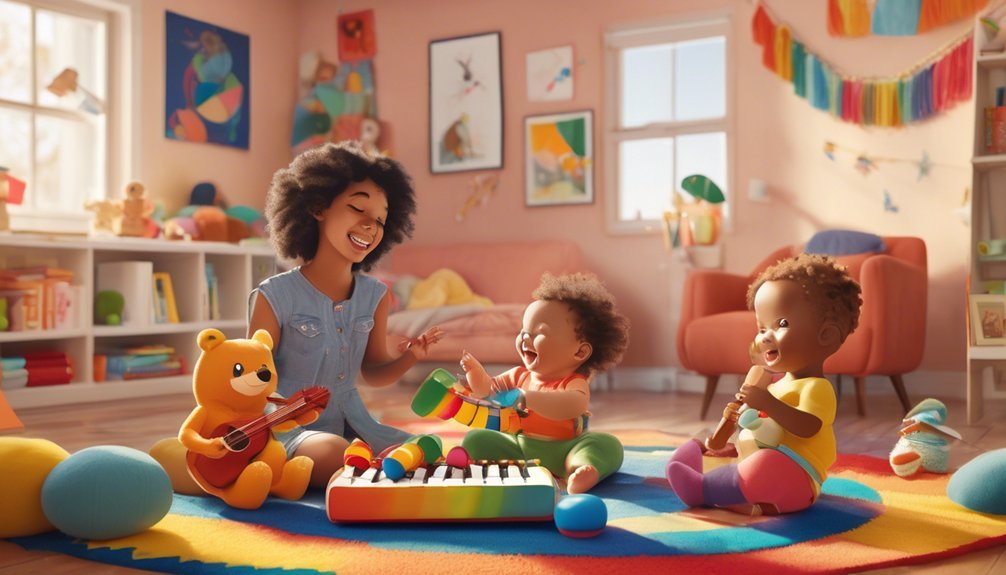
While you might think of singing as just a fun activity, sing-along sessions can play a crucial role in boosting your baby’s vocabulary. Engaging in these sessions not only entertains but also enhances language skills.
Here are some effective ways to incorporate singing games into your routine:
- Choose Familiar Tunes: Use well-known nursery rhymes to create a comforting environment.
- Introduce Musical Instruments: Encourage your baby to shake a rattle or tap a drum along with the songs.
- Use Repetitive Phrases: Sing songs with repetitive phrases to help your baby anticipate and learn new words.
- Encourage Movement: Incorporate actions or dances to make the experience interactive and fun.
These simple strategies can make a big difference in your baby’s language development!
Sensory Language Play
Sensory language play is an exciting way to engage your baby’s developing vocabulary through hands-on experiences. By incorporating sensory exploration, you can create a rich environment that stimulates your baby’s senses and encourages language development.
Use materials like textured fabrics, soft toys, or even edible items like yogurt to promote tactile experiences. As your little one interacts with these objects, narrate their actions and describe the sensations they’re feeling—smooth, rough, cold, or warm.
This not only boosts their vocabulary but also strengthens their understanding of the world around them. The more you talk about what they’re experiencing, the more words they’ll absorb.
Make it fun and interactive, and watch their language skills flourish as they explore!
Rhyming and Rhythm Activities
Rhyming and rhythm activities can significantly enhance your baby’s vocabulary and listening skills, as they naturally draw young children into the world of sounds and words. Engaging in these playful activities not only fosters language development but also strengthens your bond with your little one.
Here are some fun ways to incorporate rhythm games and nursery rhymes into your daily routine:
- Clap Along: Clap your hands to the rhythm of nursery rhymes, encouraging your baby to join in.
- Make Up Rhymes: Create silly rhymes using your baby’s name or favorite toys.
- Sing and Dance: Combine singing nursery rhymes with simple dance moves to make learning fun.
- Sound Effects: Use different sounds to emphasize words in rhymes, enhancing auditory skills.
These activities make learning enjoyable while enriching your baby’s vocabulary!
Puppet Shows for Vocabulary Building
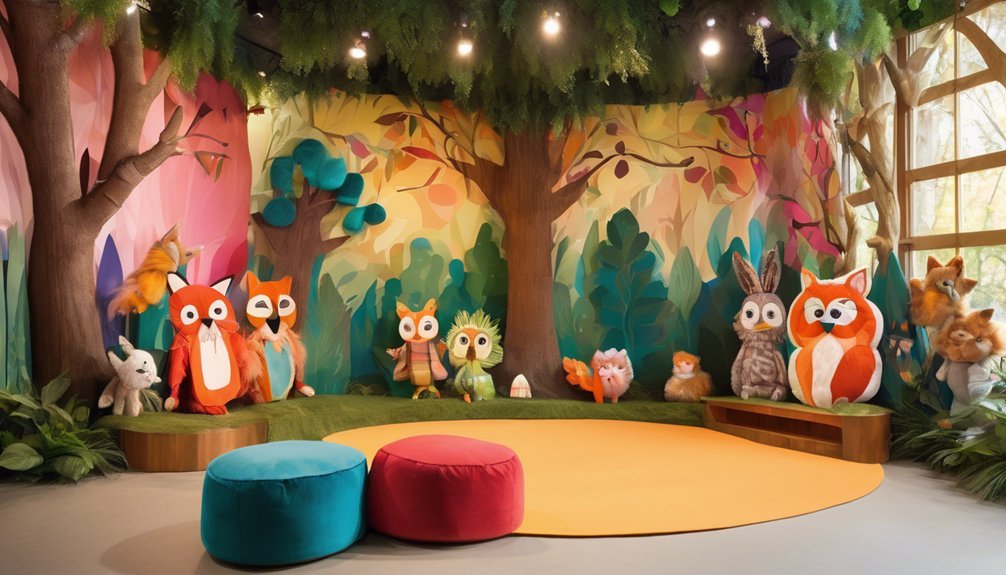
Bring storytelling to life with puppet shows, a delightful way to boost your baby’s vocabulary and imagination. By using engaging puppet characters, you create a vibrant world that captivates your little one.
As you manipulate the puppets, employ storytelling techniques like dramatic voices or expressive movements to enhance the experience. This interaction not only entertains but also introduces new words in context, helping your baby grasp their meanings.
Encourage your child to join in, perhaps by mimicking the puppets or suggesting dialogue. This active participation reinforces vocabulary learning in a playful manner.
Treasure Hunt With Words
A treasure hunt can be a fantastic way to enhance your baby’s vocabulary while making learning an exciting adventure. You can create an engaging experience by hiding objects around your home and providing word clues that lead to these hidden treasures.
Here’s how to get started:
- Choose a Theme: Pick a fun theme, like colors or animals, to focus on.
- Create Word Clues: Write simple clues that describe each hidden treasure.
- Involve Your Baby: As you search, encourage your little one to repeat the words associated with each clue.
- Celebrate Discoveries: When your baby finds a treasure, celebrate together and discuss its meaning.
This interactive game not only boosts vocabulary but also fosters a love for learning in your child.
Nature Walk Naming Game
While exploring the great outdoors, you can turn a simple nature walk into a fun and educational Naming Game that enriches your baby’s vocabulary.
Start by pointing out various plants, animals, and objects during your journey, encouraging your little one to make nature observations. As you spot a tree, say, “Look at that big tree!” or “What color is that flower?”
This interaction not only sparks curiosity but also fosters vocabulary expansion. Repeating names and descriptions helps reinforce learning, making it easier for your baby to grasp new words.
Keep the experience light and playful—ask questions and celebrate their attempts to name things. You’ll create cherished memories while helping your child build a robust vocabulary through nature’s wonders.
Everyday Object Exploration
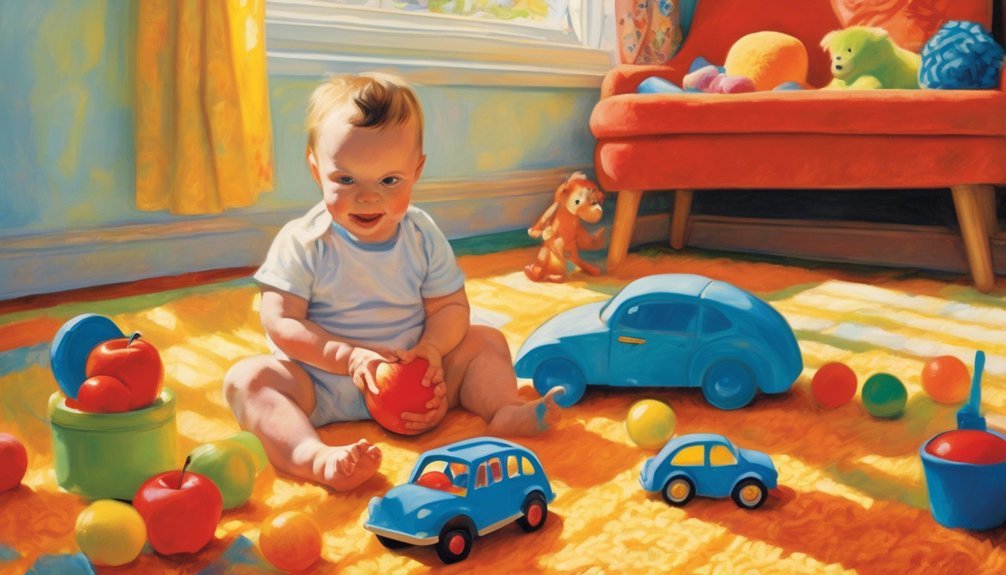
Exploring everyday objects around the house can be just as enriching as a nature walk for boosting your baby’s vocabulary.
Use these household items for sensory exploration and to encourage language development:
- Soft Blanket: Engage in texture recognition by describing its softness and colors, enhancing your baby’s understanding of everyday language.
- Plastic Containers: Perfect for shape sorting, you can introduce concepts like “circle” and “square” while your baby plays.
- Musical Instruments: Encourage sound discovery and object identification by naming the instrument and the sounds it makes.
- Fruits and Vegetables: Use them for color naming and texture exploration—ask your baby to touch, taste, or smell.
These activities create a fun, interactive environment for your little one to learn and grow!
Family Word Jars
Creating a family word jar can be a delightful way to expand your baby’s vocabulary while fostering family bonding.
Start by finding a jar and encouraging each family member to contribute words that resonate with your child’s world—animals, colors, or everyday objects. As you gather these words, engage in family word games by taking turns drawing from the jar and using the word in a sentence.
This not only promotes vocabulary sharing but also makes learning interactive and fun. Celebrate your child’s progress by revisiting previously drawn words and adding new ones as they grow.
This simple activity transforms vocabulary building into cherished family moments, creating a rich linguistic environment that nurtures your baby’s development.
Creative Art and Vocabulary Connections
Engaging your child in creative art activities offers another fantastic opportunity to enhance their vocabulary. Through artistic expression, kids can explore new words while having fun.
Here are a few ways to connect art and vocabulary expansion:
- Label Art Supplies: Introduce new terms by labeling colors, brushes, and shapes.
- Describe Artwork: Encourage your child to describe their creations, using descriptive words.
- Storytelling: Have them create a story based on their artwork, incorporating imaginative vocabulary.
- Art Vocabulary Games: Play games where they must use specific terms while creating, like “draw something that’s ‘fluffy’ or ‘sparkly.'”
These engaging activities not only stimulate creativity but also nurture language skills, making learning a joyful experience for both of you.
Frequently Asked Questions
What Age Is Appropriate to Start Vocabulary Games With Babies?
You can start introducing vocabulary games around 6 to 12 months, as your baby hits language milestones. Engaging in early communication fosters their development, making it a perfect time to encourage their growing curiosity.
How Can I Make These Games More Engaging for My Baby?
Imagine a vibrant garden bursting with colors. To engage your baby, incorporate interactive play and sensory activities like textured books and colorful toys. These experiences spark curiosity, making learning feel like a delightful adventure together.
Are There Any Specific Words to Focus on First?
Focusing on common first words like “mama,” “dada,” and “ball” helps. You can also explore word category focus, such as animals or colors, to make learning fun and relatable for your baby. Engage their curiosity!
How Often Should I Play These Vocabulary Games With My Baby?
You should incorporate vocabulary games into your daily routine. Aim for short, engaging sessions during playtime, ideally several times a week. Consistency fosters learning, helping your baby absorb new words while bonding with you.
What if My Baby Seems Uninterested in the Games?
If your baby’s showing zero interest, it feels like a thousand years! Try baby engagement strategies like interactive songs or colorful books. Alternative activity suggestions can spark curiosity and make learning feel like a joyful adventure.
Conclusion
Incorporating these playful games into your baby’s routine can lead to surprising moments of connection and learning. You might find that during a simple walk, your child suddenly names a flower or identifies a bird, showcasing their growing vocabulary. It’s fascinating how these small, interactive experiences can spark such significant language development. By making learning fun and engaging, you not only enhance your baby’s vocabulary but also create lasting memories together, turning everyday moments into extraordinary adventures.