
Choosing the right car seat is crucial for your child’s safety and comfort. You need to consider various factors, including their age, weight, and your vehicle’s compatibility. Understanding the different types of car seats and their installation methods is key to making an informed decision. With so many options available, it’s easy to feel overwhelmed. Let’s explore the essential guidelines to ensure you make a confident choice for your family.
Key Takeaways
- Determine the appropriate car seat type based on your child’s age and weight, choosing between infant seats and convertible seats.
- Ensure the car seat meets or exceeds federal safety standards and has undergone rigorous crash tests for reliability.
- Follow proper installation methods using either the LATCH system or seat belt, checking for secure fit and minimal movement.
- Regularly inspect the car seat for any wear, damage, or recall status to maintain safety compliance.
- Engage with local parenting groups for shared experiences and advice on car seat selection and installation best practices.
Understanding Car Seat Types

When it comes to choosing the right car seat for your child, understanding the different types available is crucial.
You’ll typically encounter two main categories: infant seats and convertible seats. Infant seats are designed for newborns and smaller babies, offering a rear-facing position that ensures optimal safety and comfort. These seats are portable, making it easy to transfer your baby in and out of the car.
On the other hand, convertible seats can adapt as your child grows. They can be used in both rear-facing and forward-facing positions, accommodating larger toddlers.
Choosing between these types depends on your lifestyle and your child’s needs, but both are essential for providing the safety your little one deserves during every car ride.
The Importance of Safety Standards
Selecting the right car seat goes beyond just understanding the different types; safety standards play a vital role in ensuring your child’s protection during travel.
When choosing a car seat, you need to pay attention to safety regulations that govern manufacturing and performance. Reliable car seats undergo rigorous crash tests to guarantee they can withstand the impact in case of an accident.
These tests assess how well the seat supports your child and minimizes injury risk. Always look for seats that meet or exceed federal safety standards to ensure you’re making a sound choice.
Age and Weight Recommendations
Understanding the age and weight recommendations for car seats is crucial for ensuring your child’s safety while traveling.
For infants, the ideal car seat supports a weight range typically starting from 5 pounds up to about 35 pounds, depending on the model. This ensures your little one is snug and secure.
As your child grows into the toddler age, typically around 1 year and at least 20 pounds, you’ll want to transition them to a forward-facing seat.
Keep in mind that it’s best to follow the specific guidelines for your car seat, as each one may vary slightly. Always check the manufacturer’s recommendations to ensure your child stays protected as they grow.
Prioritizing these recommendations can make all the difference in a safe journey.
Installation Methods Explained

Once you’ve chosen the right car seat based on age and weight recommendations, the next step is to ensure it’s installed correctly. Proper installation is crucial for your child’s safety.
Start by reading both your car seat’s manual and your vehicle’s instructions. Most seats offer two main securing methods: the LATCH system or the seat belt.
If you’re using LATCH, ensure the anchors are tight and the seat doesn’t move more than an inch side-to-side. With the seat belt, make sure it’s threaded correctly and locked in place.

For added security, always double-check that the car seat is level and snug. Following these installation tips can make a significant difference in your child’s safety on the road.
Rear-Facing vs. Forward-Facing Seats
When it comes to keeping your child safe in the car, choosing between rear-facing and forward-facing seats is a critical decision.
Rear-facing seats offer numerous benefits, including better support for your child’s head, neck, and spine during an accident. In contrast, forward-facing seats have associated risks, such as increased injury potential in a collision.
Here are some key points to consider:
- Rear-facing seats reduce the risk of severe head and neck injuries.
- Forward-facing seats may expose your child to higher impact forces during a crash.
- Transitioning from rear to forward-facing should only happen when your child meets specific weight and height requirements.
Ultimately, prioritize safety by keeping your child rear-facing for as long as possible.
Booster Seats: When to Transition
How do you know when it’s time to transition your child to a booster seat? The general booster seat guidelines recommend this shift when your child reaches around 40 pounds or is at least 4 years old.
However, it’s essential to consider their maturity level, as they must be able to sit still and follow safety instructions. You’ll want to ensure that your vehicle’s seat belt fits properly across their lap and shoulder.
Typically, the transition age falls between 4 and 8 years, depending on your child’s size and development.
Features to Look For
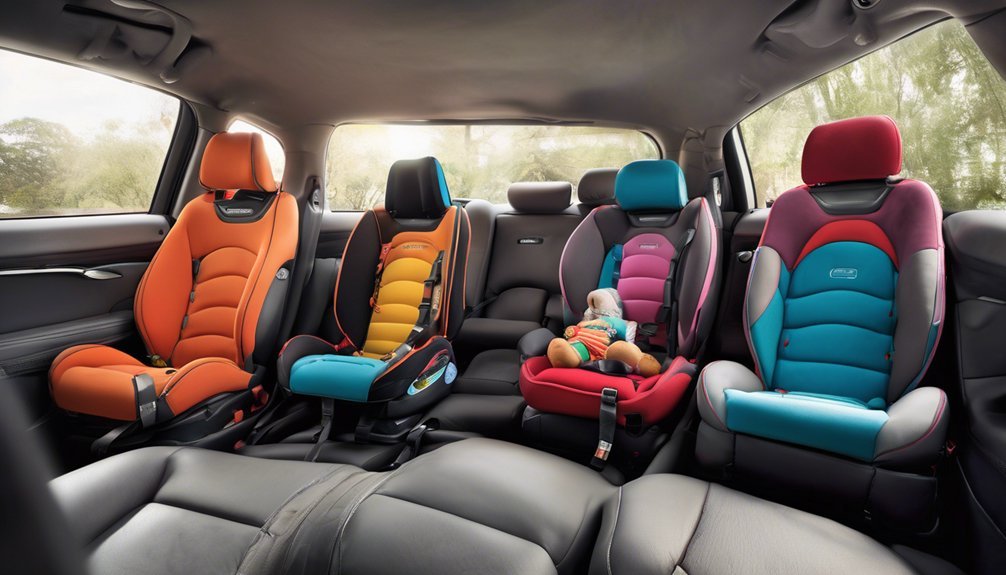
Choosing the right booster seat involves several key features that ensure your child’s safety and comfort.
You’ll want to focus on certain aspects that enhance usability and security.
- Adjustable harness: This feature helps you customize the fit as your child grows, ensuring they’re snug and secure.
- Removable covers: Look for seats with easily removable covers for hassle-free cleaning, keeping your seat looking fresh and hygienic.
- Safety ratings: Always check the safety ratings to ensure the booster seat meets or exceeds industry standards.
Top Brands and Models
Several leading brands have established themselves as top choices for booster seats, each offering models that prioritize safety, comfort, and ease of use.
Popular brands like Graco, Britax, and Chicco consistently receive high marks from parents for their innovative designs and reliable performance.
Among the top models, the Graco TurboBooster stands out for its adjustable height and armrests, ensuring a snug fit as your child grows.
The Britax Skyline is renowned for its safety features, including side impact protection, while the Chicco KidFit offers a dual-layer cushioning system for extra comfort on long journeys.
Choosing a reputable brand and model is essential to ensuring your child’s safety and comfort, so take the time to research and find the perfect fit for your family.
Common Installation Mistakes
Even the best car seat can fail to protect your child if it isn’t installed correctly.
You want to keep your little one safe, so be aware of these common installation mistakes:
- Common misalignments: Ensure the car seat is level and snug against the vehicle seat. Any tilt can compromise safety.
- Incorrect tethering: Always use the tether strap if available. Failing to secure it properly can lead to movement during a crash.
- Loose installation: Test the car seat by pulling at the base. It shouldn’t move more than an inch side to side or front to back.
Evaluating Your Vehicle’s Compatibility

Before you purchase a car seat, it’s crucial to evaluate your vehicle’s compatibility with it.
Start by measuring your vehicle dimensions to ensure the car seat fits securely in your back seat. Check the car seat manufacturer’s guidelines for recommended dimensions, as a snug fit is vital for safety.
Next, assess seatbelt compatibility; make sure your car’s seatbelts can easily latch and secure the car seat without obstruction. If you’re using a base, verify that it can be installed properly without excessive movement.
Finally, consider the vehicle’s anchor points, as they can provide additional stability. Taking these steps ensures that you choose a car seat that not only fits your child but also integrates seamlessly with your vehicle.
Maintenance and Care for Car Seats
Once you’ve ensured your car seat fits well in your vehicle, maintaining it properly is key to ensuring your child’s safety.
Regular care not only keeps the seat looking good but also ensures it functions as intended. Here are some essential maintenance tips:
- Use proper cleaning techniques: Follow the manufacturer’s guidelines for washing fabric and plastic parts. Mild soap and water often do the trick.
- Inspect for wear and tear: Regularly check straps and buckles for fraying or damage to ensure they’re safe.
- Consider seat cover options: Invest in a removable, washable seat cover to make cleaning easier and protect your seat from spills and messes.
Resources for Additional Information
When you’re seeking reliable information about car seats, numerous resources can help guide your decisions.
Start by exploring reputable car seat blogs that offer firsthand experiences and expert insights. These platforms often review various models and provide practical tips on installation and safety.
Additionally, check out safety resources from organizations like the American Academy of Pediatrics or the National Highway Traffic Safety Administration. They provide up-to-date guidelines and safety ratings that are crucial for making informed choices.
Don’t forget to connect with local parenting groups, where you can share experiences and gather advice from fellow parents.
With these resources, you’ll feel empowered to choose the best car seat for your little one’s safety and comfort.
Frequently Asked Questions
Can I Use a Second-Hand Car Seat Safely?
You can use a second-hand car seat safely, but ensure it passes a safety inspection and you know its history. Check for recalls and damage, and always follow current safety guidelines for your child’s protection.
What Should I Do With Expired Car Seats?
When dealing with expired car seats, consider recycling them according to local safety regulations. Many communities offer programs for this purpose, ensuring that you dispose of them responsibly while promoting safety for future generations.
How Do I Determine My Child’s Car Seat Needs?
How do you know what your child’s car seat needs? Consider their age, weight, and height, while understanding car seat types and safety regulations. This ensures your little one travels safely and comfortably every time.
Are There Specific Car Seats for Tall Children?
Yes, there are specific tall car seats designed for taller children, including high-back booster seats that provide adequate support and safety. These options ensure your child’s comfort while meeting safety requirements as they grow.
Can My Child Wear Bulky Clothing in a Car Seat?
You shouldn’t let your child wear bulky clothing in a car seat. It can create safety concerns, compromising the harness fit. Instead, dress them in thinner layers to ensure a snug and secure fit.
Conclusion
Choosing the right car seat is like selecting a sturdy ship for your child’s voyage through life. You wouldn’t set sail without ensuring it’s seaworthy. By understanding the types, safety standards, and installation methods, you’re equipping your little one with a reliable vessel. Remember, every journey is unique—evaluate your vehicle and keep maintenance in mind. With the right car seat, you’re not just following rules; you’re charting a safe course for your child’s adventures ahead.