
Did you know that the first three years of a child’s life are crucial for brain development? During this time, you can play a significant role in shaping their future learning and social skills. By creating a nurturing environment and engaging in meaningful interactions, you can spark their curiosity and support their growth. Discover how simple changes in your daily routine can make a lasting impact on their early development.
Key Takeaways
- Create a stimulating play environment with diverse toys and materials to encourage sensory exploration and imaginative play.
- Engage in interactive storytelling and conversations to enhance language skills and foster communication.
- Limit screen time to one hour daily, and actively participate in discussions about content to deepen understanding.
- Encourage open expression of feelings and participation in group activities to develop social skills and emotional intelligence.
- Connect with a supportive community through workshops and local events to share resources and parenting strategies.
Understanding Early Development Milestones
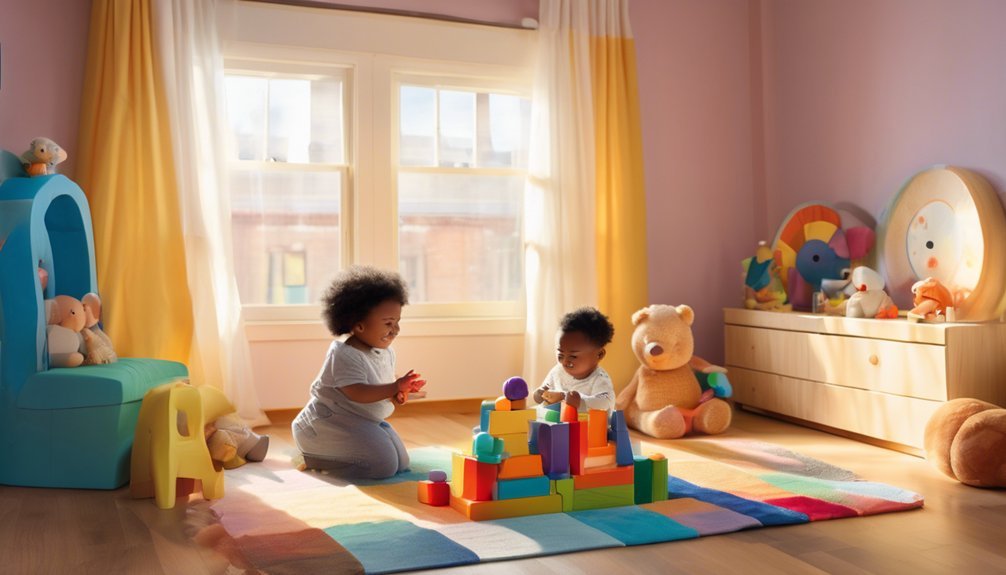
How can you recognize the critical early development milestones that shape your child’s growth? Pay close attention to their cognitive development and sensory exploration.
From the moment your little one gazes at your face, they’re absorbing the world around them. By three months, they might start reaching for toys, signaling their curiosity and desire to explore.
As they approach a year, watch how they begin to solve simple problems, like figuring out how to reach a hidden object. These milestones aren’t just checkboxes; they’re windows into your child’s learning journey.
Celebrate each step, and remember that every child develops at their own pace. Your support and encouragement will help them thrive as they navigate this exciting phase of life.
Creating a Stimulating Environment
Creating a stimulating environment is essential for fostering your child’s growth and development, as it encourages exploration and learning.
You can enhance sensory exploration and creative expression through simple changes in your home. Here are some ideas to consider:
- Set up a dedicated play area filled with diverse toys and materials.
- Use colorful art supplies to inspire creative expression.
- Incorporate natural elements like plants or textured fabrics for sensory play.
- Create a cozy reading nook with books of various genres.
- Rotate toys regularly to keep their interest alive and promote discovery.
Engaging in Play-Based Learning
While you might be focused on structured learning, engaging in play-based learning can significantly enhance your child’s development. By encouraging imaginative play, you foster creativity and problem-solving skills.
When your child pretends to be a superhero or a chef, they explore different roles and scenarios, boosting their emotional intelligence. Additionally, sensory exploration—like playing with sand or water—stimulates their senses, which is crucial for brain development.
These experiences not only make learning fun but also help your child understand the world around them. So, set aside the worksheets occasionally. Embrace the messiness of play, and watch how your child thrives while forming essential skills through laughter and exploration.
It’s in these moments that real learning happens.
Encouraging Language Development
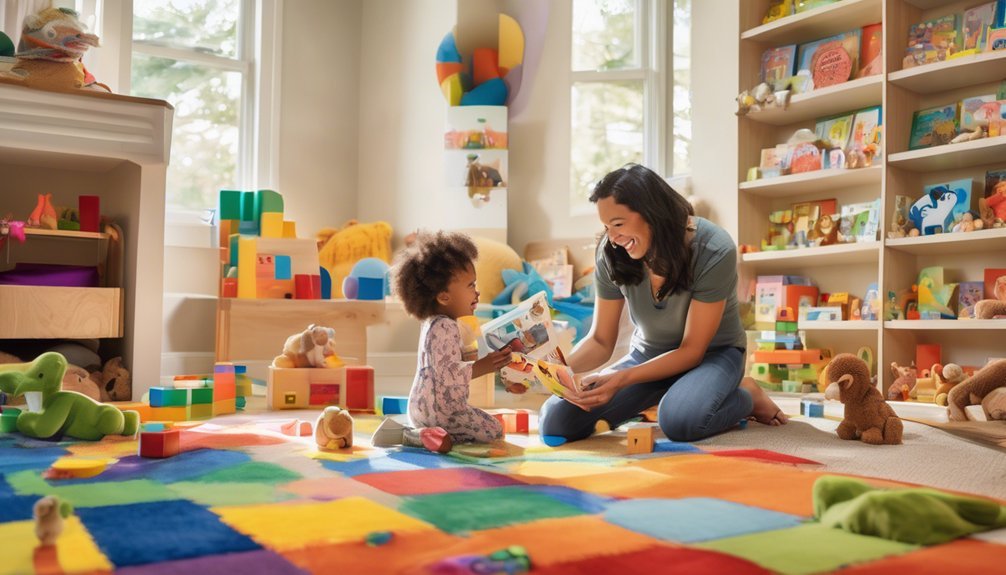
Play-based learning not only supports creativity but also lays the groundwork for robust language development. Engaging with your child in playful activities can enhance their vocabulary expansion and communication skills.
Here are some effective ways to encourage language growth:

- Use interactive storytelling to captivate their imagination.
- Encourage them to express thoughts during playtime.
- Introduce new words through everyday conversations.
- Sing songs and nursery rhymes to promote rhythm and phonetics.
- Ask open-ended questions to stimulate their thinking.
Fostering Social Skills Through Interaction
As children engage in interactive play, they naturally develop essential social skills that will benefit them throughout life.
Participating in group activities creates opportunities for peer interactions, allowing your child to learn vital lessons in communication, cooperation, and empathy. These experiences help them understand social cues and build friendships, laying a strong foundation for future relationships.
Encourage your child to join team sports, art classes, or cooperative games, where they can practice sharing, taking turns, and resolving conflicts.
By fostering these interactions, you’re not only supporting their social development but also nurturing their confidence.
Supporting Emotional Intelligence
Supporting your child’s emotional intelligence is crucial for their overall development, especially as they navigate social environments. By nurturing their emotional awareness, you help them build essential skills for life.
Here are some effective ways to support their emotional intelligence:
- Encourage them to express their feelings openly.
- Model emotional regulation by managing your own emotions.
- Use stories and role-playing to enhance empathy development.
- Teach them to recognize emotions in others through observation.
- Create a safe space for discussions about feelings.
These practices not only foster emotional regulation but also strengthen their ability to empathize with others.
Introducing Structure and Routine
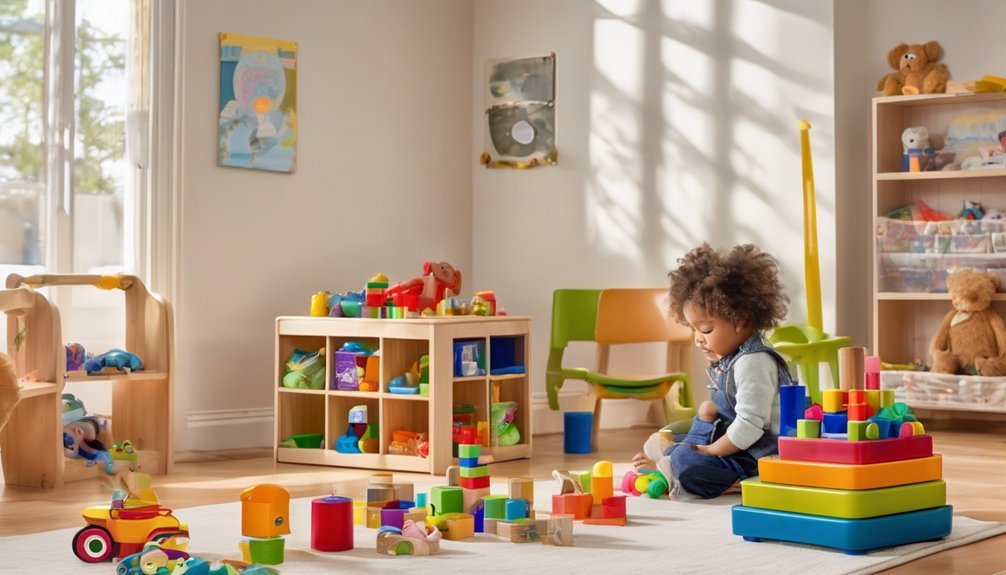
While every child thrives in a unique environment, introducing structure and routine can significantly enhance their sense of security and predictability. By establishing consistent schedules, you help your child understand what to expect throughout the day, which can reduce anxiety and foster confidence.
It’s essential, however, to embrace flexible adaptations when needed. Life can be unpredictable, and showing your child how to navigate changes gracefully can be a valuable lesson.
Create a daily rhythm that includes time for play, learning, and rest, ensuring your child feels balanced and cared for. Remember, routines don’t have to be rigid; they should evolve with your child’s needs, promoting growth while maintaining a comforting sense of stability in their lives.
Promoting Physical Activity and Motor Skills
To ensure your child develops essential motor skills and enjoys a healthy lifestyle, promoting physical activity is crucial. Engaging in movement helps enhance both gross motor skills, like running and jumping, and fine motor skills, such as grasping and manipulating objects.
Here are some simple ways to encourage physical activity:
- Organize outdoor playdates with friends.
- Incorporate fun family walks or bike rides.
- Set up a mini obstacle course at home.
- Provide age-appropriate toys, like balls and building blocks.
- Dance together to your child’s favorite songs.
Incorporating Music and Arts
Physical activity isn’t the only way to foster your child’s development; incorporating music and arts into their daily routine is equally important. Engaging in music benefits cognitive skills, emotional expression, and social interaction. Likewise, art activities spark creativity and fine motor skills while promoting problem-solving abilities.
Here’s a quick overview of how music and arts can support your child’s growth:
| Music Benefits | Art Activities | Developmental Skills |
|---|---|---|
| Enhances memory | Encourages creativity | Problem-solving |
| Boosts language skills | Develops fine motor skills | Emotional expression |
| Improves coordination | Fosters self-confidence | Social skills |
Reading Together and Developing Literacy

Reading together not only ignites a child’s imagination but also lays a crucial foundation for literacy development. Engaging in storytime offers numerous benefits, fostering a love for books and enhancing language skills.
When you choose the right books, it sparks curiosity and encourages dialogue. Here are some storytime benefits to keep in mind:
- Strengthens vocabulary through exposure to new words
- Enhances comprehension skills by discussing story elements
- Develops listening skills as children follow along
- Encourages critical thinking by asking open-ended questions
- Creates bonding moments, making reading enjoyable
Utilizing Educational Technology Wisely
As technology becomes an integral part of our daily lives, it’s essential to utilize educational tools wisely to support early childhood development. You can introduce your child to educational apps that foster creativity, critical thinking, and problem-solving skills.
However, it’s crucial to be mindful of screen time; the American Academy of Pediatrics suggests limiting it to one hour per day for children aged 2 to 5. Engage with your child during app usage, discussing what they’re learning and sharing your thoughts. This interactive approach deepens their understanding and enhances bonding.
Building a Supportive Community Network
Engaging with educational technology can open doors to learning, but building a supportive community network enhances your child’s development even further.
Connecting with others in your area creates a rich tapestry of support and resources.
Consider these ways to strengthen your network:
- Attend parent workshops to gain insights and strategies.
- Participate in neighborhood events to foster connections.
- Join support groups that address parenting challenges.
- Seek out mentorship programs for guidance and experience.
- Explore local partnerships that offer valuable community resources.
Frequently Asked Questions
What Are the Signs of Delayed Early Development?
If you’re concerned about delayed early development, notice missed milestone markers like crawling or speaking. Regular developmental assessments can help identify issues early, allowing you to seek support and ensure your child’s growth. You’re not alone in this.
How Can I Balance Screen Time With Other Activities?
Balancing screen time with other activities is essential. Create activity schedules that include screen alternatives like outdoor play, reading, or arts and crafts. This way, you nurture creativity and connection while ensuring a healthy routine.
What Should I Do if My Child Resists Learning Activities?
Did you know 70% of preschoolers resist learning activities? Try playful engagement to spark their interest, and use positive reinforcement to celebrate small wins. This approach nurtures a love for learning while easing their resistance.
How Do Cultural Differences Impact Early Development Practices?
Cultural differences shape parenting styles and rituals, influencing how you nurture your child’s growth. Understanding these variations helps you appreciate diverse approaches, fostering a supportive environment that respects both your beliefs and those of others.
When Should I Seek Professional Help for My Child’s Development?
If your child isn’t meeting key developmental milestones—like talking by age two—consider seeking professional assessments. Early intervention can make a significant difference, and you’re not alone in wanting the best for your little one.
Conclusion
By creating a nurturing environment and actively engaging in your child’s development, you’re not just supporting their growth; you’re laying the groundwork for a lifetime of learning and discovery. Remember, every small effort counts—your encouragement can feel like rocket fuel, propelling them to reach incredible heights. Celebrate their milestones, foster their creativity, and stay involved. Together, you can turn these early years into a magical journey that shapes their future in ways you can’t even imagine.