
Toddlers often reject vegetables because new tastes, textures, and colors can feel unfamiliar. A better approach is to offer them often, in small portions, without pressure, while pairing them with foods they already like. Simple changes, such as roasting for flavor, serving fun shapes, or adding a mild dip, can help. When mealtimes stay calm and repeated exposure becomes routine, acceptance usually improves in ways that may surprise parents.
Key Takeaways
- Offer vegetables regularly in a pressure-free setting so toddlers can explore without bribing or forcing.
- Pair vegetables with familiar foods, like peas in pasta or spinach in eggs, to make them feel safer.
- Use toddler-friendly textures and preparations, such as roasted carrots, soft steamed vegetables, or grated vegetables in muffins.
- Let toddlers help wash, stir, or arrange vegetables to build familiarity and ownership.
- Keep trying with calm, repeated exposure and praise small tastes instead of requiring them to finish.
Why Toddlers Say No to Veggies
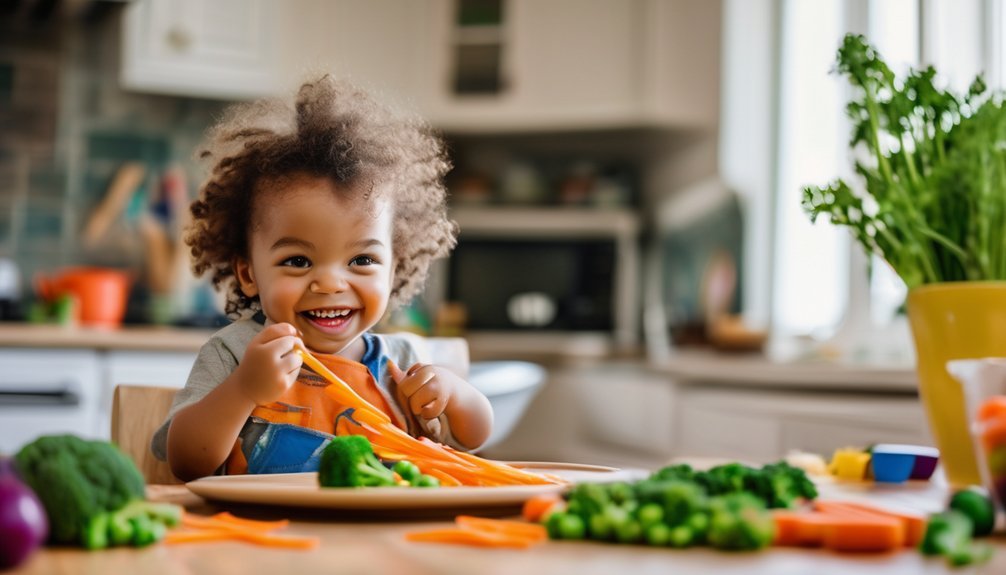
Toddlers often reject vegetables because their tastes, habits, and food preferences are still developing. At this age, taste preferences can lean toward mild, familiar flavors, while texture issues make some vegetables seem slippery, fibrous, or unpredictable.
Visual appeal matters too; bright colors may help, but unfamiliar shapes can trigger caution. Developmental stages also bring strong autonomy desires, so saying no can be a way to practice control.
In some homes, peer influence and family mealtime routines shape acceptance, yet resistance is still common. Evidence suggests repeated, low-pressure flavor exposure helps children learn without forcing compliance.
A calm, steady approach respects the child’s pace while supporting healthier choices over time.
Offer Vegetables Early and Often
Early exposure can make vegetables feel more familiar and less threatening over time. Research suggests that toddlers may need many calm, repeated chances before acceptance grows, so variety matters.
Offering small portions at breakfast, lunch, and dinner creates consistent offerings without pressure. During family meals, adults can model relaxed eating while children watch, touch, sniff, and taste, supporting sensory exploration.
Playful presentation, such as bright colors, simple shapes, or tiny portions, can invite curiosity. Positive reinforcement works best when it praises trying rather than finishing.
Repeated exposure also builds trust, because a vegetable seen often becomes less novel and more approachable. With patience, early exposure can support adventurous tasting and gradually expand a child’s comfort with greens, roots, and other vegetables across ordinary routines.
Pair Veggies With Favorite Foods

Pairing vegetables with foods a toddler already enjoys can make new flavors feel safer and more appealing. Small veggie pairings work best when they are familiar, such as adding peas to pasta, spinach to eggs, or carrots beside rice.
Research on repeated exposure and food familiarity suggests that children are more willing to try vegetables when they appear with favorite flavors they already trust. The goal is not to hide vegetables, but to connect them with a sense of comfort.
Over time, that gentle association can reduce resistance and support acceptance. Keeping portions modest and predictable helps toddlers feel in control, which often matters as much as taste.
Consistency, patience, and warm encouragement usually bring the best results.
Roast and Season Vegetables for Flavor
Roasting can make vegetables sweeter, softer, and more aromatic, which often improves acceptance among young children. Gentle roasting techniques, such as using moderate heat and a light coating of oil, help carrots, squash, and broccoli develop appealing flavor without masking their natural taste.
Simple seasonings, including mild herb blends like parsley, thyme, or oregano, can add familiarity while keeping sodium low. Evidence suggests repeated exposure matters, and pleasant flavor increases the chance of another bite.
Caregivers may find it reassuring that toddlers do not need heavily spiced food; small changes often matter most. Freshly roasted vegetables can be offered warm, with a calm, no-pressure attitude, allowing a toddler to explore taste at a comfortable pace and build trust over time.
Serve Vegetables in Toddler-Friendly Shapes
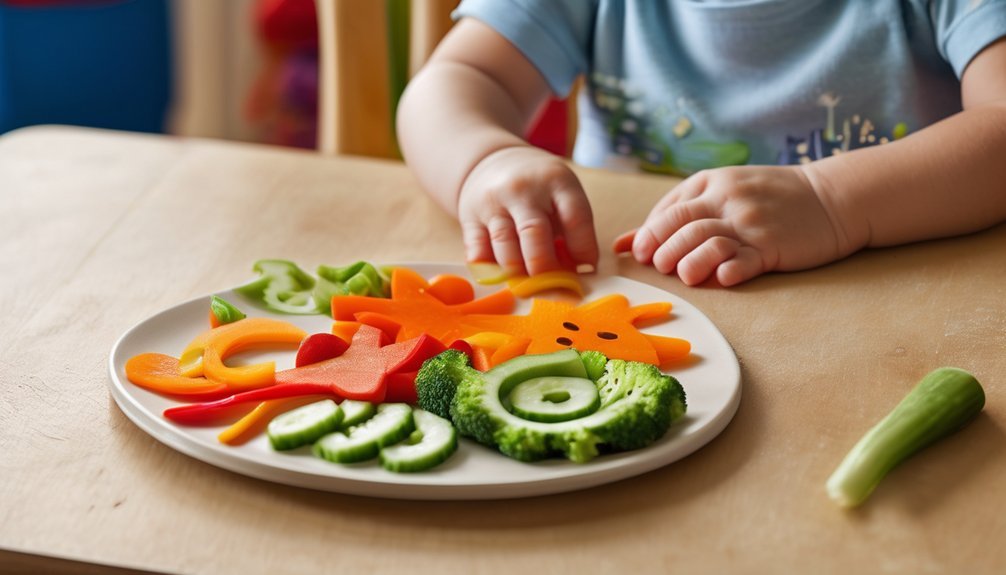
Small, easy-to-grasp pieces can make vegetables feel less intimidating for toddlers. Mildly cooked carrots cut into coins, cucumber sticks, broccoli florets, and bell pepper strips suit small hands and limited chewing skills.
Rounded or bite-sized shapes often reduce hesitation because they look familiar and manageable. Research on early feeding suggests that repeated, low-pressure exposure helps acceptance, especially when foods are easy to pick up.
Simple fun food art can support interest without turning the meal into a performance: a cucumber “smile,” pea circles, or a pepper rainbow may invite a first taste. Playful presentations should stay calm and ordinary, so vegetables remain part of the meal rather than a distraction.
Consistent shape and size can build comfort over time.
Let Toddlers Help in the Kitchen
Toddlers are often more willing to try vegetables when they help prepare them, even in simple ways. In toddler cooking, participation can be limited to washing produce, tearing lettuce, stirring cooled vegetables, or placing pieces on a tray.
These small tasks build familiarity and give a sense of ownership that often reduces hesitation at mealtime. Caregivers should keep kitchen safety central by using stable stools, blunt tools, and close supervision, while reserving cutting and heat for adults.
Research on repeated exposure and hands-on food play suggests that these experiences can increase acceptance over time. The goal is not perfection; it is gentle involvement, calm guidance, and a warm routine that lets toddlers meet vegetables as something familiar and manageable.
Use Dips and Mild Seasonings
Mild dips and light seasonings can make vegetables more appealing by adding familiar flavors without overwhelming a toddler’s palate. Small amounts of hummus, yogurt, or avocado-based dipping sauces often encourage tasting by turning plain carrots, cucumbers, and broccoli into interactive bites.
Gentle flavor combinations, such as olive oil with a touch of garlic or a pinch of mild herbs, can enhance sweetness and reduce bitterness. Research suggests children often accept foods more readily when they can control the dip and explore texture.
- Bright orange carrot sticks beside creamy ranch
- Steamed broccoli with a pale yogurt dip
- Soft cucumber rounds sprinkled with dill
- Roasted zucchini brushed with olive oil
- Pea spears served with mashed avocado
Keep Mealtimes Pressure-Free
A pressure-free mealtime often helps toddlers become more willing to try vegetables, because repeated exposure works better than coaxing or bargaining. Calm offers support mealtime enjoyment and protect trust.
| Helpful | Avoid |
|---|---|
| Offer vegetables routinely | Pleading or bribing |
| Let the child decide how much | Commenting on every bite |
| Keep attention on the family meal | Turning eating into a contest |
When adults stay neutral, toddlers can explore at their own pace. Small tastes, refusals, and pauses are normal. Positive reinforcement works best when it is quiet and specific, such as noting careful tasting or polite table behavior. Research suggests pressure can reduce acceptance, while low-stress routines build comfort over time. A steady, affectionate atmosphere often makes vegetables feel less threatening and more familiar.
Show Toddlers You Eat Vegetables
Children often copy what they see, so watching adults eat vegetables can make those foods feel familiar and worth trying. Gentle role modeling works best when vegetable variety appears naturally at family meals, not as a performance.
An adult who takes a bite of carrots, beans, or spinach while seeming relaxed sends a quiet message: these foods belong here.
- A parent tasting broccoli beside toast
- A caregiver reaching for bright peppers
- A shared bowl of peas at the table
- A plate with cucumber slices and hummus
- A calm smile after a first bite
When toddlers see trusted people enjoy vegetables, curiosity tends to grow. Repeated exposure, paired with warmth, can reduce hesitation and support acceptance over time.
Easy Veggie Recipes for Toddlers
Simple, familiar recipes can make vegetables easier for toddlers to accept because repeated exposure works best when the food feels predictable and low-pressure. Soft roasted carrots, zucchini muffins, and steamed broccoli with yogurt dip are gentle starting points. Small portions help, and the same vegetable can appear in different forms across the week.
| Recipe | Texture | Toddler Tip |
|---|---|---|
| Veggie muffins | Soft | Use grated zucchini |
| Roasted carrots | Tender | Cut into sticks |
| Broccoli dip | Easy | Pair with yogurt |
| Colorful veggie platters | Crisp | Offer one safe food |
Fun veggie art can turn tasting into play, but adults should keep pressure low. When meals stay calm and repeated, toddlers often need time before accepting new flavors.
Frequently Asked Questions
How Much Vegetable Intake Do Toddlers Need Daily?
Toddlers need about 1 to 1½ cups of vegetables daily, depending on age and appetite. Gentle portion sizes and varied vegetable benefits support growth, digestion, and healthy habits. Small, repeated servings usually work best.
Which Vegetables Are Safest for Choking-Prone Toddlers?
For choking-prone toddlers, soft vegetables are safest: well-cooked carrots, peas, squash, sweet potato, and steamed broccoli. Safe cooking softens vegetable textures, reducing risk. Cut pieces small, and supervise eating calmly and closely.
Can Vegetable Supplements Replace Fresh Vegetables for Toddlers?
No; they are not a full replacement. Tiny capsule carrots on a plate make a comic scene, but fresh vegetables still offer fiber and varied nutrients. Supplement safety and nutrient absorption should be discussed with a pediatrician.
What if My Toddler Refuses Vegetables at Daycare?
If a toddler refuses vegetables at daycare, caregivers should stay calm, offer repeated exposure, and send familiar foods. Creative recipes, fun presentations, and gentle encouragement often improve acceptance without pressure or conflict.
How Do I Handle Vegetable Allergies in Toddlers?
Vegetable sensitivities in toddlers are best handled gently: watch for toddler allergy symptoms, consult a pediatrician, and introduce new vegetables one at a time. This cautious approach supports safety, reassurance, and evidence-based confidence.
Conclusion
Helping toddlers eat more vegetables works best when adults stay patient, consistent, and low-pressure. Offering colorful veggies early and often, pairing them with familiar favorites, and making them fun to eat can gradually increase acceptance. Repeated exposure matters more than perfection, and small tastes still count. A calm mealtime routine, plus visible role modeling from adults, can turn veggies from a struggle into a normal part of the day—almost like magic.