
You might think making a baby laugh is a daunting task, but it’s actually simpler than you think. Babies respond to playful interactions and sensory stimulation in ways that can surprise you. From silly sounds to funny faces, there are countless methods to spark joy in your little one. Curious about the best techniques? Let’s explore the delightful ways you can bring laughter into your baby’s world.
Key Takeaways
- Use exaggerated facial expressions and funny faces to capture the baby’s attention and spark giggles.
- Make silly sounds like “boing” or animal noises to engage the baby’s curiosity and laughter.
- Incorporate gentle tickling during relaxed moments to foster joy and physical closeness.
- Introduce colorful toys and puppets, using different voices to keep the baby entertained and laughing.
- Create playful interactions during storytime, turning ordinary moments into joyful memories that promote laughter.
Understanding Your Baby’s Developmental Stage
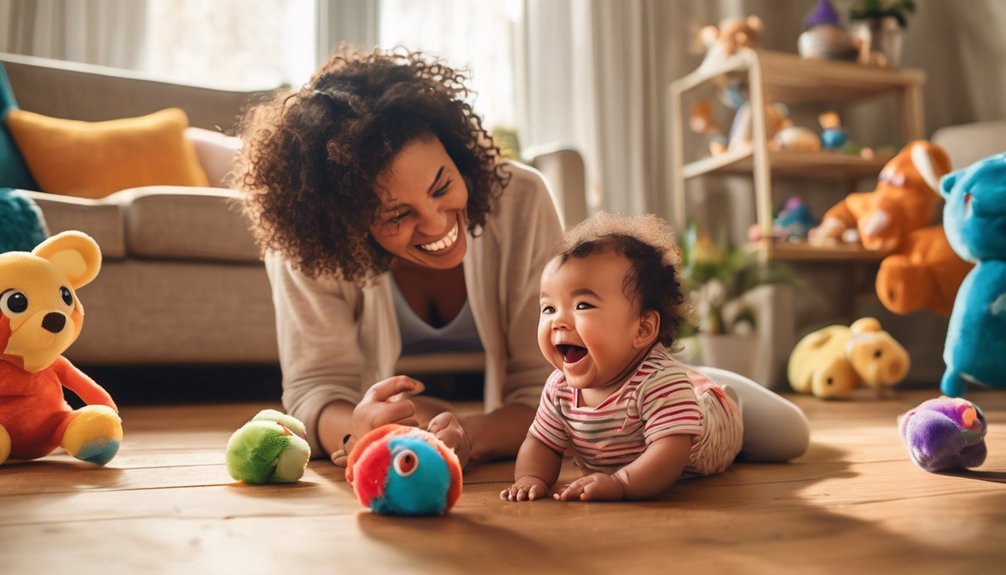
As you embark on this delightful journey of making your baby laugh, it’s essential to understand their developmental stage. Recognizing baby milestones can guide you in fostering their emotional development.
In the early months, your little one is discovering the world, and simple interactions can spark joy. By around three months, they start to respond to your voice and smiles, so engaging them with playful sounds can elicit giggles.
As they grow, they’ll develop a sense of humor and delight in surprises. You’ll find that their laughter often comes from seeing you act silly or playfully interacting with toys.
The Power of Facial Expressions
Facial expressions are a powerful tool in your quest to make your baby laugh. Your little one is keenly attuned to your emotions, and using expressive eyes can create a joyful connection.
Here are three ways to harness facial mimicry effectively:
- Exaggerate Your Expressions: Make your smiles wider and your frowns more pronounced. Babies love to see emotions amplified!
- Engage with Eye Contact: Lock eyes with your baby and use your eyebrows to convey surprise or delight. They’ll be captivated by your gaze.
- Play with Different Faces: Switch between silly, goofy, and loving faces. The variety keeps your baby intrigued and eager to respond.
Silly Sounds and Noises
Building on the connection you’ve created with your baby through expressive faces, introducing silly sounds and noises can elevate the fun even further.
Babies are naturally curious, and your playful vocalizations will capture their attention. Try making silly sounds like “boing” or “squawk,” and watch their eyes light up!
Mimicking animal noises can be particularly delightful; let out a goofy “moo” for a cow or a funny “meow” for a cat. These sounds not only entertain but also stimulate their developing minds.
When you combine these noises with animated facial expressions, you’re creating a joyful atmosphere that encourages laughter.
Tickling Techniques That Work

While you’re engaging in playful interactions with your baby, tickling can be a fantastic way to elicit giggles and joy.
To make the most of your tickling sessions, consider these techniques:
- Tackle the Tickle Timing: Choose moments when your baby is relaxed and in a good mood to optimize laughter.
- Use Gentle Touches: Light, feathery strokes on their tummy and underarms can create delightful sensations that prompt smiles.
- Mix It Up: Vary your approach by alternating between soft tickles and silly sounds to keep your baby guessing and engaged.
Playful Peekaboo Variations
After you’ve had some giggle-filled moments with tickling, it’s time to introduce another classic fun activity: peekaboo! This game is all about playful surprises that ignite your baby’s laughter.
Start with the traditional peekaboo by hiding your face behind your hands, then popping out with a big smile. To switch things up, try peekaboo with a soft blanket or a toy; let your little one guess where you’ve gone.

You can even involve siblings or pets for added excitement. As you play, exaggerate your expressions and sounds to heighten the joy.
These peekaboo variations not only elicit laughter but also strengthen your bond, creating precious memories filled with warmth and delight. Enjoy every delightful giggle!
Engaging With Funny Toys
When you introduce funny toys into your baby’s playtime, you’re opening the door to endless laughter and engagement. Colorful puppets and interactive plushies can spark joy and curiosity, making every moment special.
Here are three ways to enhance that experience:
- Character Voices: Use different voices for your colorful puppets, creating memorable characters that captivate your baby’s attention.
- Interactive Features: Choose interactive plushies that respond with sounds or movements, encouraging your little one to giggle and explore.
- Storytime Fun: Incorporate your toys into storytime, weaving them into delightful tales that invite your baby to laugh and join in the fun.
Using Props for Laughter
Using props during playtime can turn an ordinary moment into a laughter-filled adventure for your baby. When you carefully consider prop selection, think about items that spark joy and curiosity. Brightly colored scarves, soft plush toys, or even household items like a spatula can work wonders.
Engage your baby through prop interaction by incorporating silly sounds or exaggerated movements. For instance, waving a scarf while making funny faces can ignite giggles. Remember, your enthusiasm is contagious!
As you explore different props, pay attention to your baby’s reactions and adapt your approach. This playful experimentation not only strengthens your bond but also helps your little one discover the joy of laughter.
Singing and Rhyming Together
Singing and rhyming together can be one of the most delightful ways to spark laughter in your baby. When you engage in singing games and rhyming songs, you create a joyful atmosphere that fosters connection.
Here are three tips to make the most of this experience:
- Use silly voices: Experiment with different tones and accents; your baby will love the variety.
- Incorporate hand movements: Actions can enhance the fun and make the songs more engaging.
- Personalize the songs: Add your baby’s name or familiar phrases to make them feel included.
These simple actions can turn ordinary moments into cherished memories, leaving you both giggling and bonding.
Dancing and Movement Fun
Building on the joy of music, dancing and movement can create even more opportunities for laughter and connection with your baby. Engage your little one with playful stretching, gently moving their arms and legs to the rhythm of your favorite tunes.
You can also try baby yoga, incorporating simple poses that encourage bonding through touch and movement. As you sway and groove together, don’t be afraid to let loose! Your silly dance moves will likely elicit giggles, making this a cherished moment.
Encouraging Imitation and Mimicry

As you share everyday moments with your baby, encouraging imitation and mimicry can spark delightful laughter and strengthen your bond.
Babies love to imitate, and you can harness this joy by introducing fun sounds and playful activities. Here are three ways to encourage your little one:
- Mimicking Animals: Make animal sounds together—roar like a lion or buzz like a bee. Your baby will giggle as they try to mimic you.
- Playful Sounds: Use silly voices or exaggerated expressions when you talk. Your enthusiasm will inspire your baby to join in.
- Facial Expressions: Make funny faces, sticking out your tongue or raising your eyebrows. Your baby will love mirroring your expressions, creating laughter-filled moments.
Creating a Laughter-Friendly Environment
To create a laughter-friendly environment for your baby, focus on fostering a playful and joyful atmosphere that invites giggles and smiles. Pay attention to your baby’s laughter cues, as these are signs of what brings them joy.
Incorporate sensory play with colorful toys, soft fabrics, and engaging sounds to stimulate their senses. Make the space cozy and safe, allowing your little one to explore freely.
You can also add playful elements like mirrors or textured surfaces that encourage curiosity and laughter. Your energy matters too—be animated, use silly voices, and don’t shy away from being playful yourself.
This joyful connection not only encourages laughter but strengthens your bond, making every giggle a cherished moment.
Sharing Laughter With Family and Friends
While sharing laughter with family and friends, you create a network of joy that enhances your baby’s experience.
These moments not only light up your little one’s world but also strengthen family bonding. Incorporating laughter games can turn ordinary gatherings into extraordinary memories.
Here are three simple ways to share laughter:
- Funny Faces: Make silly expressions to spark giggles from both your baby and others.
- Tickle Time: Engage everyone in a delightful tickle fest—it’s a surefire way to get everyone laughing.
- Silly Songs: Sing off-key or create goofy lyrics to familiar tunes, inviting everyone to join in.
These joyful interactions enrich your baby’s emotional growth and create lasting connections.
Embrace the laughter!
Frequently Asked Questions
At What Age Do Babies Start Laughing?
Babies typically start laughing around 3 to 4 months, a delightful developmental milestone. You’ll notice laughter triggers like silly faces or gentle tickles. Cherish these moments; they strengthen your bond and create lasting memories together.
How Can I Tell if My Baby Is Ready to Laugh?
You’ll know your baby’s ready to laugh when you notice their joyful cues, like wide smiles or cooing. Pay attention to laughter triggers, like silly faces or gentle tickles, creating delightful moments together.
What if My Baby Doesn’t Laugh? Is It Normal?
They say every baby blooms in their own time. If your baby doesn’t laugh yet, it’s normal. Every child hits developmental milestones at their own pace, and emotions will emerge when they’re ready. Just keep loving!
Are There Specific Times of Day When Babies Laugh More?
You might notice your little one sharing morning giggles as they wake, full of energy. Evening chuckles often come when they’re winding down, creating a sweet time for connection and laughter before bed. Enjoy those moments!
Can My Baby’S Mood Affect Their Laughter?
Imagine a weather forecast; your baby’s mood swings can shift from sunny to stormy. Those emotional cues often dictate laughter frequency. When they’re happy, laughter flows easily—embrace those moments and share joy together.
Conclusion
In the joyful dance between silliness and tenderness, you can unlock a world of laughter for your baby. By blending playful sounds with exaggerated expressions, you’re not just making them giggle; you’re building a bond that nurtures their emotional growth. Remember, every laugh shared is a step towards deeper connection. So, embrace the chaos, relish the smiles, and enjoy this beautiful journey of laughter together—because in those moments, the simplest things become the most profound.