
When my neighbor planned her son’s pirate party with nothing but a free design app and a shared spreadsheet, it felt like turning a paper map into a shortcut. You can do the same by choosing a theme, setting a budget, sending invitations, and tracking RSVPs with free tools that keep everything simple. The real trick is in the details, and that’s where your party starts to come together.
Key Takeaways
- Use free digital tools to choose a theme, colors, and activities that match your child’s interests and age.
- Set a simple budget spreadsheet to track spending for food, decorations, favors, and a small backup cushion.
- Send digital invitations and manage RSVPs in a shared spreadsheet for easy updates and reminders.
- Plan games, crafts, and decorations that fit the theme and use affordable DIY supplies.
- Build a flexible party schedule in a calendar or spreadsheet to balance lively activities and calm breaks.
Choose a Party Theme

What kind of party will make your child light up? Start with theme ideas that match their interests and age appropriateness. You can anchor the party around character choices they love, seasonal themes, or popular trends that feel fresh, not forced.
Next, compare color schemes that support the mood, from bold primaries for action to soft pastels for whimsy. Then, map favorite activities to the theme so every game, snack, and craft feels connected.
If you want more control, build DIY decorations that reinforce the concept without clutter. You’ll make better decisions when each choice supports the same story.
Keep the theme focused, practical, and memorable, and you’ll create a celebration that feels polished, personal, and easy to execute.
Set Your Kids Party Budget
A smart kids’ party budget starts with one clear question: how much can you spend without stress? Set a firm limit, then divide it into simple categories: food, decorations, activities, favors, and a backup cushion.
That structure keeps you focused and helps you make quick decisions. Use budgeting strategies like comparing prices before you buy and putting the biggest share toward the items kids will notice most.
You can also apply cost effective ideas by choosing one standout feature and keeping everything else simple. When you track every cost in a free spreadsheet, you see where money goes and avoid surprises.
A clear budget doesn’t restrict creativity; it sharpens it. With boundaries in place, you can plan confidently and spend with purpose.
Send Invitations and Track RSVPs

Once your budget is set, you can move on to invitations and RSVPs, which help you lock in the guest list and plan the details that depend on headcount.
Use free digital invitations to share the date, time, location, theme, and reply deadline in one polished message. Keep the design simple so parents can read it quickly and respond without confusion.
For RSVP management, create a shared spreadsheet or free form that records each child’s name, caregiver contact, and response status. Check it daily, send a courteous reminder near the deadline, and update totals as answers arrive.
You’ll avoid guesswork, reduce last-minute stress, and keep your planning precise. Clear communication now gives you a cleaner, more controlled party process later.
Plan Games and Decorations
With the guest list set, you can start matching games and decorations to the kids’ ages, party theme, and available space. Choose party supplies that double as DIY decorations, then layer in themed props to sharpen the scene.
Build game ideas around movement, logic, and teamwork so every child joins in.
- Use interactive games that fit your room or yard, and keep rules simple enough for quick wins.
- Set up activity stations and craft stations to give kids choices, reduce crowding, and sustain interest.
- For outdoor setups, plan weather-safe materials and clear boundaries so play stays smooth and safe.
When you align décor with play, you create one cohesive experience that feels intentional, polished, and fun.
Make a Party Schedule
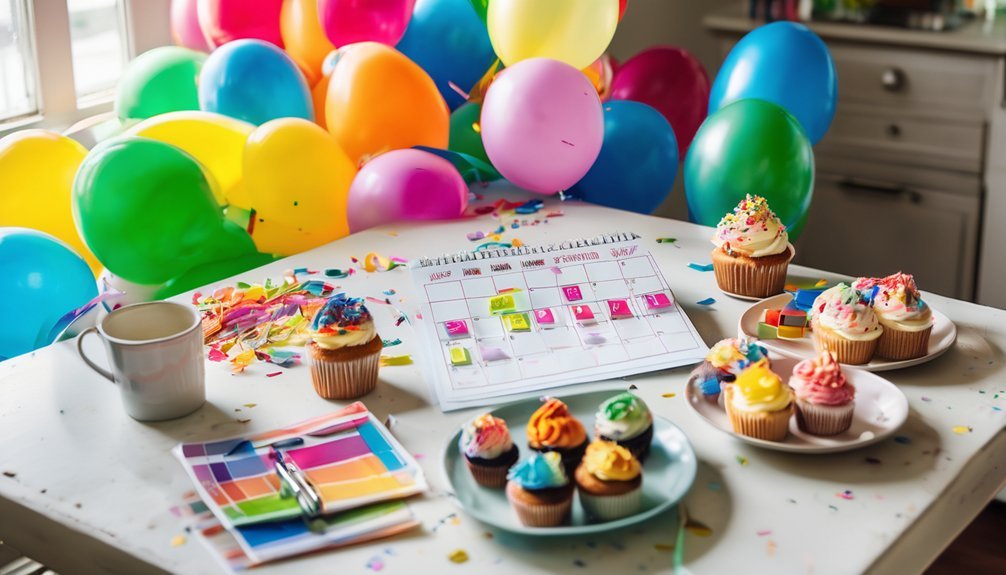
Now that you’ve matched games and decorations to the party theme, map out the timing so the whole event runs smoothly.
Build a party timeline that covers arrivals, greetings, food, games, cake, and goodbyes. Start with a simple opening window, then place your anchor moments where energy naturally rises and falls.
You’ll keep the activity flow balanced by alternating lively games with calmer pauses for snacks or transitions. Use a free calendar or spreadsheet to set start times, estimate durations, and note who leads each segment.
Keep each block flexible enough for late arrivals or faster activities. When you can see the whole schedule at once, you’ll make sharper choices, avoid bottlenecks, and guide the party with confidence and ease.
Use Checklists for Setup and Cleanup
A simple checklist can save you from last-minute chaos before and after the party. You’ll turn your setup timeline into a clear sequence: inflate balloons, place tableware, test music, and prep activities.
Then match each step to a time slot so you’re not guessing when guests arrive. Use cleanup strategies the same way. List trash bags, wipe-down cloths, storage bins, and return-to-home tasks so nothing gets missed.
- Break work into zones: entry, food, play, and gifts.
- Assign each item a finish point, not just a start.
- Reuse the same checklist next time to sharpen your process.
When you treat checklists as systems, you reduce stress and run smoother parties.
Frequently Asked Questions
How Early Should I Start Planning a Kids Party?
Start planning kids’ party 4–6 weeks ahead so you can choose party themes, build guest lists, and book supplies calmly. If you’re hosting a larger event, give yourself 8 weeks for smoother coordination.
What Free Tools Help Manage Party Supplies?
You can use Google Sheets for supply inventory and a budget tracker, plus Trello or Notion to organize tasks, checklist apps to track purchases, and shared notes so you don’t miss anything.
How Can I Find Allergy-Safe Party Food Ideas?
You can find allergy-safe party food ideas by checking trusted recipe filters; about 1 in 13 kids has food allergies. You’ll boost dietary restrictions awareness by choosing allergy friendly snacks, labeling every dish clearly.
Should I Hire Entertainers or DIY Party Activities?
You should hire entertainers if you want effortless pacing and polished fun; choose DIY activities when you value DIY creativity and flexibility. Weigh entertainer benefits against your budget, age group, and stress tolerance.
How Do I Handle Party Favors on a Tight Budget?
You can skip pricey favors: choose budget friendly favors like crayons, stickers, or homemade gifts. Bundle them in paper bags, buy in bulk, and let kids decorate. That medieval thrift saves cash and delights everyone.
Conclusion
With a little free help, you can plan a kids’ party that feels like a burst of confetti without blowing your budget. You’ve chosen a theme, tracked your costs, sent invites, and lined up games and decorations. Now all that’s left is to follow your schedule and check your lists. So breathe easy, enjoy the smiles, and watch the day sparkle—because a memorable party doesn’t need to cost a fortune.