You want to foster a love for stories, you want to create lasting memories, and you want to bond with your baby. The way you share tales can shape their world and spark their imagination. It’s essential to understand the nuances of this experience and how to make it meaningful. Let’s explore the best practices to ensure your time together is not just enjoyable but impactful. What should you consider first?
Key Takeaways
- Choose sturdy board books with colorful illustrations and simple stories to engage your baby’s attention and promote language acquisition.
- Create a cozy reading environment with soft lighting and comfortable seating to foster intimacy and encourage bonding during storytime.
- Use expressive storytelling techniques, such as varying pitch and pace, to bring stories to life and maintain your baby’s interest.
- Incorporate reading into daily routines, like during playtime or before bed, to establish consistency and enhance vocabulary through everyday experiences.
- Celebrate milestones, such as your baby saying their first word from a book, to reinforce their progress and cultivate a lifelong love for reading.
Understanding the Importance of Reading to Babies
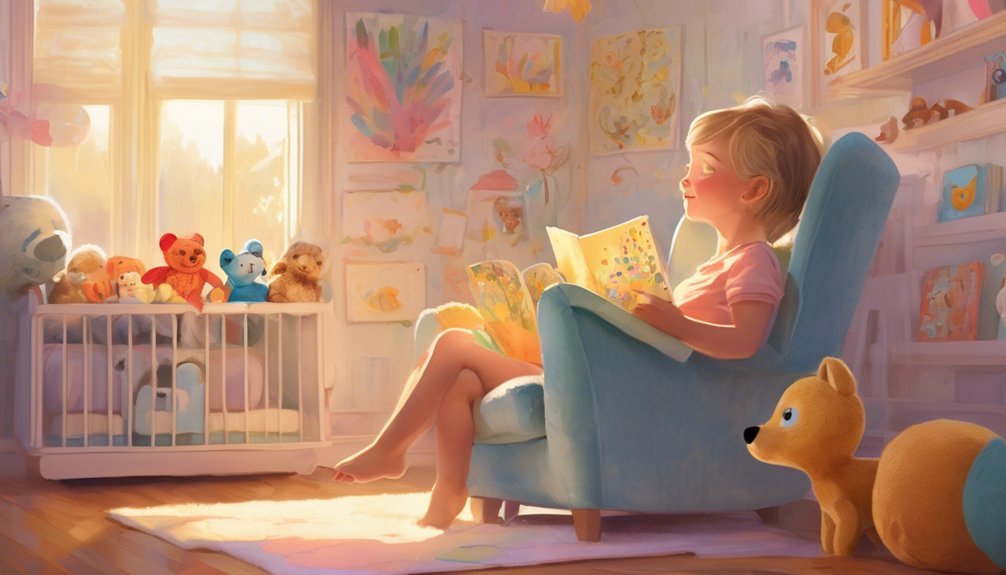
When you read to your baby, you’re not just sharing stories; you’re laying the foundation for their future language and cognitive skills. Engaging with books sparks their curiosity and encourages exploration.
Each time you read aloud, you’re enhancing their cognitive development and promoting language acquisition. Your voice, the rhythm of your words, and the expressions you make all stimulate their brains, helping them recognize sounds, patterns, and meanings.
These early interactions create a bond, fostering emotional security while enriching their vocabulary. As they listen, your baby learns how stories flow and how language connects us.
Choosing the Right Books for Your Baby
Selecting the right books for your baby can transform storytime into a delightful adventure.
Start with a solid board book selection, as these sturdy books are perfect for little hands. Look for titles featuring colorful illustrations that capture your baby’s attention and spark their imagination. Simple stories with rhythmic language can make reading more engaging for both of you.
Consider interactive books with textures or flaps to keep your baby curious and involved. Don’t shy away from classic tales or new favorites; each page turn is a chance to bond.
Creating a Cozy Reading Environment
After choosing the right books, the next step is to create a cozy reading environment that enhances the experience.
Start by finding a space with soft lighting, which sets a warm and inviting mood. You might choose a cozy corner of your living room or a comfortable nook in your child’s room.
Make sure you have comfortable seating; a plush chair or a soft blanket on the floor can work wonders. Surround yourself with pillows for extra comfort, and don’t forget to eliminate distractions.
This intimate setting invites closeness, allowing you to bond with your baby during storytime. With the right environment, you’ll both feel relaxed and ready to dive into the magical world of books together.
Using Your Voice Effectively
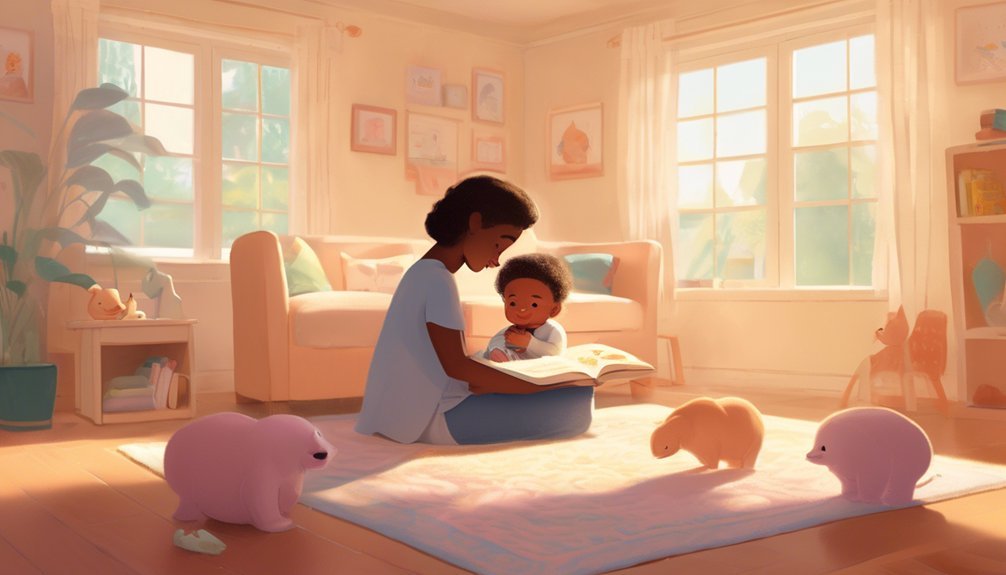
To truly captivate your baby during storytime, harnessing the power of your voice can make all the difference. Using voice modulation and expressive tones, you can create a magical experience that draws your little one in.
Here are some tips to enhance your storytelling:
- Vary your pitch – Use higher tones for excitement and softer tones for soothing moments.
- Change your pace – Slow down for suspenseful parts and speed up for action scenes.
- Emphasize key words – Highlight important phrases to grab their attention.
- Use sound effects – Mimic animal sounds or environmental noises to bring the story to life.
Your voice can be a powerful tool, fostering a deeper bond and creating cherished memories during these intimate moments.
Incorporating Gestures and Expressions
While your voice sets the stage, incorporating gestures and facial expressions can elevate the storytelling experience even further.

Engage your baby with gestural storytelling by using your hands to illustrate the action in the story. A gentle wave can represent a hello, while a dramatic shrug can evoke surprise.
Your facial expressions are equally important; a wide smile can convey joy, and a furrowed brow can show concern.
These elements of expressive reading help create a rich, immersive experience, making the story come alive. Your baby will respond to your animated expressions, fostering a deeper connection.
Making It Interactive With Questions
Building on the animated storytelling you’ve already embraced, making reading interactive with questions can further engage your baby.
By incorporating question prompts, you’ll spark curiosity and foster a deeper connection. Here are four ways to make your storytelling interactive:
- Ask about characters: “What do you think the bear is feeling?”
- Encourage predictions: “What do you think will happen next?”
- Relate to their experiences: “Have you ever seen a big, fluffy dog like that?”
- Discuss colors and shapes: “What color is the sun in this picture?”
These question prompts not only enhance interactive storytelling but also create a joyful atmosphere for bonding.
Following Your Baby’s Cues

Reading to your baby becomes even more meaningful when you pay attention to their cues. Cues recognition is key; observe their facial expressions, movements, and sounds.
If they lean in or giggle, they’re engaged and enjoying the story. Conversely, if they fidget or look away, it might be time to pause or switch to a different book.
Responding to these emotional responses fosters a deeper connection, making reading a shared experience. Trust your instinct—your baby’s reactions will guide you in choosing the right stories and pacing.
This attentive approach not only enhances their enjoyment but also strengthens your bond, creating a cozy and loving atmosphere for both of you.
Establishing a Reading Routine
Establishing a reading routine can transform storytime into a cherished daily ritual for you and your baby. A consistent reading schedule helps foster a love for books and creates a comforting space for connection.
Here are four tips to help you get started:
- Choose a specific time – Whether it’s mornings or bedtime stories, pick a slot that feels right for you both.
- Create a cozy environment – Snuggle up in a favorite chair or bed, making it inviting and warm.
- Incorporate sensory elements – Use soft blankets or toys to enhance the experience and engage your baby’s senses.
- Be consistent – Regularly reading together builds anticipation and strengthens your bond.
Embrace these moments; they’ll be memories you’ll cherish forever.
Exploring Different Genres and Styles
Exploring a variety of genres and styles can make storytime even more enjoyable for you and your baby. Don’t just stick to one type of book; mix it up with enchanting fairy tales that spark imagination and whimsical poetry selections that dance off the page.
Fairy tales introduce your little one to classic narratives filled with adventure and moral lessons, while poetry can introduce rhythm and sound, making the experience playful and engaging.
As you read, pay attention to your baby’s reactions—does a particular rhyme make them giggle? Are they captivated by a magical character?
Using Props and Visual Aids
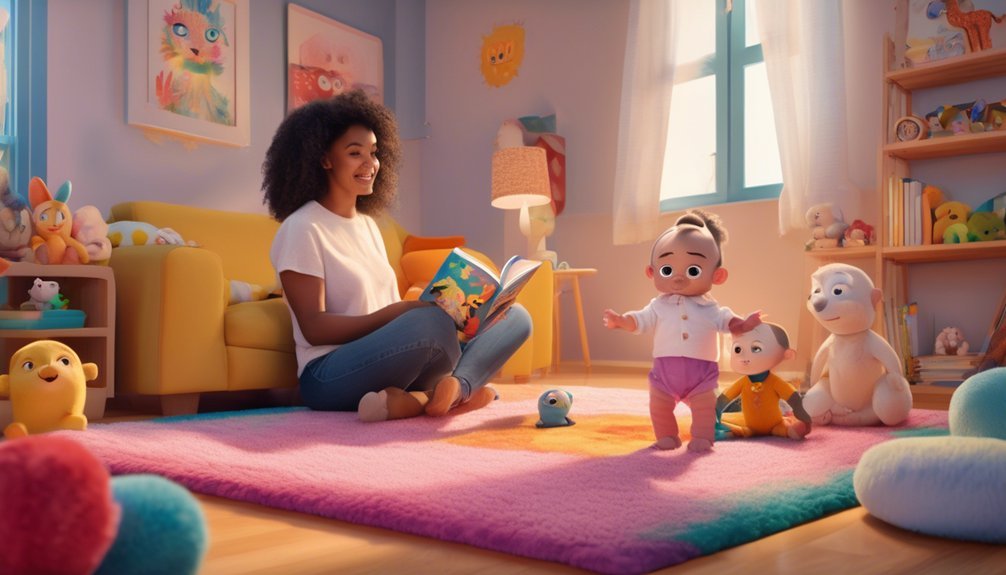
To enhance your baby’s reading experience, consider incorporating props and visual aids that capture their attention and stimulate their senses. Thoughtful props selection can make storytime more interactive and fun.
Here are some ideas to get you started:
- Soft toys: Use plush characters from the story to bring it to life.
- Colorful flashcards: Show images related to the narrative to enhance understanding.
- Finger puppets: Act out scenes to engage your baby’s imagination while you read.
- Illustrated storyboards: Display visuals that correspond with the plot to support visual learning.
Using these props and visual aids can create a warm, inviting atmosphere, making each reading session a cherished bonding moment for you and your little one.
Encouraging a Love for Books Beyond Storytime
While storytime is a wonderful way to introduce your baby to the world of books, fostering a love for reading outside of those moments is equally important.
Engage your little one with book-related activities that spark curiosity and creativity. Create a cozy reading nook where they can explore books independently. Use picture books to inspire imaginative play—encourage them to act out stories or create their own endings.
Visit libraries or bookstores together, letting them choose their own books. Incorporate reading into daily routines, like pointing out words during walks or cooking.
Tracking Progress and Celebrating Milestones
As you read to your baby, keeping track of their progress and celebrating milestones can enhance their journey into the world of books. By acknowledging these moments, you create a deeper bond and encourage a lifelong love for reading.
- First Words: Cheer when they say their first word from a book.
- Turning Pages: Celebrate when they start turning pages independently.
- Story Retell: Smile as they retell a story in their own words.
- Favorite Book: Rejoice when they express a favorite book choice.
These progress tracking moments and milestone celebrations not only highlight their growth but also fill your reading sessions with joy and warmth.
Embrace these small victories, and watch your baby’s love for books blossom!
Frequently Asked Questions
At What Age Should I Start Reading to My Baby?
You can start reading to your baby from birth. Early exposure fosters developmental benefits, nurturing language skills and bonding. As they grow, pay attention to their reading preferences to keep them engaged and excited.
How Long Should Each Reading Session Last?
You might think long sessions are best, but babies’ attention spans are short. Aim for 5 to 10 minutes of reading duration. You’ll create a cozy moment, fostering connection and curiosity while respecting their little limits.
Can I Read to My Baby in Different Languages?
Absolutely, you can read to your baby in different languages! It enriches their language exposure and offers bilingual benefits, helping them develop cognitive skills early. Embrace this beautiful journey together; you’re nurturing their love for language.
What if My Baby Loses Interest During Reading?
If your baby loses interest during reading, try changing your tone, using vibrant illustrations, or incorporating interactive elements. These reading techniques boost baby engagement and keep your little one excited about storytime’s magic and connection.
Should I Read the Same Book Repeatedly?
Imagine a favorite song you can’t help but sing along to. Reading the same book repeatedly offers repetition benefits, providing your baby familiarity and comfort. You’ll bond and ignite their love for stories together.
Conclusion
Reading to your baby isn’t just a bonding experience; it’s a vital step in their development. Did you know that children who are read to regularly are 15% more likely to recognize words by age five? By creating a cozy environment and using engaging techniques, you’re not only sparking their imagination but also setting the foundation for a lifelong love of reading. So, grab that colorful board book and dive into the magical world of stories together!