
Taking your baby’s temperature can feel daunting, but it’s an essential skill every parent should have. Knowing the right techniques and tools can help you monitor their health effectively. Whether you’re checking for a fever or just ensuring they’re comfortable, understanding the process makes a difference. Let’s explore the best methods and tips to ensure you do it safely and accurately. You might be surprised by what you learn next.
Key Takeaways
- Choose the appropriate thermometer type, such as digital, infrared, or rectal, for accurate readings based on your baby’s age and comfort.
- Ensure the thermometer is clean and follow the manufacturer’s instructions for proper usage and placement.
- For the rectal method, gently insert the thermometer about 1 inch into the rectum for the most accurate core temperature.
- Wait for the beep from the digital thermometer to confirm that the reading is complete before checking the temperature.
- Monitor your baby’s behavior alongside the temperature; consult a pediatrician if the temperature exceeds normal ranges or if symptoms arise.
Understanding Normal Temperature Ranges for Babies
When you’re caring for your little one, understanding their normal temperature range is essential for their health. Babies typically have a temperature between 97°F and 100.4°F (36.1°C to 38°C).
However, don’t be surprised by normal temperature fluctuations throughout the day. Factors like activity level, time of day, and even how they’re dressed can cause baby temperature variations.
It’s important to remember that a slight temperature change doesn’t always indicate illness; it can simply be their body responding to the environment.
Keep a watchful eye on how your baby behaves alongside their temperature. If they seem happy and active, you’re likely in a good place.
Trust your instincts, and always reach out to your pediatrician if you have concerns.
Why It’s Important to Monitor Your Baby’s Temperature
Monitoring your baby’s temperature is crucial because even slight changes can signal underlying health issues. By keeping an eye on their temperature, you can better manage any fevers and address potential concerns early on. Temperature fluctuations can indicate infections or other ailments that might require prompt attention.
| Temperature Range | Possible Concerns |
|---|---|
| Below 97°F | Hypothermia risk |
| 97°F – 100.4°F | Normal range |
| 100.5°F – 102.9°F | Mild fever |
| 103°F – 104°F | Moderate fever |
| Above 104°F | Serious health risks |
Staying vigilant about your baby’s temperature ensures you’re equipped to provide the best care possible, keeping them safe and healthy.
Types of Thermometers for Taking Baby’s Temperature
Keeping track of your baby’s temperature is only the first step; knowing which thermometer to use can make the process easier and more accurate.
Digital thermometers are popular for their reliability and quick readings. They’re easy to use and often provide results in under a minute, giving you peace of mind.
On the other hand, infrared thermometers offer a no-touch option, which is especially useful for restless babies. While they’re convenient, ensure you check their thermometer accuracy, as some models may vary.
Ultimately, your choice between digital and infrared will depend on your comfort level and your baby’s needs.
How to Use a Digital Thermometer
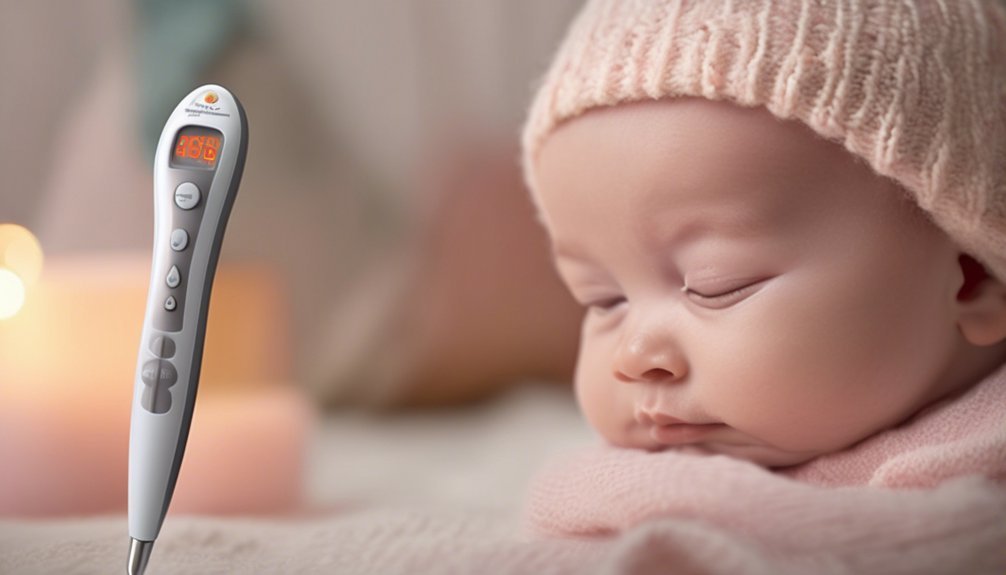
Using a digital thermometer is a straightforward process that can help you accurately track your baby’s temperature.
First, choose the right digital thermometer type for your needs—oral, axillary, or tympanic. Before using it, make sure to clean the thermometer according to the manufacturer’s instructions to ensure proper thermometer care.
Turn on the device, and place it in the appropriate location, being gentle and reassuring to your little one.
Wait for the beep, which indicates that the reading is complete. Once it beeps, check the display for your baby’s temperature. If it’s high, don’t panic; just consult your pediatrician for guidance.
Taking Temperature Rectally: Step-by-Step Guide
When it comes to taking your baby’s temperature, rectal measurement is often the most accurate method, especially for infants.

To start, gather a digital thermometer and ensure it’s clean—maintaining thermometer hygiene is crucial. Apply a small amount of lubricant on the tip for comfort.
Gently position your baby on their back or side, holding their legs apart. Insert the thermometer about half an inch into the rectum, using the rectal technique. Hold it steady until you hear the beep, which indicates the reading is complete.
After you’ve finished, carefully remove the thermometer and clean it thoroughly.
Taking Temperature Orally: When and How
While taking your baby’s temperature orally can be convenient, it’s important to wait until they’re old enough to understand the process, usually around age four or five.
At this age, they can cooperate and hold the thermometer correctly, ensuring better measuring accuracy. When you’re ready, choose a digital thermometer designed for oral use.
Place it under their tongue, asking them to close their mouth gently. Keep an eye on the display until it beeps, indicating the temperature is ready.
Always remember to explain what you’re doing, making it a comfortable experience. If your child feels anxious, reassure them.
An accurate oral temperature can guide you in assessing their health, giving you peace of mind as a loving parent.
Taking Temperature Axillary (Underarm): Tips and Techniques

If your little one isn’t quite ready for oral temperature taking, measuring their temperature axillary (underarm) can be a practical alternative.
Here are some tips for getting accurate readings:
- Choose the right thermometer: Digital thermometers work best for axillary measurements.
- Position your baby: Make them comfortable, holding their arm gently against their body.
- Ensure proper placement: Place the thermometer deep into the armpit, ensuring it touches skin and not clothing.
- Wait patiently: Keep the thermometer in place for the recommended time, usually around 10 seconds.
- Read and record: Check the display for the temperature and note it down for future reference.
Taking an axillary measurement may not be as precise as others, but it’s a gentle and effective way to check your baby’s health.
Taking Temperature Temporally: Using a Forehead Thermometer
Taking your baby’s temperature with a forehead thermometer can be quick and convenient, especially for restless little ones. These devices are designed for easy use, making them perfect for busy parents.
To ensure forehead thermometer accuracy, always follow the manufacturer’s instructions. Gently press the thermometer against your baby’s forehead and swipe across the skin, allowing it to gather the necessary data.
Temperature taking techniques vary, but consistency is key. Make sure your baby’s forehead is clean and dry for the most accurate reading.
While forehead thermometers are generally reliable, it’s wise to confirm any concerning readings with a more traditional method if needed. This way, you’ll feel reassured and confident in caring for your little one’s health.
Signs Your Baby May Have a Fever
Recognizing the signs of a fever in your baby is crucial for timely intervention and care.
Pay attention to these fever symptoms that may indicate your little one isn’t feeling well:
- Increased fussiness or irritability
- Changes in appetite or refusal to eat
- Excessive sleepiness or lethargy
- Flushed skin or noticeable temperature sensitivity
- Sweating or chills
You know your baby best, so trust your instincts.
If you notice any of these signs, it’s essential to keep a close watch and consider checking their temperature.
When to Call a Doctor Based on Temperature Readings

Knowing when to call a doctor based on your baby’s temperature readings can be overwhelming, especially when you’re already worried about their wellbeing.
If your baby is under three months old and has a temperature of 100.4°F (38°C) or higher, it’s essential to seek medical advice immediately.
For older babies, look out for fever symptoms like persistent crying, irritability, or trouble sleeping. If their temperature exceeds 102°F (38.9°C) and lasts more than a day, a call to the doctor is wise.
Age considerations matter, too—infants and younger toddlers may need more immediate attention.
Trust your instincts; if something feels off, don’t hesitate to reach out for guidance. Your peace of mind is important.
Tips for Keeping Your Baby Calm During Temperature Checks
While checking your baby’s temperature can be a necessary task, it doesn’t have to be a stressful one for either of you.
You can use soothing techniques and distraction methods to keep your little one calm. Here are some helpful tips:
- Sing a gentle lullaby or play soft music.
- Use a favorite toy or blanket for comfort.
- Offer a pacifier or let them suck on their thumb.
- Engage them with a colorful book or a playful puppet.
- Keep the room warm and cozy to create a relaxing atmosphere.
Common Mistakes to Avoid When Taking Baby’s Temperature
Taking your baby’s temperature can be straightforward, but several common mistakes can lead to inaccurate readings and unnecessary stress.
One common misconception is relying solely on forehead thermometers, which can be less reliable than rectal or ear methods.
Also, don’t forget that temperature variations can happen due to factors like time of day or activity level.
Avoid measuring immediately after a bath or when your baby is bundled in heavy clothing, as this can skew results.
Lastly, always follow the manufacturer’s instructions closely for your specific thermometer type.
Frequently Asked Questions
Can I Use an Old Thermometer for My Baby?
You can use an old thermometer, but ensure it’s accurate and safe. Check for any damages and consider its age. Prioritizing your baby’s health means taking necessary safety precautions with reliable tools.
How Often Should I Check My Baby’s Temperature?
You might think checking your baby’s temperature daily isn’t necessary, but keeping an eye on fever signs is crucial. Regular monitoring helps you catch any issues early, ensuring your little one stays healthy and comfortable.
What Should I Do if My Baby Resists Temperature Checks?
If your baby resists temperature checks, try calm techniques like gentle rocking or soothing sounds. Distraction methods, like toys or funny faces, can help ease their anxiety, making the experience smoother for both of you.
Are There Any Specific Times to Avoid Taking My Baby’S Temperature?
When you’re feeling the weight of your baby’s discomfort, it’s best to avoid temperature checks during feedings, naptime, or when they’re upset. Timing matters; choose calmer moments for a smoother experience.
Can Teething Affect My Baby’S Temperature Readings?
Teething symptoms can indeed cause temperature fluctuations in your baby. While mild increases are common, it’s essential to monitor closely. If you’re worried about significant changes, don’t hesitate to consult your pediatrician for reassurance.
Conclusion
Taking your baby’s temperature is crucial for their well-being, so remember to choose the right method, stay calm, and observe their behavior. By understanding normal ranges, using the thermometer correctly, and knowing when to seek help, you’ll be better equipped to care for your little one. Trust your instincts, stay informed, and prioritize your baby’s comfort. With these steps, you’ll not only monitor their health effectively but also ease their worries during temperature checks.