
Transitioning from a bassinet to a crib can feel like moving from a cozy nest to a spacious sky. It’s a significant step in your baby’s development, often marked by signs of readiness around 4 to 6 months. Preparing for this change involves more than just setting up the crib; it also requires establishing new routines and understanding your baby’s needs. So, how can you make this transition smooth and successful? Let’s explore the steps together.
Key Takeaways
- Assess signs of readiness, such as rolling over and needing more space, typically between 4 to 6 months.
- Prepare the crib with firm, breathable bedding and fitted sheets for a safe sleep environment.
- Establish a consistent bedtime routine with calming activities to ease the transition.
- Ensure safety by keeping the crib clear of soft items and placing the baby on their back to sleep.
- Be patient and supportive during the adjustment period, allowing your baby to adapt at their own pace.
Signs Your Baby Is Ready for a Crib
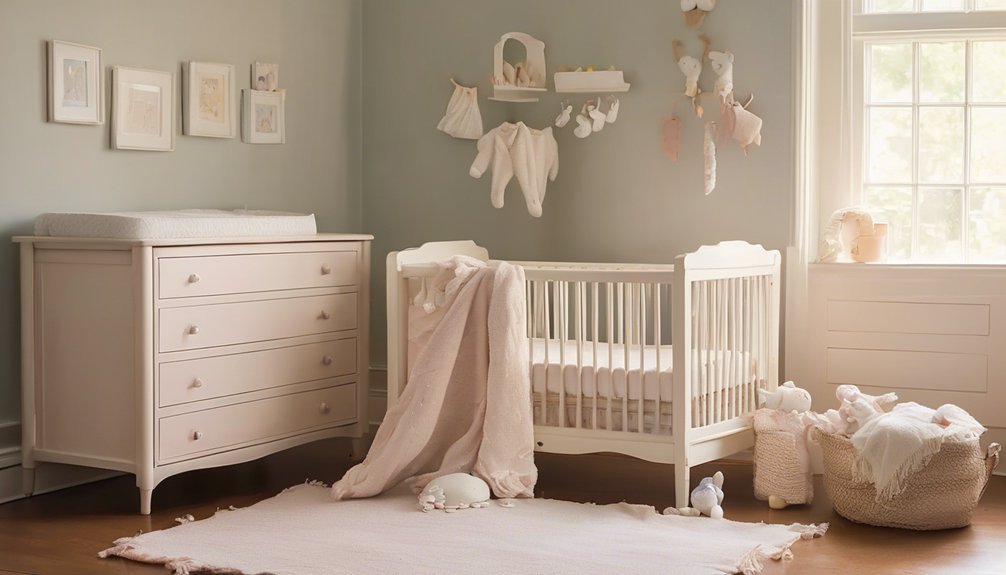
As your baby grows, you might notice certain signs that indicate it’s time to transition from a bassinet to a crib. If your little one is outgrowing the bassinet’s cozy confines or can roll over and push up, it’s a clear signal.
Crib size is important; you’ll want a space where your baby can move comfortably. Additionally, consider their sleep associations—if your baby’s starting to rely on the bassinet for comfort, transitioning early can help them adapt to the crib environment.
Creating a familiar sleep routine in the crib, like using the same blanket or lullaby, can ease the change. Trust your instincts; you know your baby best. Embrace this next step in their journey with love and support.
Ideal Age for Transitioning
Transitioning your baby from a bassinet to a crib typically happens between 4 to 6 months, but it can vary depending on your child’s development and individual needs.
The ideal age for this transition often aligns with key developmental milestones, like increased mobility or the ability to push up on their hands. You might notice your little one showing signs of readiness, such as rolling over or attempting to sit up.
These signals indicate that they may benefit from the spaciousness and safety of a crib. Trust your instincts as a parent; if you feel your baby is ready, it’s likely the right time.
Preparing the Crib for Your Baby
When you’re ready to prepare the crib for your baby, it’s essential to create a safe and comfortable sleep environment.
Start by choosing firm, breathable bedding that fits snugly to prevent any gaps where little limbs could get stuck. Opt for fitted sheets made from soft, natural materials to keep your baby cozy.
Consider adding crib accessories like a mobile or a nightlight to provide gentle stimulation and comfort, but avoid anything that could pose a suffocation risk.
Keep the crib free of toys, bumpers, and blankets to maintain a safe sleeping space.
Establishing a Bedtime Routine
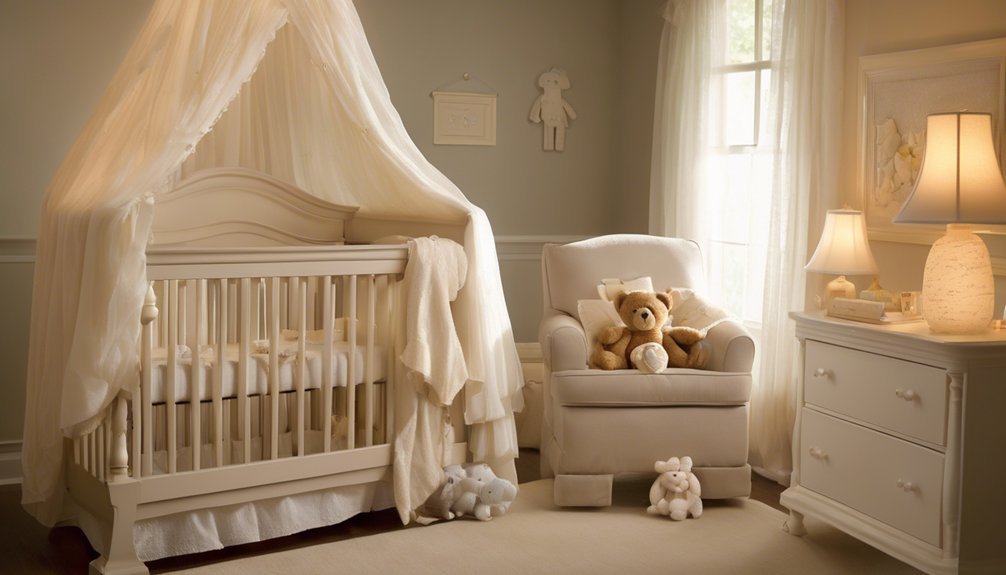
Creating a consistent bedtime routine can significantly ease the transition from bassinet to crib for your baby. Establishing bedtime rituals helps signal to your little one that it’s time to wind down.
Start with calming activities, like a warm bath or gentle rocking, to create a soothing environment. Dim the lights and play soft music to further set the mood.
As you cuddle or read a story, your baby will start to associate these moments with comfort and security. Aim to stick to the same order of activities each night, helping your baby feel more settled.
This predictability not only fosters a sense of safety but also encourages better sleep habits as they adapt to their new sleeping space.
Gradual Transition Techniques
As your baby becomes accustomed to their bedtime routine, it’s time to introduce them to the crib.
Start with a gradual introduction by placing the crib in your bedroom for a few nights, allowing your baby to get familiar with their new sleep space.

Once they seem comfortable, begin putting them down for naps in the crib. You can also use comfort items, like a soft blanket or their favorite stuffed animal, to provide reassurance during this transition.
This familiarity can make the crib feel more secure.
Over a week or two, gradually shift nighttime sleep to the crib, ensuring you’re nearby for comfort.
Patience is key; this process helps your little one feel safe and secure in their new environment.
Creating a Comfortable Sleep Environment
To ensure your baby sleeps soundly in their new crib, focus on crafting a comfortable sleep environment.
Start by choosing soft, breathable bedding that suits the season. A snug fitted sheet can make the crib feel more inviting.
Consider adding crib accessories like a soothing nightlight or a gentle white noise machine to create a calming atmosphere.
Keep the room at a comfortable temperature—between 68-72°F is ideal.
You might also want to include a cozy blanket or a favorite stuffed animal, but ensure it’s safe for your baby’s age.
Lastly, maintain a consistent bedtime routine to signal that it’s time to sleep.
Safety Tips for Crib Use
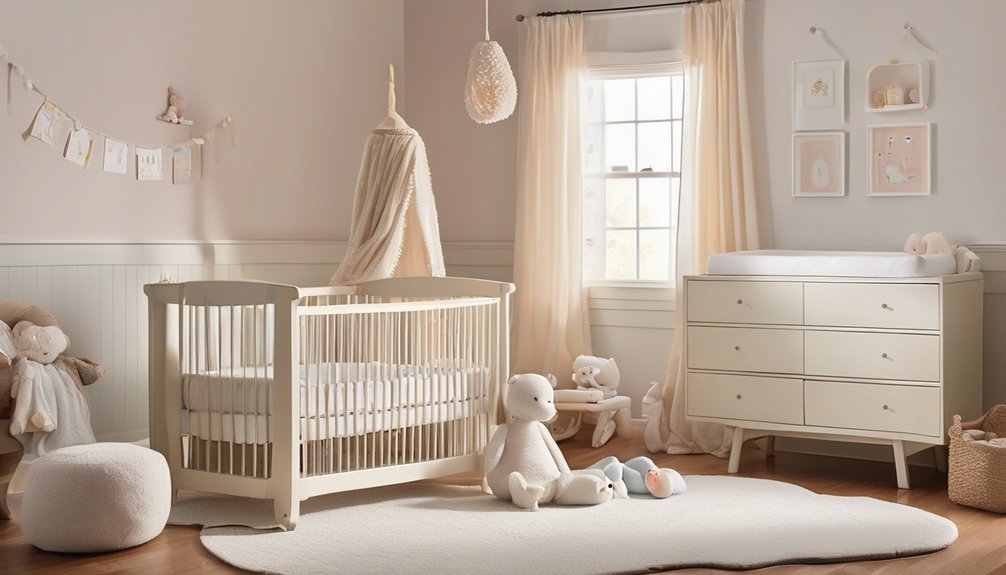
While transitioning to a crib can be exciting, ensuring your baby’s safety should be your top priority.
First, make sure the crib meets current safety standards, with no loose or missing slats. When adjusting the mattress height, start at the highest level for infants and lower it as your baby grows and can sit up.
Keep the crib clear of pillows, blankets, and stuffed animals to reduce the risk of suffocation. Always place your baby on their back to sleep.
Regularly inspect the crib for any wear and tear. Lastly, create a secure environment by ensuring the crib is away from windows, cords, and other hazards.
With these crib safety tips, you’ll foster a safe sleep space for your little one.
Managing Separation Anxiety
Even though transitioning from a bassinet to a crib is a significant milestone, it can also trigger feelings of separation anxiety in both you and your baby. To help navigate this emotional shift, consider implementing effective separation strategies. Start by establishing a consistent bedtime routine, which can provide comfort and predictability.
Here’s a quick reference table for anxiety management:
| Strategy | Description | Benefit |
|---|---|---|
| Gradual Transition | Move the crib closer to your bed | Eases the separation process |
| Comfort Objects | Introduce a favorite toy or blanket | Provides reassurance |
| Short Departures | Practice leaving the room briefly | Builds confidence in separation |
| Consistent Routine | Stick to the same schedule | Creates a sense of security |
These tactics can ease anxiety for both of you during this important change.
Adjusting to the New Sleep Space
As you transition your baby to the crib, it’s essential to create an inviting and comforting sleep environment.
Start by introducing familiar items from the bassinet, like a favorite blanket or stuffed animal, to ease the change. Use adjustment strategies such as gradually increasing time spent in the crib, allowing your little one to explore this new sleep space during the day.
Dim the lights and play soft music to establish a soothing atmosphere. Consistency is key; maintain a bedtime routine to signal that it’s time to sleep.
Monitoring Your Baby’s Sleep Patterns

Monitoring your baby’s sleep patterns is crucial for ensuring they adjust well to their new crib. Pay attention to their sleep cycles, which usually consist of light and deep sleep stages.
Use monitoring techniques like a baby monitor to keep an eye on them from a distance. Take notes on when they fall asleep and wake up, as this can help you identify patterns over time. You might notice they settle better at certain times or after specific routines.
Being consistent with bedtime rituals can also aid in creating a comforting environment. By understanding these cycles and employing effective monitoring, you’ll provide the support your baby needs during this transition, fostering a sense of safety and security in their new sleeping space.
Troubleshooting Common Issues
Understanding your baby’s sleep patterns can help you identify and address common issues that may arise when moving them to a crib. You might encounter sleep disruptions, such as fussiness or difficulty settling down. It’s important to recognize that these are common concerns during the transition.
If your baby seems restless, try maintaining a consistent bedtime routine to create a sense of security. Consider the crib’s environment; ensure it’s dark, quiet, and comfortable.
If your little one wakes frequently, check for any discomfort, like hunger or a wet diaper. Remember, patience is key—this adjustment takes time.
Celebrating the Transition Success
Transitioning to a crib can be an exhilarating milestone for both you and your baby. This achievement deserves a celebration! Take a moment to acknowledge how far you’ve come. You’ve navigated sleepless nights and countless diaper changes, and now your little one is ready for this new adventure.
Consider hosting a small family gathering or sharing your experiences with friends who are also parents. Sharing milestones not only reinforces your bond with your baby but also connects you with others who understand the journey.
Create a cozy atmosphere in the nursery—dim lights, soft music, and perhaps a little treat for yourself. Remember, every step forward is worth celebrating, and your baby’s transition to their crib is a moment to cherish!
Frequently Asked Questions
Can I Use the Crib Immediately After Transitioning From the Bassinet?
Yes, you can use the crib right after transitioning. Just ensure you follow crib safety tips and create a cozy sleep environment. This way, your little one will feel secure and comfortable in their new space.
How Do I Choose the Right Crib Mattress?
Choosing the right crib mattress means considering mattress firmness and size compatibility. You’ll want a firm mattress that fits snugly in the crib, ensuring your baby sleeps safely and comfortably as they grow.
What Should I Do if My Baby Rolls Over in the Crib?
If your baby’s rolling over, ensure they’re always placed on their back to sleep. Monitor their sleep position and follow safety precautions, like avoiding soft bedding, to keep your little one safe and sound during naps.
Can I Still Use a Swaddle After Moving to the Crib?
You can still use a swaddle after moving to the crib, but ensure it’s safe swaddling. Swaddle benefits include comfort and security, helping your baby feel snug and sleep better during this transition.
What Type of Bedding Is Safest for a Crib?
For crib bedding, choose breathable materials like cotton or bamboo, ensuring it meets safety guidelines. Avoid pillows, blankets, and bumpers. Keeping your baby’s sleep environment simple promotes safety and comfort, letting you both rest peacefully.
Conclusion
As you watch your little one peacefully drift off in their crib, surrounded by the gentle glow of a nightlight and the soft lull of a bedtime story, remember that this transition is a beautiful milestone. Embrace the journey, knowing that each coo and sigh is a step toward independence. With patience and love, you’re not just changing sleep spaces; you’re fostering a sense of security and comfort in their new world. Celebrate this moment—you’ve both earned it!