
Did you know that children raised in Montessori environments often show higher levels of creativity and problem-solving skills as they grow? This method encourages infants to explore their surroundings and learn at their own pace. By understanding the principles behind Montessori parenting, you can create an atmosphere that nurtures your child’s natural curiosity and independence. What does this approach look like in practice, and how can it shape your infant’s early development?
Key Takeaways
- Create a nurturing environment with natural materials, soft colors, and cozy spaces to foster exploration and emotional security in infants.
- Encourage independence by allowing infants to explore and practice self-soothing techniques, while observing their unique cues for needs and emotions.
- Engage infants in sensory exploration through hands-on activities and natural materials, promoting cognitive growth and deeper connections with their surroundings.
- Foster social skills and emotional growth through playdates, mirror play, and shared reading experiences that encourage empathy and emotional expression.
- Invest in holistic development by focusing on long-term growth, promoting curiosity, collaboration, and respect for others as foundational values for future independence.
Understanding Montessori Principles
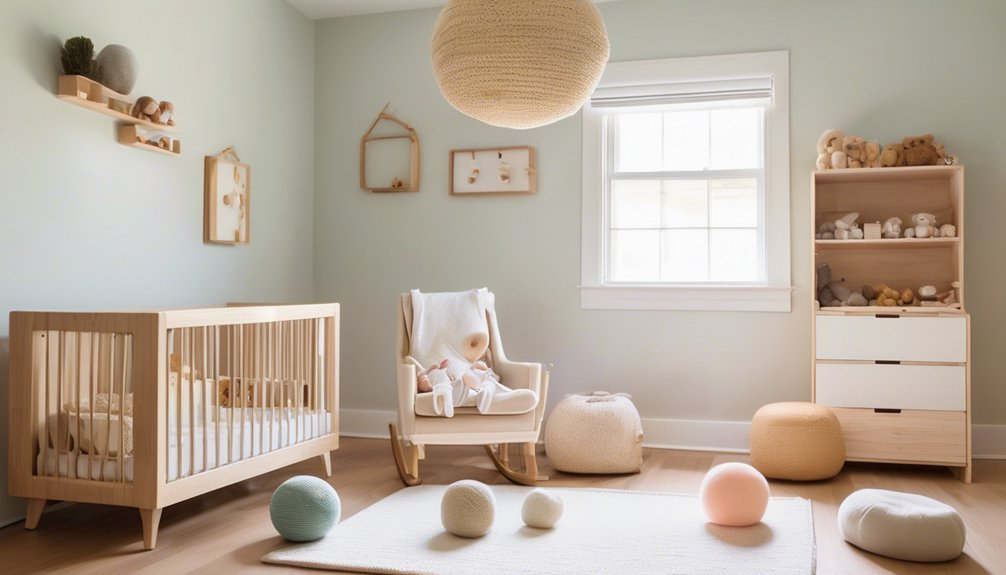
When you embrace Montessori principles, you’re not just choosing a method; you’re opting for a holistic approach to your infant’s development.
The Montessori philosophy emphasizes respect for your child as an active participant in their own learning journey. It recognizes that even infants are curious explorers, eager to understand the world around them.
By providing a rich, engaging environment, you encourage their innate desire to learn. This approach fosters independence and self-confidence, allowing your infant to develop at their own pace.
You’ll notice how even simple activities, like reaching for a toy or exploring textures, become meaningful learning experiences.
Creating a Nurturing Environment
Creating a nurturing environment for your infant involves more than just filling a room with toys; it requires thoughtful consideration of their developmental needs and interests. Surround your little one with natural materials like wood, cotton, and wool, which not only feel pleasant but also promote sensory exploration.
Design peaceful spaces by reducing clutter and creating cozy corners where your baby can observe their surroundings. Soft colors and gentle lighting can further enhance tranquility, fostering a sense of security.
Encouraging Independence From Birth
Although your infant may seem entirely dependent on you, encouraging independence from birth sets the foundation for their growth and self-confidence.
By introducing independent milestones, like reaching for toys or exploring their environment, you’re fostering their natural curiosity. Allow them time to practice self-soothing techniques, such as gently rubbing their hands or finding comfort in a soft blanket.
These small moments of autonomy not only help your little one feel secure but also nurture their ability to cope with challenges. Remember, it’s essential to strike a balance between support and allowing space for exploration.
As you honor their efforts, you’re paving the way for a confident, independent child who can navigate the world with assurance.
Observing Your Infant’s Cues
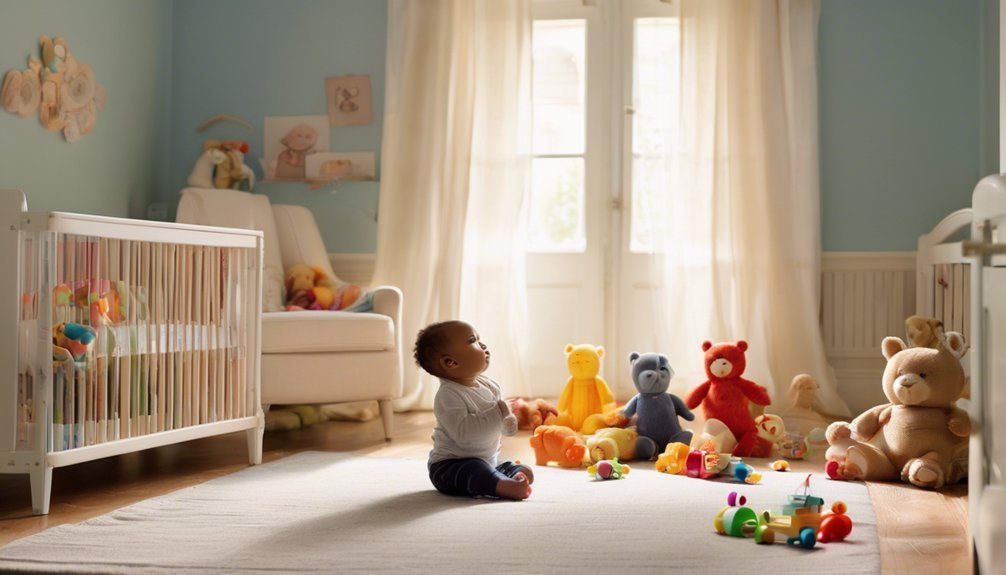
Understanding your infant’s cues is a vital part of fostering their independence and emotional development. By practicing cues recognition, you’ll notice their unique signs of hunger, fatigue, or discomfort.
Each baby communicates differently, so pay close attention to their facial expressions, body language, and sounds. When you respond promptly to these cues, you’re engaging in responsive parenting, which builds trust and security.

This bond encourages your little one to explore their world confidently. Remember, it’s about being present and attuned to their needs, rather than imposing your own schedule.
As you observe and respond, you’ll deepen your connection, creating a nurturing environment that respects your child’s individuality and promotes their growth. Your attentive response can make all the difference.
Sensory Exploration and Play
Engaging in sensory exploration and play is essential for your infant’s development, as it sparks curiosity and encourages cognitive growth. You can create sensory bins filled with natural materials like leaves, stones, and water, allowing your baby to experience various textures and sensations. This hands-on interaction fosters a deep connection with the world around them.
| Material | Texture | Benefits |
|---|---|---|
| Soft fabric | Smooth | Calms and soothes |
| Rough bark | Textured | Enhances tactile skills |
| Cool water | Wet | Stimulates sensory awareness |
| Warm sand | Grainy | Encourages exploration |
Using natural materials not only nurtures your baby’s senses but also builds a foundation for creativity and learning.
The Role of Freedom and Limits
As your infant explores the world through sensory play, you’ll notice the importance of allowing freedom while setting appropriate limits. Striking this balance nurtures their independence and fosters a sense of security.
Here are three ways to maintain that equilibrium:
- Create safe spaces: Designate areas where your infant can explore freely, ensuring they’re safe from hazards.
- Set gentle boundaries: Use flexible limits that guide your child, helping them understand acceptable behaviors without stifling their curiosity.
- Observe and adapt: Pay attention to your infant’s reactions and adjust your limits as needed, allowing for a dynamic environment that respects their growing needs.
Montessori Materials for Infants
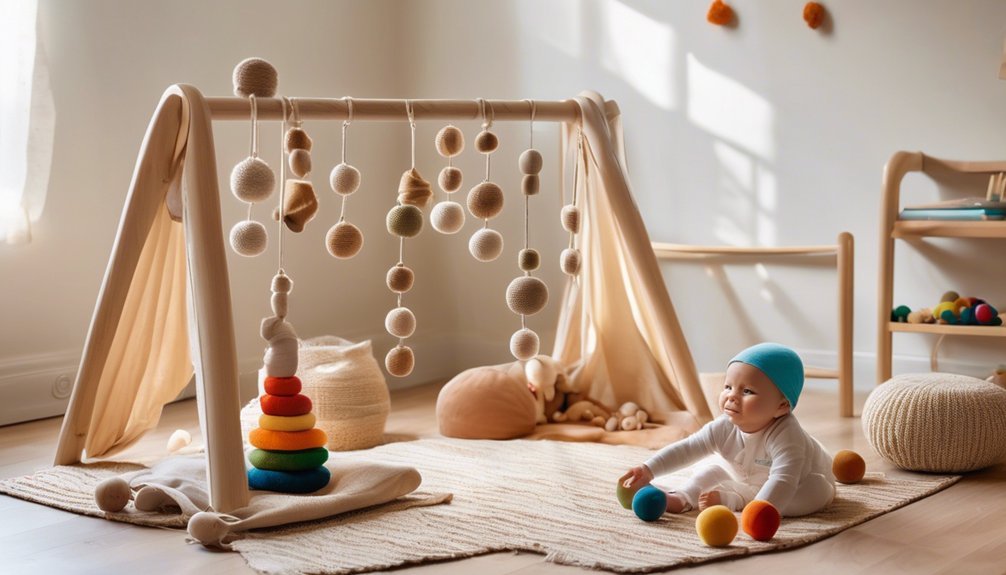
When you introduce Montessori materials to your infant, you’re not just providing toys; you’re offering opportunities for exploration and development. Montessori toys are thoughtfully designed to stimulate your baby’s senses and curiosity.
Consider using sensory baskets filled with various textures, colors, and shapes. These baskets engage your little one’s natural desire to explore and encourage independent play.
Observe how your infant interacts with these materials, as each moment provides insight into their interests and preferences. By allowing them to discover through hands-on experiences, you foster a sense of autonomy and confidence.
Trust that these simple yet purposeful tools can nurture their cognitive and sensory skills, creating a rich environment where learning happens organically. Your involvement in this journey makes all the difference.
Supporting Motor Development
Montessori materials not only spark curiosity but also play a vital role in supporting your infant’s motor development. Engaging your little one in activities that promote movement can enhance their coordination and strength.
Here are three effective ways to support this journey:
- Tummy Time: Encourage tummy time daily to strengthen neck and shoulder muscles. It’s essential for developing gross motor skills.
- Grasping Toys: Provide toys that are easy to grasp, helping your baby refine their fine motor skills as they learn to reach and hold.
- Movement Spaces: Create safe areas for exploration, allowing your infant to crawl, roll, and discover their body’s capabilities.
Language Development Through Interaction
How can simple interactions foster your infant’s language development? Engaging with your baby through everyday conversations and interactive storytelling can significantly support their language milestones.
When you narrate your routines or describe objects around you, your infant absorbs sounds, rhythms, and vocabulary. These rich interactions not only stimulate their listening skills but also encourage them to respond with coos or babbles, laying the foundation for speech.
By making eye contact and using expressive tones, you create a warm environment that invites communication. Remember, each moment spent talking and sharing stories nurtures their curiosity and understanding of language, helping them grow more confident in expressing themselves as they develop.
Your presence and words truly make a difference!
Establishing Routines That Respect Individuality

While nurturing your infant’s development, it’s essential to establish routines that honor their unique needs and preferences. By providing individual care and personalized schedules, you help your baby thrive in a supportive environment.
Here are three ways to create routines that respect their individuality:
- Observe Your Baby: Pay attention to their cues—hunger, sleepiness, or playfulness—to tailor your routine.
- Flexible Timing: Allow for variations in the schedule, adapting it based on your infant’s mood and energy levels.
- Engaging Activities: Incorporate activities that resonate with their interests, like sensory play or quiet reading, fostering a sense of security.
Fostering Social Skills and Emotional Growth
As your infant begins to explore their world, fostering social skills and emotional growth becomes crucial for their overall development. Engaging with your baby through eye contact, smiles, and gentle touch enhances their social awareness. Encourage them to express feelings and respond to your emotional cues, nurturing their emotional regulation.
| Activity | Purpose | Benefit |
|---|---|---|
| Playdates | Develops interaction skills | Builds social awareness |
| Mirror play | Enhances emotional recognition | Supports emotional regulation |
| Reading together | Encourages empathy | Fosters connection |
The Long-Term Benefits of Montessori Parenting
Montessori parenting lays a strong foundation for your child’s future, fostering independence and a lifelong love of learning. By embracing this approach, you’re nurturing their long-term growth and holistic development.
Here are three key benefits:
- Self-Confidence: Your child learns to trust their abilities, making them more resilient in facing challenges.
- Critical Thinking: Montessori encourages exploration and problem-solving, equipping your child with essential skills for the future.
- Social Responsibility: They develop empathy and respect for others, leading to healthier relationships and a sense of community.
These benefits not only shape who your child becomes but also cultivate a mindset that values curiosity and collaboration.
You’re not just parenting; you’re investing in a brighter future for them.
Frequently Asked Questions
How Do I Choose Montessori Toys for My Infant?
When choosing toys for your infant, consider natural materials like wood or fabric. Align them with your baby’s developmental stages, focusing on sensory exploration and fine motor skills. Observe what sparks their interest and curiosity.
What Are Common Misconceptions About Montessori for Infants?
Montessori myths can spread like wildfire, leading you to think infants need constant supervision. In reality, fostering infant independence nurtures their natural curiosity, allowing them to explore and learn at their own pace, confidently and joyfully.
Can I Practice Montessori Principles With Multiple Children?
Yes, you can absolutely practice Montessori principles with multiple children. Observing sibling dynamics can enrich their learning. Encourage shared activities that foster cooperation, allowing each child to explore at their own pace while supporting one another.
How Do I Handle Screen Time in a Montessori Approach?
Isn’t it fascinating how screen time can shape your child’s world? Embrace mindful engagement by limiting exposure, encouraging creativity, and fostering real-life connections. You’ll nurture their growth while maintaining balance in a tech-driven environment.
Are There Specific Books on Montessori Parenting for Infants?
You’ll find several engaging Montessori literature options that focus on infant development. These books offer insights into fostering independence and sensory exploration, helping you create a nurturing environment that respects your little one’s natural curiosity.
Conclusion
In the garden of your infant’s growth, Montessori parenting serves as the sunlight, nurturing their innate curiosity and independence. By observing their cues and providing a rich, sensory environment, you’re planting seeds for emotional and cognitive development. Each interaction is like watering these seeds, fostering trust and resilience. As you cultivate this unique space, you’re not just raising a child; you’re helping a lifelong learner blossom, ready to embrace the world with confidence and joy.