
Many parents underestimate the significance of each month in their baby’s development. Each milestone is more than just a cute photo opportunity; it represents essential growth in physical, emotional, and cognitive skills. Understanding these milestones can help you support your child’s journey effectively. As you explore the key developments from birth to their first birthday, you’ll discover how these changes can impact your parenting approach and your child’s future.
Key Takeaways
- Newborns display instinctual reflexes like grasping and rooting, crucial for early development in the first two months.
- By months three and four, babies begin rolling over, supported by tummy time that strengthens core muscles.
- At five months, communication skills emerge with babbling, while hand coordination allows for purposeful grasping of objects.
- By ten and eleven months, babies master cruising techniques and may take their first independent steps, highlighting increased mobility.
- Celebrating the first birthday signifies a year of growth, with milestones marked by gifts and family traditions captured in memory books.
Month 1: Newborn Development

During the first month of your baby’s life, you’ll witness remarkable developments that lay the groundwork for their future growth.
Your newborn’s reflexes, like the grasping and rooting reflexes, are instinctual behaviors that help them adapt to their new environment. You’ll notice how their tiny fingers grip your hand, creating an instant bond.
Sleep patterns can be unpredictable during this stage, with your baby sleeping up to 16-18 hours a day, often in short bursts. This irregularity is normal as they adjust to life outside the womb.
Understanding these early signs will help you nurture their development and provide comfort. Embracing this unique journey allows you to foster a secure foundation for your baby’s thriving future.
Month 2: Social Smiles and Increased Alertness
At around two months old, your baby begins to show exciting signs of social development, particularly through social smiles and increased alertness. This newfound social engagement is crucial for building an emotional connection between you and your little one. You’ll notice your baby becoming more aware of their surroundings, responding to your voice, and even attempting to mimic your expressions.
| Milestone | Description | Tips for Encouragement |
|---|---|---|
| Social Smiles | Your baby smiles in response to you | Smile back and maintain eye contact |
| Increased Alertness | More awake and observant of their environment | Talk to them about what they see |
| Vocalizations | Coos and gurgles emerge | Respond with enthusiasm and mimic sounds |
| Eye Contact | Longer periods of eye contact | Hold their gaze during interactions |
| Reaction to Faces | Recognizes familiar faces | Show them pictures of loved ones |
Embrace these moments; they’re the foundation of your bond.
Month 3: Tummy Time Triumphs
As your baby enters the third month, you’ll notice significant changes in their physical development, particularly through tummy time. This essential activity strengthens their neck and shoulder muscles, preparing them for future milestones.
To make tummy time enjoyable, try various tummy time techniques, like placing a rolled towel under their chest for support or lying down face-to-face, which fosters connection and engagement. Incorporating developmental toys, such as soft blocks or colorful rattles, can capture their attention and encourage reaching and grasping.
Month 4: Rolling Over and Reaching Out
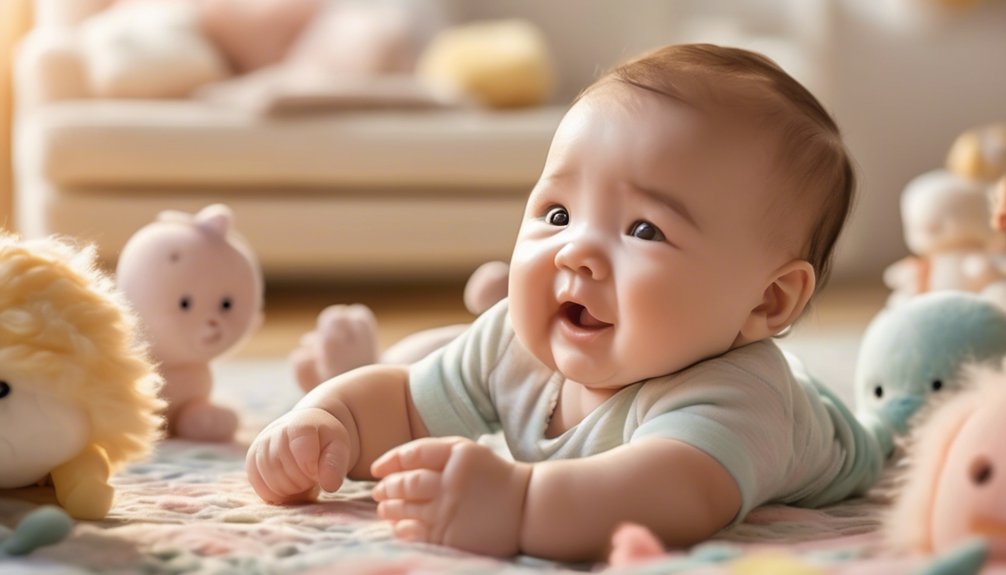
By month four, many babies begin to roll over and reach out, marking a thrilling phase of exploration and newfound mobility.
This development enhances their sensory play and builds strength acquired during tummy time. You’ll notice your little one becoming more curious about their surroundings, eager to connect with the world.
To support this exciting milestone, consider these activities:
- Encourage tummy time to strengthen their core muscles.
- Provide colorful toys that stimulate reaching and grasping.
- Create a safe space for rolling over with soft surfaces.
- Engage in sensory play with varied textures and sounds.
As your baby discovers their ability to move, you’ll witness their personality shine through in delightful ways.
Embrace this journey together!
Month 5: Babbling and Grasping
During month five, you’ll likely notice your baby’s communication skills blossoming as they begin to babble and experiment with sounds. These adorable baby sounds are more than just noise; they’re vital building blocks for future language development. You’ll hear your little one practicing different tones and pitches, eagerly responding to your conversations.

At the same time, you may see improvements in their hand coordination. Your baby might start grasping objects with purpose, exploring textures and shapes.
Encourage this exploration by providing safe toys that are easy to hold. This combination of babbling and grasping isn’t just cute; it signifies your baby’s growing understanding of the world around them, fostering both cognitive and physical skills essential for their development.
Month 6: Sitting Up and Exploring
At six months, your baby is likely to surprise you with newfound abilities, particularly in sitting up and exploring their surroundings.
This stage is all about developing sitting stability, which opens the door to exciting exploration. Here are some strategies to encourage this growth:
- Support them as they practice sitting, helping them find balance.
- Surround them with engaging toys to draw their attention and encourage reaching.
- Create a safe space for exploration, allowing them to move and discover freely.
- Observe their reactions to different textures and sounds, fostering sensory development.
As your little one learns to sit and explore, it’s a beautiful reminder of their growing independence and curiosity.
Enjoy this amazing journey together!
Month 7: Crawling and Object Permanence
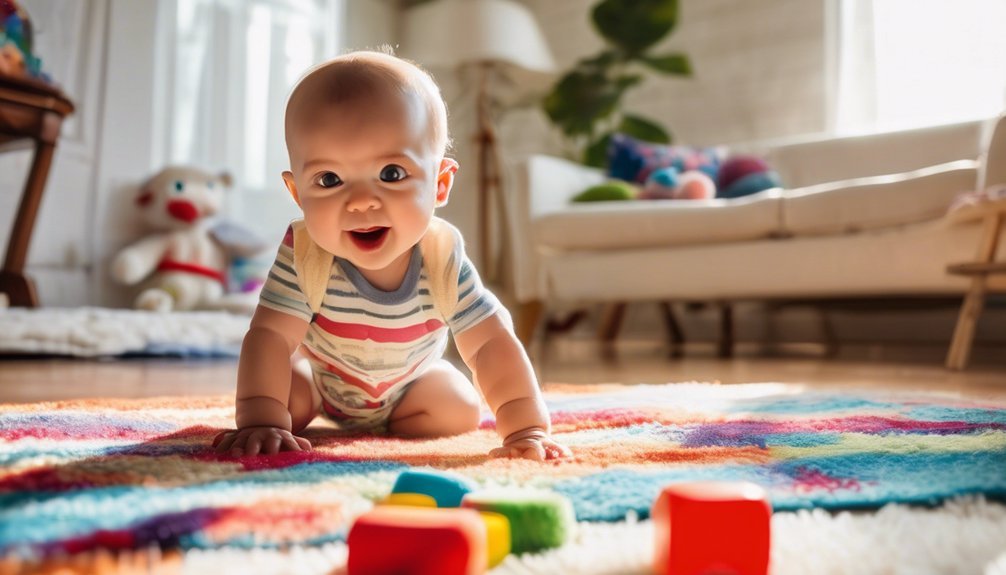
As your baby reaches seven months, you’ll likely notice a fascinating shift in their development, particularly with crawling and the understanding of object permanence. Your little one’s newfound crawling techniques allow them to explore their environment, igniting curiosity and independence. This phase is essential for their physical and cognitive growth.
| Crawling Techniques | Object Permanence Understanding |
|---|---|
| Rocking on hands and knees | Recognizing hidden toys |
| Army crawl | Searching for objects |
| Scooting | Understanding that objects exist even when out of sight |
| Rolling to reach items | Anticipating where toys will appear |
Celebrate these milestones together! Engage with your baby by playing hide-and-seek with toys; it enhances their object permanence understanding. Your support during this time nurtures their exploration and emotional security.
Month 8: Standing With Support
By eight months, your baby is likely showing remarkable progress, particularly in their ability to stand with support. This milestone can be exciting for both of you, as you witness their newfound strength and determination.
To encourage this development, consider these standing techniques and support strategies:
- Provide sturdy furniture for your baby to hold onto.
- Sit with them on the floor, offering your hands for balance.
- Encourage cruising by placing toys just out of reach.
- Celebrate their efforts with praise and claps to boost their confidence.
Emphasizing safety while providing opportunities for practice will nurture their skills.
As they explore standing, remember that each small victory is a step toward their independence and mobility.
Month 9: First Words and Imaginative Play
Month nine is an exciting time for your baby as they begin to form their first words and engage in imaginative play. You might notice them babbling more purposefully, experimenting with sounds that resemble simple words like “mama” or “dada.” These first words mark a significant leap in communication, reflecting their growing understanding of language and connection with you.
Additionally, imaginative play starts to flourish. Your baby may enjoy pretending with toys, like feeding a doll or mimicking animal sounds. This type of play not only enhances creativity but also fosters cognitive development and social skills.
Encourage this exploration by joining in the fun, as your participation enriches their experience, helping to nurture their budding imagination and expanding their world in delightful ways.
Month 10: Cruising and Increased Mobility
At ten months, your baby’s newfound verbal skills from last month pave the way for exciting physical developments. As they begin to explore their world, you’ll notice them mastering cruising techniques, using furniture for support. This increased mobility brings joy but also requires vigilance regarding mobility safety.
Here are some key aspects to consider during this stage:
- Encourage cruising by placing toys just out of reach.
- Create a safe environment by removing sharp objects and obstacles.
- Supervise their movements closely to prevent falls.
- Offer praise and support to build their confidence.
Watching your little one navigate their surroundings is thrilling, and with your guidance, they’ll become more adept at balancing and exploring each day.
Month 11: Walking and Fine Motor Skills
As your baby approaches eleven months, they’re likely ready to take their first independent steps, marking a significant milestone in their development.
You’ll notice them experimenting with various walking techniques, such as shuffling or taking small, confident strides. Encourage this exploration by creating a safe space for them to practice and gain balance.
At this stage, fine motor development also flourishes. Your little one may start to grasp objects more effectively, using their thumb and forefinger for precision.
Simple activities like stacking blocks or picking up small toys can enhance these skills. Celebrate their progress, as each step and grasp is a testament to their growing independence and coordination.
Your support and encouragement are crucial as they navigate this exciting journey.
Month 12: Celebrating the First Year
Your baby’s first birthday marks a momentous occasion filled with reflection and joy. As you celebrate this significant milestone, consider capturing those first memories in a special way. A birthday celebration can be both intimate and meaningful.
Here are some ideas to enhance your baby party:
- Include milestone gifts that represent growth and exploration.
- Create a memory book filled with photos from the past year.
- Incorporate family traditions that make the day unique.
- Capture photo opportunities with your little one and their favorite toys.
This day isn’t just about cake and candles; it’s about cherishing the journey you’ve shared. Celebrate the love, laughter, and all the little moments that have shaped this incredible year together!
Frequently Asked Questions
How Can I Encourage My Baby’s Development Through Play?
To encourage your baby’s development through play, engage in sensory play and interactive games. These activities stimulate their senses, promote cognitive skills, and strengthen your bond. Enjoy exploring and discovering together, nurturing their growth and curiosity.
What Are Some Signs of Developmental Delays in Infants?
You might notice your baby isn’t reaching for toys or responding to sounds. These early intervention signs can indicate developmental delays. Regular developmental assessments can help you ensure your little one gets the support they need.
How Much Should My Baby Be Sleeping Each Month?
Your baby’s sleeping patterns evolve monthly, typically ranging from 14 to 17 hours in the early months. Ensure a calm sleep environment to promote restful nights, helping both you and your little one recharge together.
When Should I Start Reading to My Baby?
As you cradle your little one, start reading to them early. This act plants seeds of imagination, nurturing early literacy and reaping reading benefits. Your voice becomes a comforting melody, inviting their curious mind to explore worlds.
What Nutritional Milestones Should I Expect in the First Year?
In your baby’s first year, expect gradual transitions. Start with breastfeeding tips, then introduce solid foods around six months. Watch for cues; each step nurtures their growth and strengthens your bond. Enjoy this beautiful journey together.
Conclusion
As you celebrate your baby’s first year, remember that each milestone is a monumental leap in their development, as if they’re conquering the world one giggle at a time! From the first social smile to those wobbly first steps, every moment is a treasure chest of memories. You’ve witnessed their transformation from a tiny bundle to a curious explorer, ready to tackle life’s adventures. Embrace these fleeting moments, because before you know it, they’ll be off to conquer the universe!