
Understanding motor skills milestones is essential for tracking your child’s physical development. From the early reflexes of newborns to the confident walking of toddlers, each stage plays a crucial role in their growth. You might notice how these milestones influence their independence and interaction with the world. As you observe these changes, consider how they pave the way for more complex skills as your child matures. What can you expect as they continue to develop?
Key Takeaways
- Newborns exhibit early reflexes like rooting and grasping, aiding in nourishment and bonding.
- By 4-6 months, babies improve control over arm and leg movements, leading to rolling over and reaching.
- At 7-9 months, infants master sitting and start crawling, promoting exploration and independence.
- By 10-12 months, babies progress to standing and taking first steps, enhancing mobility and confidence.
- From 13-15 months, toddlers walk with greater confidence, improving coordination and encouraging further exploration.
Newborn to 3 Months: Early Reflexes

During the first three months of life, your newborn exhibits several early reflexes that are crucial for their development. The rooting reflex helps them find nourishment, while the grasp reflex allows them to hold onto your finger, creating a bond through tactile exploration.
You might notice the startle reflex when unexpected sounds occur, showcasing their sensitivity to early sensations. Your baby’s head control is still developing, but they’ll begin to lift it briefly during tummy time.
Visual tracking starts to emerge, enabling them to follow your movements with their eyes. These reflexive movements are essential as they lay the foundation for future motor skills, promoting growth and connection between you and your little one.
4 to 6 Months: Developing Control
As your baby approaches the six-month mark, you’ll notice significant advancements in their motor skills and control. This period is crucial for developing hand-eye coordination and strengthening their muscles during tummy time.
You may observe:
- Improved ability to grasp toys and bring them to their mouth.
- Enhanced control of arm and leg movements, leading to rolling over.
- Increased curiosity in reaching for objects, promoting exploration.
Encouraging tummy time not only aids in physical development but also fosters the connection between their vision and movement.
You’ll be amazed at how your little one is beginning to understand their body’s capabilities. Cherish these moments as they grow, and remember, each milestone is a step towards greater independence.
7 to 9 Months: Sitting and Crawling
By the time your baby reaches nine months, you’ll witness remarkable progress in their motor skills, particularly in sitting up and crawling. Many babies begin to master sitting techniques, such as propping themselves with their hands or transitioning from a crawl position.
This newfound stability allows them to engage with their surroundings more actively.
As your little one begins to crawl, it’s vital to prioritize crawling safety. Ensure that their play area is free from hazards, and supervise them closely to prevent falls or injuries.
Encourage exploration while providing a secure environment, as this fosters confidence and independence. Remember, every baby develops at their own pace, so celebrate these milestones as unique achievements in your child’s journey.
10 to 12 Months: Standing and First Steps
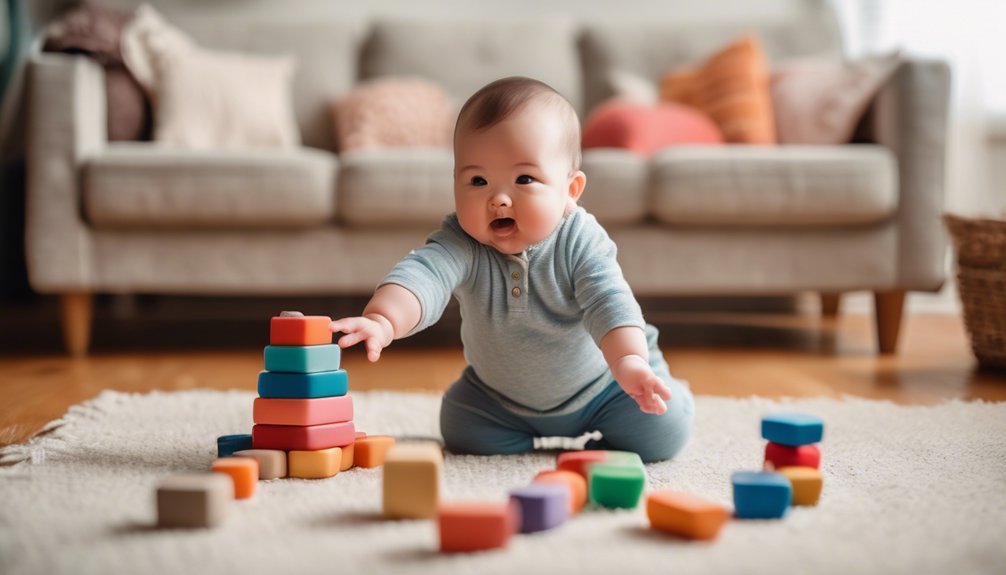
From around nine to twelve months, your baby will likely progress from crawling to standing and taking those exciting first steps. This transformation is crucial for their development and involves essential skills like balance training and proper foot placement.
Here are a few key aspects to consider during this stage:
- Strengthening muscles: Your baby’s legs will grow stronger as they pull themselves up and practice standing.
- Improving coordination: They’ll learn to balance on their feet, gradually increasing their confidence.
- Exploring environments: Standing and walking allow them to engage with the world more actively.
Encouraging this exploration, while providing a safe space, supports their journey toward mobility.
Celebrate each small milestone together, nurturing their confidence and independence.
13 to 15 Months: Walking With Confidence
Once your baby reaches around 12 months, you’ll notice a significant boost in their walking abilities, as they start to navigate their surroundings with newfound confidence.

This period marks an exciting transition to independent walking, where your little one’s legs strengthen, and their balance improves. You may observe them taking longer strides and even attempting to pivot or turn while walking.
Each successful step is a confidence-boosting moment, encouraging them to explore further. It’s important to create a safe environment for these adventures, allowing them to practice without fear.
Celebrate their milestones, as your encouragement reinforces their sense of security. Engaging with them during this time nurtures their growing independence and fosters a strong bond between you.
16 to 18 Months: Exploring the Environment
As your child approaches 18 months, their curiosity about the world around them grows immensely. This period is crucial for environmental exploration, where every new experience enhances their sensory development.
You’ll notice them reaching out to touch, taste, and investigate everything in sight.
Encourage their exploration through:
- Safe outdoor play: Let them experience different textures, sounds, and sights.
- Interactive toys: Choose items that stimulate their senses and promote hands-on learning.
- Everyday experiences: Include them in simple tasks, like cooking or gardening, to foster engagement.
These sensory experiences not only support their motor skills but also nurture a sense of wonder.
Embrace this journey, as it lays the foundation for future growth and discovery.
19 to 24 Months: Running and Climbing

At around 18 to 24 months, your child’s physical abilities begin to flourish as they master running and climbing, showcasing their growing confidence and coordination.
This stage is vital for toddler exploration, as they eagerly navigate their surroundings. You’ll notice them tackling climbing challenges with a boldness that often surprises you. They may climb onto furniture, playground structures, or even the stairs, seeking new heights and experiences.
This adventurous spirit not only enhances their motor skills but also fosters problem-solving abilities as they assess risks and develop strategies to overcome obstacles.
You can support their journey by providing safe environments for exploration and encouraging their natural urge to climb and run, nurturing their physical and emotional growth during this exciting time.
2 to 3 Years: Refining Coordination
By the age of 2 to 3 years, your child’s coordination undergoes significant refinement, marking a crucial phase in their physical development. You’ll notice improvements in hand-eye coordination and gross motor skills as they engage in various activities.
This period is vital for fostering body awareness and confidence through play.
Encourage your child with:
- Balance activities that enhance stability and coordination.
- Movement games that promote social play and sensory exploration.
- Obstacle courses to develop ball skills and fine motor abilities.
These experiences not only refine their coordination but also strengthen their social interactions and emotional growth.
Celebrate their progress; every achievement, big or small, is a step toward a more coordinated future!
3 to 4 Years: Mastering Basic Skills
Once your child reaches the age of 4, they’ll begin mastering basic motor skills that lay the foundation for more complex movements. This is a crucial time for fostering toddler independence, as they start to engage in activities that require balance, coordination, and strength.
During playtime activities, you’ll notice them running, jumping, and climbing with growing confidence. These physical challenges not only enhance their motor skills but also promote social interaction and problem-solving abilities.
Encourage your little one to explore different environments, whether it’s a playground or your backyard, to further develop these skills. Your support and enthusiasm during this phase can empower them to take risks and embrace their budding independence, setting the stage for future growth.
4 to 5 Years: Enhancing Fine Motor Skills
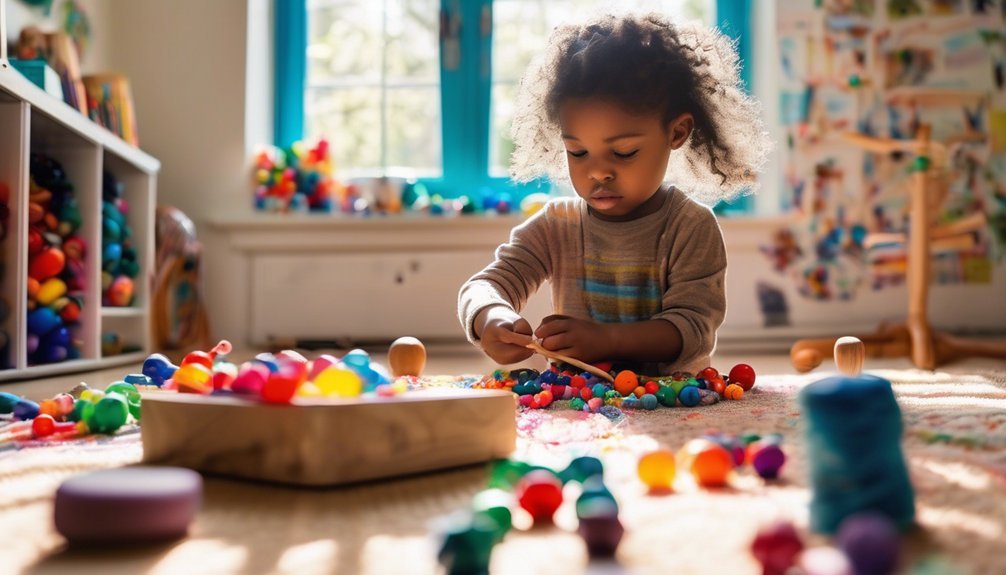
As your child approaches the age of 5, you’ll likely notice significant advancements in their fine motor skills, which are essential for daily tasks and academic readiness.
Engaging in activities that promote these skills can be both fun and beneficial. Here are some effective ways to enhance their fine motor development:
- Finger painting and drawing shapes to improve their crayon grip.
- Puzzle play and building blocks for hand-eye coordination.
- Cutting paper, threading beads, and buttoning clothes to refine dexterity.
Encouraging your child to manipulate toys and stack cups will also foster confidence and independence.
Each of these activities not only enhances fine motor skills but also nurtures creativity and problem-solving abilities, making learning enjoyable and meaningful.
5 to 6 Years: Engaging in Complex Activities
While your child is approaching the age of 6, they’re ready to engage in more complex activities that challenge their growing motor skills.
At this stage, you can encourage creative play that fosters imagination and dexterity. Activities like building intricate structures with blocks or crafting with various materials not only stimulate their creativity but also enhance their fine motor coordination.
Group activities, such as team games or collaborative art projects, are invaluable, promoting social skills and teamwork. These interactions help them navigate shared spaces while refining their coordination and balance.
By actively participating in these enriching experiences, you support their development and create meaningful bonding moments.
6 Years and Beyond: Building Sports and Play Skills
When children enter the years beyond six, they’re not just refining their existing motor skills; they’re also developing a deeper understanding of sports and play. This period is crucial for building teamwork, social interaction, and confidence.
Engaging in team sports and organizing playdates can significantly enhance their physical and emotional growth.
- Teamwork: Kids learn to cooperate and communicate effectively with peers.
- Skill Development: They refine coordination, balance, and overall fitness through various activities.
- Social Skills: Playdates foster friendships and teach conflict resolution.
Encouraging your child to participate in these experiences helps them navigate challenges, forge connections, and enjoy the joys of play.
Embrace this exciting phase of growth and exploration, nurturing their passion for sports and teamwork.
Frequently Asked Questions
How Can I Encourage My Baby’s Motor Skill Development?
To encourage your baby’s motor skill development, engage in tummy time regularly and incorporate sensory play. These activities strengthen muscles and enhance coordination, fostering a joyful exploration of their world while nurturing their growing abilities.
What Should I Do if My Child Is Delayed in Motor Skills?
If you notice delays in your child’s motor skills, don’t panic. Instead, explore intervention strategies and support resources available. Early action can make a significant difference, fostering growth and connection between you and your child.
Are There Toys That Promote Motor Skills for Different Age Groups?
Yes, there are many developmental toys designed for various age groups. Engaging your child with age-appropriate activities can enhance their motor skills, helping them build confidence and enjoy learning through play while fostering deeper connections.
How Do Motor Skills Impact Overall Child Development?
Motor skills significantly influence your child’s cognitive development and emotional regulation. As they master movement, they gain confidence, explore their environment, and build connections, fostering a sense of security and enhancing their overall development journey.
When Should I Consult a Professional About My Child’s Motor Skills?
If you notice early signs of delay or concern in your child’s motor skills, it’s best to seek a professional evaluation. Early intervention can significantly enhance their development and provide you both with invaluable support.
Conclusion
As you witness your child’s progression through these critical motor skills milestones, remember that each step holds the promise of newfound independence and exploration. From those first reflexive movements to confident strides, every achievement is a building block for their future. Yet, as they grow, the challenges will evolve, and you’ll find yourself holding your breath, anticipating the next leap. Embrace this journey, for the path of development is filled with both triumphs and surprises that shape their world.