
Bathing your newborn can be a tender moment, but it requires careful attention to safety and comfort. You’ll want to create a warm, distraction-free space and choose gentle products that protect their sensitive skin. Understanding the best practices for water temperature and bath frequency is crucial. As you prepare for this experience, you’ll discover how to make it not just safe, but also a special bonding time for you and your little one.
Key Takeaways
- Use warm, not hot, water for bathing your newborn to protect their delicate skin.
- Always keep one hand on the baby while bathing to ensure their safety.
- Choose mild, hypoallergenic bathing products designed specifically for newborns to minimize irritation.
- Prepare a warm, draft-free environment with non-slip mats to prevent accidents.
- Observe your baby’s signals, pausing if they show signs of discomfort or distress during bath time.
Understanding Your Newborn’s Bathing Needs

While it might seem overwhelming at first, understanding your newborn’s bathing needs is essential for their comfort and safety.
Newborn skin is delicate, requiring gentle care. You’ll want to use warm water, never hot, to protect that sensitive skin. Bath essentials include a soft washcloth, mild baby soap, and a cozy towel.
Aim for sponge baths until the umbilical cord stump falls off, usually within the first few weeks. Keep bath time short and soothing, making it a bonding experience. Always have everything within reach, ensuring your baby’s safety.
Choosing the Right Bathing Environment
Creating a safe and comfortable bathing environment for your newborn is just as important as the bathing process itself.
To ensure bathroom safety and make the experience enjoyable, consider these key elements:
- Temperature Control: Keep the bathroom warm and draft-free, as newborns can lose heat quickly.
- Non-slip Surfaces: Use non-slip mats in the tub and on the floor to prevent accidents.
- Accessible Bathing Accessories: Organize your bathing accessories within arm’s reach, so you can focus on your baby without scrambling for items.
Selecting Safe Bathing Products
When it comes to selecting safe bathing products for your newborn, three essential factors should guide your choices: ingredient safety, hypoallergenic properties, and pediatrician recommendations.
Look for natural products that are free from harsh chemicals, fragrances, and dyes. Your baby’s delicate skin deserves gentle care, so prioritize hypoallergenic options that minimize the risk of irritation or allergic reactions.
Always check labels and choose items endorsed by pediatricians, as their expertise can help ensure you’re making the best decisions for your little one.
Preparing for Bath Time
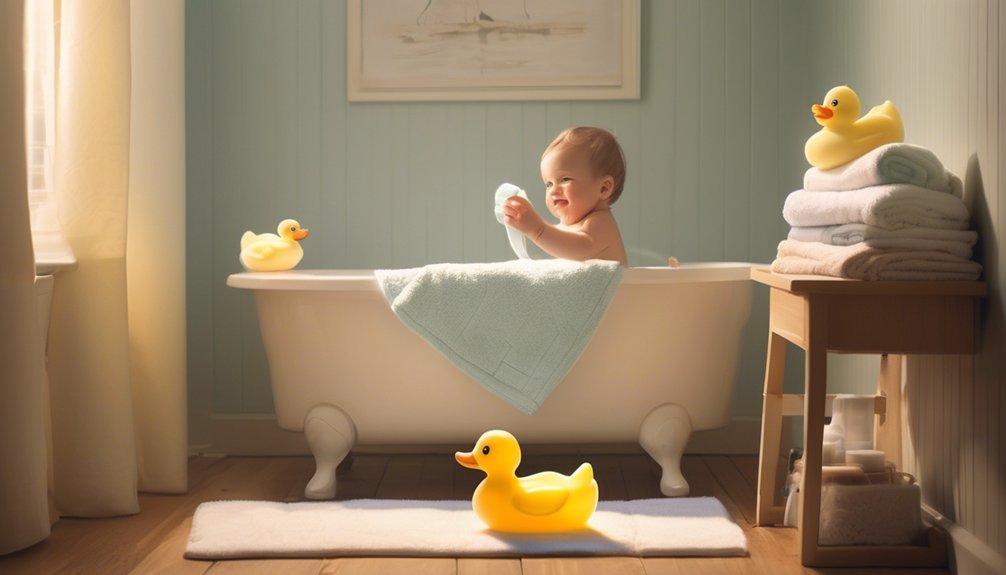
Before you start bathing your newborn, it’s crucial to gather everything you need to ensure a smooth and enjoyable experience.
Preparing ahead not only helps you feel organized but also keeps your little one safe and comfortable.
Here are three bath time essentials you shouldn’t overlook:
- Newborn Bathware: Choose a soft, supportive tub or a sponge for gentle bathing.
- Mild Soap and Shampoo: Opt for products specifically designed for newborns, free of harsh chemicals.
- Warm Towels and Clothes: Have cozy towels and the next outfit ready to wrap your baby up immediately after the bath.
With everything in place, you can focus on bonding with your newborn, making bath time a cherished ritual.

Proper Water Temperature for Newborns
Ensuring the water temperature is just right is essential for keeping your newborn comfortable and safe during bath time. The ideal temperature for your baby’s bath is around 100°F (37.8°C). You can easily check this by using a bath thermometer or your wrist—just dip it in and feel.
The water shouldn’t be too hot or too cold, as both can be uncomfortable or unsafe. Remember, your little one has delicate skin that’s sensitive to temperature changes.
Always prioritize water safety by preparing everything you need within arm’s reach, so you can keep a close eye on your baby while bathing. With the right temperature, you’re creating a soothing experience that they’ll cherish as they grow.
Bathing Positions for Safety and Comfort
How can you make bath time both safe and comfortable for your newborn? The right bathing positions can enhance their experience and ensure their safety.
Consider these three positions:
- Sitting Position: Support your baby in a sitting position using a bath seat or your lap. This allows them to feel secure while enjoying the water, promoting a sense of independence.
- Lying Position: Gently lay your baby back on a soft washcloth or your forearm, keeping their head above water. This position is soothing and helps you wash their body more easily.
- Cradle Position: Hold your baby in a cradled position, with their head resting on your arm. This close contact fosters bonding and reassures your little one during bath time.
Embrace these positions to create a nurturing environment for your newborn.
Techniques for Gently Washing Your Baby
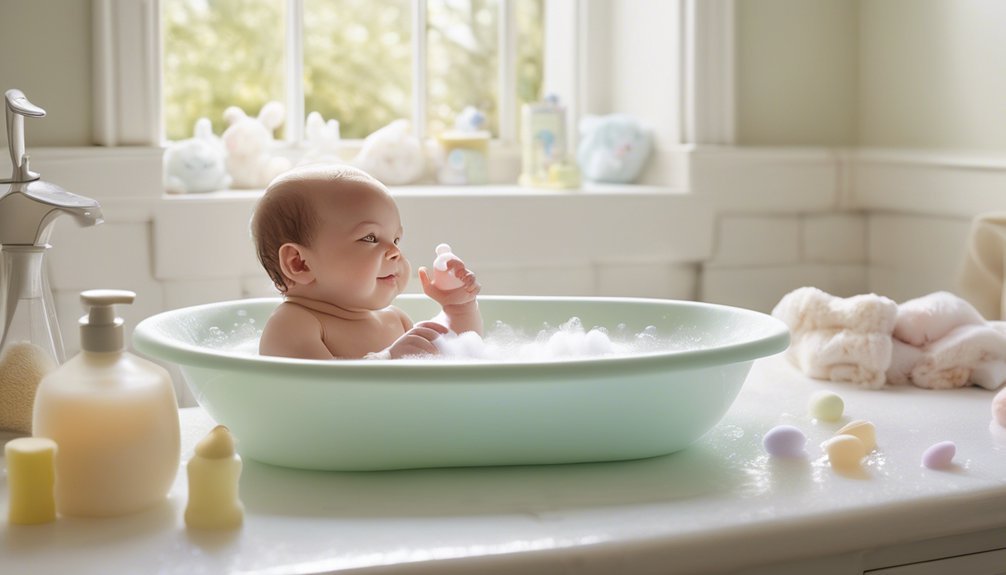
When it comes to gently washing your baby, taking a calm and methodical approach can make a significant difference.
Begin by using warm water and a soft washcloth to create a soothing environment. As you gently scrub, focus on one small area at a time, ensuring you’re thorough without being rough.
Use gentle scrubbing motions, especially in creases and folds where milk or moisture can accumulate. Incorporate soothing techniques like singing softly or talking to your baby, which can help them feel secure during bath time.
Keeping Your Newborn Secure During the Bath
Keeping your newborn secure during bath time is crucial for their safety and your peace of mind. To ensure a smooth experience, follow these safety precautions and keep your bath time essentials close at hand:
- Support their head and neck: Always cradle your baby’s head and neck with one arm while using the other to wash them. This helps prevent any slipping.
- Use a non-slip mat: Place a non-slip mat in the tub to provide a stable surface, reducing the risk of accidental slips.
- Stay within arm’s reach: Always keep one hand on your baby, even if you’re grabbing a washcloth or toy. Your constant presence reassures them and ensures safety.
With these tips, you can create a nurturing and secure environment during bath time.
Drying and Moisturizing After the Bath
As soon as bath time is over, gently wrapping your newborn in a soft towel is essential for keeping them warm and comfortable. Use gentle drying techniques, like patting rather than rubbing, to avoid irritating their delicate skin.
| Drying Technique | Benefits | When to Use |
|---|---|---|
| Pat Dry | Gentle, non-irritating | After bathing |
| Air Dry | Natural, breathable | In a warm environment |
| Towel Wrap | Keeps warmth | Immediately after bath |
Once dry, apply moisturizing products suited for newborns. Look for hypoallergenic options to nourish and protect their skin. This routine not only comforts your little one but also strengthens your bond, making bath time a cherished experience.
Frequency of Bathing for Newborns
After you’ve wrapped your newborn snugly in a towel and applied moisturizer, you might wonder how often you should bathe them. Bath frequency is essential for your baby’s delicate skin, especially since their skin sensitivity requires special care.
Generally, you don’t need to bathe your newborn every day. Here are some guidelines to consider:
- 2-3 times a week: This is often sufficient for newborns, allowing their natural oils to protect their skin.
- After diaper changes: A quick wipe down can help keep them fresh between baths.
- During warm weather: You might want to bathe them more often if it’s hot, but always check for any signs of irritation.
Your loving touch during these moments is what matters most.
Recognizing Signs of Discomfort or Distress
How can you tell if your newborn is uncomfortable or distressed during bath time? Pay close attention to their crying cues—different cries can signal various needs. A high-pitched or continuous cry often indicates distress, while soft whimpers might mean they’re just a bit unsettled.
Additionally, observe their body language. If your little one’s limbs are stiff or they’re arching their back, they might be feeling uneasy. Look for signs of tension in their fists or a furrowed brow, as these can also signal discomfort.
Staying attuned to these signals will help you create a calm bathing environment. Remember, it’s perfectly okay to pause and comfort your baby if you sense any signs of distress. Your instinct is your best guide.
Making Bath Time a Bonding Experience
Creating a soothing atmosphere during bath time can transform it into a delightful bonding experience for you and your newborn.
Focus on these three elements to enhance your moments together:
- Warm Water: Ensure the water is comfortably warm, promoting relaxation and comfort for your baby.
- Gentle Touch: Use soft, calming strokes while washing, fostering trust and security as you explore playful interaction.
- Engaging Sounds: Sing a lullaby or softly talk to your baby; your voice can create a safe and loving environment, enriching those precious bonding moments.
Frequently Asked Questions
Can I Bathe My Newborn Immediately After Birth?
You shouldn’t bathe your newborn immediately after birth. Instead, focus on umbilical cord care and wait until the cord falls off. Bathing frequency should be minimal, ensuring your little one stays clean while staying healthy.
Should I Use Soap Every Time I Bathe My Baby?
You don’t need to use soap every time you bathe your baby. Their delicate skin benefits from less frequent soap use, so focus on bathing frequency and keep it gentle to maintain that precious softness.
How Can I Prevent My Baby From Slipping in the Bath?
How can you keep your little one safe during bath time? Using baby bath mats and infant bath seats provides stability, ensuring your baby stays secure while you share those precious moments together. Enjoy every splash!
What Should I Do if My Baby Cries During Bath Time?
If your baby cries during bath time, try soothing techniques like gentle rocking or soft singing. Create a calming environment with warm lighting and warm water, helping your little one feel secure and relaxed throughout the experience.
Is It Safe to Bathe a Newborn in a Regular Bathtub?
While it’s possible to bathe your newborn in a regular bathtub, you should prioritize bathtub safety. Consider using a baby bath instead, ensuring proper support for their head and maintaining newborn hygiene throughout the process.
Conclusion
In summary, keeping your newborn safe during bath time is crucial for their well-being and your peace of mind. By creating a comfortable environment and using gentle products, you’re not just washing away the day’s dirt; you’re also building a strong bond. Remember, “a stitch in time saves nine”—taking these precautions now will prevent potential issues later. With practice and patience, bath time can become a cherished routine that strengthens your connection with your little one.