When it comes to your baby’s safety, a crib can be both a cozy haven and a potential hazard. You’ll want to prioritize cribs that meet strict safety standards while also considering style and functionality. Understanding the essential features and materials is crucial for making the right choice. What specific aspects should you focus on to ensure your baby’s sleep environment is secure and comfortable?
Key Takeaways
- Ensure crib slats are no more than 2.375 inches apart to prevent entrapment and suffocation hazards.
- Choose cribs with adjustable mattress heights to accommodate your baby’s growth safely.
- Select non-toxic materials and finishes, avoiding harmful chemicals to ensure a safe sleeping environment.
- Look for recognized safety certifications to guarantee compliance with current safety standards and regulations.
- Regularly inspect the crib for wear and tear, ensuring all hardware is secure and stable.
Understanding Crib Safety Standards
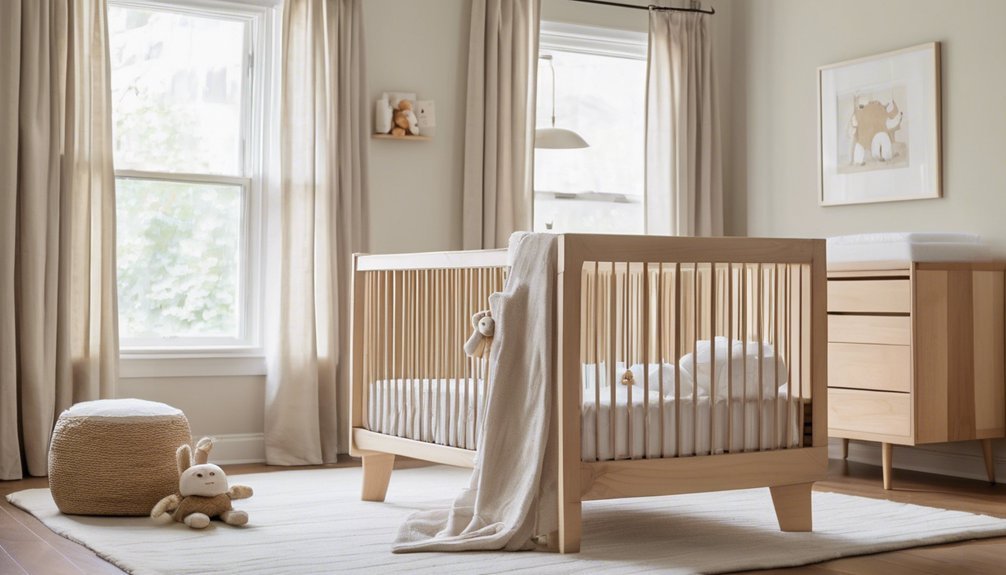
When you’re choosing a crib for your baby, it’s essential to understand the safety standards that govern these products. Crib safety isn’t just a guideline; it’s a necessity.
Familiarize yourself with the regulatory guidelines set by organizations like the Consumer Product Safety Commission (CPSC). These guidelines ensure cribs meet strict requirements regarding design and materials, minimizing risks like entrapment and suffocation.
Look for cribs that have been tested for sturdiness and stability, with slats no more than 2 3/8 inches apart. Avoid older models, as they may not comply with current safety standards.
Choosing the Right Crib Size
Choosing the right crib size is crucial not only for your baby’s comfort but also for ensuring safety and functionality in your nursery.
When selecting a crib, pay close attention to crib dimensions. Standard cribs typically measure 28 inches wide and 52 inches long, but always confirm these measurements.
As your baby grows, you’ll want a crib that accommodates their changing needs and provides ample space for movement. Consider adjustable mattress heights; this feature allows you to lower the mattress as your infant grows, ensuring safety and ease of access.
A well-sized crib not only supports your baby’s comfort but also enhances the overall design of your nursery, creating a cozy haven for your little one.
Material Matters: Wood vs. Metal
While both wood and metal cribs have their advantages, the material you choose can significantly impact safety, durability, and aesthetics.
Wood cribs often boast exceptional wood durability, providing a sturdy frame that can withstand years of use. They also offer a warm, inviting look that complements any nursery decor.
On the other hand, metal cribs are known for their sleek and modern design. They tend to be lighter, making them easier to move, and often feature a minimalist aesthetic that appeals to contemporary tastes.
Ultimately, your decision should reflect your values and lifestyle. Consider how each material aligns with your vision for your child’s space while ensuring that safety remains your top priority.
Non-Toxic Finishes and Paints
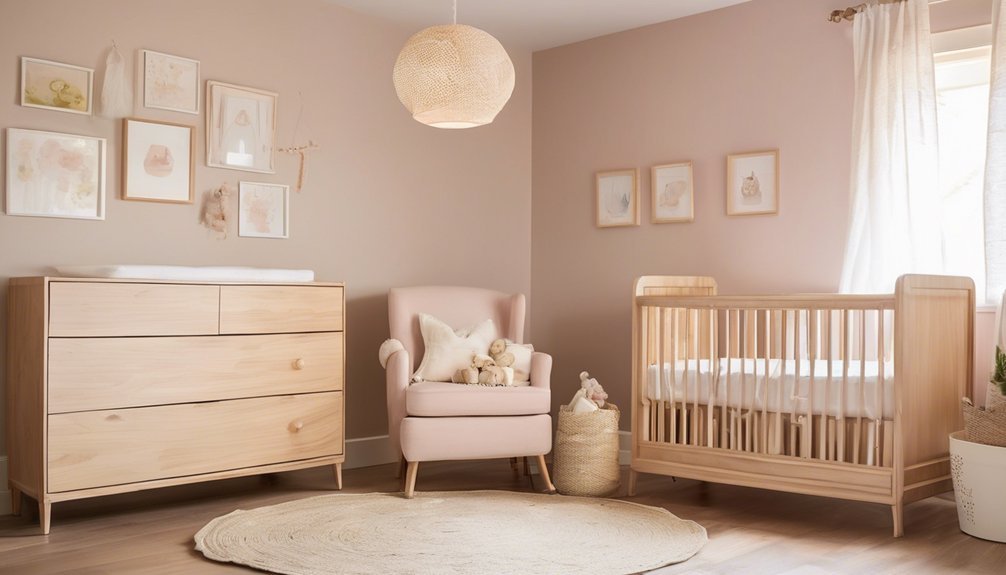
Ensuring your baby’s crib is free from harmful chemicals is crucial, especially since infants spend so much time sleeping and playing in their cribs.
When choosing a crib, look for non-toxic finishes and paints that prioritize your child’s health. Many manufacturers now offer eco-friendly options, which are free from harmful substances like volatile organic compounds (VOCs).
These finishes not only promote chemical safety but also contribute to a healthier indoor environment. Always check for certifications that guarantee the absence of toxic materials.

Sturdy Construction and Stability
A crib’s sturdiness is vital for your baby’s safety and comfort. When choosing a crib, look for models that have passed rigorous durability tests, ensuring they can withstand daily use without compromising stability.
Check for stability features like solid construction materials, reinforced corners, and a sturdy mattress support system. These elements contribute to a secure environment where your little one can sleep soundly.
A well-built crib doesn’t just protect your child; it also gives you peace of mind as a parent. Don’t hesitate to physically test the crib’s stability by shaking it gently; it should feel solid without any wobbling.
Ultimately, investing in a sturdy crib is one of the most important choices you can make for your baby’s well-being.
Adjustable Mattress Heights
Choosing a crib with adjustable mattress heights offers significant advantages as your baby grows. This feature allows you to easily modify the height based on your child’s development, ensuring safety and convenience.
As your little one becomes more mobile, you can lower the mattress to prevent falls.
Here are some key benefits of adjustable mattress heights:
- Safety: Lowering the mattress as your baby learns to stand minimizes the risk of falls.
- Ease of Access: A higher setting makes it easier for you to lift your infant.
- Accommodates Mattress Thickness: Different thicknesses can be easily adjusted for comfort.
- Longevity: Adapting to your child’s growth extends the crib’s usability.
- Convenience: Quick adjustments save you time and effort during busy days.
Crib Slat Spacing Regulations
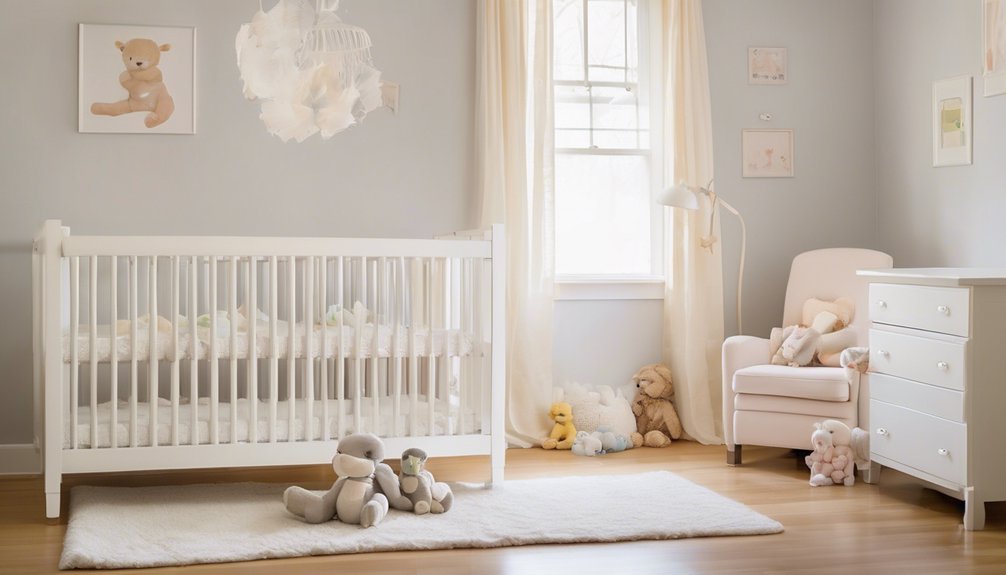
When selecting a crib, understanding crib slat spacing regulations is crucial for your baby’s safety. The Consumer Product Safety Commission (CPSC) mandates that slats must be no more than 2 3/8 inches apart.
This spacing guideline prevents your little one from getting stuck or falling out, ensuring peace of mind as you nurture your child. Always check for compliance with these crib slat regulations before making a purchase.
Look for labels or certification that confirm adherence to these safety standards. Additionally, avoid older models, as they may not meet current requirements.
Avoiding Drop-Side Cribs
While many parents appreciate the convenience of drop-side cribs, it’s crucial to avoid them due to safety concerns.
The drop side dangers pose a significant risk, as these cribs have been linked to serious injuries and even fatalities.
Instead, consider these safe alternatives:
- Fixed-side cribs for better stability
- Cribs with adjustable mattress heights for ease of use
- Non-toxic materials and finishes for peace of mind
- Cribs that meet current safety standards and regulations
- Portable cribs for travel without compromising safety
Safety Features to Look For
After steering clear of drop-side cribs, it’s important to focus on the safety features that can enhance your baby’s sleeping environment.
Look for cribs with safety certifications from recognized organizations, ensuring they’ve passed rigorous testing standards. Sturdy construction is key; make sure the crib doesn’t wobble and has no sharp edges or splinters.
You should also check for adjustable mattress heights, allowing you to lower the crib as your baby grows. Regularly monitor for any crib recalls, keeping your little one safe from potential hazards.
Opt for non-toxic finishes, as your baby will spend countless hours in their crib. Prioritizing these features will give you peace of mind, while creating a secure space for your precious child.
Ensuring Proper Mattress Fit
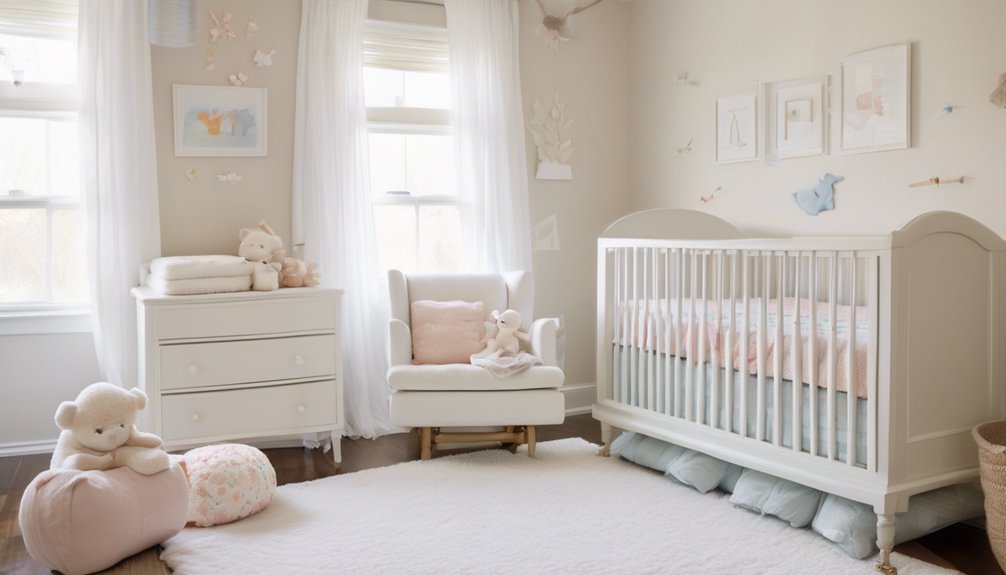
Ensuring a proper mattress fit is crucial for your baby’s safety and comfort, as a poorly fitting mattress can create gaps where infants could become trapped.
To get the right fit, consider the following:
- Measure the crib: Ensure your crib’s dimensions align with standard mattress sizes.
- Choose the right thickness: A mattress that’s too thick or thin may not fit snugly.
- Test mattress firmness: Firmness is vital for safe sleeping; a firm mattress reduces the risk of suffocation.
- Check for gaps: Insert a two-finger test; no more than two fingers should fit between the mattress and crib sides.
- Regularly assess fit: As your baby grows, monitor the mattress to maintain safety and comfort.
Prioritizing these factors keeps your little one safe and sound.
The Importance of Regular Inspections
Regular inspections of your crib are vital to maintaining a safe sleeping environment for your baby. By conducting these checks regularly, you can ensure that all components are secure and in good condition.
Look for any signs of wear or damage, such as loose slats or sharp edges. Regular maintenance helps prevent accidents and creates peace of mind for you as a parent.
Scheduling safety audits every few months can provide an extra layer of assurance. During these audits, examine the crib’s hardware and structure closely, and don’t hesitate to address any issues immediately.
Stylish Yet Safe: Design Considerations
While creating a nursery that reflects your personal style, you must prioritize safety in crib design. A safe crib can still embody trendy patterns and color schemes that enliven the space.
Here are some design considerations to keep in mind:
- Choose non-toxic finishes and materials.
- Ensure the crib’s slats are no more than 2.375 inches apart.
- Opt for rounded edges to prevent injuries.
- Select fabrics that are easy to clean and machine washable.
- Incorporate a breathable mattress that fits snugly.
Frequently Asked Questions
How Often Should I Replace My Crib Mattress?
You should replace your crib mattress every 5-7 years or sooner if you notice wear, tears, or odors. Mattress longevity is crucial for your baby’s comfort, so watch for these replacement indicators closely.
Can I Use a Second-Hand Crib Safely?
You can use a second-hand crib safely, but you must perform a thorough crib inspection. Check for recalls, structural integrity, and safety standards to ensure your baby’s safety in their sleep environment.
What Age Is Appropriate to Transition From a Crib?
Did you know 80% of toddlers transition from cribs between 18 months and 3 years? Look for crib transition signs like climbing out. A safe toddler bed can ensure your little one’s comfort and security during this change.
Are There Any Recalls on Cribs I Should Know About?
You should regularly check crib recall updates to ensure your baby’s safety. Staying informed about crib safety standards helps you avoid potential hazards. Always prioritize your child’s well-being by keeping abreast of any crucial recalls.
How Can I Ensure Crib Safety During Travel?
When you travel, prioritize portable crib safety by checking for sturdy construction and secure locking mechanisms. Look for features like breathable materials and easy setup to ensure your little one’s comfort and safety on the go.
Conclusion
In the world of cribs, safety should always be your top priority. By keeping an eye on safety standards, choosing the right size and materials, and ensuring a snug mattress fit, you can create a secure haven for your little one. Don’t forget to inspect the crib regularly; a stitch in time saves nine. With thoughtful choices, you can blend safety with style, giving your baby a comfortable space to rest and grow.