
Swaddling can be a useful technique for calming newborns and promoting better sleep. When done correctly, it mimics the secure environment of the womb, which many babies find comforting. However, it’s important to recognize that swaddling isn’t suitable for every infant. Understanding the benefits and drawbacks is essential for ensuring your baby’s comfort and safety. Let’s explore how to swaddle effectively, while being mindful of potential pitfalls and alternatives.
Key Takeaways
- Swaddling mimics the womb’s environment, providing comfort and security, which can enhance a baby’s sleep and emotional regulation.
- Benefits include reduced startle reflex, improved sleep quality, and decreased fussiness, while drawbacks may involve discomfort and potential hip development concerns.
- Use breathable fabrics and ensure the swaddle is snug but not restrictive, allowing for hip movement to prevent developmental issues.
- Monitor baby cues, such as fussiness or attempts to escape the swaddle, to determine their comfort level and preferences.
- Pediatric experts recommend stopping swaddling by 2-3 months and avoiding it during tummy time to ensure safety and proper development.
What Is Swaddling?

Swaddling is a comforting practice that involves wrapping a newborn snugly in a blanket to create a secure environment reminiscent of the womb. This age-old technique can significantly improve baby sleep, helping infants feel safe and calm.
You can use various swaddling techniques, such as the traditional square fold or the more modern sleep sack, to suit your baby’s needs. When done correctly, swaddling can minimize the startle reflex, which often disrupts peaceful slumber.
Remember to keep the swaddle snug around the arms but loose around the hips to support healthy development. As you embrace this practice, you’ll likely find a deeper connection with your baby, fostering a sense of intimacy and security during those crucial early months.
The Science Behind Swaddling
While many parents instinctively swaddle their newborns, the science behind this practice reveals its physiological and psychological benefits.
Swaddling mimics the confined space of the womb, providing a sense of security that can soothe your baby. Neuroscience implications suggest that this comforting embrace may positively influence brain development, promoting the achievement of critical developmental milestones.
By reducing startle reflexes and minimizing sensory overload, swaddling helps create an environment conducive to sleep, which is essential for your baby’s growth.
Additionally, the gentle pressure of swaddling can activate calming responses in your infant’s nervous system, fostering emotional regulation and attachment.
Understanding these underlying mechanisms can empower you to make informed choices about swaddling, enhancing your baby’s well-being during those early, formative days.
Benefits of Swaddling
Understanding the physiological and psychological benefits of swaddling can help you make informed decisions for your newborn. Swaddling provides several advantages that promote better infant sleep and comfort.
| Swaddling Advantages | Description | Impact on Infant Sleep |
|---|---|---|
| Reduces Startle Reflex | Limits sudden movements | Promotes uninterrupted sleep |
| Provides Security | Mimics the womb environment | Enhances relaxation |
| Temperature Regulation | Keeps baby warm but not overheating | Supports longer sleep cycles |
| Decreases Excessive Crying | Creates a calming effect | Reduces nighttime awakenings |
| Encourages Self-Soothing | Helps baby learn to settle independently | Fosters better sleep habits |
Drawbacks of Swaddling

Though swaddling can offer various benefits, it’s essential to consider its potential drawbacks. Some babies may experience swaddling discomfort, leading to fussiness and disrupted sleep. You might notice that your little one isn’t settling as easily as expected, which could be a sign that they prefer more freedom in their movement.
Additionally, there are developmental concerns associated with prolonged swaddling, particularly regarding hip development. It’s crucial to ensure that your baby’s legs can move freely to avoid issues like hip dysplasia.
Always listen to your baby’s cues and be prepared to adjust your approach. By being aware of these drawbacks, you can make informed choices that best support your child’s comfort and development.
When to Start Swaddling
After considering the drawbacks of swaddling, it’s important to know when to start this practice to maximize its benefits. The appropriate age to begin swaddling is typically within the first few days after birth. This early initiation helps your baby feel secure and comfortable, mimicking the snug environment of the womb.

Look for signs of swaddle readiness, such as your baby’s startle reflex and their need for soothing. If your little one seems restless or has trouble settling, swaddling can provide the gentle reassurance they crave.
Always ensure you’re swaddling safely—keep their hips loose and check for any signs of discomfort. Each baby is unique, so trust your instincts as you navigate this bonding experience.
When to Stop Swaddling
As your baby grows and develops, you’ll need to pay attention to signs that it’s time to stop swaddling. Typically, this transition occurs around 2 to 4 months, but every baby is unique.
Watch for signs of rolling over or increased mobility—these indicate they’re ready to break free.
To ease the swaddling transition, consider gradual methods like swaddling only during naps or using one arm out.
These swaddling transition tips can help maintain your baby’s comfort while adjusting to new sleep patterns. Monitor your baby’s sleep closely; disruptions may indicate they’re feeling confined.
Always prioritize safety and comfort as you navigate this important milestone. Trust your instincts and your baby’s cues as you make this change together.
Safe Swaddling Techniques
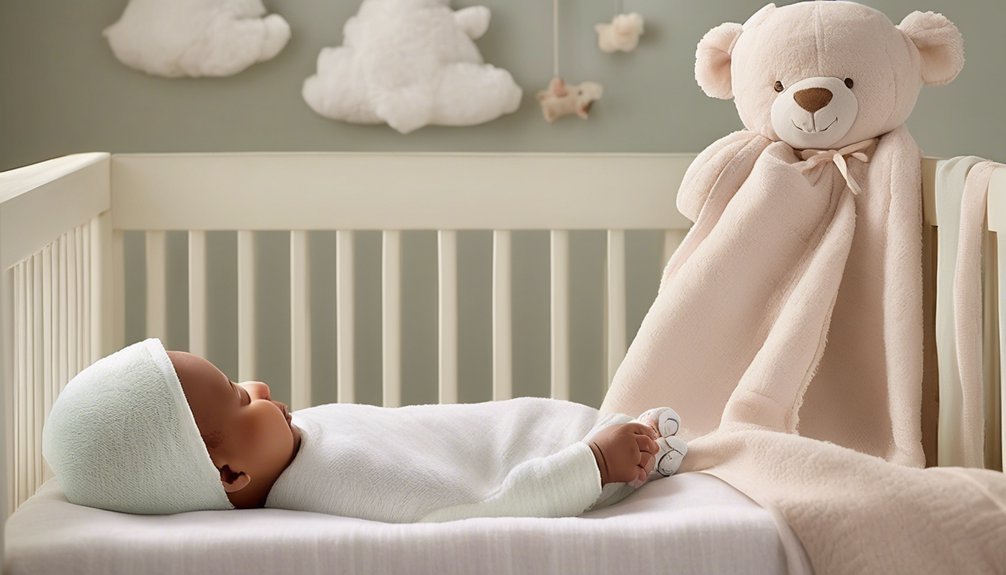
To ensure your baby is swaddled safely, it’s crucial to follow specific techniques that promote comfort while reducing risks.
Start by choosing safe fabric choices, such as breathable cotton or muslin, which help regulate your baby’s temperature. It’s essential to avoid materials that can trap heat, as overheating poses a danger.
When swaddling, aim for moderate swaddle tightness; you want your baby snug but not restricted. Ensure there’s enough room for your baby’s hips to move freely, preventing hip dysplasia.
Always check that your baby can move their legs and that their chest remains comfortably wrapped without pressure.
How to Swaddle Your Baby
Swaddling your baby can be a soothing practice that helps them feel secure and calm.
To start, lay your baby on a flat surface, placing them on their back. Take a lightweight, breathable blanket and fold down one corner. Gently place your baby’s arm down along their side, then wrap the corner of the blanket across their body, tucking it under their opposite side.
Next, bring the bottom of the blanket up, ensuring it’s snug but not too tight to allow for baby comfort. Finally, wrap the remaining corner over your baby’s other arm, securing them gently.
Common Swaddling Mistakes
While swaddling can be a comforting practice, many parents make common mistakes that can compromise their baby’s safety and comfort. It’s essential to understand these common misconceptions and swaddling myths to ensure your little one benefits from this technique.
| Mistake | Description | Consequence |
|---|---|---|
| Swaddling too tight | Restricting movement around the hips | Increased risk of hip dysplasia |
| Covering the head | Wrapping the blanket around the head | Risk of overheating |
| Using unsuitable fabrics | Choosing non-breathable materials | Discomfort and potential suffocation |
Alternatives to Swaddling
If you’re considering alternatives to swaddling, various techniques can provide your baby with comfort and security without the potential risks associated with traditional swaddling.
One popular option is a sleep sack, which allows your little one to move their arms freely while still feeling snug. These come in various fabrics and weights, ensuring your baby stays cozy at any temperature.
Additionally, babywearing options, like wraps or soft structured carriers, offer closeness while allowing your baby to feel secure against you. These methods promote bonding, ease fussiness, and help with sleep.
Signs Your Baby Might Not Like Swaddling
How can you tell if your baby isn’t a fan of swaddling? Recognizing baby cues is crucial to understanding their swaddle preferences.
Here are some signs that might indicate your little one prefers to be unswaddled:
- Excessive fussiness or crying during swaddling
- Attempts to break free from the swaddle
- Flailing arms and legs while wrapped
- Difficulty settling down despite being swaddled
- Waking frequently or appearing uncomfortable
If you notice these behaviors, it may be time to explore other soothing methods.
Every baby is unique, and their comfort is paramount. Trust your instincts and pay attention to what your baby communicates, as they’ll guide you in finding the right approach to help them feel secure and at ease.
Expert Opinions on Swaddling
Understanding your baby’s preferences is just the beginning when it comes to swaddling. Expert insights suggest that while swaddling can provide comfort, it’s essential to follow pediatric recommendations for safety. Many pediatricians emphasize the importance of not swaddling too tightly, especially around the hips, to prevent developmental issues.
Here’s a quick overview of expert opinions:
| Expert Insights | Pediatric Recommendations |
|---|---|
| Provides a sense of security | Use breathable fabrics |
| Can reduce startle reflex | Stop swaddling by 2-3 months |
| Promotes better sleep | Ensure proper hip positioning |
| May soothe fussy babies | Monitor for overheating |
| Supports newborn bonding | Avoid swaddling during tummy time |
Ultimately, listening to your baby’s cues will guide you in making the best swaddling choices.
Frequently Asked Questions
Can Swaddling Help With Colicky Babies?
Swaddling can provide colic relief by mimicking the womb’s environment, which often enhances baby comfort. You’ll find that the gentle pressure helps soothe your little one, potentially reducing their fussiness and promoting better sleep.
How Can I Tell if My Baby Is Too Warm While Swaddled?
Like a delicate flower wilting in the sun, you’ll notice swaddle signs of your baby overheating. Check their baby temperature; if they’re sweaty, flushed, or restless, it’s time to adjust or remove the swaddle.
Are There Specific Fabrics Recommended for Swaddling Blankets?
When choosing swaddling blankets, opt for breathable fabrics like cotton blends and muslin wraps. These materials help regulate your baby’s temperature while providing comfort, ensuring your little one feels secure and cozy during sleep.
Can I Swaddle a Baby With Hip Dysplasia?
Swaddling a baby with hip dysplasia requires caution. You should use gentle swaddling techniques that allow for proper hip positioning, addressing hip dysplasia concerns while providing comfort and security. Always consult your pediatrician for personalized guidance.
Is It Safe to Swaddle My Baby During Naps?
When considering naptime safety, swaddling can be soothing, but limit its duration. Monitor your baby closely, ensuring they’re comfortable and safe—always prioritize their well-being during those precious, peaceful moments of rest.
Conclusion
In conclusion, swaddling can be a beneficial practice for many newborns, promoting longer sleep and reducing fussiness. However, it’s essential to remain mindful of your baby’s comfort and development. Studies show that 80% of parents who swaddle report improved sleep for their infants. As you navigate this comforting technique, always listen to your baby’s cues and make adjustments as needed, ensuring their safety and contentment in this early stage of life.