
Toddlers need regular fluids to stay healthy, yet intake often drops during busy play or picky phases. Water should remain the main drink, with milk and simple smoothies added in small amounts. Parents can also watch for dry mouth, fewer wet diapers, and low energy. The most useful hydration strategies are often simple, but some warning signs deserve closer attention.
Key Takeaways
- Toddlers need about 4 cups of fluids daily, with water making up most of their intake.
- Offer water often, plus milk with meals, especially after waking, during play, and on busy outings.
- Choose water, plain milk, or lightly flavored fruit-infused water; avoid soda, energy drinks, and sweetened drinks.
- Give small, repeated drink chances using preferred cups or straws to make drinking easier.
- Watch for dehydration signs like dry mouth, fewer wet diapers, dark urine, irritability, or unusual quietness.
How Much Water Toddlers Need
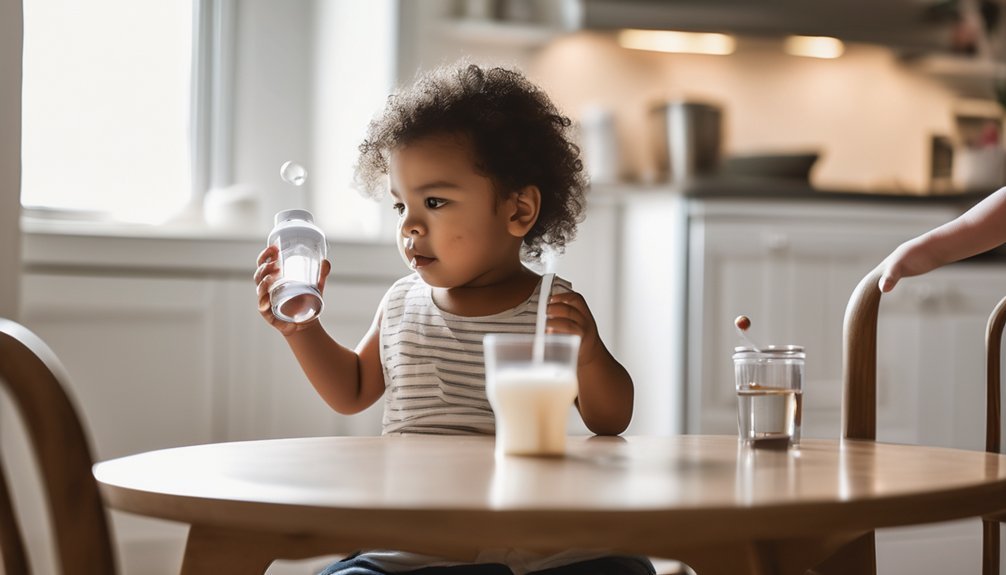
Toddlers generally need about 4 cups of fluids per day for 1- to 3-year-olds, with water making up much of that intake; individual needs can vary based on body size, activity level, climate, and diet.
In practice, this means a child may need a little more during active play, when toddler activity increases fluid loss through breathing and sweat.
Weather considerations also matter: hot, dry, or humid days can raise needs, while cooler conditions may lessen them.
Caregivers can offer water regularly with meals and between activities, then watch for signs of adequate intake, such as moist lips, normal energy, and regular urination.
Gentle, consistent access helps a young child stay comfortably hydrated without pressure or worry.
Best Drinks for Toddlers
Water should be the primary drink for toddlers, since it hydrates without added sugar, calories, or caffeine.
Plain milk is also appropriate, especially with meals, because it supplies protein, fat, and key micronutrients.
For families seeking variety, small servings of healthy smoothies can be acceptable when made mostly from whole fruit, vegetables, and yogurt, without juice or sweeteners.
Flavored water may be offered if it is lightly infused with fruit and contains no added sugar or artificial sweeteners, though plain water remains preferable.
Pediatric guidance generally discourages soda, energy drinks, and sweetened beverages, as these can displace nourishing options and increase dental risk.
A calm, consistent drink routine helps toddlers accept healthy choices and supports steady hydration throughout the day.
Hydration Tips for Busy Toddler Days
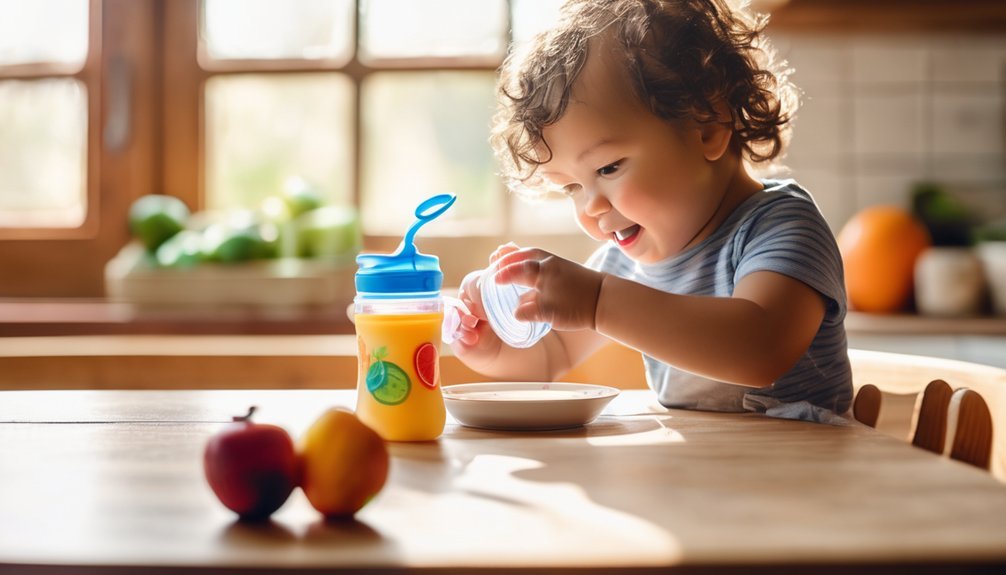
On busy days, consistent access to fluids matters more than perfect timing, since toddlers may drink less when routines are disrupted. Caregivers can keep a small cup or bottle within reach during outings, playdates, and errands, offering sips at regular pauses.
Water is usually the best option between meals, while milk can fit with meals and snack time. During active playtime, brief drink breaks help maintain comfort without turning hydration into a struggle.
Routines also help: offering fluids on waking, with meals, after diaper changes, and before leaving home creates gentle repetition. Spilled drinks or refused sips are common and not usually concerning; the goal is steady opportunity, not pressure.
Simple, calm reminders often support better intake throughout demanding days.
Signs Your Toddler Is Dehydrated
Early clues of dehydration in a toddler often include a dry mouth, fewer wet diapers or trips to the bathroom, darker urine, and lower energy than usual.
These dehydration symptoms may also appear as sunken eyes, no tears when crying, or a cool, mottled look to the skin. A parent may notice a child seeming unusually quiet, irritable, or less interested in play.
- Lips may look cracked or sticky.
- Urine may have a stronger odor.
- Alertness may seem reduced.
Evidence suggests that these signs warrant attention, especially if they follow heat, vomiting, or diarrhea.
Hydration myths can delay action, since thirst alone is not always a reliable signal. When symptoms cluster, prompt medical guidance is reasonable, particularly if the toddler seems weak or difficult to rouse.
Hydration Tips for Picky Toddlers
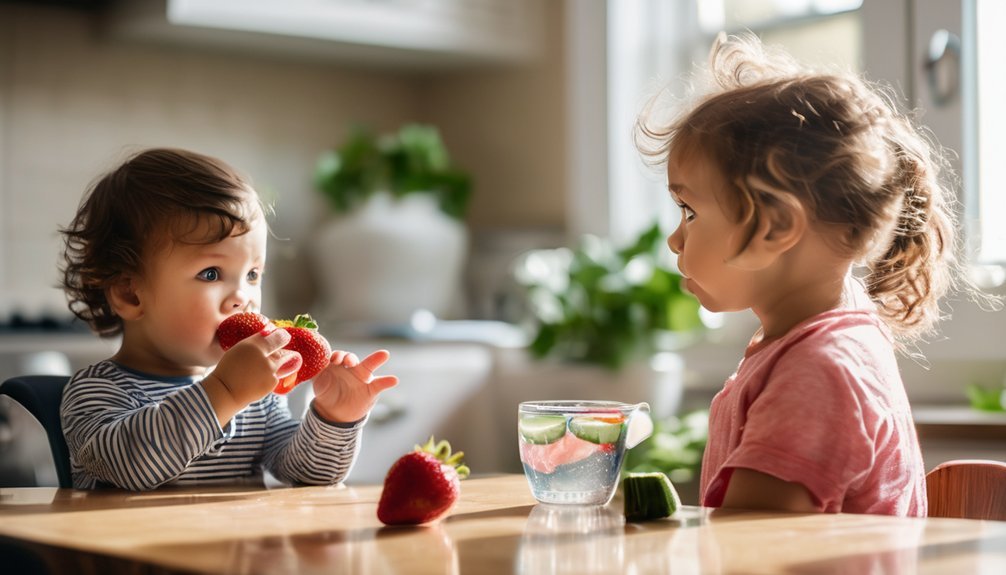
For toddlers who resist drinking, hydration often improves when fluids are offered in small, repeated chances throughout the day rather than in large, pressured servings.
Caregivers can respect toddler preferences by using cups in preferred colors, straws, or familiar routines that make drinking feel safe and predictable.
Cool water may be accepted more readily when served in tiny amounts, and mild fun flavors, such as a hint of fruit, can support interest without adding excess sugar.
Calm modeling helps; toddlers often copy nearby adults and siblings. Gentle praise for each sip can reinforce cooperation without turning drinking into a struggle.
When refusal persists, monitoring urine, energy, and mouth moisture remains important, since these signs help guide whether extra support is needed.
Add More Fluids to Meals
Adding fluids to meals can help toddlers meet hydration needs without extra pressure between eating times. Small, regular servings of water, milk, or broth at breakfast, lunch, and dinner support intake in a calm, routine-based way.
Practical meal enhancements include foods with high water content and gentle creative pairings that make drinking feel natural, not forced.
- Offer water in an easy-grip cup beside each plate.
- Pair fruits, soups, yogurt, or oatmeal with sips of fluid.
- Include smoothies or diluted soups when appropriate for the menu.
This approach works best when adults stay consistent and relaxed. Toddlers often respond well to familiar placement and predictable cues.
Over time, these quiet habits can support hydration while keeping meals intimate, steady, and unpressured.
When to Call the Pediatrician
A pediatrician should be contacted if a toddler shows signs of dehydration, such as a dry mouth, no tears when crying, unusually dark urine, fewer wet diapers than expected, lethargy, or persistent refusal to drink.
These dehydration symptoms may worsen quickly, especially during vomiting, diarrhea, fever, or hot weather. Pediatric guidance is especially important if the child cannot keep fluids down, seems confused, has sunken eyes, or has not urinated for several hours.
A same-day call is prudent when concerns persist, even if symptoms appear mild. Caregivers are encouraged to trust careful observation and seek advice early, because timely evaluation can prevent complications.
Reassurance matters: most toddlers recover well with prompt support, appropriate fluids, and close monitoring under a clinician’s direction.
Frequently Asked Questions
Can Toddlers Drink Water Before Bedtime?
Yes, toddlers can drink water before bedtime. Small sips may support bedtime routines and comfort. Common hydration myths aside, a brief amount is usually safe, though larger volumes may increase night waking and bathroom trips.
Should Toddlers Carry Their Own Water Bottles?
Toddlers may carry their own water bottles when adults ensure water bottle safety. This can support toddler independence, though supervision remains important. A clinician would note that lightweight, spill-resistant bottles reduce injury and contamination risks.
How Can I Make Water More Appealing to Toddlers?
Water may become irresistibly exciting with tiny additions of fun flavors—like fruit slices—and colorful cups that sparkle like treasure. Evidence suggests repeated exposure helps; a calm, affectionate approach usually encourages toddlers to sip more willingly.
Are Ice Pops a Good Way to Hydrate Toddlers?
Ice pops can help with hydration, but they should not replace water or milk. Choosing low-sugar ice pop flavors supports intake. They work best as occasional hydration alternatives, especially during illness or heat.
Do Toddlers Need More Fluids During Hot Weather?
Yes, toddlers typically need extra fluids in hot weather; children can lose more water through sweat than adults. Caregivers should watch hydration signs and offer frequent fluid sources, such as water, milk, and watery fruits.
Conclusion
In conclusion, toddler hydration is best supported by steady access to water, with about 4 cups of fluids daily serving as a helpful target. Milk and smoothies can add variety, but water should remain the primary drink. One useful visual is the “4-cup” goal: over a typical day, that is about one cup per meal and snack period. With attention to urine output, behavior, and thirst cues, parents can promote safe, consistent hydration.