Did you know that many common laundry detergents contain harsh chemicals that can irritate your baby’s sensitive skin? Choosing the right detergent is just the first step in ensuring your little one’s clothes are safe and comfortable. There are several important considerations, from pre-washing new garments to sorting laundry by fabric type. Understanding these details can make a significant difference in your baby’s comfort and health. Let’s explore the best practices together.
Key Takeaways
- Select a hypoallergenic, fragrance-free detergent that is gentle on sensitive skin to protect your baby’s comfort.
- Pre-wash baby clothes using a gentle detergent to remove manufacturing residues and prevent skin irritation.
- Wash baby clothes in hot water to eliminate allergens, and cold water for delicate fabrics to maintain integrity.
- Sort laundry by fabric type and color to prevent damage and ensure appropriate care for each item.
- Avoid bleach and harsh chemicals; use natural stain removers like vinegar or baking soda for gentle cleaning.
Choosing the Right Detergent
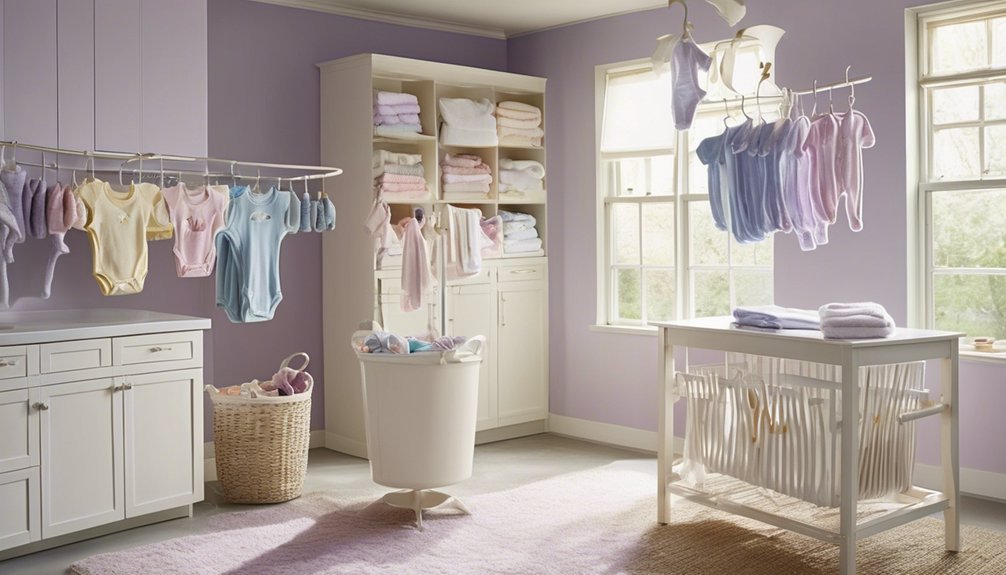
When it comes to choosing the right detergent for your baby’s clothes, many parents find themselves overwhelmed by the options available.
It’s essential to select a detergent that’s gentle on sensitive skin, as your little one’s delicate complexion can react negatively to harsh chemicals. Look for a fragrance-free option, ensuring no strong scents irritate their skin or overwhelm their senses.
You want a product that effectively cleans without unnecessary additives. Reading labels is crucial; prioritize those labeled hypoallergenic and dermatologist-tested.
As you navigate your choices, remember that a safe and soothing detergent contributes to your baby’s comfort, allowing them to snuggle in clean, soft clothes without worry.
It’s one small yet significant step towards nurturing your precious little one.
Pre-Washing Baby Clothes
Preparing your baby’s clothes for their first wear is a crucial step that shouldn’t be overlooked. Pre-washing helps remove any residues from manufacturing, ensuring your little one’s delicate skin stays safe. With baby skin being particularly sensitive, it’s essential to choose gentle methods.
Here’s a simple guide to pre-washing:
| Step | Action | Purpose |
|---|---|---|
| Check Labels | Look for care instructions | Ensures safe washing |
| Use Gentle Detergent | Choose a baby-friendly detergent | Protects fabric sensitivity |
| Rinse Thoroughly | Remove all detergent residues | Prevents irritation |
Sorting Baby Laundry
After pre-washing those tiny outfits, the next important step is sorting your baby laundry. By creating distinct baby laundry categories, you’ll make the washing process smoother and more effective.
Start with sorting by fabric type—grouping cottons, synthetics, and delicate items. This way, each fabric receives the care it needs.
Next, consider sorting by color; keep whites separate from brights and darks to prevent any unwanted dye transfer. If you’re using specific sorting methods, like separating heavily soiled items from cleaner ones, you’ll ensure everything gets the appropriate wash.
Washing Temperature Guidelines
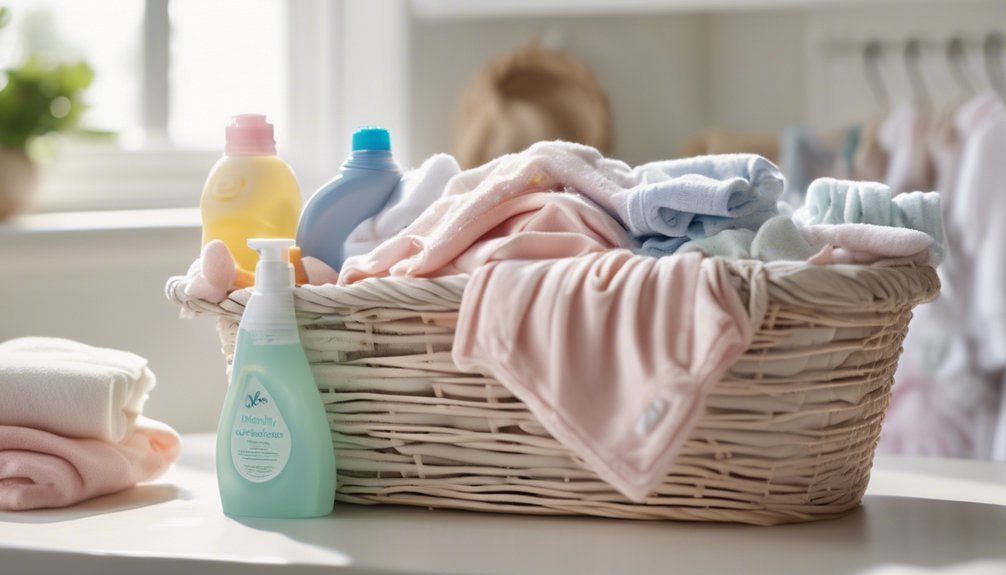
While it might seem tempting to throw all your baby clothes into the wash on the same setting, paying attention to washing temperature guidelines is crucial for maintaining the integrity of those delicate fabrics.
Generally, you’ll want to wash cottons and durable fabrics in warm water, which helps remove stains effectively. For more delicate items, like those made from silk or lace, stick to cold water to prevent damage.
Mixing fabric types can complicate things, so try to sort them by their washing cycles. Remember, using the right temperature not only preserves the clothes but also keeps your baby’s sensitive skin safe from irritants.

A little care now goes a long way in ensuring your little one stays comfy and cozy in their outfits.
Hand Washing vs. Machine Washing
When it comes to washing baby clothes, you might find yourself wondering whether hand washing or machine washing is the better option.
Hand washing benefits include a gentle touch that helps protect delicate fabrics, ensuring your little one’s clothes last longer. You can also control the water temperature and detergent used, reducing the risk of irritation for sensitive skin.
On the other hand, machine washing efficiency saves you time and effort, allowing you to clean larger loads quickly. If you’re juggling nap times and feedings, this can be a lifesaver.
Ultimately, the choice depends on your schedule and your baby’s needs—both methods can effectively keep those precious clothes fresh and clean.
Safe Stain Removal Techniques
Stains on baby clothes can feel like a daunting challenge, but with the right techniques, you can tackle them safely and effectively.
Start by using natural stain removers like white vinegar or baking soda, which are gentle yet powerful against stains. For fresh stains, rinse the fabric in cold water immediately—this helps lift the stain before it sets.
Gently dab the area with a mixture of water and your chosen natural remover, using a soft cloth or sponge. Always test a small hidden area first to ensure there’s no discoloration.
Drying Baby Clothes
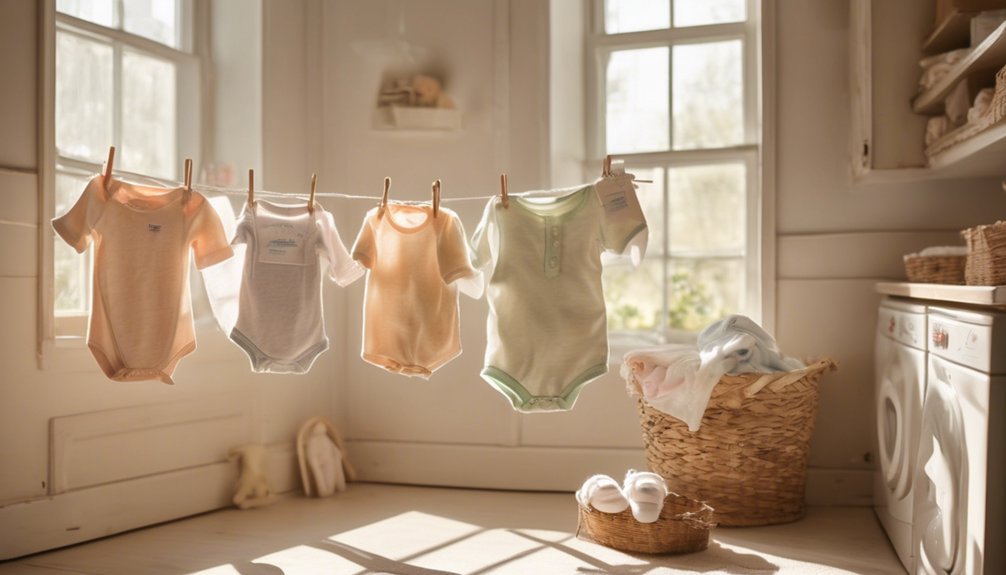
After tackling those tricky stains, the next step is ensuring your baby’s clothes dry properly. You can choose between air drying and tumble drying, both with their benefits. Air drying is gentle and helps maintain the fabric’s integrity, while tumble drying can save you time on busy days.
Here’s a handy comparison to help you decide:
| Method | Pros |
|---|---|
| Air Drying | Gentle on fabrics, energy-saving |
| Tumble Drying | Quick, convenient |
Whichever you choose, make sure to check the care labels. Keeping your baby’s clothes soft and fresh is essential for their delicate skin. Happy drying!
Ironing Baby Garments
Ironing baby garments can seem like an extra task on your to-do list, but it’s worth considering for those special occasions or when you want everything looking pristine.
To make the process easier, use gentle ironing techniques. Start with a low heat setting to protect delicate fabrics like cotton and muslin. Always check the care label for specific instructions, as some materials may require steam or a pressing cloth.
Remember to iron while the fabric is slightly damp; this helps eliminate wrinkles effortlessly. Caring for your baby’s clothes with these techniques not only enhances their appearance but also ensures they remain soft and comfy against your little one’s skin.
A little extra effort can go a long way in nurturing those cherished moments.
Storing Clean Baby Clothes
When you’ve just finished washing your baby’s clothes, the next step is figuring out how to store them properly.
Start by using efficient folding techniques; for onesies and shirts, fold them in half and then roll to save space. For pants, you can stack them neatly or roll them up to maximize your storage options.
Consider space-saving solutions like drawer dividers or storage bins to keep everything organized and accessible. Labeling bins can help you find what you need quickly, especially during those hectic moments.
Caring for Different Fabrics
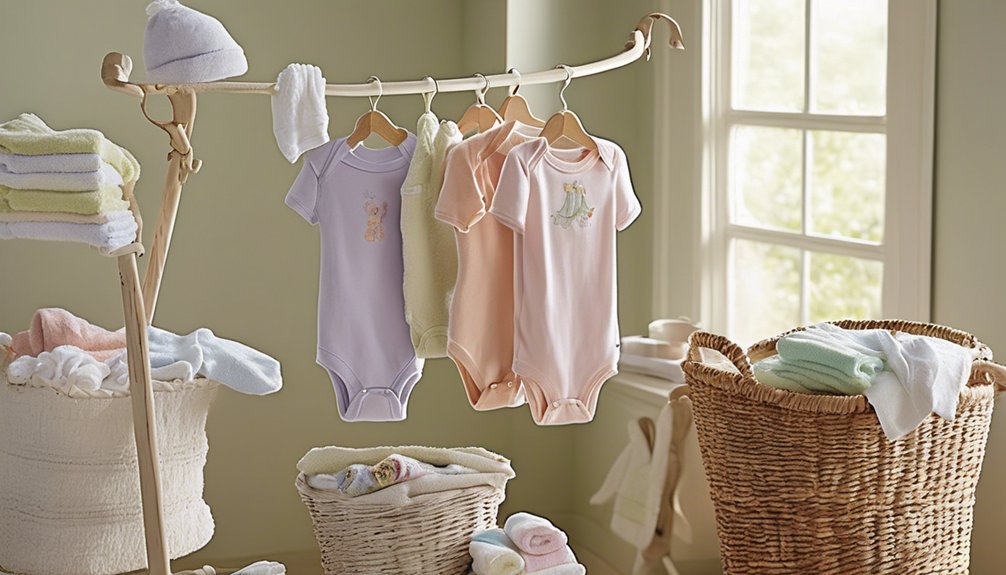
Now that your baby’s clothes are neatly stored, it’s important to care for the different fabrics to keep them looking their best. Cotton care is straightforward; wash in cold water with a gentle detergent, and avoid bleach to preserve softness. For synthetic fabrics, like polyester, use a delicate cycle to prevent damage. Always check labels for specific instructions, ensuring you’re treating each piece right.
| Fabric Type | Care Instructions | Tips |
|---|---|---|
| Cotton | Wash in cold water, gentle detergent | Avoid bleach, tumble dry low |
| Synthetic Fabrics | Delicate cycle, cold wash | Air dry when possible |
| Blends | Gentle cycle, cold or warm wash | Check fabric content |
Tips for Reducing Allergens
To keep your baby’s clothes free from allergens, consider washing them separately from the rest of your laundry. This helps prevent cross-contamination from other items that may carry dust, pet hair, or pollen.
Opt for allergen free fabrics whenever possible; organic cotton is a great choice as it’s soft and gentle on your baby’s sensitive skin. When selecting a detergent, choose hypoallergenic options that are free from fragrances and dyes. These detergents clean effectively without introducing harmful irritants.
Additionally, wash everything in hot water to eliminate any lingering allergens. Finally, ensure your baby’s wardrobe is stored in a clean, dust-free environment to maintain that allergen-free haven. Your little one deserves the safest and most comfortable clothing possible.
Eco-Friendly Washing Options
Choosing eco-friendly washing options not only protects the planet but also ensures your baby’s clothes stay safe and clean. By opting for biodegradable detergents, you’re making a conscious choice for both your child’s delicate skin and the environment. These detergents break down naturally, reducing harmful residues. Pair them with natural fabric softeners to keep your baby’s clothes soft without harsh chemicals.
Here’s a quick guide to help you choose:
| Eco-Friendly Options | Benefits |
|---|---|
| Biodegradable Detergents | Safe for baby’s skin, environmentally friendly |
| Natural Fabric Softeners | Reduces static, gentle on fabrics |
| Plant-Based Stain Removers | Effective, non-toxic alternatives |
| Reusable Laundry Bags | Cuts down on waste, durable |
Frequently Asked Questions
How Often Should I Wash Baby Clothes?
You should wash baby clothes frequently, ideally every few days, to keep them fresh and clean. Establish a laundry schedule that fits your routine, ensuring your little one always has soft, safe garments to wear.
Can I Use Fabric Softener on Baby Clothes?
You know what they say, “Better safe than sorry.” While fabric softener can be tempting, it’s best to skip it on baby clothes. Consider fabric softener alternatives, especially for sensitive materials like cotton and bamboo.
What if My Baby Has Sensitive Skin?
If your baby’s got sensitive skin, you should definitely opt for hypoallergenic detergents. These gentle formulas reduce irritation, ensuring your little one stays comfortable and happy in their clothes without worrying about harsh chemicals or allergens.
Are There Specific Detergents for Cloth Diapers?
When choosing a detergent for cloth diapers, think of it as nurturing your little one’s delicate skin. Look for gentle detergent ingredients, and wash frequently to maintain freshness and comfort for your baby.
How Can I Remove Strong Odors From Baby Clothes?
To remove strong odors from baby clothes, try soaking them in a mixture of warm water and vinegar before washing. You can also add scent boosters during the wash for an extra fresh touch.
Conclusion
In conclusion, washing your baby’s clothes isn’t just a chore; it’s an essential step in protecting their delicate skin and overall health. By choosing the right detergent and following proper washing techniques, you can significantly reduce allergens and irritants. Remember, many parents believe that all detergents are the same, but the truth is, a gentle, hypoallergenic option makes all the difference. With these tips, you can create a safe and cozy wardrobe for your little one, ensuring their comfort always comes first.