
Many parents are unaware that baby-led weaning can significantly influence their child’s eating habits and motor skill development. This approach allows babies to self-feed with whole pieces of food, promoting exploration and independence from the start. By understanding the principles behind baby-led weaning, you can create a positive mealtime experience for your little one. So, how do you effectively implement this method and choose the right foods?
Key Takeaways
- Baby-led weaning encourages self-feeding, allowing babies to explore foods at their own pace without purees.
- It promotes the development of motor skills and hand-eye coordination through the manipulation of whole food pieces.
- This approach helps create a positive relationship with food, fostering healthy eating habits from an early age.
- Safety is paramount, so foods should be appropriately sized, soft, and supervised during mealtimes to prevent choking hazards.
- Baby-led weaning supports diverse tastes and textures, enhancing nutritional intake and celebrating mealtime exploration.
Understanding Baby-Led Weaning
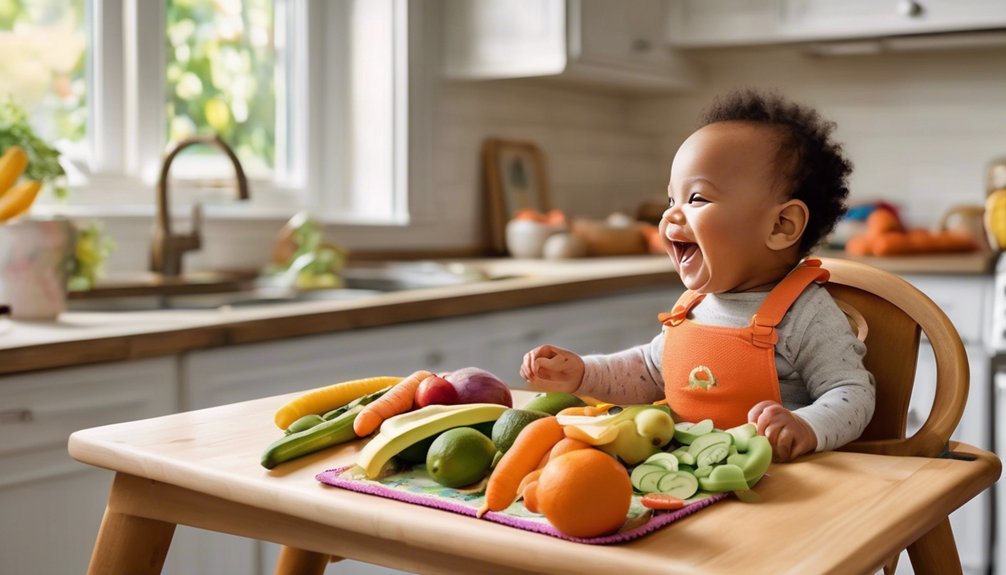
Baby-led weaning (BLW) is a method of introducing solid foods to infants that emphasizes self-feeding and exploration. This approach allows your baby to discover textures and flavors at their own pace, fostering independence and encouraging healthy eating habits.
Many parents appreciate the baby-led benefits, such as improved motor skills and a more varied diet. However, there are baby-led misconceptions that you should be aware of, like the belief that BLW is messy or that babies can’t get enough nutrition.
In reality, with the right foods, your little one can thrive while enjoying mealtime. By understanding these aspects of BLW, you’ll feel more confident in nurturing your child’s relationship with food and making mealtime a joyful experience.
Key Principles of Baby-Led Weaning
While introducing solid foods, it’s important to follow the key principles of baby-led weaning (BLW) to ensure a positive experience for both you and your baby.
Firstly, pay attention to your baby cues; they’ll guide you in recognizing when they’re ready to eat. Offer a variety of soft, appropriately-sized foods during meal times, allowing your little one to explore textures and flavors independently.
Encourage self-feeding, as this helps develop motor skills and confidence. Avoid pressure or distractions, creating a relaxed atmosphere that fosters enjoyment and connection.
Benefits of Baby-Led Weaning
When you choose baby-led weaning (BLW), you’re not just introducing solid foods; you’re also fostering a range of developmental benefits for your child.
BLW encourages your little one to explore various textures and flavors, promoting a healthy relationship with food. This process helps meet their nutritional needs while allowing them to develop fine motor skills as they grasp and manipulate different foods.
As they learn to self-feed, they hit critical developmental milestones, like improved hand-eye coordination and independence. Research shows that children who engage in BLW often exhibit better eating habits later on.
How to Get Started With Baby-Led Weaning

Starting with baby-led weaning can be an exciting adventure for both you and your baby.
Begin by introducing your little one to first foods around six months of age, when they’re developmentally ready. Make meal times relaxed and enjoyable; this helps your baby feel comfortable exploring new textures and flavors.
Offer soft, appropriately-sized pieces of food that your baby can grasp easily. Avoid distractions during meals, allowing your baby to focus on their food.
It’s important to follow your baby’s cues—let them lead the way in how much they want to eat. Embrace the messiness of this stage, as it’s a natural part of learning.
With patience and encouragement, you’ll foster a positive relationship with food for your child.

Choosing the Right Foods for Baby-Led Weaning
Choosing the right foods for baby-led weaning is crucial for your baby’s development and enjoyment at mealtime. Focus on offering a variety of finger foods with different food textures to encourage flavor exploration.
Incorporate seasonal produce to ensure freshness and nutrient balance, while also introducing diverse cultural cuisines to broaden your baby’s taste preferences. Aim for a colorful food presentation, as this can make meals more appealing and fun.
Remember to keep meals balanced, mixing proteins, grains, and healthy fats. By providing meal variety, you help your little one discover new tastes and textures.
Always follow safety guidelines to ensure a positive experience while allowing your baby to enjoy this exciting journey into food.
Safety Considerations for Baby-Led Weaning
While introducing your baby to solid foods through baby-led weaning can be an exciting milestone, it’s essential to prioritize safety throughout the process.
Be aware of choking hazards and take the necessary precautions to ensure your little one enjoys this new experience safely.
Here are some important safety considerations:
- Supervision Guidelines: Always supervise your baby during mealtime; never leave them unattended.
- Food Size and Texture: Offer appropriately sized pieces that your baby can grasp easily and chew. Avoid hard, round, or sticky foods.
- Know the Signs: Learn the signs of choking and how to respond effectively in case of an emergency.
Common Mistakes to Avoid
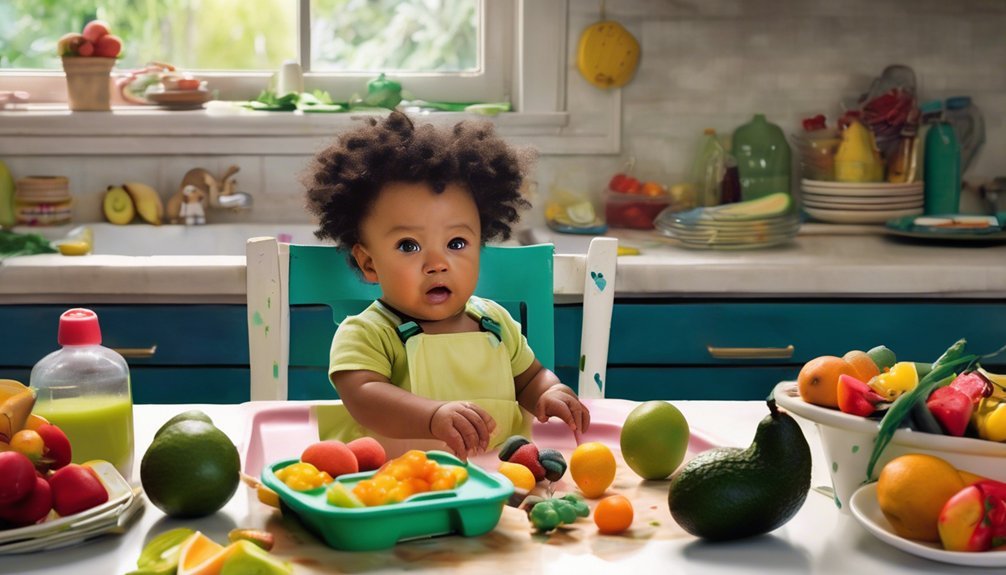
As you embark on the journey of baby-led weaning, it’s easy to overlook some common pitfalls that can hinder your baby’s experience.
One frequent misconception is that your baby should eat only certain foods; in reality, offering a variety of textures and flavors can enhance their exploration.
Another mistake isn’t allowing your baby to self-feed, which is crucial for developing motor skills. Remember, it’s normal for babies to play with food—this is part of their learning process.
Additionally, avoid pressuring your baby to eat more than they want; this can create a negative association with mealtime.
How to Support Your Baby’s Exploration
Supporting your baby’s exploration during weaning is vital for their development. Encouraging sensory exploration helps them engage with different textures, tastes, and smells, fostering curiosity and confidence.
Here are some practical ways to support this journey:
- Create a safe eating environment: Ensure the area is free from hazards while allowing freedom to explore.
- Offer a variety of foods: Introduce different shapes, colors, and textures to stimulate their senses and promote social eating.
- Be patient and encouraging: Cheer them on as they experiment, turning mealtime into a fun, shared experience.
Transitioning From Milk to Solids
Transitioning from milk to solids marks an exciting milestone in your baby’s development, and it’s essential to approach this shift thoughtfully.
Start by introducing solids around six months, as this aligns with your baby’s readiness for new textures and flavors. Begin with soft, easy-to-hold foods like ripe bananas or steamed carrots, ensuring they’re cut into manageable pieces.
This solid introduction should complement, not replace, milk; continue breastfeeding or formula feeding during the milk transition. Observe your baby’s cues; they’ll let you know if they’re hungry or full.
Encouraging Healthy Eating Habits

Once your baby begins exploring solid foods, fostering healthy eating habits becomes a key focus. Establishing early meal routines can set the stage for a lifetime of healthy food choices.
Here are some practical tips to help you encourage these habits:
- Offer a variety of foods: Introduce different fruits, vegetables, and proteins to broaden their palate.
- Make mealtime enjoyable: Create a positive atmosphere and allow your baby to explore food at their own pace.
- Model healthy eating: Let your little one see you enjoying nutritious foods, as children often mimic their parents’ behaviors.
Addressing Picky Eating With Baby-Led Weaning
As your baby explores the world of solid foods, addressing picky eating can be a common challenge.
Baby-led weaning offers effective picky eater strategies that encourage your little one to engage with a variety of flavors and textures. By allowing your baby to self-feed, you’re promoting autonomy, which can help reduce food aversions.
Try introducing new foods alongside familiar favorites to create a sense of comfort. Keep mealtimes relaxed and pressure-free, as this encourages exploration rather than resistance. Offering colorful, visually appealing foods can also spark curiosity.
Resources and Support for Parents
Navigating baby-led weaning can be both exciting and overwhelming, especially when you’re faced with the challenges of picky eating.
Luckily, there are many resources and support systems to help you along the way. Connecting with others on this journey can make a significant difference in your experience.
Consider exploring:
- Online forums: Share experiences and seek advice from fellow parents.
- Community workshops: Participate in local meetups for hands-on guidance and nutritional advice.
- Social media: Follow parenting resources that offer educational materials and peer networks.
These resources provide expert advice and a sense of community, ensuring you never feel alone as you help your little one explore new foods.
Embrace the journey together!
Frequently Asked Questions
Can Baby-Led Weaning Cause Allergies in Infants?
Introducing foods early can help in allergy prevention, but it’s crucial to monitor for reactions. You should consult with your pediatrician about safe food introduction practices to minimize allergy risks while ensuring a positive eating experience.
What Age Is Best to Start Baby-Led Weaning?
When it comes to starting, you’ve got to strike while the iron’s hot! The best age for baby-led weaning is typically around six months, when your baby shows developmental readiness for solid foods.
How Does Baby-Led Weaning Affect Breastfeeding?
Baby-led weaning can influence your breastfeeding duration and feeding patterns. By introducing solid foods, you may notice your baby naturally decreases breastfeeding frequency, fostering a more balanced approach to nutrition and maintaining a close bond.
Is Baby-Led Weaning Suitable for All Babies?
Like a flower blooming at its own pace, baby-led weaning suits some babies but not all. Individual readiness and developmental milestones matter; it’s essential to observe your baby’s cues before diving into this feeding method.
Can I Mix Purees With Baby-Led Weaning?
You can definitely mix purees with baby-led weaning. Experiment with puree combinations alongside solid foods, using different feeding techniques to help your baby explore flavors and textures while developing self-feeding skills. Enjoy the journey together!
Conclusion
In conclusion, baby-led weaning offers a unique approach to introducing solids that nurtures independence and promotes healthy eating habits. Research shows that babies who practice baby-led weaning may be less likely to become picky eaters later on, with studies indicating a 30% reduction in picky eating tendencies compared to traditional weaning methods. By allowing your baby to explore foods at their own pace, you’re setting the stage for a lifelong positive relationship with food.