
Word search puzzles offer a unique approach to teaching word recognition that can significantly enhance literacy skills. You'll find that these engaging activities not only capture students' attention but also foster a deeper understanding of vocabulary. As you explore the benefits of incorporating puzzles into your lessons, consider how they can cater to various learning styles and promote critical thinking. The impact of this interactive method might surprise you.
Key Takeaways
- Word search puzzles enhance word recognition by making learning interactive and enjoyable, fostering student engagement.
- They promote vocabulary expansion and strengthen word associations through active participation in a fun format.
- These puzzles aid in cognitive development by freeing up mental resources for better text comprehension.
- Word searches can be tailored to specific themes, aligning with curriculum goals and personal interests for targeted learning.
- Engaging in word searches reinforces critical thinking and problem-solving skills, integral to effective language acquisition.
The Importance of Word Recognition in Literacy Development
Word recognition is a crucial building block in literacy development, acting as the bridge between spoken language and reading. When you master word recognition, you enhance your reading fluency, allowing you to read smoothly and with greater comprehension.
This skill isn't just about identifying words; it's integral to your cognitive development. As you become proficient in recognizing words, you free up cognitive resources that can be redirected toward understanding and analyzing text.
This shift not only boosts your overall reading skills but also encourages critical thinking. By focusing on word recognition, you lay a solid foundation for literacy that will support your academic and personal growth, making every reading experience more enriching and enjoyable.
Engaging Students Through Interactive Learning
Recognizing words lays the groundwork for effective reading, but engaging students in the learning process is just as important.
Interactive activities, like word search puzzles, make learning enjoyable and immersive. When you incorporate these puzzles into your lessons, you foster an environment that promotes student engagement.
Students become active participants rather than passive recipients of information. They'll eagerly dive into the challenge of finding words, reinforcing their recognition skills in the process.
As they work through these puzzles, they'll develop critical thinking and problem-solving abilities, too. This hands-on approach ensures that students aren't just memorizing words but actively building connections.
Enhancing Vocabulary Skills With Word Searches
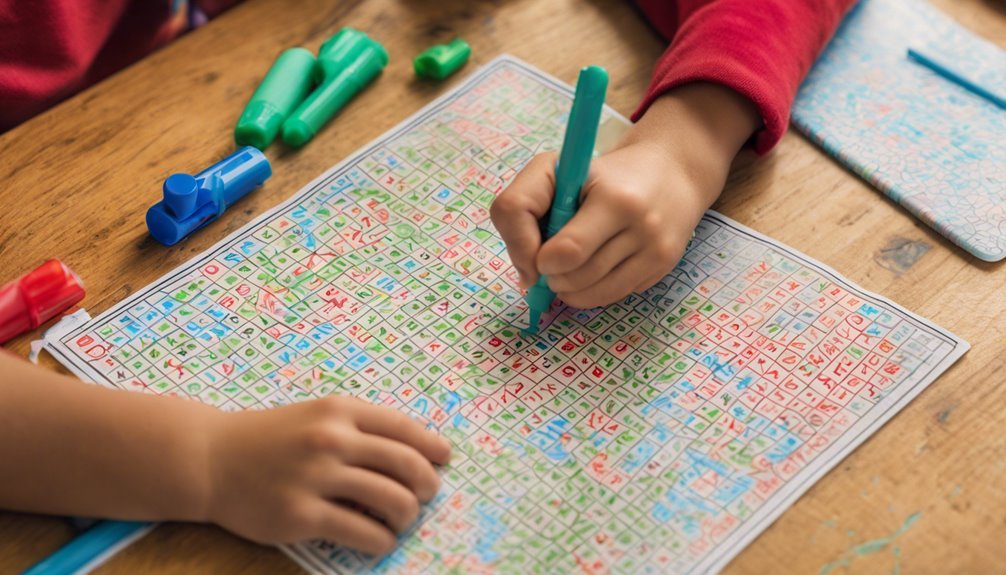
Vocabulary development is crucial for effective communication and comprehension, and word search puzzles offer a fun way to enhance these skills. By engaging with word searches, you not only promote vocabulary expansion but also strengthen word associations. This interactive approach allows you to encounter new words in a context that fosters retention.
| Vocabulary Expansion | Word Associations |
|---|---|
| Discover new terms | Connect related words |
| Reinforce meanings | Build contextual links |
| Explore synonyms | Enhance understanding |
| Increase word recall | Foster critical thinking |
| Enjoyable learning | Encourage curiosity |
Incorporating word searches into your learning routine can make vocabulary practice enjoyable, while also deepening your understanding of language and its nuances.
Strategies for Incorporating Word Searches in the Classroom
When you introduce word searches in the classroom, you can create an engaging learning environment that captivates students' attention.
Start by aligning word searches with your current curriculum; choose vocabulary related to themes or subjects you're covering. This not only maximizes word search benefits but also reinforces learning. You can implement them as warm-up activities, homework, or even as a reward for good behavior.
Encourage collaborative learning by having students work in pairs or small groups, discussing strategies to locate words. Additionally, consider creating personalized word searches based on individual students' interests.
This approach enhances classroom implementation, making the activity more relevant and enjoyable. Ultimately, integrating word searches effectively encourages active participation and reinforces word recognition skills.

Catering to Different Learning Styles With Puzzles

To effectively cater to different learning styles, incorporating word search puzzles can be a game-changer in your classroom. These engaging puzzles serve as visual aids, appealing to visual learners who thrive on seeing words in context.
For auditory learners, discussing strategies and solutions during collaborative activities fosters deeper understanding through dialogue. Kinesthetic learners benefit from the hands-on experience of tracing and finding words, solidifying their recognition skills.
By integrating puzzles into group work, you encourage teamwork and communication, allowing students to share insights and techniques. This multifaceted approach not only enhances word recognition but also makes learning enjoyable.
Embracing diverse learning styles ensures that every student finds a method that resonates, promoting mastery and confidence in their word recognition abilities.
The Role of Word Search Puzzles in Language Acquisition
Incorporating word search puzzles into your teaching toolkit can significantly boost language acquisition among students. These puzzles engage learners by promoting active participation in identifying and recognizing words, thereby enhancing their language skills.
As students search for words, they not only reinforce vocabulary but also develop cognitive abilities, such as pattern recognition and memory retention. This interactive approach encourages exploration and curiosity, essential components of effective language acquisition.
Additionally, word search puzzles can be tailored to specific themes, allowing you to target relevant vocabulary and concepts. By integrating these puzzles into your curriculum, you create a dynamic learning environment that supports both language development and cognitive growth, making it easier for students to master new languages and expand their linguistic horizons.
Assessing Progress and Understanding Through Word Searches

Word searches can serve as a powerful tool for assessing students' progress and understanding of vocabulary. By incorporating these puzzles into your lessons, you can engage in effective progress tracking.
As students complete word searches, you can observe how quickly they identify and recall words, providing immediate insight into their vocabulary retention and comprehension. Additionally, analyzing common errors can enhance your understanding assessment, revealing areas that may require further instruction.
This hands-on approach allows you to gauge not only individual performance but also overall class dynamics. By using word searches strategically, you can create a focused learning environment that fosters both mastery and confidence in word recognition, ultimately benefiting your students' educational journey.
Making Learning Fun: The Joy of Puzzles in Education
Engaging students in learning doesn't have to be a chore; it can be a delightful experience. By incorporating puzzles into your teaching, you can tap into the puzzle benefits that turn mundane lessons into fun learning adventures.
Word search puzzles not only enhance word recognition but also boost critical thinking and problem-solving skills. When students are excited about finding words, they become more invested in their education, making retention easier and more enjoyable.
This joy in learning fosters a positive classroom environment where curiosity thrives. So, as you plan your lessons, think of creative ways to integrate puzzles. You'll be amazed at how this simple tool can transform your students' engagement and mastery of new concepts.
Frequently Asked Questions
Are Word Search Puzzles Suitable for All Age Groups?
Yes, word search puzzles are suitable for all age groups. They offer various word search benefits, like enhancing vocabulary and improving focus.
For younger kids, they can introduce new words in a fun way, while older individuals can challenge themselves with more complex puzzles.
You can customize difficulty levels, making them accessible for everyone.
Whether you're a student or an adult, word searches can engage your mind and provide enjoyable learning experiences.
How Can I Create My Own Word Search Puzzles?
Creating your own word search puzzles can be as thrilling as embarking on a treasure hunt!
Start by using online puzzle generators, which let you input your chosen words and customize the grid size. Alternatively, you can find printable templates that provide a straightforward format.
Just fill in your words, then add random letters to complete the puzzle. You'll enjoy the satisfaction of crafting a unique challenge for yourself or others!
Do Word Searches Help With Spelling Skills?
Yes, word searches do help with spelling skills! As you search for words, you reinforce spelling by visualizing the letters and their arrangement.
This spelling reinforcement enhances your vocabulary, making it easier to remember and use new words. Plus, the engaging nature of puzzles keeps you motivated, turning learning into a fun challenge.
Can Word Searches Be Used for Non-English Languages?
Absolutely, you can use word searches for non-English languages!
Imagine immersing yourself in a new culture while honing your language skills. Word searches help reinforce cultural vocabulary, making language learning enjoyable and effective.
As you search for words, you're not just playing a game; you're actively engaging with the language. This method enhances your vocabulary retention, allowing you to master the nuances of a new language while appreciating its cultural context.
What Materials Do I Need to Make Word Searches?
To create word searches, you'll need word search templates, which you can easily find online.
Choose from various educational resources that fit your topic or theme. You'll also want a list of words to include, ideally related to the subject matter.
Finally, grab some paper or use digital tools if you prefer. Once you have these materials, you're ready to design a fun and engaging word search puzzle that enhances learning!
Conclusion
Incorporating word search puzzles into your teaching toolkit not only makes learning enjoyable but also fosters vital skills in your students. Imagine watching them transform from hesitant readers into confident word detectives, eagerly spotting words in a sea of letters. As they connect with vocabulary in a hands-on way, you'll witness their literacy skills flourish. So why not dive into the world of word searches? The next puzzle could spark a love for reading that lasts a lifetime!